Article | Salgado Photographs Auction New York April 2026
Not a Boundary in Sight
The selection 'Sebastião Salgado: A Life’s Voyage' presents the great artist’s work at a compelling moment.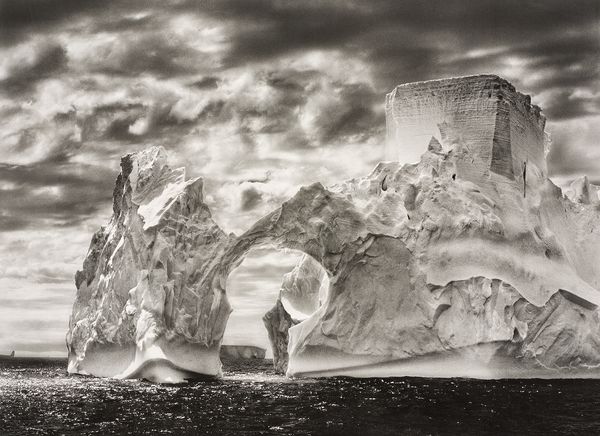
Sebastião Salgado, Iceberg Between Paulet Island and the South Shetland Islands, Antarctica, 2005. Photographs New York.
One aspect of the photographic medium we most love is its transportive nature. Viewing great photographs can often help us achieve a sense of arrival, a transcendent experience that dismantles our sense of self and awakens us to the vast spectrum and layered beauty of living life. In a sense, a transcendental photograph, just like a transformative travel experience, can enlighten us to the arbitrary nature of boundaries — those borders set by nations or those more personal boundaries set by ourselves. And the work of Sebastião Salgado knows neither. Throughout his career Salgado harnessed this transportive power to raise awareness and effect change.
Phillips is honored to present Sebastião Salgado: A Life’s Voyage, an exceptional group of 30 works from a distinguished private collection. Along with the special section within the live auction on 11 April, additional works from the collection are on offer in a dedicated online auction, closing 12 April. The photographs from this collection encompass the full scope of Sebastião Salgado’s remarkable career, including two rare portfolios, Gold Mine and Kuwait: A Desert on Fire, as well as a compelling array of Salgado’s most iconic images.
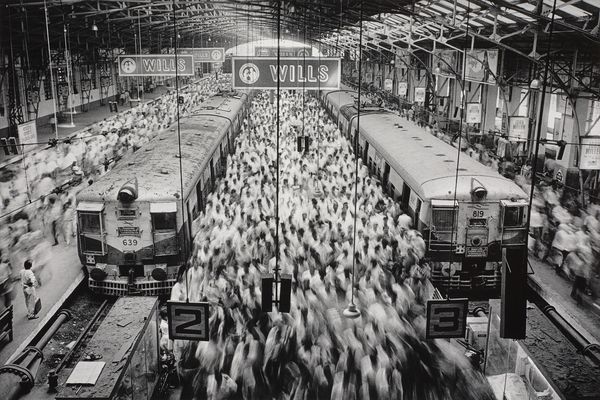
Sebastião Salgado, Church Gate Station, Western Railroad Line, Bombay, India, 1995. Photographs New York.
Spanning four decades across four continents, these images reflect Salgado’s limitless pursuit of image making, his life’s voyage. From the Amazon rainforest to the Sahara Desert to the Antarctic tundra, Salgado captured human hardships and nature’s sublime beauty in full context, bringing humanitarian and environmental issues to the forefront of his work. Salgado’s pioneering social documentary approach left an indelible mark on the medium of photography.
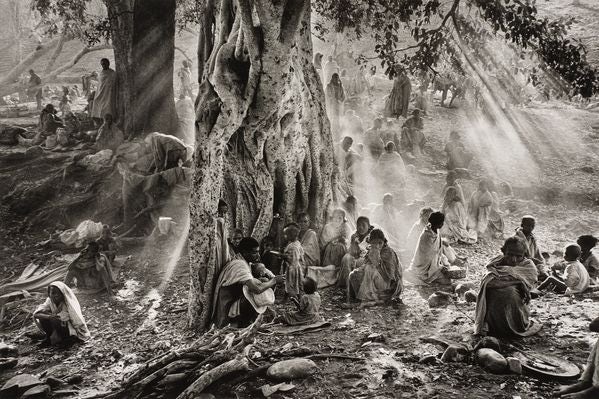
Sebastião Salgado, In Kalema Camp, Tigray, Ethiopia, 1985. Photographs New York.
Salgado’s legacy extends far beyond the medium of photography. A committed environmentalist and humanitarian, he co‑founded Instituto Terra with his wife, Lélia Wanick Salgado. It is one of the most successful large‑scale reforestation initiatives in the world and has restored degraded land in Brazil’s Atlantic Forest through the planting of millions of native trees and the revival of entire ecosystems. No other photographer in history has exerted such far‑reaching influence across environmental, social, and cultural spheres.
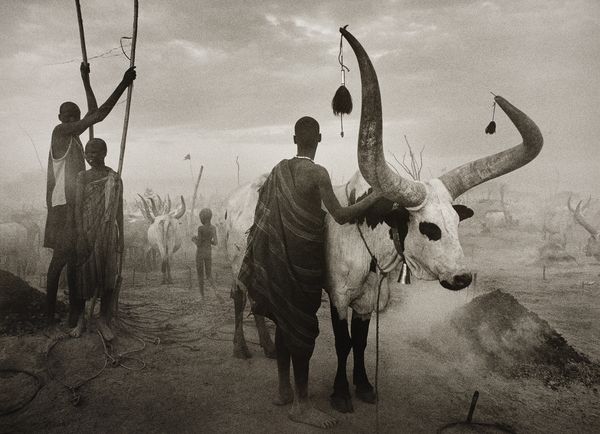
Sebastião Salgado, Dinka Group at Pagarau Cattle Camp, Southern Sudan, Africa, 2006. Photographs New York.
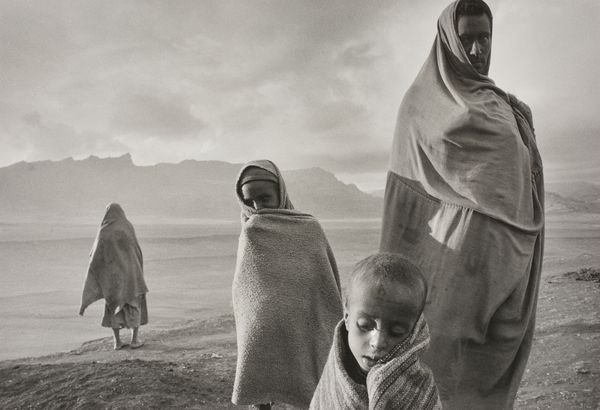
Sebastião Salgado, Refugees in the Korem Camp, Ethiopia, 1984. Photographs New York.
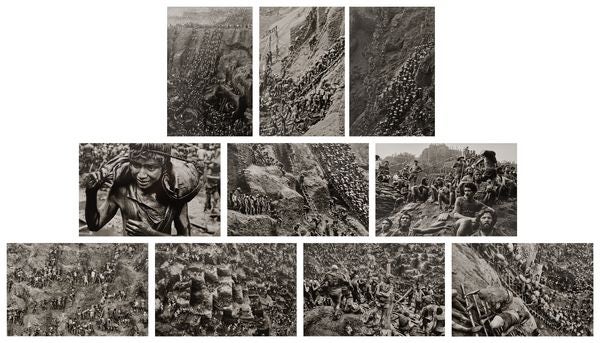
Sebastião Salgado, Gold Mine (portfolio of 20 prints), 1986. Photographs New York.
Viewed alongside the images that comprise the Gold Mine series, we’re confronted with one of the artist’s most emblematic themes — the human quest for dignity in the face of harsh labor. But Salgado doesn’t merely document these conditions; he shows us the indomitable nature of the human spirit. Taken alongside Salgado’s photographs of animals and landscapes, we begin to see connections between how we use our time as humans, the artificial social constraints imposed on our lives, and nature.
The portfolio Kuwait: A Desert on Fire sees the artist venturing into conditions perhaps even more dangerous than the mines. Visiting the environmental disaster in the aftermath of the 1991 Gulf War, he shows us again how humans endure in the face of adversity.
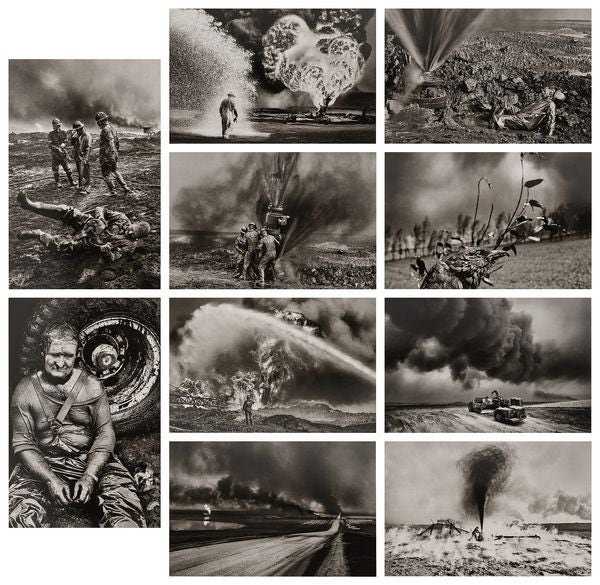
Sebastião Salgado, Kuwait: A Desert on Fire (portfolio of 20 prints), 1986. Photographs New York.
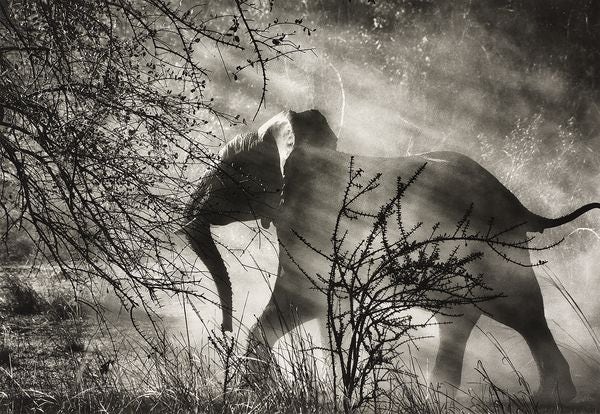
Sebastião Salgado, Elephant (against light), Kafue National Park, Zambia, 2010. Photographs New York.
Above all, Salgado’s work celebrates the majesty of nature and the struggles of the human condition, ultimately offering a plea for dignity, respect, and preservation. Today, these themes carry a newfound urgency, helping us see our current cultural moment with our eyes wide open.
Discover more from Photographs >
Recommended Reading