Article | Ernst Schuster Phillips Auction Hong Kong Xxi November 2025
Collector Ernst Schuster Returns With Another Round of Exceptional Watches
The second half of the Ernst Schuster Collection will be offered at the Phillips Hong Kong Watch Auction: XXI.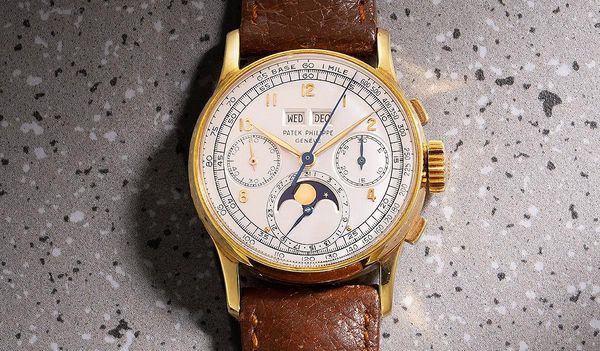
The PHILLIPS Hong Kong Watch Auction: XXI takes place on 21-23 November 2025, at our West Kowloon headquarters. The auction includes more than 300 of the world's finest watches – and though we are loath to boast, we truly think it's one of the best catalogues we've ever put together. We'll be highlighting a number of the most interesting lots and stories featured in the sale, including all the watches presented below.
– By Logan Baker
Ernst Schuster lived many lives at once. Born in Würzburg, Germany, in 1946, he left his family’s farm at 19 and built a new life for himself in Munich, where he would go on to become a gentleman racer, taking his Ferraris and Porsches to Goodwood, Le Mans, and the Targa Florio. He collected art with the same intensity, forming friendships with figures like Keith Haring, who once sketched spontaneously on the caseback of one of Schuster’s watches – a stainless steel Patek Philippe Ref. 1518, one of only four known. That mix of curiosity, instinct, and courage defined everything he did.
Watches were central to that story. Schuster began collecting in the 1960s, drawn first to Patek Philippe and Rolex, and later to Cartier. He started buying seriously in the 1970s, at the height of the Quartz Crisis, when mechanical watchmaking seemed destined for obsolescence. Where others saw anachronisms, Schuster saw beauty and longevity. He sought out complicated Patek Philippe chronographs and world timers that languished in display cases, Rolex Daytonas that few yet called “Paul Newman,” and Cartier creations that bridged design and horology. His approach was instinctive, not speculative – he bought what delighted him, often on a large scale, and often long before the rest of the world caught up.
The result was a collection of remarkable depth and vision, assembled at a pivotal moment in modern watch history. Now, decades later, Schuster has decided to part with some of those pieces, sharing the watches that defined his life and taste with a new generation of collectors. Highlights from the Ernst Schuster Collection will appear in the Phillips Hong Kong Watch Auction: XXI, while a previous selection was offered at the Phillips’ Decade One sale in Geneva.
Lot 930: A Circa 2019 Rolex Cosmograph Daytona 'John Mayer' Ref. 116508
Estimate: HKD $320,000 - 640,000
When Rolex pulled the covers off the 18k yellow gold Daytona Ref. 116508 with a green dial at Baselworld 2016, it didn’t take long for the watch to break out from the pack. The pairing felt fresh, even a little irreverent for a precious-metal Daytona, and collectors clocked it right away. The watch’s cultural moment arrived soon after, when John Mayer discussed it on Hodinkee's Talking Watches in 2019 and turned the reference into a modern-day cult object. Prices followed.
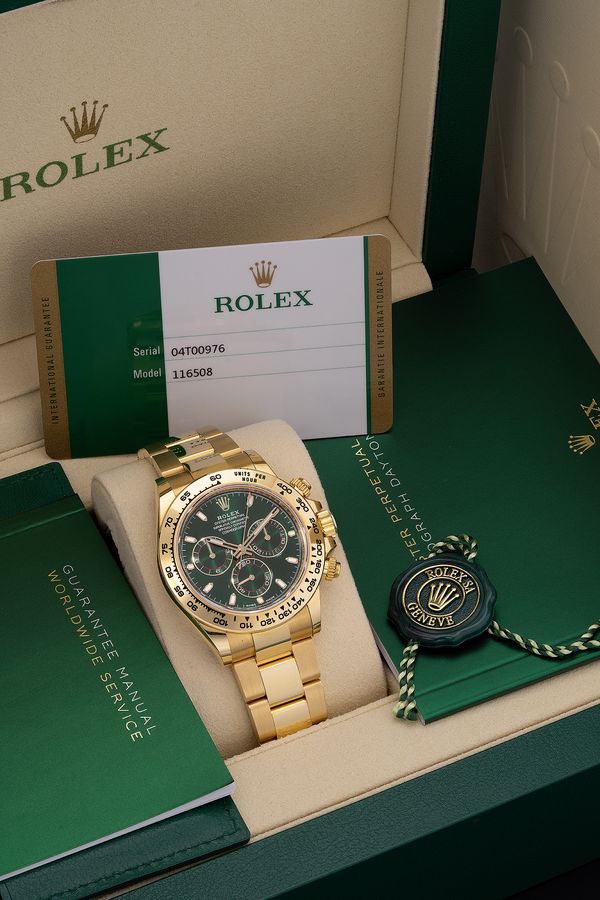
Lot 930: A Circa 2019 Rolex Cosmograph Daytona 'John Mayer' Ref. 116508 that's included in the Phillips Hong Kong Watch Auction: XXI. Estimate: HKD $320,000 - 640,000
The dial is where the watch earns its reputation. The deep green finish shifts in the light, and the red accents add just a touch of warmth. The layout stays classic Daytona, but the bold rings around the sub-dials pull the eye in and keep the design grounded. Inside sits the calibre 4130, Rolex’s long-running in-house chronograph movement.
Rolex discontinued the Ref. 116508 in 2023, which only tightened supply and pushed the reference even deeper into collector territory. This example lands in excellent condition, with protective stickers still on the upper right caseband and crown guards. It comes with its original guarantee and box, and it offers a rare shot at a watch that has already stepped into the “modern classic” conversation.
Lot 932: A 1988 Patek Philippe Calatrava Ref. 3893 in Platinum with Diamond Hour Markers
Estimate: HKD $80,000 - 160,000
The Patek Philippe Ref. 3893 tends to fly under the radar. Released in the 1980s as part of the Calatrava family, it followed the era’s quiet preference for slim cases and clean dials. Most examples left the workshop in yellow or white gold, with the latter already tough to find. Collectors know two dial styles for the reference: a soft ivory tone and a crisp white sector layout.
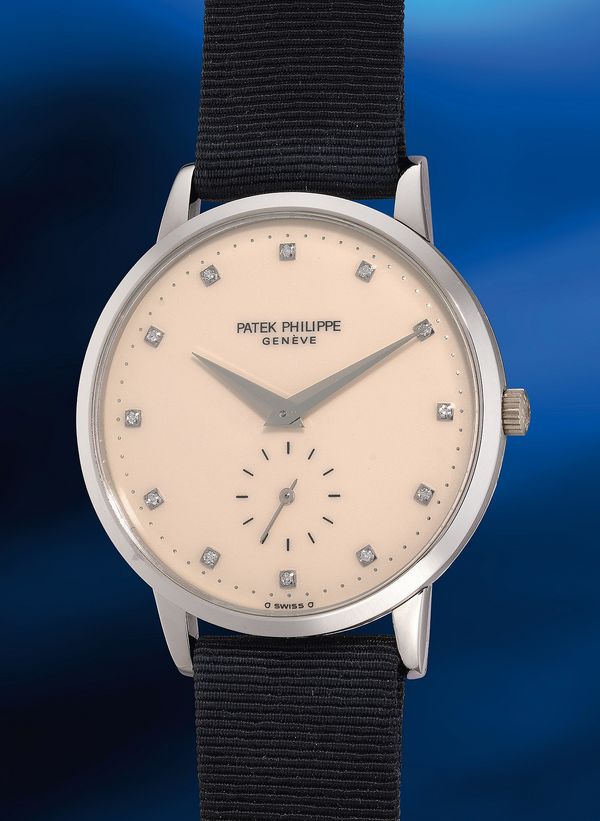
Lot 932: A 1988 Patek Philippe Calatrava Ref. 3893 in Platinum with Diamond Hour Markers that's included in the Phillips Hong Kong Watch Auction: XXI. Estimate: HKD $80,000 - 160,000
This watch takes the story in a different direction. It comes in platinum, which already places it in rare company, and the dial features a warm ivory-white finish that complements the sharp dauphine hands. The design keeps things honest: no clutter, no tricks, just a clear view of the metal, its proportions, and the work that went into it. Then you notice the hour markers. The 12 diamonds add a touch of flash to the watch without compromising the Calatrava’s trademark restraint.
Research shows this is the first platinum 3893 to surface publicly and the only example with this specific diamond-set configuration. The Extract from the Archives confirms production in 1988. It’s a watch that stays true to the Calatrava ethos while offering something genuinely rare, and it lands with the kind of poise that holds up anywhere, anytime.
Lot 934: A 1989 Patek Philippe Second-Series Perpetual Calendar Ref. 3940J in 18k Yellow Gold
Estimate: HKD $160,000 - 320,000
Among Patek Philippe’s modern icons, the Ref. 3940 sits in a class of its own. Launched in 1985 and produced for more than two decades, it distilled the perpetual calendar into something slim, balanced, and quietly brilliant. The ultra-thin calibre 240Q keeps the case at about 9mm thick, and the 36mm diameter delivers a proportions-first look that feels both vintage and contemporary.
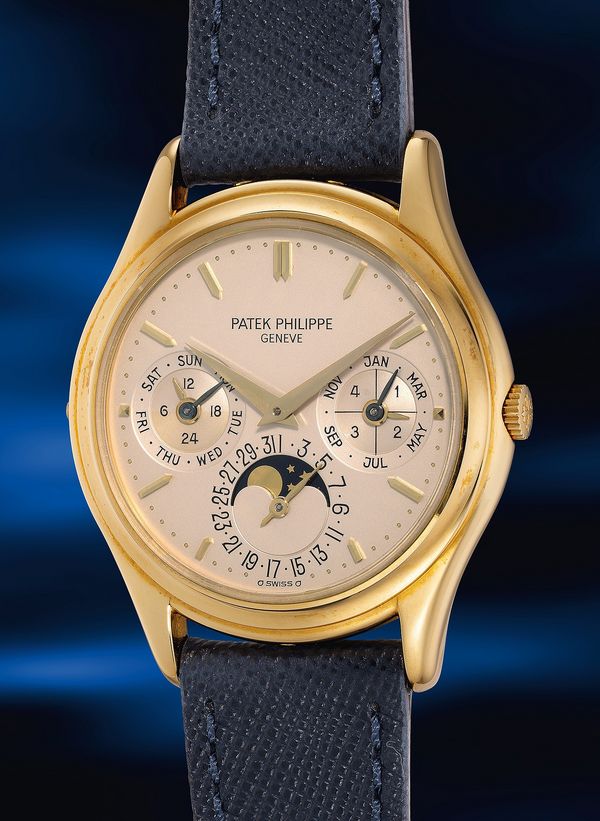
Lot 934: A 1989 Patek Philippe Second-Series Perpetual Calendar Ref. 3940J in 18k Yellow Gold that's included in the Phillips Hong Kong Watch Auction: XXI. Estimate: HKD $160,000 - 320,000
The watch carries real history, too. Philippe Stern wore a 3940 as his personal daily watch, which only deepened the model’s standing with collectors. Throughout its run, Patek produced three series in yellow, white, and pink gold, as well as platinum. Each variation helped shape the reference’s reputation as one of the most refined perpetual calendars the brand ever made.
This 18k yellow gold example, dating to 1989, comes in excellent overall condition. It’s a later second-series piece, identified by the cross-shaped divider on the leap-year display and the “Swiss” sigma signature beneath the minute track. It comes with its original accessories and offers a chance to own one of Patek’s most enduring designs, carefully preserved and ready for its next chapter.
Lot 935: A 1992 Patek Philippe First-Series Perpetual Calendar Ref. 5040J in 18k Yellow Gold
Estimate: HKD $160,000 - 320,000
Patek Philippe introduced the Ref. 5040 in 1992, adding a new chapter to the brand’s long history with perpetual calendars. By then, Patek had already spent decades shaping the category, but the 5040 stood apart thanks to its tortue case. The softly curved, early-20th-century silhouette brought a distinct elegance to the complication.
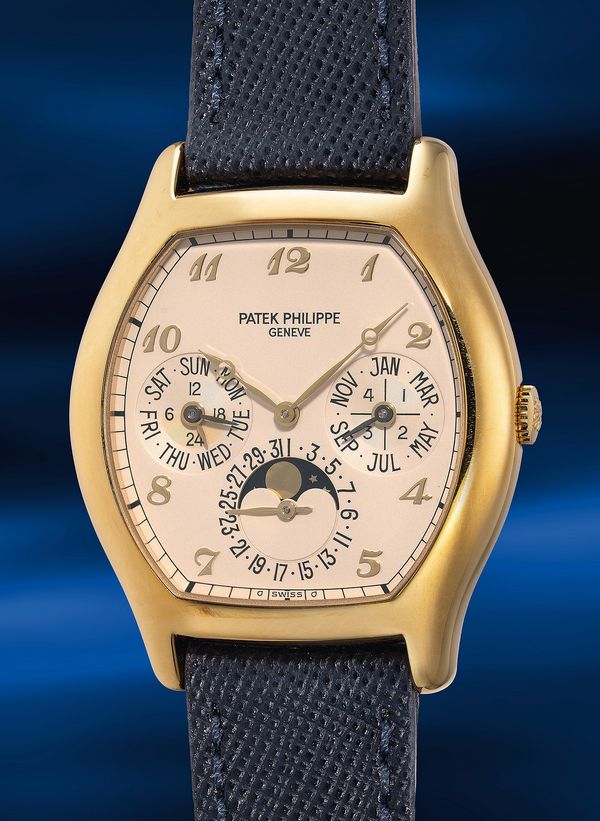
Lot 935: A 1992 Patek Philippe First-Series Perpetual Calendar Ref. 5040J in 18k Yellow Gold that's included in the Phillips Hong Kong Watch Auction: XXI. Estimate: HKD $160,000 - 320,000
The reference stayed in Patek's catalogue until 2007 and is now grouped by collectors into three series, each tied to its movement range. Early pieces, like the one here, carry numbers in the 77X'XXX range. Later examples move into the 3'12X'XXX and 3'67X'XXX ranges as production progressed. Throughout those years, the watch was available in yellow, white, and pink gold, as well as a small number in platinum.
This fresh-to-the-market yellow gold example dates to 1992 and comes from the first series. It has been preserved with care and retains the charm that defines the early production pieces. Complete with its original accessories and an Extract from the Archives, it offers a rare opportunity to pick up one of the most distinctive perpetual calendars in Patek’s modern era.
Lot 936: A 1949 Patek Philippe Perpetual Calendar Chronograph Ref. 1518 in 18k Yellow Gold
Estimate: HKD $2,800,000 - 5,600,000
The Patek Philippe Ref. 1518 marks the beginning of one of the most significant legacies in watchmaking.
When it debuted in 1941, it became the world's first serially produced perpetual calendar chronograph wristwatch. That alone secured its place in history. The design still feels special. The moon-phase, the twin calendar windows, and the neatly arranged chronograph registers all settle into a dial that never feels cluttered. You see the beginnings of a line that later grew into the 2499, 3970, 5970, and today’s 5270. Everything starts here.
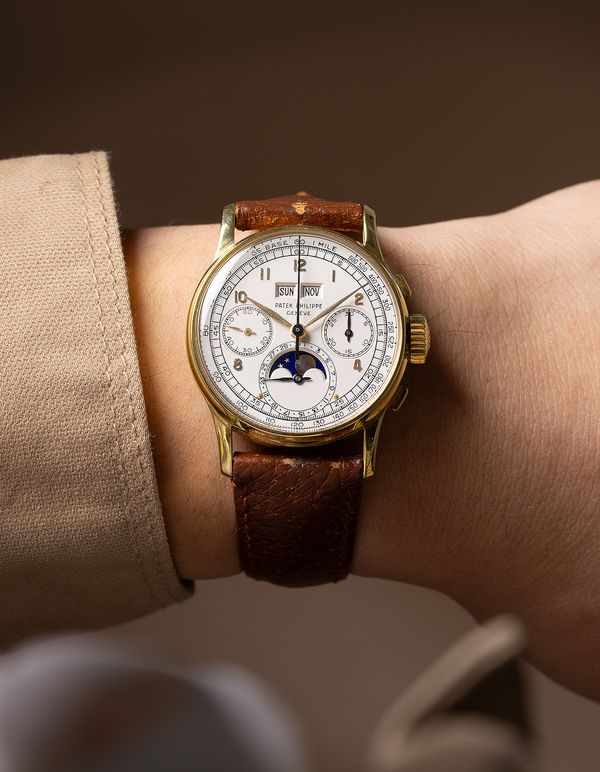
Lot 936: A 1949 Patek Philippe Perpetual Calendar Chronograph Ref. 1518 in 18k Yellow Gold that's included in the Phillips Hong Kong Watch Auction: XXI. Estimate: HKD $2,800,000 - 5,600,000
Production ran for only about thirteen years, and a total of 281 examples are believed to have left the Geneva workshop. The watch uses square pushers and a Calatrava-style case with long, slim lugs that reflect the design language of the 1940s. This example, cased in 18k yellow gold and dated to 1949, comes fresh to the market and remains in excellent overall condition.
The dial is clean and well-preserved. It displays the correct short signature that Patek introduced around 1948, along with the updated shape of the calendar apertures seen on late second-series pieces. The case comes from Emile Vichet, marked with the number 9 maker's mark. He worked as one of Patek’s key casemakers during this period, and his work is evident in the strong lugs and the deep hallmark under one of them.
After spending decades in Schuster's collection, the watch shows a light, even patina around the pushers and behind the lugs. It enhances the piece's presence rather than distracting from it. The 1518 remains one of the defining complicated watches of the 20th century. This example has the quality, provenance, and character that could place it at the center of any serious vintage collection.
Lot 937: A 1948 Patek Philippe Perpetual Calendar Ref. 1526 in 18k Yellow Gold
Estimate: HKD $640,000 - 1,280,000
The Patek Philippe Ref. 1526 marks one of the most important turning points in the brand’s history. Introduced in 1941, it became the first perpetual calendar wristwatch produced in series, laying the groundwork for every subsequent perpetual calendar built by Patek.
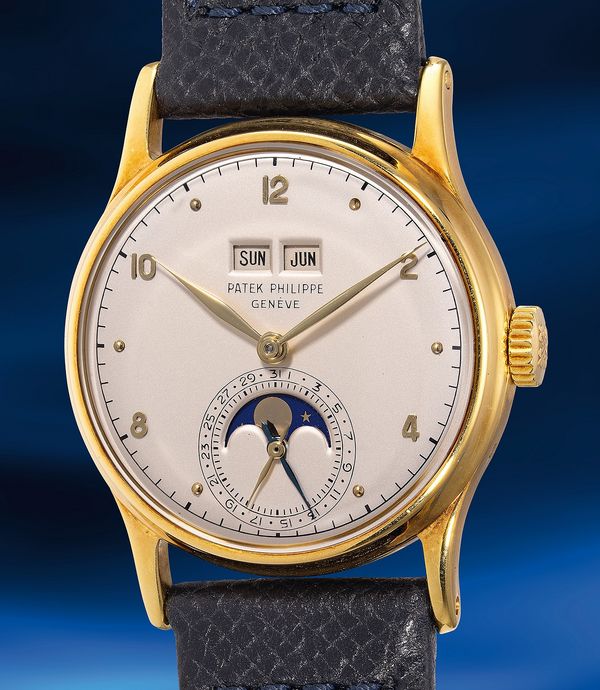
Lot 937: A 1948 Patek Philippe Perpetual Calendar Ref. 1526 in 18k Yellow Gold that's included in the Phillips Hong Kong Watch Auction: XXI. Estimate: HKD $640,000 - 1,280,000
Only 210 examples were made between 1941 and 1952. Most were cased in yellow gold, a small number in pink gold, and a single known example in stainless steel. Emile Vichet produced the cases, the same artisan responsible for many examples of the legendary 1518 and early 2499s. His work gives the 1526 its clean lines, balanced proportions, and subtle presence on the wrist.
This 18k yellow gold example is a strong one. The dial is well-preserved, featuring simple Arabic numerals that convey the reference’s understated charm. The case exhibits crisp hallmarks on the band and beneath one lug, and the surface displays a gentle layer of patina, suggesting long-term storage rather than heavy wear. It comes with a Patek Philippe confirmation letter from the 1980s and two Extracts from the Archives, from 1990 and 2025. Take note – examples in this level of condition are rare.
Lot 938: A 1937 Patek Philippe Ref. 407 in Stainless Steel
Estimate: HKD $32,000 - 64,000
Patek Philippe introduced the Ref. 407 in 1936, only a few years after the Stern family took over the company during the financial strain of the Great Depression. The design picks up the sharp geometry of the era. The rectangular case evokes the spirit of the Gondolo watches, leaning into the clean lines and symmetry that defined Art Deco.
This example keeps things simple with a two-tone silvered dial, a white minute track, and a small seconds display. The focus falls on proportion and craft rather than technical fireworks.
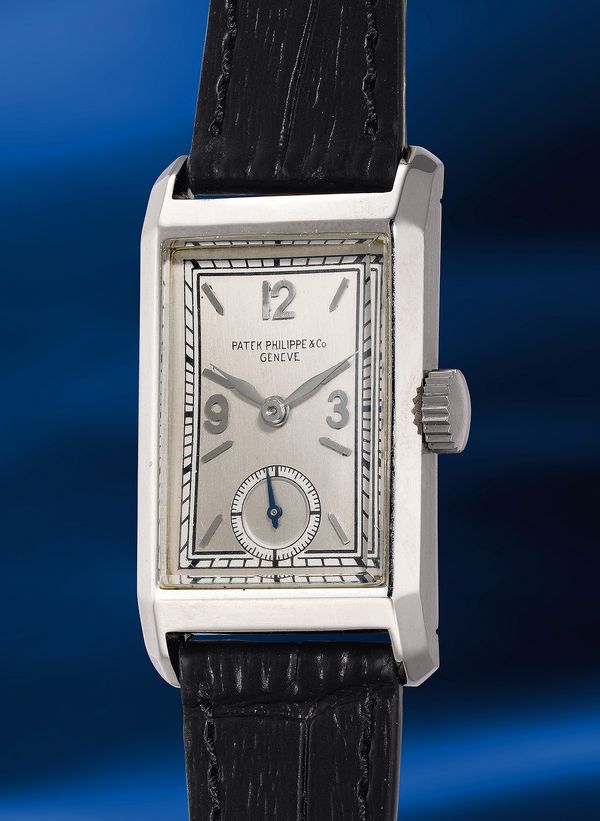
Lot 938: A 1937 Patek Philippe Ref. 407 in Stainless Steel that's included in the Phillips Hong Kong Watch Auction: XXI. Estimate: HKD $32,000 - 64,000
The stainless steel case houses the calibre 9''90, one of Patek Philippe’s longest-running movements. The tonneau-shaped design was introduced in 1934 and remained in production for over four decades. It powered a number of the company’s best-known shaped watches, including the Ref. 2442, known as the Banana; the Ref. 2441, known as the Eiffel Tower; and the Ref. 425, known as the Tegolino.
This Ref. 407 has the subtle presence that defines the best vintage Patek. The watch was made almost ninety years ago, yet it still feels refined and completely wearable. The curved caseback adds comfort to the wrist. The piece comes fresh to the market in excellent condition, supported by two Extracts from the Archives. It is a strong choice for collectors who appreciate restrained design and real history.
Lot 939: A 1943 Patek Philippe Ref. 1480 in 18k Pink Gold with 'Fancy' Lugs
Estimate: HKD $48,000 - 96,000
Patek Philippe introduced the Ref. 1480 in 1940; it remained in the catalogue through the end of that decade. Made in 18k yellow or pink gold, the watch stands out for its flat crystal, sharp geometry, and the slightly futuristic look that followed the tail end of the Art Deco period. Collectors often refer to it as the “twin lugs” model due to the distinctive stacked lugs that bracket the case.
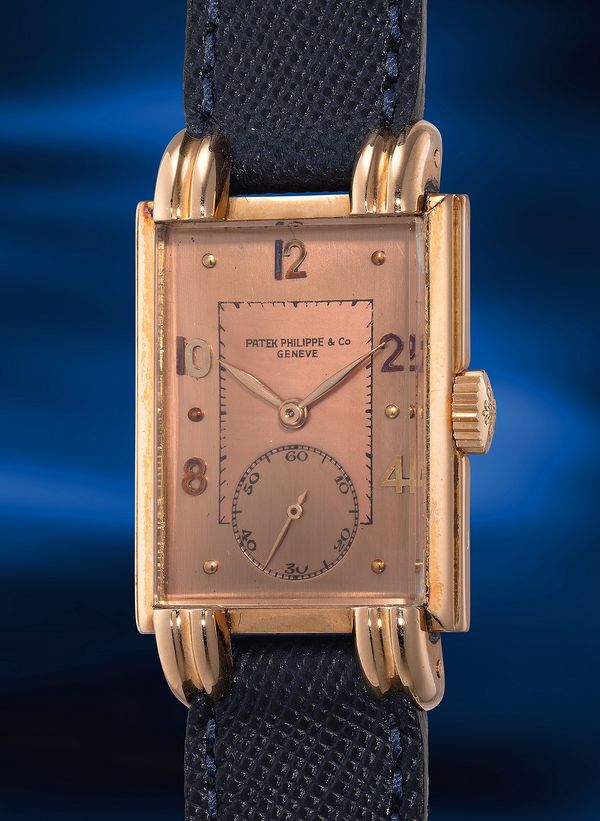
Lot 939: A 1943 Patek Philippe Ref. 1480 in 18k Pink Gold with 'Fancy' Lugs that's included in the Phillips Hong Kong Watch Auction: XXI. Estimate: HKD $48,000 - 96,000
Between the 1930s and 1950s, Patek produced a wide range of rectangular watches. Some used round movements, but the more serious designs – like the one here – relied on the rectangular calibre 9’’’90. Introduced in the mid-1930s and produced into the 1960s, the movement became a backbone for many of the brand’s shaped wristwatches.
The present example carries key number 5 on the caseback, indicating it was made by Georges Croisier, one of Geneva’s most respected casemakers at the time. The two-tone dial, likely made by Stern Frères, features a pink-champagne center paired with a copper-colored outer track and matching small seconds. The engraved and enamelled signature stretches across the upper half of the dial in its earlier, elongated form, a detail Patek shortened around 1948.
Dating to 1943, the watch has survived in impressive condition. The edges are crisp, the dial remains warm and even, and the overall presence reflects careful stewardship. It comes with its Extract from the Archives and offers a sharp, well-preserved look at one of Patek’s most distinctive rectangular designs.
Lot 940: A 1911 Patek Philippe Tonneau-Shaped Wristwatch in 18k Yellow Gold with Breguet Numerals
Estimate: HKD $24,000 - 32,000
When the tonneau-shaped wristwatch emerged in the early 1900s, it bore little resemblance to the converted pocket watches that most people were still wearing at the time. The curved, barrel-like form sat comfortably on the wrist and opened the door for bolder design. Patek Philippe was quick to embrace the new shape and produced some of the era’s most imaginative pieces, often with oversized numerals and layouts that signaled a break from the past.
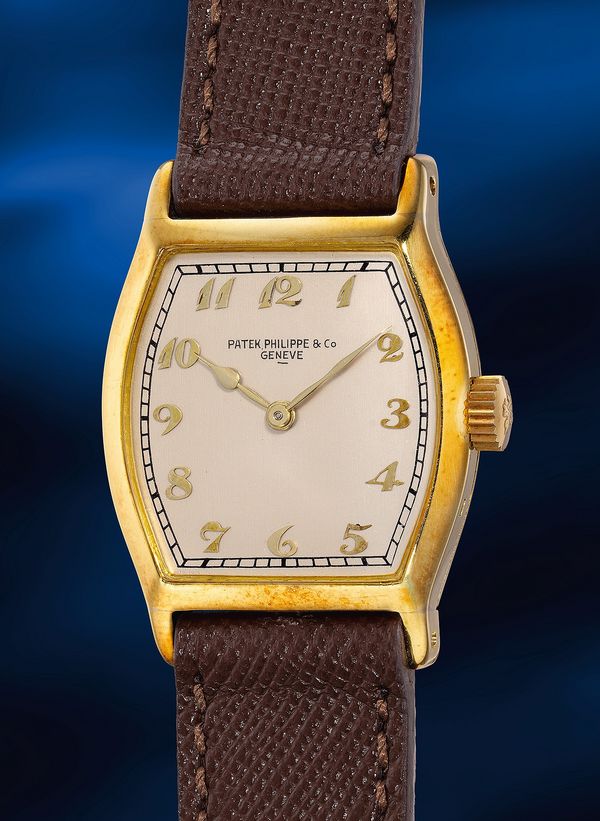
Lot 940: A 1911 Patek Philippe Tonneau-Shaped Wristwatch in 18k Yellow Gold with Breguet Numerals that's included in the Phillips Hong Kong Watch Auction: XXI. Estimate: HKD $24,000 - 32,000
This example captures the spirit of the 1920s with real charm. The Extract from the Archives shows the watch started its life in 1911 inside a white gold case. During a 1927 service at Patek Philippe, the case and dial were replaced with the 18k yellow gold case and Breguet numeral dial you see here. The Patek Philippe & Co. signature on the caseback remains sharp, and the dial has remained in impressive condition for its age.
A service invoice from 1983 notes a full overhaul at Patek Philippe and the purchase of a new buckle. Only a small number of early tonneau-shaped Pateks have appeared at auction over the years, and this one has stayed in Schuster's collection for more than four decades.
Lot 941: A 1930 Patek Philippe Ref. 484 in 18k Yellow Gold
Estimate: HKD $24,000 - 40,000
Patek Philippe’s Ref. 484 comes from the same period as the better-known Ref. 96, but the two watches couldn’t feel more different. Where the Ref. 96 relies on purity and simplicity, the Ref. 484 features semi-hooded lugs that lend the case a more sculptural appearance.
Like many Patek references from the 1930s, it is extraordinarily rare. Only four examples have surfaced publicly to date.
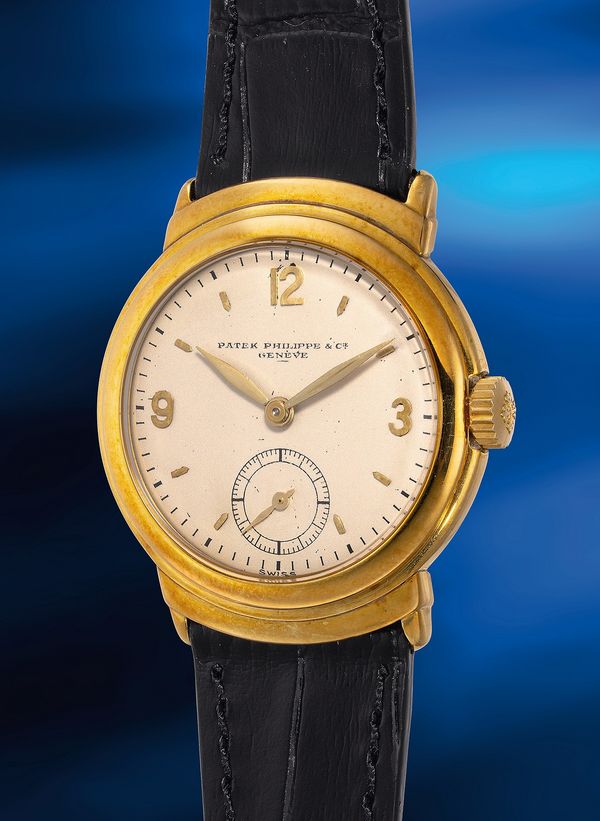
Lot 941: A 1930 Patek Philippe Ref. 484 in 18k Yellow Gold that's included in the Phillips Hong Kong Watch Auction: XXI. Estimate: HKD $24,000 - 40,000
This watch carries an engraved caseback with the initials, "H P M III." Inside, the caseback is inscribed with H P McIntosh III and Booth Road, Mentor, Ohio. The name likely belongs to the original owner, and Booth Road was the family’s address at the time. He may have been the eldest son of Henry P. McIntosh, Jr., who served as president of Guardian Savings Trust Co. in the early twentieth century. The personal engraving was likely added after the watch was delivered, suggesting a private commission.
The case originates from Wenger, one of Patek Philippe’s key casemakers at the time, marked by the Geneva key number 1 inside the caseback. The watch has survived nearly a century in excellent condition. It was last serviced in 1991 and is accompanied by two Patek Philippe Extracts from the Archives that confirm its details and provenance.
Lot 1054: A 1989 Patek Philippe Second-Series Perpetual Calendar Chronograph Ref. 3970E in 18k Yellow Gold
Estimate: HKD $480,000 - 960,000
Patek Philippe produced the Ref. 3970 for nearly two decades, offering it in yellow, pink, and white gold, as well as platinum.
Across its four series, the total output is estimated to be just over 4,000 pieces. The second series ran from 1987 to about 1990, overlapping slightly with the first. These watches featured a solid screw-back case, accompanied by feuille hands and baton indexes. Production across all metals for the second series is approximately 650 pieces, with roughly 150 to 200 of those bearing the 3971 designation.
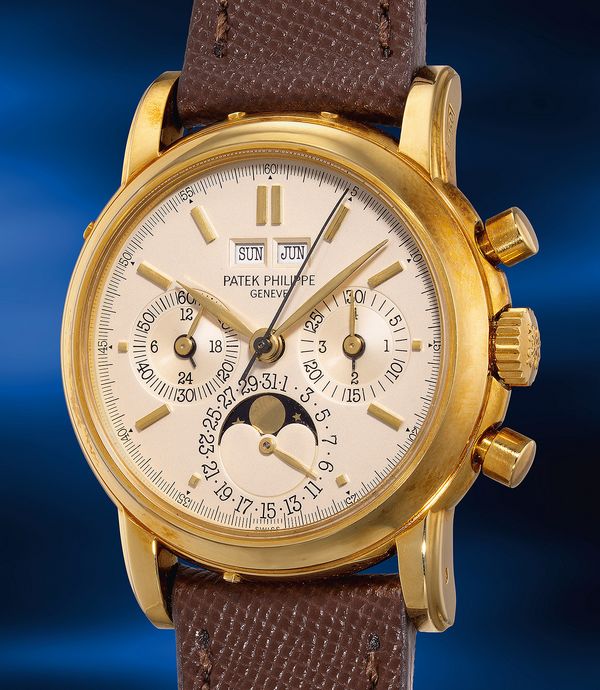
Lot 1054: A 1989 Patek Philippe Second-Series Perpetual Calendar Chronograph Ref. 3970E in 18k Yellow Gold that's included in the Phillips Hong Kong Watch Auction: XXI. Estimate: HKD $480,000 - 960,000
This 18k yellow-gold example belongs to that second series and uses a sapphire screw-down caseback, identifying it as the 3970E. The “E” stands for étanche, the French word for waterproof. One of the standout details here is the set of crisp “big hallmarks,” including the 750 purity stamp and the Atelier Réunis casemaker’s key number 28, both punched cleanly on the outside of the lug. These larger exterior hallmarks only begin to appear midway through second-series production, which makes them especially desirable.
The watch has been cared for with real attention. The case remains sharp, and the gold shows a light, even patina along the band and bezel. It’s a strong, well-preserved example of one of Patek Philippe’s most desirable perpetual calendar chronograph references.
Lot 1055: A 1993 Patek Philippe Third-Series Perpetual Calendar Chronograph Ref. 3970E in Platinum
Estimate: HKD $640,000 - 1,280,000
The reference 3970 represents the third chapter in Patek Philippe’s line of serially produced perpetual calendar chronographs, following the 1518 and the 2499. Released in 1986, it carried forward the familiar design cues – pump pushers, stepped lugs, and a balanced dial layout – while trimming the case diameter from 37.5mm to 36mm.
The technical leap was more dramatic. Patek replaced the long-running Valjoux base movement with the calibre CH 27-70 Q, a heavily reworked version of the Lemania 2310 that brought the complication into a new era. The dial gained a leap-year display and a 24-hour indicator, making the watch more intuitive to read.
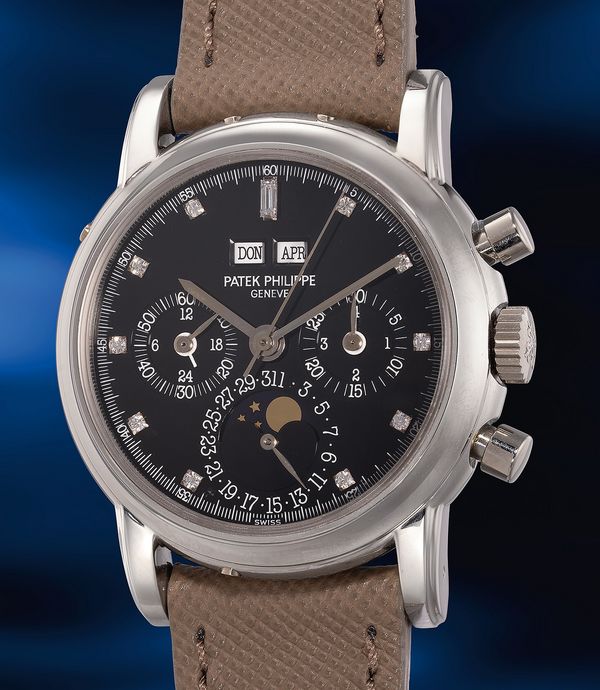
Lot 1055: A 1993 Patek Philippe Third-Series Perpetual Calendar Chronograph Ref. 3970E in Platinum that's included in the Phillips Hong Kong Watch Auction: XXI. Estimate: HKD $640,000 - 1,280,000
This third-series example from 1993 offers something far less common than the standard silvered dial. The semi-glossy black dial carries chaton-set diamond hour markers and a German calendar. The result feels richer and more dramatic than the familiar opaline executions, with the dark surface giving the diamonds an enhanced presence. The hallmarks are visible on the lugs, a detail collectors prize.
Fresh to the market and well-preserved, the watch delivers the mechanics, the history, and an extra layer of scarcity through the dial that sets it apart within the reference. It’s a compelling choice for anyone who wants the classic Patek perpetual calendar chronograph with an extra touch of opulence.
Lot 1056: A 1989 Patek Philippe 'Jump Hour' Limited Edition Ref. 3969R in 18k Pink Gold
Estimate: HKD $160,000 - 320,000
Patek Philippe marked its 150th anniversary in 1989 with a slate of commemorative pieces, each tied to a different chapter of the brand’s history. Among them was the Ref. 3969, a limited edition that revived the tonneau-shaped jump hour watches Patek produced in the late 1920s. It also marked the Stern family’s first jump hour wristwatch since taking ownership of the company in 1932. Inside ticks the calibre 215 HG, a manual-wind movement built around the jump hour mechanism noted by the “HG” designation.
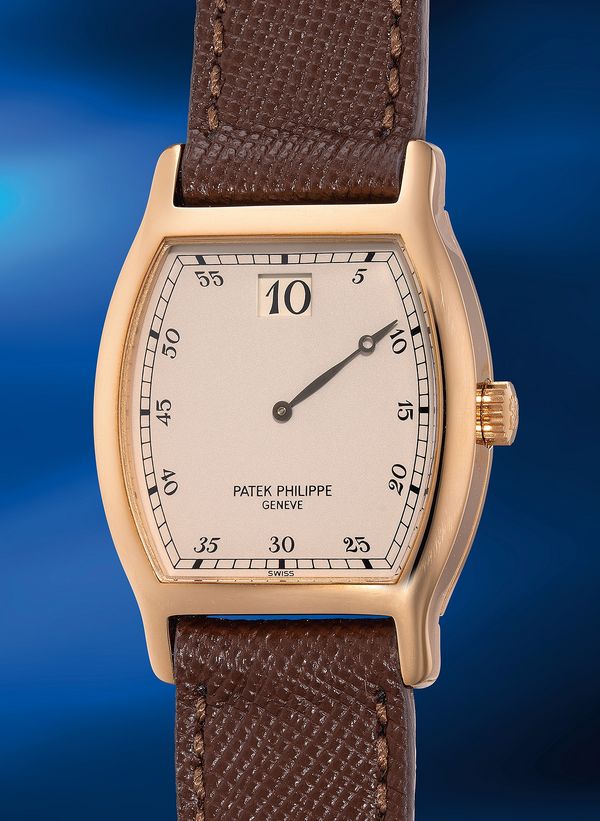
Lot 1056: A 1989 Patek Philippe 'Jump Hour' Limited Edition Ref. 3969R in 18k Pink Gold that's included in the Phillips Hong Kong Watch Auction: XXI. Estimate: HKD $160,000 - 320,000
Production was limited. Patek made 450 examples in pink gold and only 50 in platinum. Jump hour watches tend to catch attention, and this reference has become a quiet favorite for those who like something a little off the beaten path.
This example uses a monobloc case and has been kept in impressive condition. It comes with its Certificate of Origin from Gübelin S.A., along with its attestation and Geneva Seal certificate. The solid caseback carries a sharp anniversary engraving reading “Patek Philippe Genève – 150th Anniversaire – 1839 – 1989,” paired with the movement number.
Patek Philippe has confirmed that the tooling used to manufacture the Ref. 3969 no longer exists, meaning the design will never be revived – a fact that only deepens the appeal of this already uncommon anniversary piece.
Lot 1058: A 1945 Patek Philippe Chronograph Ref. 130R in 18k Pink Gold
Estimate: HKD $200,000 - 400,000
The Patek Philippe Ref. 130 is one of the brand’s great chronographs, a model that manages to feel sporty, elegant, and restrained all at once.
Produced from 1936 through the mid-1960s, it was available mostly in yellow gold, with smaller numbers in pink gold and stainless steel, as well as a rare two-tone steel-and-gold version. Over the years, Patek fitted the reference with a variety of dials – tachymeter scales, pulsation scales, and sector designs – each giving the watch a slightly different character. The movement inside is the calibre 13-130, Patek’s refined take on the legendary Valjoux 13’’’.
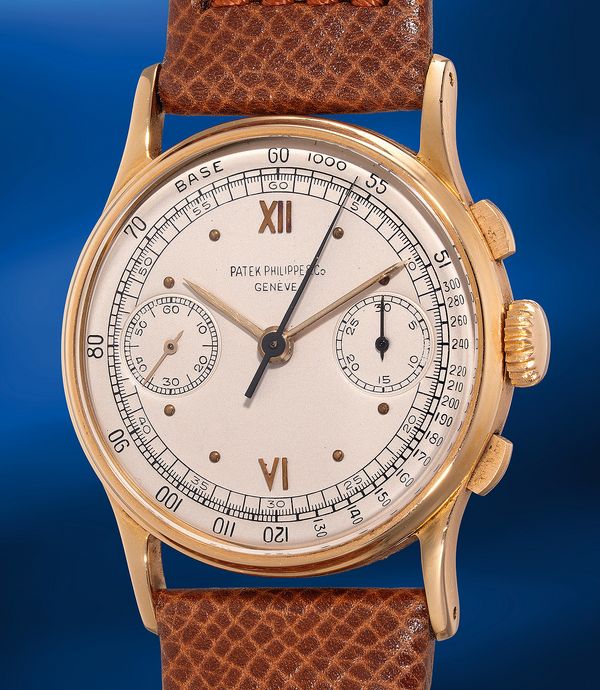
Lot 1058: A 1945 Patek Philippe Chronograph Ref. 130R in 18k Pink Gold that's included in the Phillips Hong Kong Watch Auction: XXI. Estimate: HKD $200,000 - 400,000
This example is crafted in 18k pink gold and dates back to 1945, as confirmed by the Patek Philippe Extract from the Archives. The case remains in excellent condition, with sharp hallmarks on the band and behind the lugs. A confirmation letter notes that the watch was originally sold on 25 May 25 1946, through Freccero & Co.
Vintage Patek chronographs remain among the most coveted watches in the category, and the Ref. 130 holds a special place for collectors. It represents classic Patek design and craftsmanship at a moment when the brand was helpting to define the modern chronograph. This example embodies the preservation, charm, and history that make the reference so enduring.
Lot 1059: A 1952 Patek Philippe Chronograph 'Anse a Ragno' Ref. 1579 in 18k Yellow Gold
Estimate: HKD $160,000 - 320,000
The Patek Philippe Ref. 1579 stands apart the moment you see it. The lugs – six faceted edges on each one – give the watch a sculptural quality that breaks from the softer Calatrava lines seen on most of the brand’s mid-century chronographs.
The look is bold but still balanced, a blend of sharp geometry and classic proportions that earned the watch its long-standing nickname: “Anse a Ragno" – or Spider Lugs. Collectors have used the name since the 1980s, making it one of the earliest and most enduring nicknames in vintage Patek lore.
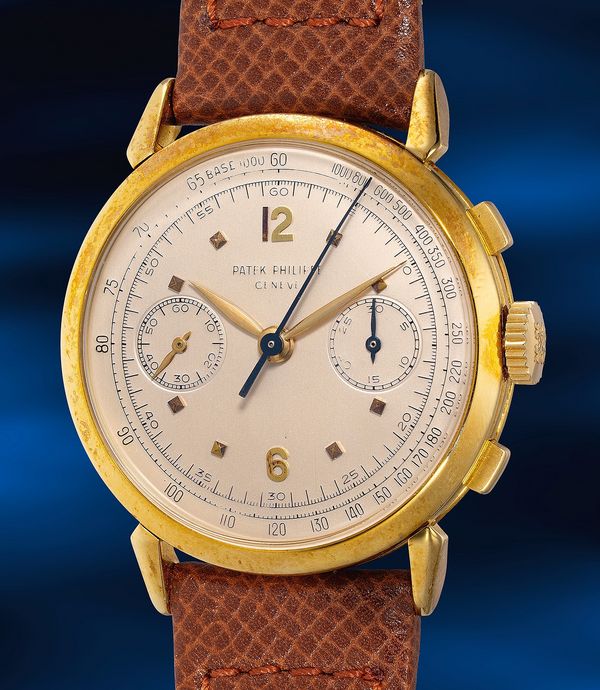
Lot 1059: A 1952 Patek Philippe Chronograph 'Anse a Ragno' Ref. 1579 in 18k Yellow Gold that's included in the Phillips Hong Kong Watch Auction: XXI. Estimate: HKD $160,000 - 320,000
The dial design mirrors the case’s angular energy. Second-series watches, like the one seen here, feature faceted pyramid hour markers instead of the baton markers seen on earlier 1940s examples. The effect is subtle but distinctive, and the style is rarely found on other Patek references. It’s one of the reasons the 1579 feels so different from its contemporaries.
Produced from 1943 into the mid-1960s, the reference came in yellow gold, pink gold, stainless steel, and platinum – all with cases made by Wenger, identified by the Geneva Key 1 stamp. Fewer than 500 pieces were made across all metals, giving the Ref. 1579 a level of exclusivity most modern “limited editions” can’t match. Inside is the Valjoux-based calibre 13'''130, finished to Patek Philippe standards and carrying the Geneva Seal.
Lot 1060: A 1947 Patek Philippe Ref. 1480 in 18k Pink Gold with 'Fancy' Lugs
Estimate: HKD $48,000 - 96,000
Patek Philippe introduced the Ref. 1480 in 1940; it remained in the catalogue through the end of that decade. Made in 18k yellow or pink gold, the watch reflects the early post-Art Deco shift toward sharper lines and modern geometry. The most recognizable detail is the overhanging twin-style lugs, which earned the reference its “twin lugs” nickname among collectors. Inside sits the tonneau-shaped calibre 9’’’90, the movement Patek used for many of its shaped wristwatches well into the 1960s.
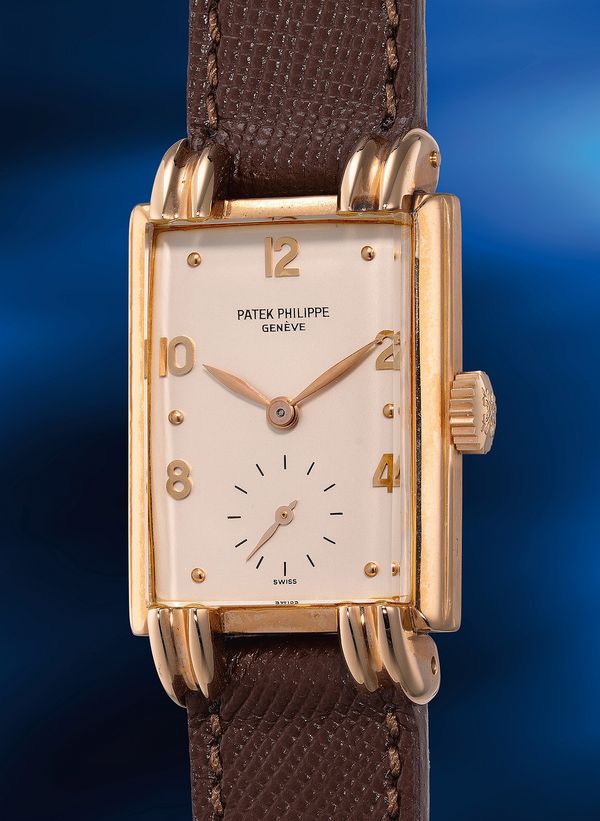
Lot 1060: A 1947 Patek Philippe Ref. 1480 in 18k Pink Gold with 'Fancy' Lugs that's included in the Phillips Hong Kong Watch Auction: XXI. Estimate: HKD $48,000 - 96,000
The case on this example comes from Georges Croisier, the Geneva casemaker identified by the number 5 stamped on the back. Croisier played a key role in shaping mid-century Patek production and even made three of the four known stainless-steel Ref. 1518s. The watch features an ivory dial with the shorter signature seen on period examples. The applied pink gold Arabic numerals, dot markers, and matching hands tie the dial to the case, while the domed crystal adds a gentle lift to the profile.
Accompanied by its Extract from the Archives, the watch is offered in excellent condition. It captures the character of the reference with crisp details, honest aging, and the quiet charm that defines Patek’s shaped watches from the era.
Lot 1067: A Circa 2000 Patek Philippe Calatrava Millenium 'Single-Sealed' Ref. 5032 in 18k Yellow Gold
Estimate: HKD $95,000 - 190,000
As the 21st century drew ever closer, the watch world waited to see how Patek Philippe would mark the occasion. The bar was already sky high thanks to the Calibre 89, unveiled for the brand’s 150th anniversary in 1989.
Patek delivered once again, introducing the Star Caliber 2000 – a pocket watch with 21 complications – as well as the Ref. 5100, a rectangular wristwatch built around a new ten-day movement. Tucked into that same flurry of releases, however, was a quieter but equally thoughtful piece: the Ref. 5032 Millennium, sold only through the Patek Philippe Salon in Geneva.
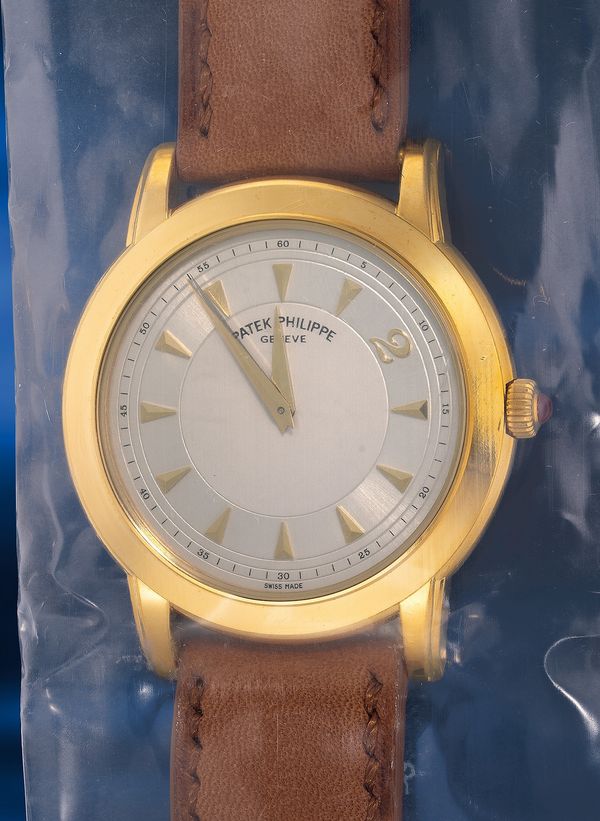
Lot 1067: A Circa 2000 Patek Philippe Calatrava Millenium 'Single-Sealed' Ref. 5032 in 18k Yellow Gold that's included in the Phillips Hong Kong Watch Auction: XXI. Estimate: HKD $95,000 - 190,000
The edition was small. Patek produced just 100 examples in 18k yellow gold, making it one of the rarest anniversary pieces in the modern era. Favre Perret made the 36mm two-piece case, fitted with a screw-down caseback and slim downturned lugs. The silvered dial kept things simple with dagger markers, five-minute hashes, and a single applied Breguet numeral at two o’clock – a nod to the year 2000, and the new millennium.
This example is number 53 in the series and remains in single-sealed condition. Fresh to the market and preserved with great care, it offers collectors a rare chance to own one of Patek Philippe’s most understated and exclusive millennium commemorative watches.
You can view the complete Phillips Hong Kong Watch Auction: XXI auction catalogue here.