Article | Seiko Astronomical Observatory Chronometer Grand Seiko 45gs Vfa Phillips Decade One 2025
The Evolution of Japanese Watchmaking: Seiko, Grand Seiko, and Credor at Decade One (2015-2025)
Over the course of half a century, these six watches capture Japan’s quiet revolution in mechanical and artistic watchmaking.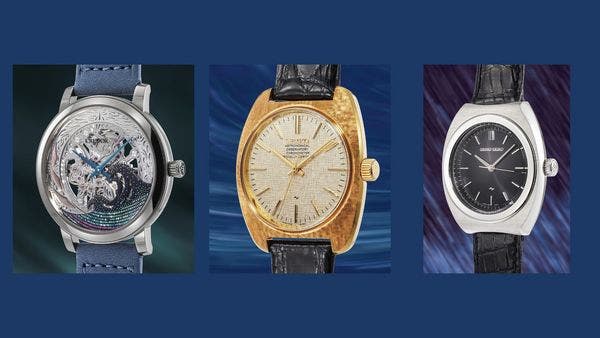
This November, Phillips in Association with Bacs & Russo will celebrate a decade of watch auctions with the Decade One (2015-2025) thematic sale at the Hôtel Président in Geneva. This landmark sale marks the successful first 10 years of the Phillips Watches department, reflecting on the remarkable watches, record-breaking results, and new scholarship that have shaped Phillips Watches since its inaugural auction in 2015.
– By Logan Baker
When Seiko entered the Swiss Observatory Chronometer Trials in the 1960s, few in Neuchâtel or Geneva expected much from a manufacturer based thousands of miles away in Japan. But within a few short years, Seiko’s watchmakers and engineers at the Suwa and Daini facilities upended those assumptions. Their high-frequency movements ranked among the most accurate ever tested, matching – and even surpassing – the best Swiss calibres.
The upcoming Phillips Decade One (2015–2025) auction showcases six watches that chart this extraordinary arc. From Seiko’s chronometric triumphs to Grand Seiko’s obsessive refinement and Credor’s seamless blend of art and mechanics, they show how Japan reshaped the global conversation about what fine watchmaking could be.
Seiko
Seiko’s rise was rooted in discipline and data. In the postwar years, Japan rebuilt its industries on rigorous process control, and Seiko’s watchmakers treated precision timekeeping as both a scientific endeavor and a matter of national pride. The results speak for themselves.
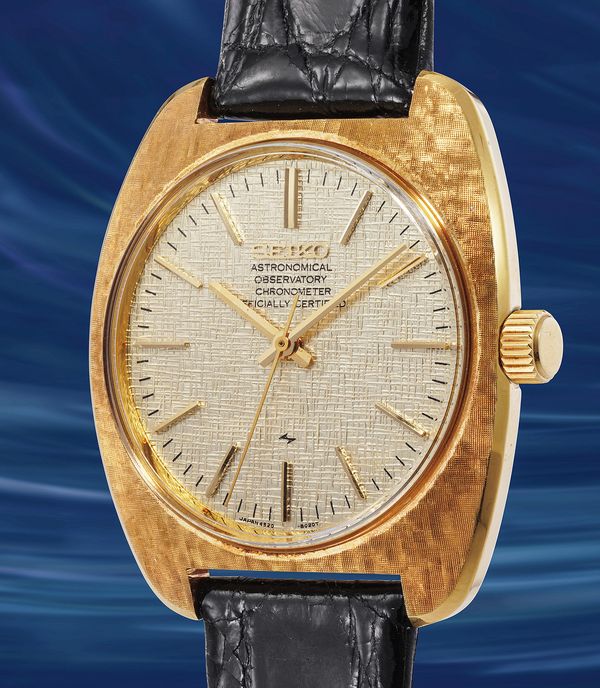
Lot 127: A circa 1970 Seiko Astronomical Observatory Chronometer Ref. 4520-8020 in 18k yellow gold. Included in the Phillips Decade One (2015-2025) auction. Estimate: CHF 15,000 - 30,000
A pinnacle of this effort was the Seiko Astronomical Observatory Chronometer. After 45 days of rigorous testing at the Neuchâtel Observatory, 226 examples of the high-beat 5Hz Seiko calibre 4580A were certified as chronometers. To commemorate this success, Seiko cased the movements in 18k yellow gold with a linen-textured finish and sold them commercially. Priced at ¥180,000 in 1970 – several months’ salary for a typical domestic worker – it was a statement that Japan could stand shoulder-to-shoulder with the Swiss.
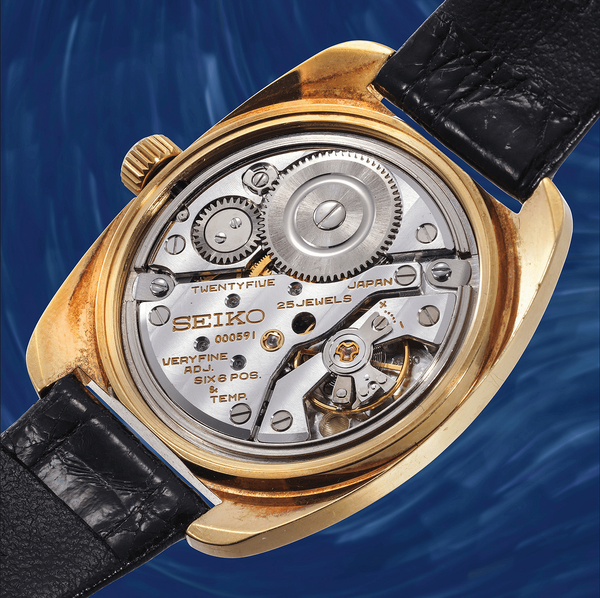
The high-beat calibre 4580A inside the Seiko Astronomical Observatory Chronometer.
That same ambition is also evident in the Seiko Chronograph Ref. 6139-6010, believed to be the first automatic chronograph wristwatch sold to the public. Officially released in May 1969, it beat both the Swiss-made Calibre 11 and Zenith’s famous El Primero to market. Seiko incorporated a column wheel, vertical clutch, and automatic winding mechanism into its robust design.
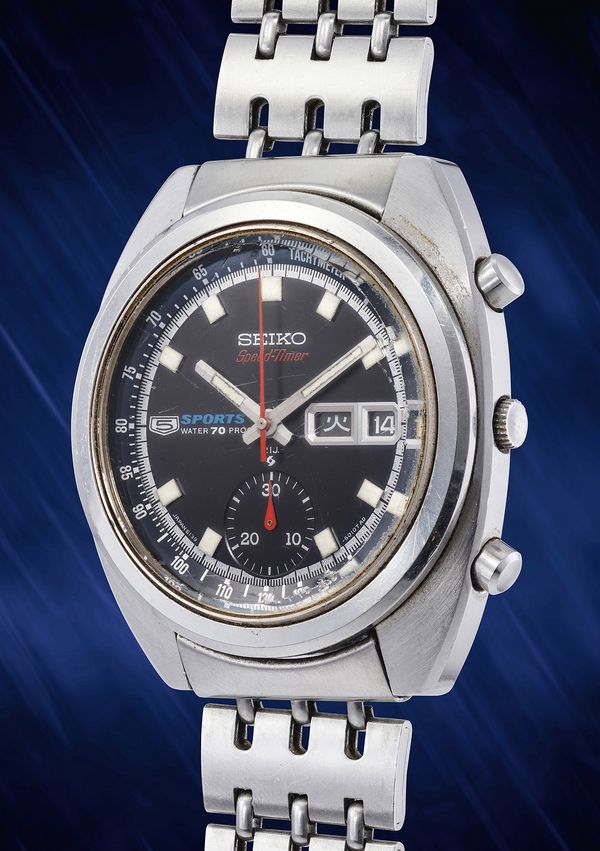
Lot 129: A circa 1969 Seiko Chronograph Ref. 6139-6010 that's included in the Phillips Decade One (2015-2025) auction. Estimate: CHF 3,000 - 6,000
In addition to its historical significance, the Ref. 6139-6010 also evolved into a cultural icon after Bruce Lee famously wore one throughout his film career.
The present example, produced in January 1969, is among the earliest known surviving pieces.
Grand Seiko
Where Seiko’s Observatory watches embodied scientific precision, Grand Seiko represented the philosophical side of the same pursuit. Since its 1960 inception, the brand’s mission has been clear and uncompromising: to build the world’s finest watches. Not the flashiest, but the most precise, legible, and reliable – watches that can be worn every day.
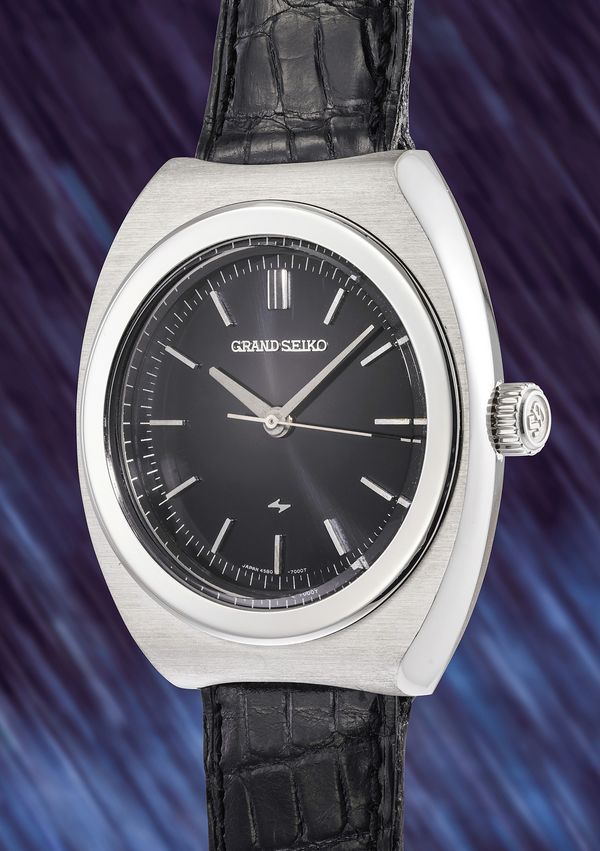
Lot 153: A circa 1970 Grand Seiko 45GS V.F.A. Ref. 4580-7000 that's included in the Phillips Decade One (2015-2025) auction. Estimate: CHF 8,000 - 16,000
That philosophy arguably reached its zenith in the late 1960s with the 45GS V.F.A. (Very Fine Adjusted). The calibre 4580A inside delivered an average rate of –2 to +2 seconds per day, guaranteed to stay within one minute per month for at least two years.
Its design reflects Japanese modernism at its best: crisp planes, razor-sharp edges, and a deep blue dial. The “lightning bolt” Daini “S” logo also injects a subtle visual spark. The example offered at Decade One remains in outstanding condition.
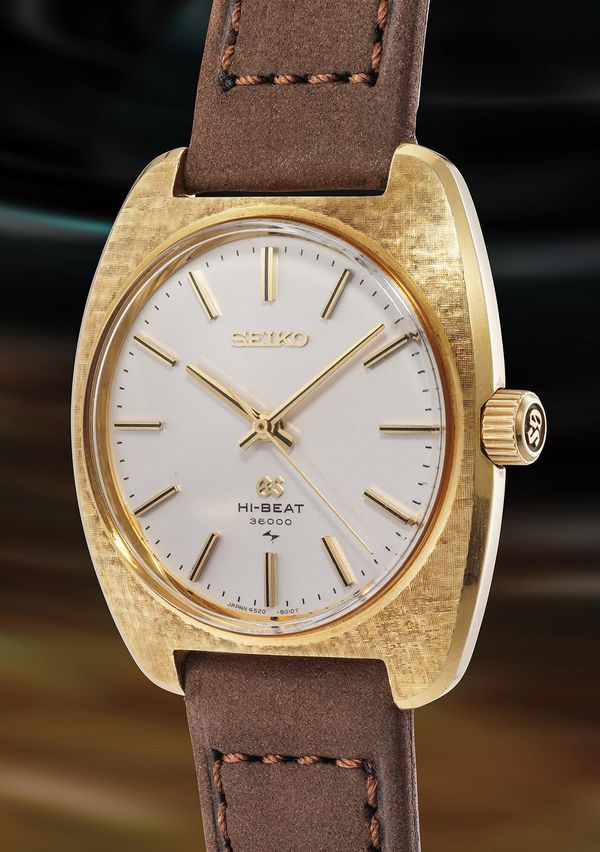
Lot 128: A circa 1970 Grand Seiko Hi-Beat Ref. 4520-8010 that's included in the Phillips Decade One (2015-2025) auction. Estimate: CHF 2,000 - 3,000
Closely related is the Grand Seiko Hi-Beat Ref. 4520-8010, which shares both the case and movement architecture with Seiko's Astronomical Observatory Chronometer.
It represents the democratization of Seiko’s precision research, translating Observatory-grade movement designs into a consumer-ready product. The manual-wind calibre 4520A operates at 36,000 (5Hz) vibrations per hour, a high-frequency rate that few other manufactures attempted at the time.
Credor
If Seiko stands for science, and Grand Seiko for philosophy, then Credor embodies artistic craft.
Launched in 1974, Credor became Seiko’s platform for haute horlogerie – an atelier where Japan’s best watchmakers, engravers, and lacquer artists collaborated to create watches defined by restraint and refinement.
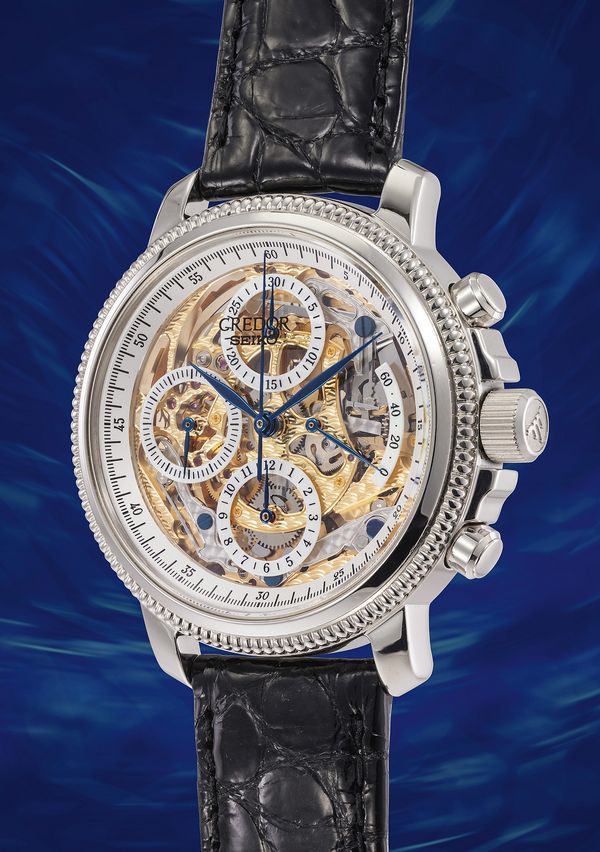
Lot 152: A 2006 Credor Skeleton Chronograph Ref. GBBL993 that's included in the Phillips Decade One (2015-2025) auction. Estimate: CHF 6,000 - 12,000
One standout of Credor's work is the Skeleton Chronograph Ref. GBBL993 from 2006. Its platinum case houses the calibre 6S99, a fully integrated in-house chronograph adorned with silver-plating, perlage, and engraved golden bridges inspired by traditional Japanese temple architecture.
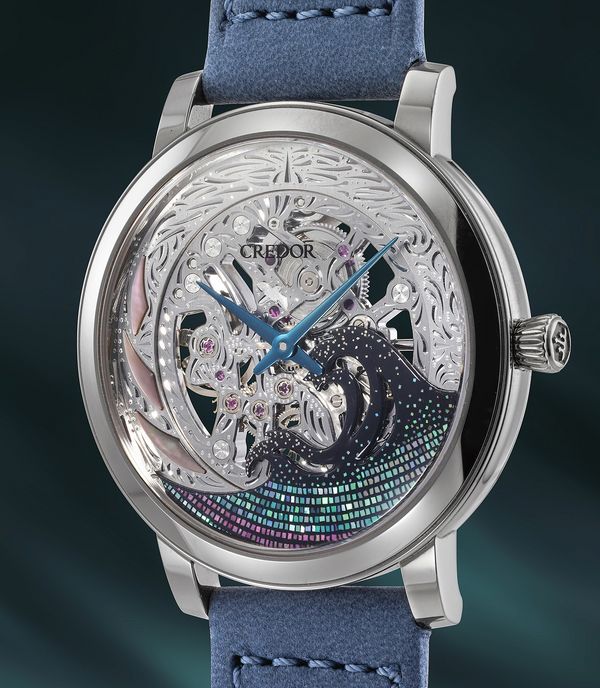
Lot 42: A circa 2016 Credor ‘Great Wave’ Limited Edition Ref. GBBD963 that's included in the Phillips Decade One (2015-2025) auction. Estimate: CHF 5,000 - 10,000
Fast forward a decade, and Credor reaffirmed its artistic edge with the “Great Wave” Limited Edition Ref. GBBD963, introduced in 2016. Produced in just 30 examples, it draws on Katsushika Hokusai’s iconic, Edo-period woodblock print, “The Great Wave off Kanagawa.”
Master lacquerware artist Issyu Tamura created the wave motif on each dial by hand, layering lacquer inlaid with mother-of-pearl to form a purple-green-blue gradient, while master engraver Kiyoshi Terui oversaw the wave-like engraving of the 1.98-mm-thin calibre 6899A and added a depiction of Mount Fuji to its balance cock.
The Japanese Way of Watchmaking
Together, these six watches reveal the breadth of Japanese watchmaking. Unlike Switzerland’s centuries-old guild tradition, Japan’s international rise unfolded within a single generation, driven by dedication and collective effort rather than inherited craft.
More than 50 years later, those values endure. Seiko, Grand Seiko, and Credor no longer chase validation from abroad; they define their own standard.
You can view the complete Phillips Decade One (2015-2025) auction catalogue here.