Article | Specialist Picks Design London November 2025
Timeless Design: Specialists' Picks
Our London Design team shares their expert selections from the upcoming auction.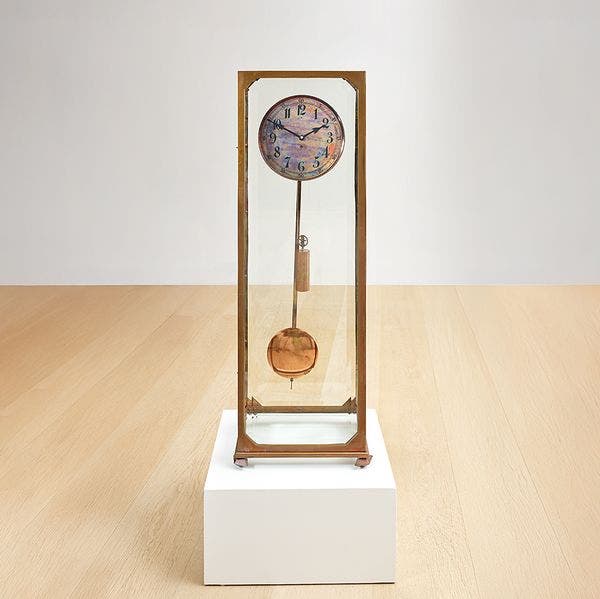
Adolf Loos, Rare longcase clock, circa 1904. Design London.
Adolf Loos
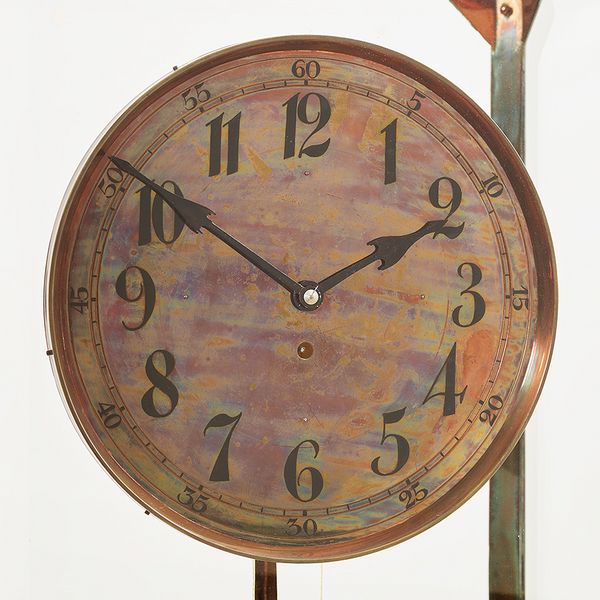
Adolf Loos, Rare longcase clock (detail), circa 1904. Design London.
Sofia Sayn-Wittgenstein, Head of Department, London
Adolf Loos’ clock feels astonishingly contemporary — it is almost impossible to believe it was conceived over 120 years ago. Stripped of ornament, it captures the very essence of Loos’ philosophy: beauty born of clarity and purpose. I am especially drawn to how he makes the clock face appear to float in space, suspended within its perfectly proportioned glass case. The delicate, diamond-shaped legs add just enough lift and grace, grounding the structure while keeping it light. There is an almost architectural precision to the composition — every line deliberate, every element essential. Loos’ rejection of decoration feels not austere but liberating: time, distilled to its purest form. For me, it is a reminder that true modernity lies not in novelty, but in timeless restraint.
Ico Parisi
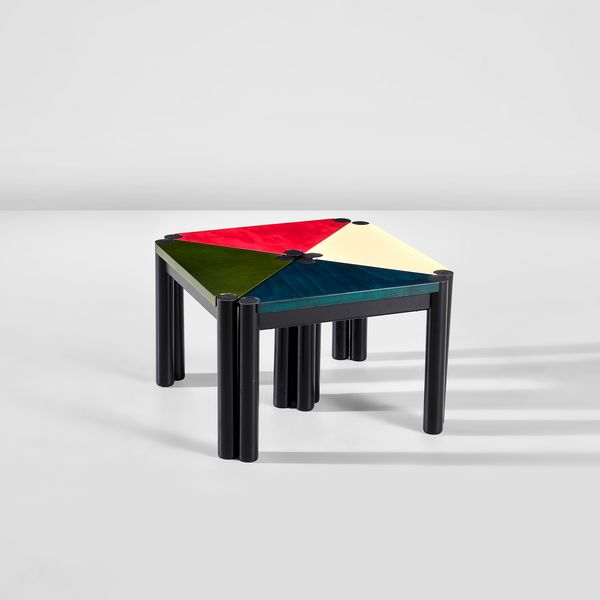
Ico Parisi, Set of four modular side tables, circa 1970. Design London.
Antonia King, Head of Sale, Design
What drew me to these tables? Without a moment of hesitation — the colours. However, going beyond this, they are in equal parts functional, versatile and immensely joyful. Parisi spent much of his life collaborating and surrounding himself with other prominent architects, artists and designers, including Lucio Fontana, Fausto Melotti, Mario Radice and Gio Ponti, to name but a few. Could it be that the pink dyed wood we see here was inspired by the iconic Fontana pink? To me, these four modular tables embody the humanistic spirit of how great design can enhance modern life and living. With their ingenious yet simple geometric form, we have before us an almost childlike game or kind of tangram with seemingly endless colour combinations and arrangements, easily movable and adaptable to suit every need. Parisi himself resisted being pigeonholed into any one category (architect, furniture or industrial designer, photographer or conceptual artist), instead his passions and his work were multi-faceted and often blurred the boundaries between these different disciplines, reflecting a post-war optimism with a holistic vision of design as a way of shaping social practice and experience which still very much resonates today.
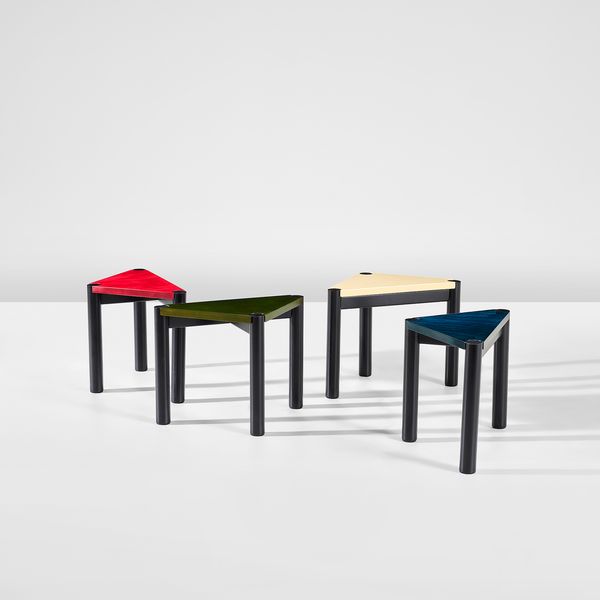
Ico Parisi, Set of four modular side tables, circa 1970. Design London.
Pietro Chiesa
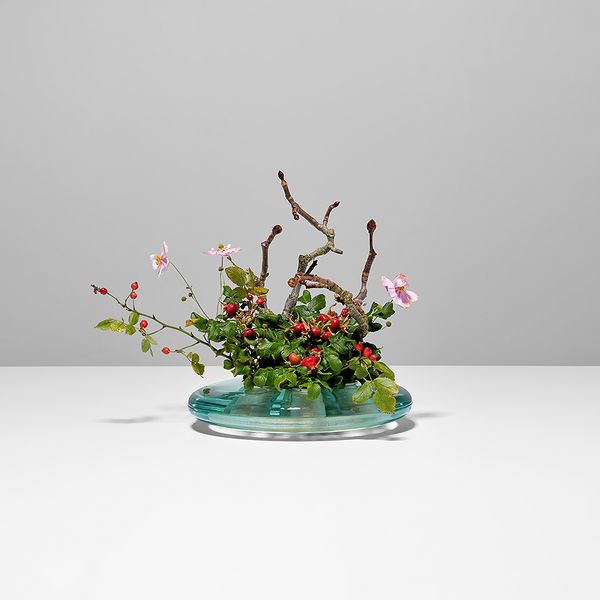
Pietro Chiesa, Flower holder, circa 1934. Design London.
Margherita Manca, Senior Cataloguer, Design
The art of the centrotavola, a decorative centrepiece, has long been a cherished tradition in Italian homes. My grandmother, who loved hosting, always made sure her table featured one with carefully arranged flowers, believing that a well-chosen centrepiece could transform any meal into an occasion. This flower holder by Pietro Chiesa for Fontana Arte, which could certainly be used as a centrepiece, embodies that very spirit, combining elegance and functionality. Designed with six individual brass receptacles set into a bold glass structure, it comes with a special brass key to disassemble the holders, an ingenious touch reflecting Chiesa’s attention to both form and practicality. The thick, luminous glass captures and refracts light while the brass fittings offer a subtle contrast, reinforcing the piece’s sculptural presence. As a centrotavola, it allows for careful flower arranging, encouraging rhythm and balance. It was great fun to shoot with beautiful seasonal branches, carefully selected by our team. Chiesa, who directed Fontana Arte during a period of intense innovation, transformed glass into a medium of experimentation. This piece exemplifies the company’s mastery of materials and technique to create a beautiful object, perfectly suited to both display and ritualised daily use.
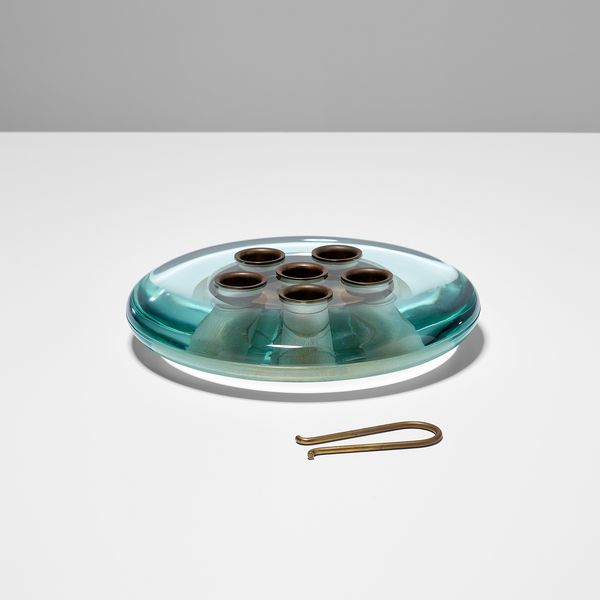
Pietro Chiesa, Flower holder, circa 1934. Design London.
Yoichi Ohira
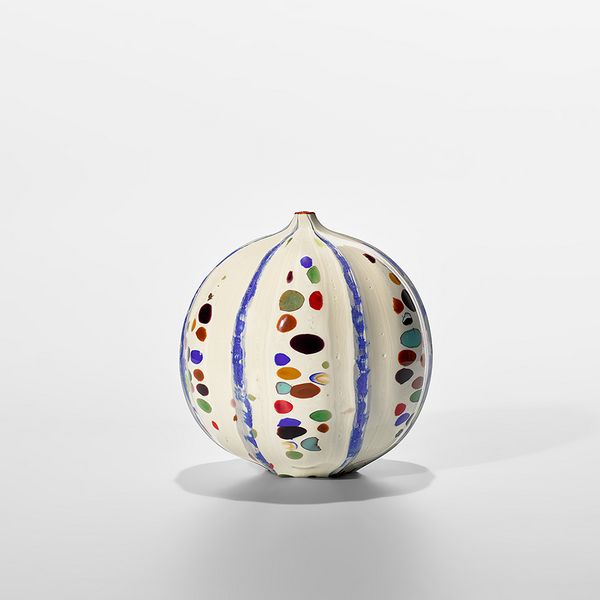
Yoichi Ohira, 'Coriandoli' vase, 2001. Design London.
Madalena Horta E Costa, Specialist, Design
Yoichi Ohira’s luminous blown glass vessels have long been a source of fascination for me. Compact and light forms that possess extraordinary depth and compositional balance — extremely complex yet imbued with a profound sense of stillness. His work speaks in a distinctive visual language: original, refined, and deeply poetic. Ohira’s unique ability to abstract the natural beauty of Japan and merge it with the precision and tradition of Italian glassmaking has drawn comparisons to Émile Gallé, yet his voice remains entirely his own. We are delighted to be presenting five examples of Ohira’s work — each a testament to his technical mastery and artistic vision. Selecting a single piece is no easy task. Among them, Coriandoli is especially captivating — joyful and playful, yet serene. Named after the Italian word for confetti, the piece seems to crystallise a fleeting moment of celebration. Its softly rounded, organic form is marked with vertical blue striations and a scattering of vivid murrine inserts — like confetti suspended in air, frozen mid-fall. The interplay of deep purples, fiery reds, turquoise, and amber against the luminous ivory ground gives the impression of movement held in stillness. To me, it evokes the gentle hush that follows festivity — the calm after joy — like waves washing over colorful fragments on a pale sand shore.
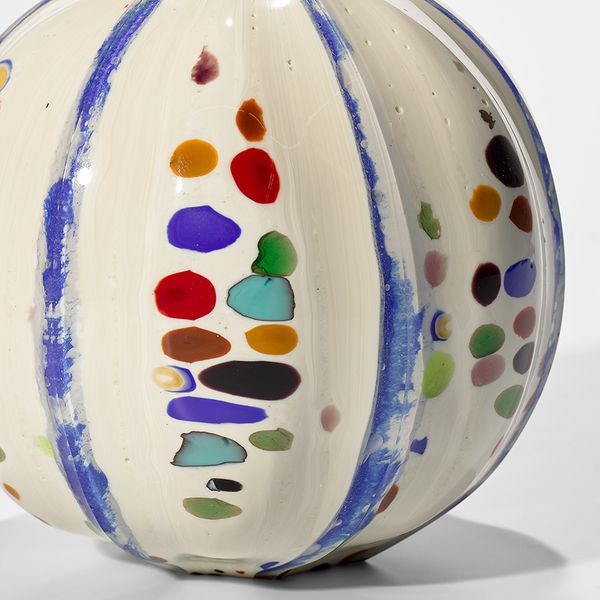
Yoichi Ohira, 'Coriandoli' vase, 2001. Design London.
Josef Hoffmann
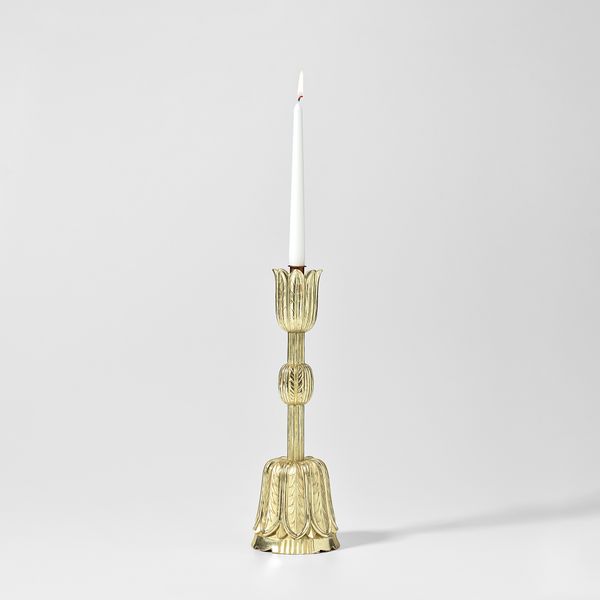
Josef Hoffmann, Candlestick, model no. 40, circa 1934. Design London.
Carlotta Pintucci, Cataloguer, Design
Imagine this: you are in your living room. It’s dark outside, and rain taps gently against the windows, the kind of rain that makes you grateful to be indoors. The only source of light is a single candle, its flame flickering softly, held aloft by a striking candlestick, a masterpiece by Josef Hoffmann. The warm glow dances across the gilded wood, catching every curve and corner of its perfectly balanced form. Shadows stretch gently across the walls, mirroring the geometric clarity that defines Hoffmann’s design. In this quiet moment, the candlestick becomes architecture in miniature. This is the essence of Hoffmann’s philosophy, and the spirit of the Wiener Werkstätte: that even the smallest elements in a room contribute to the beauty and harmony of the whole. Design is not separate from life, it is life, expressed through form and function. In the background, Billy Joel’s Vienna plays softly, and for a moment, it feels as if the Vienna Secession still breathes through the room: refined, modern, and deeply human.
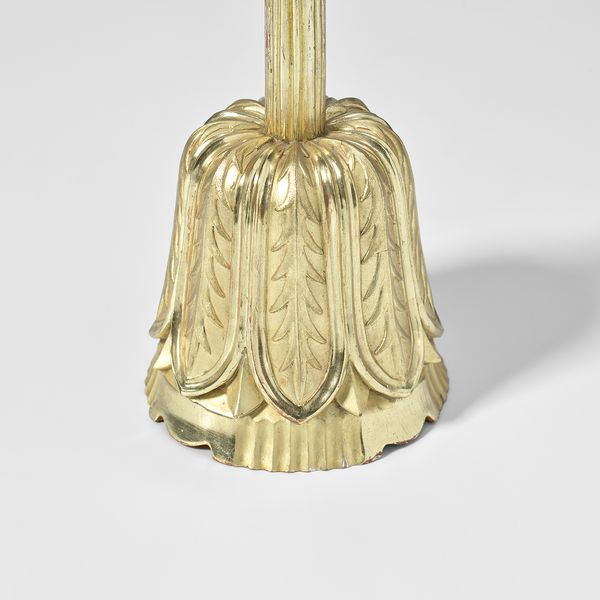
Josef Hoffmann, Candlestick, model no. 40, circa 1934. Design London.
Gerald Summers
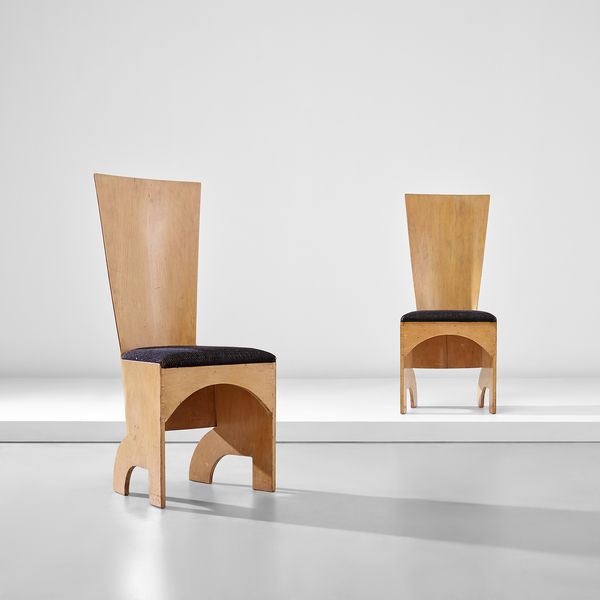
Gerald Summers, Pair of high back chairs, circa 1934. Design London.
Rosie Simon, Intern, Design
In her team pick for the Spring sale this year, Cecilia Moure, on our New York Design team, discussed the privilege we have of spending so much time with pieces and the deeper understanding and new tastes we develop through this. I found myself reflecting on her words as I considered the draw I felt to Gerald Summers’ High back chairs.
While neither my personal style nor my academic interests typically lean towards the minimal, they kept calling me back. Perhaps it is how surprising they are: designed in the 1930s, their form is a nearly unbelievable precursor to the groovy modernism of the later century. Or perhaps it is their considered nature, each dramatic feature serving a specific purpose: calming the mind plagued by modernity and subtly, creatively ensuring comfort. Influenced by his wife and business partner Marjorie Butcher, and free-form modernist poets, nearly a century after their creation, the chairs still feel fresh and still respond to the same challenges Summers set out to conquer. Little of this context can be gleaned by a quick glance at the chairs, which is testament to their timelessness, and Summers’s vision of modernity, but for me they stand also as a symbol of the value of time spent with an object, of open-mindedness and the power of good design to carry stories across the years.
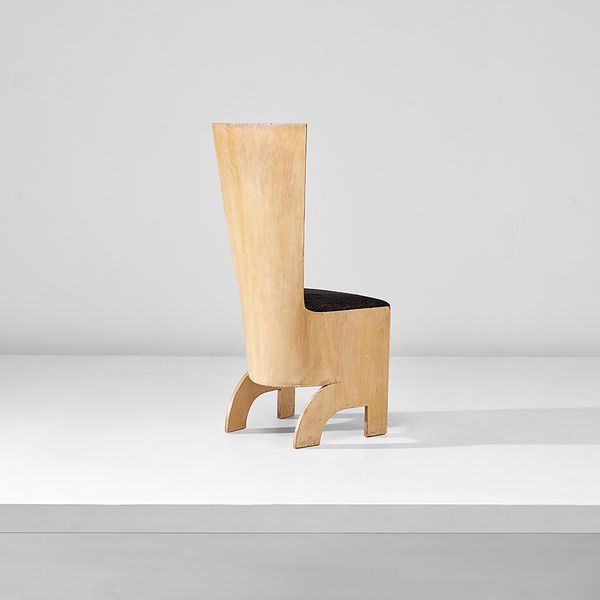
Gerald Summers, Pair of high back chairs, circa 1934. Design London.