Article | Five Things That Set Arredoluce Apart
Five Things That Set Arredoluce Apart
Behind the firm that illuminated modern Italy in more ways than one.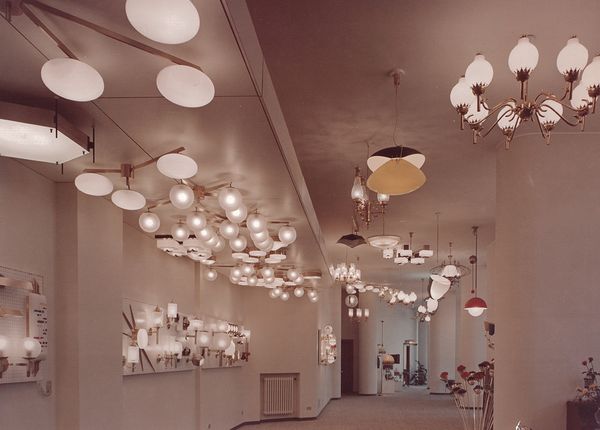
Archival image of ceiling lights on display in the Arredoluce showroom in Monza, featuring Angelo Lelii’s 'Tre lune' and 'Sei lune' ceiling lights (lots 108, 109), shown alongside Ettore Sottsass’s 'Balena' ceiling light, model no. 12600 (lot 113). Credit: Arredoluce Archives/Fragile Milano
From the post-war optimism of the 1940s to the radical experimentation of the 1970s, Arredoluce stood at the intersection of innovation, elegance, and technical mastery. More than just a lighting company, it was a cultural force that helped define the modern Italian aesthetic. What follows is a closer look at the key qualities that set Arredoluce apart: from the visionary leadership of Angelo Lelii and a deep culture of collaboration, to a sculptural approach to lighting and an uncompromising dedication to craftsmanship.
1. Angelo Lelii’s Vision
What truly set Arredoluce apart was the singular vision of its founder, Angelo Lelii. Established in Monza in 1943, in the heart of Italy’s design-rich Brianza region, Arredoluce emerged as a brand where technological precision met sculptural elegance. Lelii, originally from Ancona, brought a distinctive creative energy to his adopted city, forging close ties with local society and quickly earning a reputation for his refined, Liberty-inspired lamps.
Lelii’s ambition went far beyond decorative lighting. He approached design as a synthesis of art, engineering, and atmosphere, imagining light not only as function, but as experience, too. Arredoluce’s lamps were not mass-produced artifacts — they were crafted statements, distinguished by their geometric clarity, material sophistication, and uncompromising attention to detail.
He was also a technical innovator: from solid brass components turned from a single block to seamless welds and the brand’s signature switches, every element reflected his obsession with quality. This perfectionism helped define the identity of Arredoluce within the wider Made in Italy movement, a name synonymous with craftsmanship, modernity, and vision.
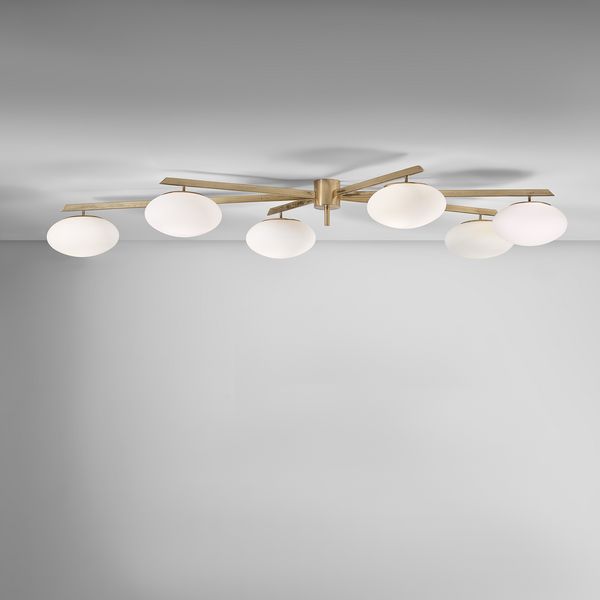
Angelo Lelii, 'Sei lune' ceiling light, circa 1961. Design London.
A particularly emblematic lot is the 'Sei lune' ceiling light (lot 109). With its six opaline glass diffusers radiating from a central brass structure like stylised solar rays, it embodies Lelii’s belief in light as both architecture and poetry. Each detail, from the soft glow of etched glass to the radiating brass arms, speaks to the balance of form and function that defined Arredoluce.
Even the company’s name and logo — a blend of arredo (furniture) and luce (light), set in a clean red typeface designed by Lelii himself — reinforced the brand’s clarity of purpose and identity. In every sense, Angelo Lelii didn’t just build a company; he shaped a new language of Italian lighting design.
2. A Culture of Collaboration
Another defining feature that set Arredoluce apart was its genuine culture of collaboration. While many post-war manufacturers relied on anonymous production or licensed designs, Arredoluce, under Angelo Lelii’s direction, became a creative laboratory, forging close partnerships with some of Italy’s most visionary designers, among them Ettore Sottsass, Nanda Vigo, Gio Ponti, and Vico Magistretti.
Lelii’s openness to experimental ideas, paired with the company's technical expertise, created a rare synergy between industrial capability and artistic innovation. His charisma and unwavering commitment to quality attracted designers who sought more than just commercial outcomes, they found in Arredoluce a space for material research, sculptural exploration, and conceptual design.
Ettore Sottsass: Beyond Function
In the mid-1950s, Ettore Sottsass began designing lamps for Arredoluce, during a period when he was challenging the strict rationalism of modernist design. From 1956, he introduced industrial plastics into lighting — a radical gesture at the time. His work between 1957–58, including prototypes and small series, explored stacked geometric forms and experimental materials such as Plexiglas, joined by fine metal wires.
A standout result of this collaboration is the ‘Balena’ ceiling light, model no. 12600 (lot 113), a striking composition of layered volumes that anticipates themes later seen in Sottsass’ ceramic and postmodern work. The ceiling light suspended an aluminium form suggestive of a whale’s movement, fluid, organic, and quietly monumental. Held by nylon threads, it seems to float in space, achieving a delicate balance between industrial minimalism and natural form. It embodies Arredoluce’s willingness to push design beyond the conventional.
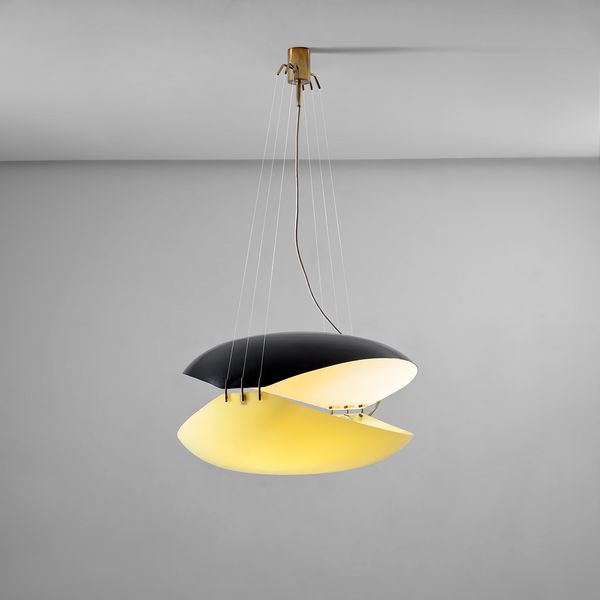
Ettore Sottsass, Jr., 'Balena' ceiling light, model no. 12600, circa 1957. Design London.
Nanda Vigo: Sculptural Precision
Another key collaborator was Nanda Vigo, whose transdisciplinary approach blurred boundaries between art, architecture, and design. First meeting Lelii in San Francisco, Vigo described him as an “enlightened entrepreneur” — one who championed both innovation and the dignity of craftsmanship.
Vigo’s contributions often took the form of limited editions and prototypes, combining industrial ambition with artisanal finesse. Vigo approached light as an almost immaterial substance to be shaped and diffused. Her work played with transparency, reflection, and ephemeral surfaces, often using steel and glass to create objects that were as much about perception as they were about form. Her 1968 Prototype floor lamp, model no. 14033 (lot 107) embodied this philosophy, merging architectural presence with a sense of ambient transformation. Crafted in polished steel with bold cylindrical and parallelepiped forms — a vocabulary difficult to manufacture at the time. Her use of glass surfaces gave these works a distinctive, reflective quality, transforming light into spatial experience.
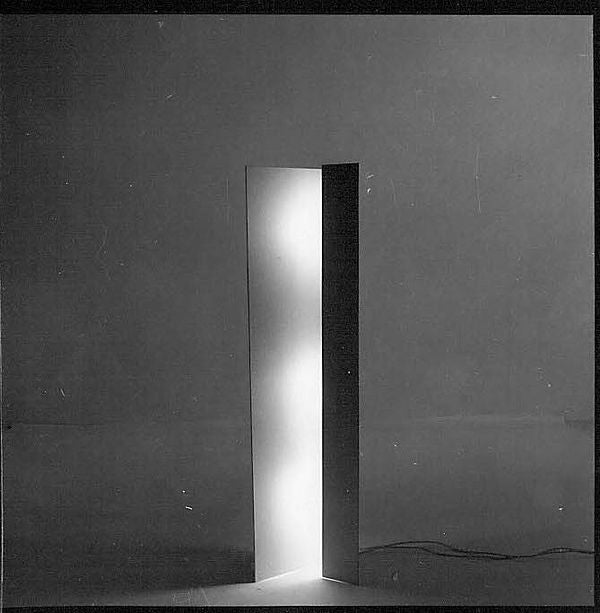
Archival photograph of the Prototype floor lamp, model no. 14033 designed by Nanda Vigo (lot 107). Credit: Arredoluce Archives/Fragile Milano
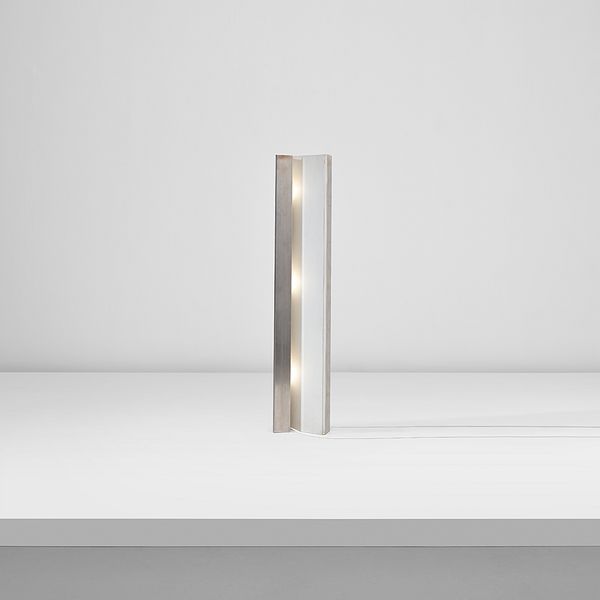
Nanda Vigo, Prototype floor lamp, model no. 14033, 1968. Design London.
Together, these collaborations cemented Arredoluce’s identity as a company where radical design thinking met technical excellence — a rare model of partnership that produced some of the most refined and forward-looking lighting of the 20th century.
3. A Sculptural Aesthetic
A key element that set Arredoluce apart was its commitment to lighting as a sculptural medium, not merely a functional necessity, but a vital component of spatial and artistic composition. In contrast to manufacturers focused on utility or mass production, Arredoluce treated every fixture as a carefully conceived three-dimensional object, designed to engage both environment and observer.
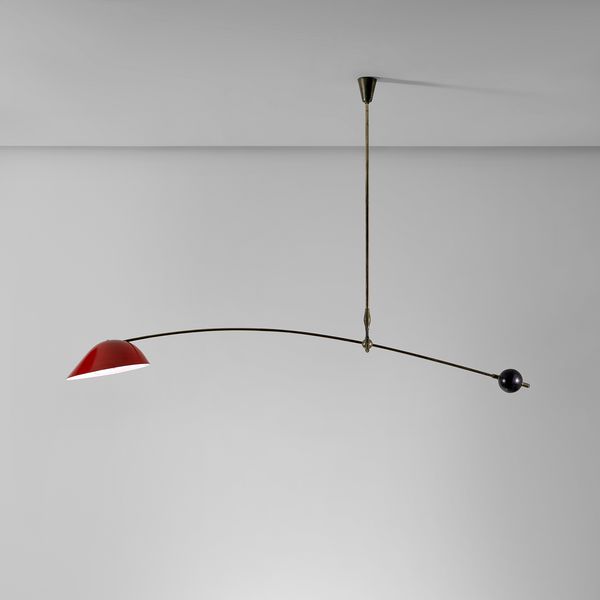
Angelo Lelii, Ceiling light, model no. 12432, circa 1953. Design London.
This vision was pioneered by Angelo Lelii, whose work combined geometric rigour with poetic restraint. His Ceiling light, model no. 12432 (lot 111), with its brass structure appearing perfectly poised through a delicate play of balance (“un gioco di equilibri”), exemplifies this ethos: a lighting piece that functions as both instrument and sculpture, shaping light with the sensitivity of an artist.
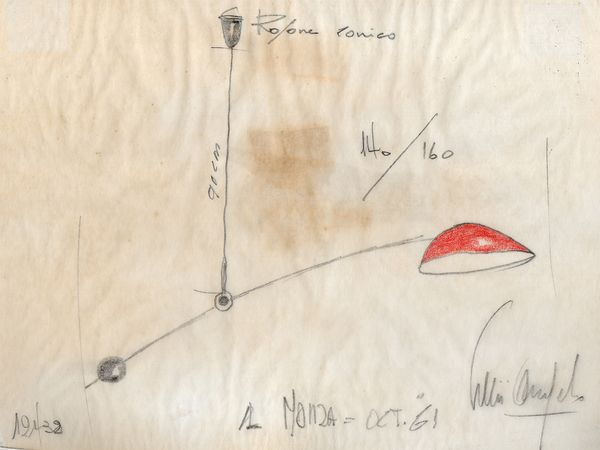
A signed archival drawing of the model Ceiling light, model no. 12432 (lot 111) designed by Angelo Lelii, completed in 1961, a few years after the model’s initial design. Credit: Arredoluce Archives/Fragile Milano
These designs defined spaces, acting as visual anchors that heightened atmospheres and emotional resonance. Arredoluce’s lamps blurred the line between industrial design and fine art, earning their place in museums and private collections alike.
At their core, these pieces expressed a belief that lighting should be intellectually engaging and emotionally compelling — functional artworks that invite contemplation, interaction, and aesthetic delight. It is this sculptural sensibility, underpinned by technical sophistication, that ensures Arredoluce’s legacy as a pioneer of modern Italian design.
4. Technical and Material Innovation
Arredoluce distinguished itself through a relentless pursuit of technical precision and material experimentation. Unlike many of its contemporaries, the company consistently pushed the boundaries of what lighting could do and how it could be made. It embraced modern materials such as aluminium, acrylics, and opaline glass, combining them with mechanical ingenuity to create lighting that was both functional and dynamic.
Many Arredoluce models featured adjustable arms, pivoting heads, concealed wiring, and innovative methods of light diffusion, allowing the user to shape and direct light with unprecedented control. Rather than passive décor, these fixtures became interactive tools, responsive to the changing needs of domestic and architectural space.
This bold technicality was deeply rooted in Angelo Lelii’s intuitive, hands-on approach to materials. Among his lifelong passions was a particular love for glass, especially the Venetian murrine. As his son Luciano recalled, Lelii would personally travel to Venice to select and acquire glass from Venini, a testament to his attention to detail and commitment to quality. From the 1960s onwards, several Arredoluce models incorporated these refined elements. One notable example is the Set of seven wall lights (lot 112), in which the use of murrine reflects a seamless blend of craft heritage and contemporary form.
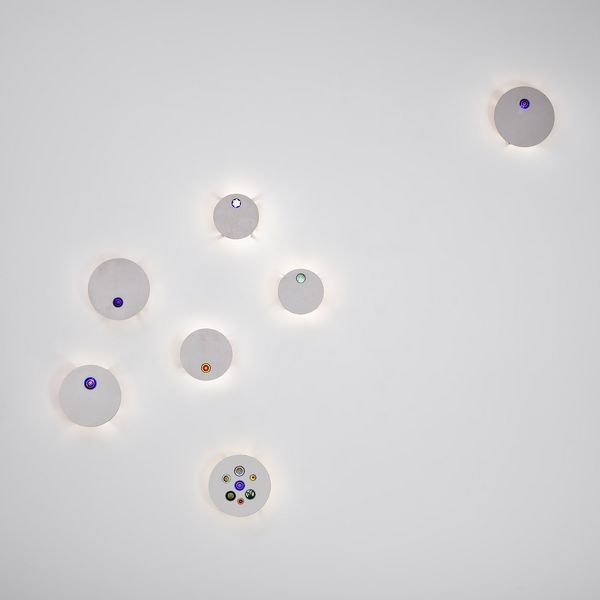
Angelo Lelii, Set of seven wall lights, circa 1966. Design London.
Through this combination of material daring and engineering elegance, Arredoluce helped redefine lighting design for the modern interior, bringing together form, function, and sensory richness in ways that still resonate today.
5. Consistent Craftsmanship
While Arredoluce embraced modernity in form and material, it remained deeply rooted in a tradition of exceptional craftsmanship. Every piece was meticulously produced in Italy, often by highly skilled artisans, ensuring a standard of construction that matched the company’s bold design ethos.
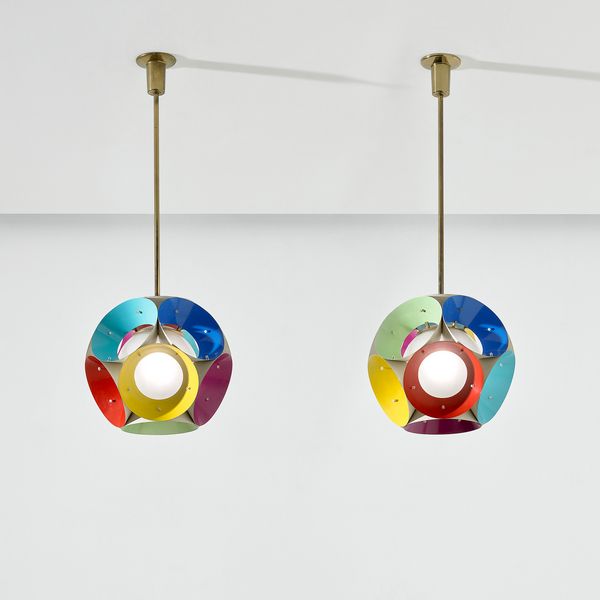
Angelo Lelii, Pair of rare ceiling lights, circa 1963. Design London.
This unwavering attention to detail — visible in flawless welds, precision-machined components, and carefully finished surfaces — ensured that Arredoluce’s creations were not only visually striking but also mechanically robust and enduring. It is this combination of innovative design and rigorous build quality that explains why so many of the brand’s pieces have survived in remarkable condition and are now prized as collectible icons of 20th-century design.
Arredoluce did not treat craftsmanship as secondary to concept; instead, it was integral to the vision — a guarantee that form, function, and finish would always align.
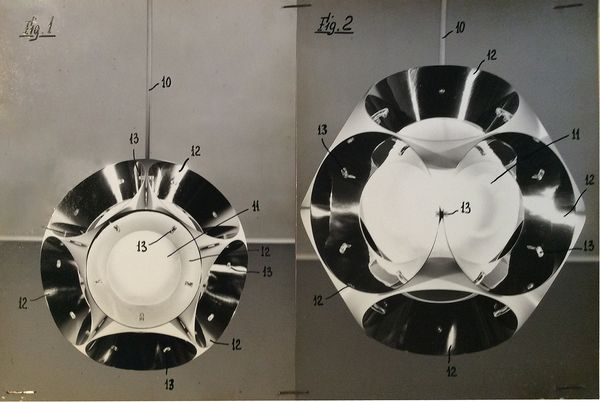
Archival image of the prototype of the Pair of rare ceiling lights designed by Angelo Lelii (lot 106). Credit: Arredoluce Archives/Fragile Milano