Article | Best German Watches At Phillips Decade One 2015 2025 Durrstein Lange Klings
Made in Germany: The Best German-Made Watches at Decade One (2015-2025)
The Swiss make the best watches in the world – the Germans, too.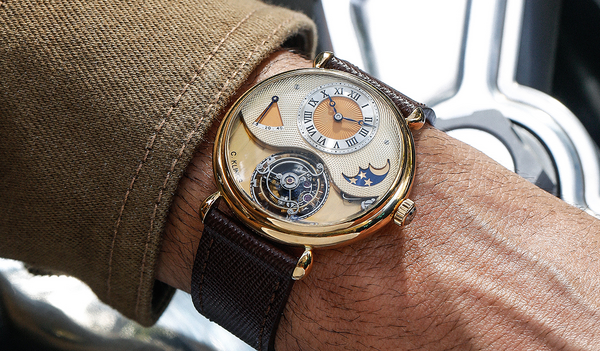
This November, Phillips in Association with Bacs & Russo will celebrate a decade of watch auctions with the Decade One (2015-2025) thematic sale at the Hôtel Président in Geneva. This landmark sale marks the successful first 10 years of the Phillips Watches department, reflecting on the remarkable watches, record-breaking results, and new scholarship that have shaped Phillips Watches since its inaugural auction in 2015.
– By Logan Baker
German watchmakers helped lay the foundation of modern horology. In 19th-century Saxony, Ferdinand-Adolph Lange transformed Glashütte from a struggling mining town into a center of precision engineering, creating the framework for German watchmaking that continues today.
Those traditions helped to establish the standards of precision, artistry, and innovation that still guide watchmaking today. Decade One (2015-2025) celebrates this legacy with a curated selection of German masterpieces, alongside a dedicated non-selling exhibition exploring 180 years of Glashütte craftsmanship.
Lot 209: A Circa 1900 A. Lange & Söhne Quarter Repeating Grande & Petite Sonnerie in 18k Yellow Gold
Estimate: CHF 150,000 - 300,000
The present quarter-repeating Grande & Petite Sonnerie by A. Lange & Söhne stands out as a masterpiece of both technical ingenuity and artistic expression.
Completed around 1900, it belongs to a rare class of pocket watches distinguished by open dials, revealing the intricacies of the movement beneath – here based on a Piguet ébauche. Its substantial Louis XV–style case reflects the era’s finest craftsmanship, with five-bar hinges that speak to an obsessive attention to detail.
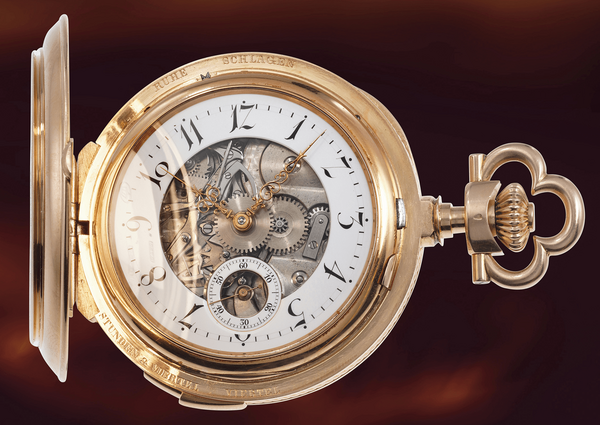
Lot 209: A Circa 1900 A. Lange & Söhne Quarter Repeating Grande & Petite Sonnerie in 18k Yellow Gold that's included in the Phillips Decade One (2015-2025) catalogue. Estimate: CHF 150,000 - 300,000
Every surface rewards close inspection. The front cover bears a finely engraved star chart, framed by a zodiac ring divided into twelve sectors. The back cover is even more dramatic: a richly engraved memento mori depicting a skeleton wielding a scythe and dancing before a five-pointed star. Around it runs an inscription in German that translates as: “Your final hour is a secret – Old friend Skeleton remains silent – He is the leader in the roundelay – The dance of death – To him all must bow.”
The watch’s origins trace back to the vision of Ferdinand Adolph Lange, born in Dresden on 18 February 1815. Lange studied at the Technische Bildungsanstalt from 1829, dividing his time between theory and hands-on work under Johann Christian Friedrich Gutkaes, creator of the famed five-minute clock at the Dresden Semperoper. After completing his apprenticeship in 1835, Lange spent several years refining his craft across Europe, including a formative period managing Joseph Thaddäus Winnerl’s workshop in France, followed by further study in Switzerland and England.
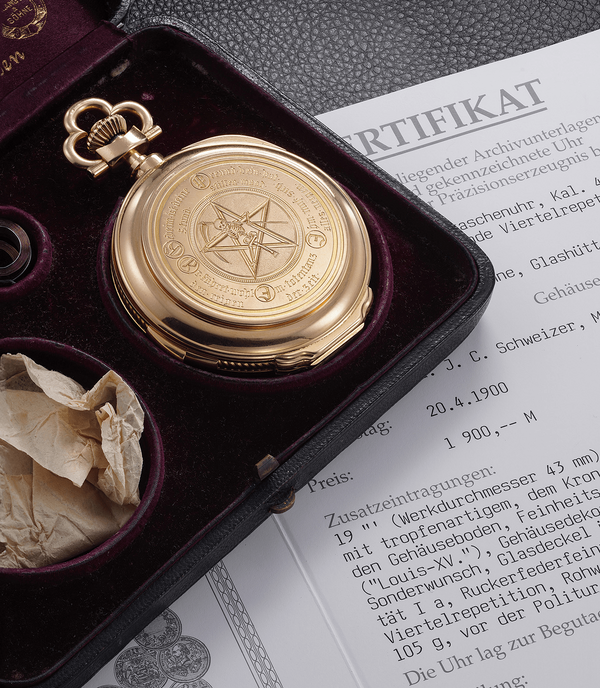
Lot 209: A Circa 1900 A. Lange & Söhne Quarter Repeating Grande & Petite Sonnerie in 18k Yellow Gold that's included in the Phillips Decade One (2015-2025) catalogue. Estimate: CHF 150,000 - 300,000
Returning to Dresden in 1841, Lange set out to establish a watchmaking industry in Saxony. With government backing, he founded A. Lange & Cie. in Glashütte in 1845, transforming a struggling mining town into a center of precision watchmaking. He not only trained apprentices but encouraged them to establish their own workshops, laying the foundations of a thriving horological ecosystem.
Lange’s contributions to watchmaking were profound. He introduced the metric system to German watchmaking and developed precision tools, including a micrometer capable of measuring to the thousandth of a millimeter. In 1868, his son Richard joined the business, prompting the name change to A. Lange & Söhne. Ferdinand also served as mayor of Glashütte for 18 years, guiding the town’s transformation until his death in 1875.
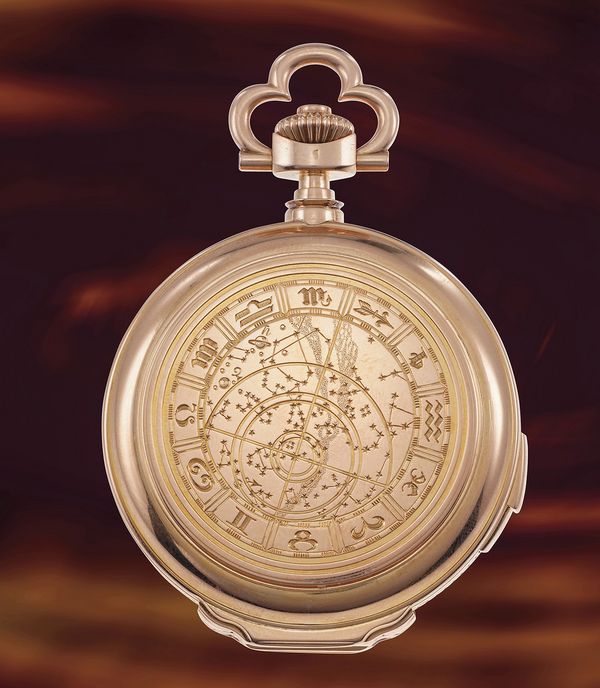
Lot 209: A Circa 1900 A. Lange & Söhne Quarter Repeating Grande & Petite Sonnerie in 18k Yellow Gold that's included in the Phillips Decade One (2015-2025) catalogue. Estimate: CHF 150,000 - 300,000
Under Richard and Emil Lange, the company continued to flourish. Emil earned numerous honors, including the French Legion of Honor and the title of Commercial Councillor from King Frederick Augustus III of Saxony. Even as machine-made watches gained market share, A. Lange & Söhne remained synonymous with uncompromising, hand-finished quality.
This exceptional watch is illustrated in Die Uhren von A. Lange & Söhne by Reinhard Meis and Martin Huber (p. 181, table 68), where it is listed as one of only two known quarter-repeating Grande & Petite Sonnerie pocket watches produced by the firm – the other housed in a different case.
Lot 94: A Circa 2006, Unique Christian Klings Tourbillon No. 7 in 18k Yellow Gold
Estimate: CHF 100,000 - 200,000
Christian Klings is one of the most revered names in contemporary independent watchmaking. Over a career spanning more than three decades, he has produced fewer than 35 watches, yet his influence on both collectors and fellow watchmakers is immense. Klings approaches watchmaking as both art and craft, creating bespoke timepieces by hand using traditional tools and techniques. His work ranges from 10-second tourbillons with free-sprung escapements and chronometer detent escapements to exquisitely finished time-only watches featuring single-beat escapements.
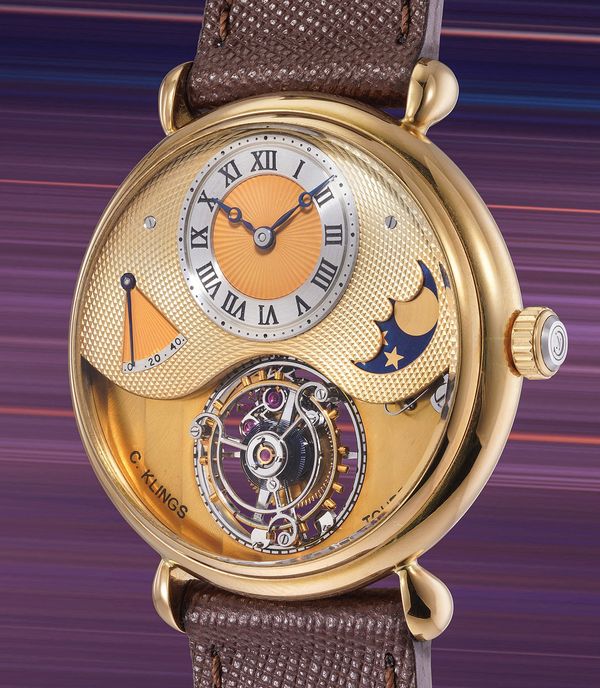
Lot 94: A Circa 2006, Unique Christian Klings Tourbillon No. 7 in 18k Yellow Gold that's included in the Phillips Decade One (2015-2025) catalogue. Estimate: CHF 100,000 - 200,000
The present watch represents one of Klings’ most ambitious undertakings – a unique piece that required more than 1,500 hours to complete. Its centerpiece is the large flying tourbillon positioned at six o’clock, a mechanical tour de force defined by sculptural curves, refined elegance, and exceptional finishing.
Remarkably, the accompanying documentation is nearly as captivating as the watch itself. Written entirely by Klings, the contract is far more than a standard certificate: it is a true souscription agreement, documenting the sale of the watch before it was built. Historically, this model allowed independent watchmakers to finance their work before the modern collecting market existed – a practice famously employed by another watchmaker with a six-letter surname.
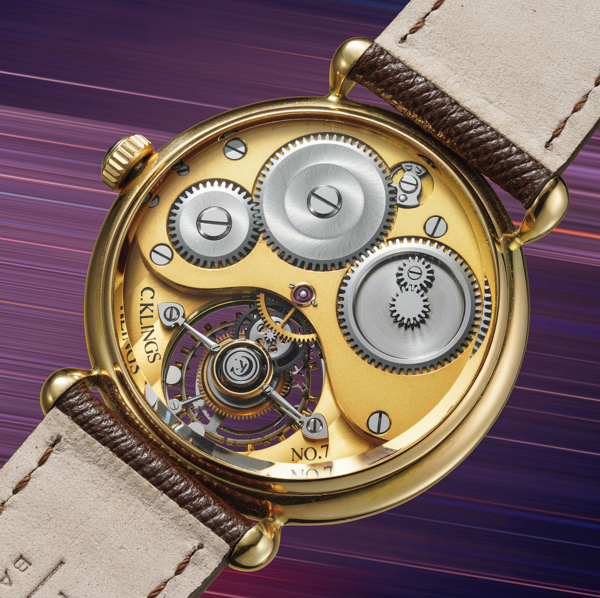
Lot 94: A Circa 2006, Unique Christian Klings Tourbillon No. 7 in 18k Yellow Gold that's included in the Phillips Decade One (2015-2025) catalogue. Estimate: CHF 100,000 - 200,000
On the reverse side of the contract lies an even greater surprise: a hand-drawn sketch by Klings himself, outlining the essential design of the watch to come. More than a piece of industrial design, it is a rare artifact of a different era – one in which independent watchmaking was an intimate, artisanal pursuit shared between dedicated craftsmen and discerning collectors. Before the era of multi-year waiting lists and allocation politics, watchmaking at this level was defined by its romance, rarity, and the shared passion of those who created and commissioned these extraordinary works.
Lot 211: An 1895 Union-Dürrstein Grande Complication Pocket Watch in 18k Pink Gold
Estimate: CHF 150,000 - 300,000
The present Union-Dürrstein Grande Complication is a landmark in German watchmaking. Created to commemorate the 50th anniversary of the Glashütte watch industry, it was – and remains – one of the most complicated pocket watches ever produced in Germany.
Dürrstein & Co. was founded in Dresden in 1874 by Johannes and Friedrich Dürrstein as a wholesale firm distributing Swiss and German timepieces across Central Europe. On January 1, 1893, Johannes Dürrstein expanded his ambitions by founding the Uhrenfabrik Union in Glashütte (known today as Union Glashütte), operating it alongside his retail business. With Julius Bergter as technical director, the new factory embraced modern industrial methods while preserving Glashütte’s tradition of precision.
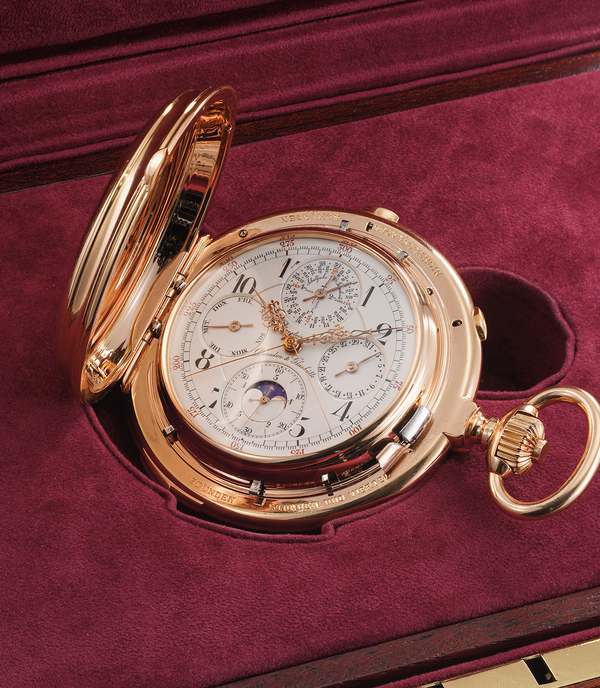
Lot 211: An 1895 Union-Dürrstein Grande Complication Pocket Watch in 18k Pink Gold that's included in the Phillips Decade One (2015-2025) catalogue. Estimate: CHF 150,000 - 300,000
Just two years later, Union presented the present Grande Complication at the 1895 World’s Fair in Chicago, marking both the industry’s 50th anniversary and the first Grande Complication ever produced in Glashütte. Only six examples were made.
This watch embodies the pinnacle of late 19th-century watchmaking. It includes the three complications that define a true Grande Complication: a chiming mechanism, a perpetual calendar, and a split-seconds chronograph. But its chiming function goes far beyond the norm. Alongside a minute repeater, it incorporates the Grande and Petite Sonnerie – among the most complex and revered mechanisms in horology.
In design and layout, the watch recalls the A. Lange & Söhne Grande Complication pocket watches from the early 20th century (see Phillips Watches Geneva Watch Auction XXI, May 2025, lot 24, sold for CHF 1,168,400). Yet it offers even more: a foudroyante, or flying seconds hand, positioned at six o’clock alongside the regular seconds hand, capable of measuring fifths of a second.
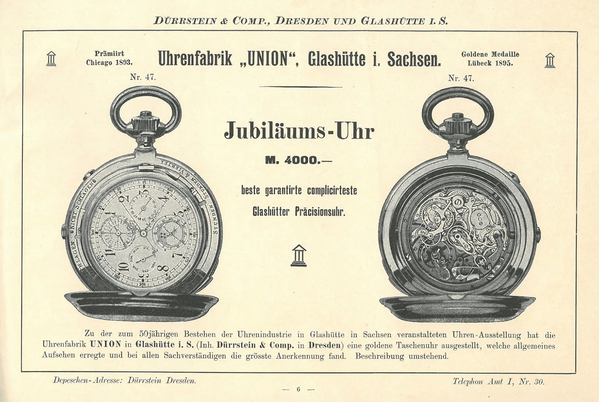
Lot 211: An 1895 Union-Dürrstein Grande Complication Pocket Watch in 18k Pink Gold that's included in the Phillips Decade One (2015-2025) catalogue. Estimate: CHF 150,000 - 300,000
Housed in a heavy pink gold hunter case, the watch reveals a wealth of functions when opened: sonnerie pushers, calendar indications, a moonphase display, split-seconds chronograph hands, minute counter, continuous seconds, and the 1/5th seconds foudroyante. Elegant Louis XV–style hour and minute hands complete the ensemble.
The movement – based on an ébauche supplied by Audemars Piguet – is a masterpiece of horological architecture, with each component hand-finished to an exceptional standard. Union-Dürrstein’s original description captures its complexity: “The clock contains no fewer than 2,840 grooves, 121 levers and springs, 240 screws, 56 wheels and pinions, 850 drilled holes, 40 jewels, and 738 individual parts.”
Johannes Dürrstein (1845–1901) was instrumental in shaping German watchmaking at the turn of the 20th century. Trained as a merchant in Frankfurt, he recognized a growing demand for reliable and affordable timepieces and built one of the largest wholesale watch businesses in the German Empire, handling as many as 50,000 pocket watches a year. He forged close ties with Ferdinand Adolph Lange, becoming the exclusive distributor of Lange watches and persuading the company to produce more accessible models under the Deutsche Uhren Fabrikation (DUF) name.
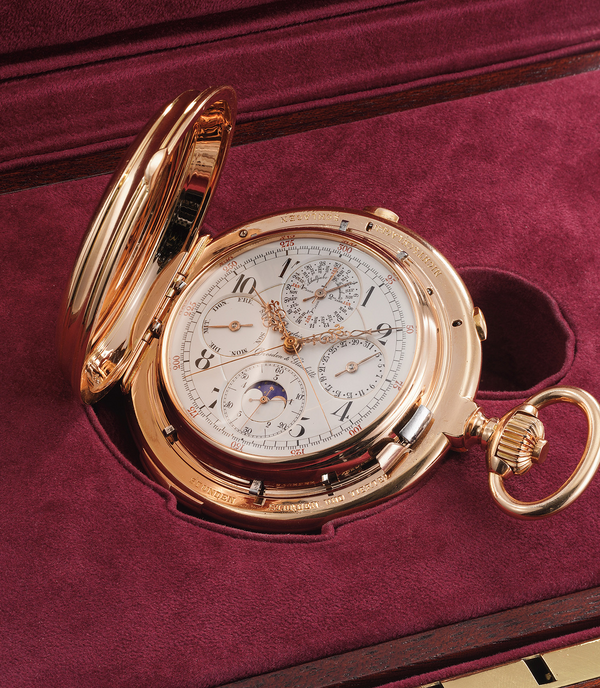
Lot 211: An 1895 Union-Dürrstein Grande Complication Pocket Watch in 18k Pink Gold that's included in the Phillips Decade One (2015-2025) catalogue. Estimate: CHF 150,000 - 300,000
The founding of the Union factory in Glashütte in 1893 marked Dürrstein’s most enduring legacy. Union quickly distinguished itself, producing everything from chronographs to highly complicated pocket watches, including a Grande Complication in its first year. Dürrstein elevated German watchmaking into the realm of haute horlogerie by sourcing the finest ébauches for his most ambitious creations. The pinnacle came in 1899 with the Universal-Uhr, built on an Audemars Piguet ébauche and, at the time, the most complicated pocket watch in the world, boasting 19 complications and 1,168 components.
By the time Union opened a purpose-built manufactory in 1899, it employed around 40 craftsmen and was producing chronometers, tourbillons, and complex pocket watches. Although Dürrstein’s death in 1901 ended his direct involvement, the company continued under his family, winning awards for its observation and marine chronometers before eventually succumbing to the economic turmoil of the interwar years. His vision, however, laid the groundwork for Glashütte’s enduring role at the forefront of German watchmaking.
Lot 210: A 2022 A. Lange & Söhne 1815 Rattrapante 'Homage to F.A. Lange' Ref. 425.050 in Honeygold
Estimate: CHF 100,000 - 200,000
We are delighted to present the very first A. Lange & Söhne 1815 Rattrapante “Homage to F. A. Lange” to appear at international auction.
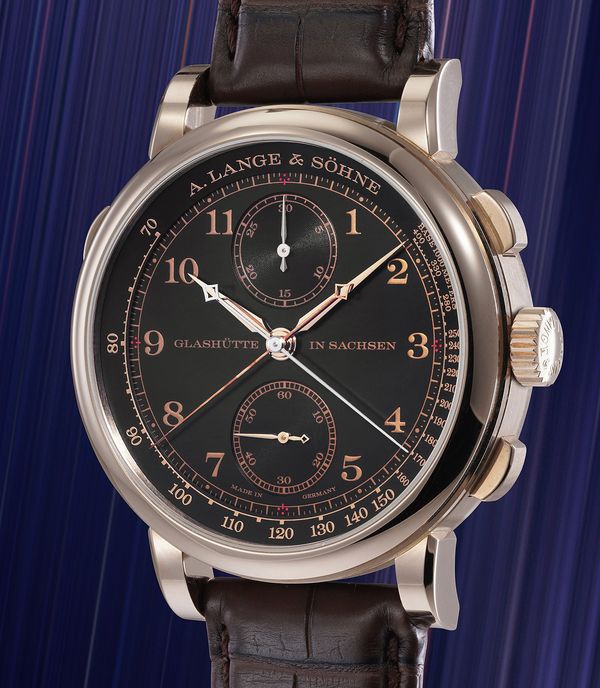
Lot 210: A 2022 A. Lange & Söhne 1815 Rattrapante 'Homage to F.A. Lange' Ref. 425.050 in Honeygold that's included in the Phillips Decade One (2015-2025) catalogue. Estimate: CHF 100,000 - 200,000
Launched in 2022 as a limited edition of 100 pieces, the present example is number 85. It represents a landmark for the brand: despite producing double and triple split-seconds chronographs, as well as split-seconds chronographs combined with perpetual calendars (with or without tourbillon), A. Lange & Söhne had never offered a pure rattrapante chronograph until the debut of this model.
Housed in the manufacture’s proprietary honey gold – a patented alloy developed in-house – the watch radiates a distinctive warm hue and offers greater hardness and scratch resistance than traditional yellow gold. Created to mark the 175th anniversary of Ferdinand Adolph Lange’s founding of his Glashütte workshop, and with it the birth of Saxon watchmaking, the 1815 Rattrapante “Homage to F. A. Lange” pays tribute to that legacy through both design and execution.
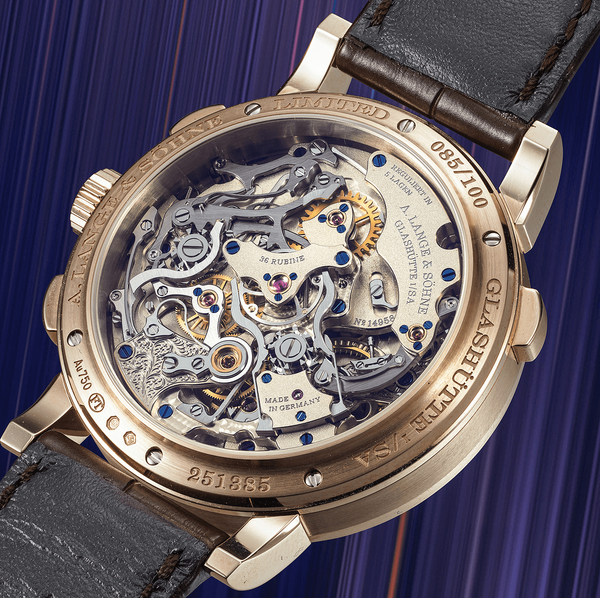
Lot 210: A 2022 A. Lange & Söhne 1815 Rattrapante 'Homage to F.A. Lange' Ref. 425.050 in Honeygold that's included in the Phillips Decade One (2015-2025) catalogue. Estimate: CHF 100,000 - 200,000
The dial departs from the layout of other A. Lange & Söhne chronographs, with the minute counter and continuous seconds positioned vertically. Inside, the movement is a three-dimensional architectural marvel, finished to the highest standards with polished and grainé surfaces and hand-engraved floral details. Its decoration also sets it apart from the brand’s other chronograph calibres, drawing inspiration from the historic 1A-grade pocket watches produced by Ferdinand Adolph Lange in the 19th century.
Offered in hardly worn condition and complete with its full complement of accessories, this limited edition 1815 Rattrapante embodies the technical refinement, aesthetic harmony, and historical depth that define A. Lange & Söhne at its very best.
Lot 11: A 1912 A. Lange & Söhne Pocket Watch in 18k Yellow Gold with 'Hunting' Enamel Scenes and Deadbeat Seconds
Estimate: CHF 80,000 - 160,000
An exceptional display of both technical mastery and artistic ambition, the present hunter-case pocket watch from 1912 features A. Lange & Söhne’s patented dead-beat seconds mechanism (DR No. 182, dated 3 August 1877).
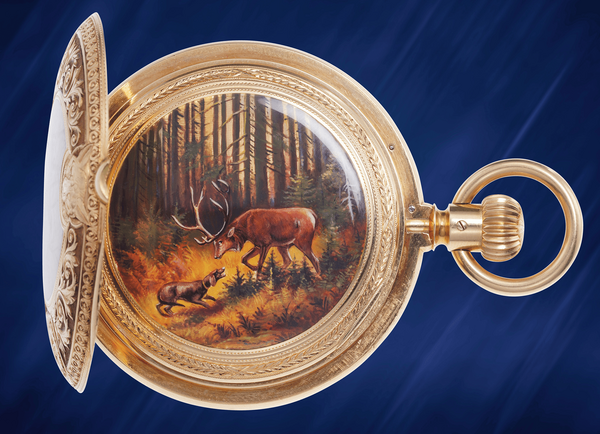
Lot 11: A 1912 A. Lange & Söhne Pocket Watch in 18k Yellow Gold with 'Hunting' Enamel Scenes and Deadbeat Seconds that's included in the Phillips Decade One (2015-2025) catalogue. Estimate: CHF 80,000 - 160,000
Yet in this instance, the movement is not the star of the show. That distinction belongs to the case – a spectacular example of early 20th-century decorative watchmaking. The sumptuous gold hunter case is richly engraved with chased foliate motifs and animal masks in relief, including a fox’s head at 12 o’clock and a dog’s head at 6 o’clock. Both outer covers are set with exquisitely detailed enamel miniatures, each evoking the romantic imagery of the hunt: one side depicts a stag framed by a mountainous landscape, the other a bird perched among birch trees.
Opening the inner cuvette reveals another masterpiece of enamel painting – a vivid woodland scene showing a stag confronted by a hunting hound. The depth, precision, and vibrancy of the colors attest to the hand of a master enameller.
Hunting watches of this kind were more than timekeepers; they were prized as miniature works of art by aristocratic sportsmen and collectors alike. This example, with its superb state of preservation, fully executed enamel scenes, and richly chased gold casework, is a tour de force of the genre – one that unites mechanical ingenuity with the highest levels of engraving and enameling.
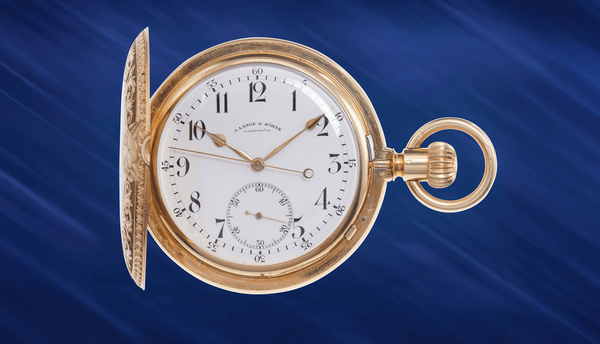
Lot 11: A 1912 A. Lange & Söhne Pocket Watch in 18k Yellow Gold with 'Hunting' Enamel Scenes and Deadbeat Seconds that's included in the Phillips Decade One (2015-2025) catalogue. Estimate: CHF 80,000 - 160,000
Among all jumping seconds watches produced by A. Lange & Söhne, this is the only known example housed in such elaborate and opulent casework. According to the accompanying A. Lange & Söhne Certificate, it was sold to Albert Arz in Hungary. Arthur Arz von Straußenburg (1857–1935) was among the most prominent Austro-Hungarian generals of the First World War and served as the final Chief of the General Staff of the Imperial Army.
Lot 208: A 2019 A. Lange & Söhne Datograph Up/Down "Lumen" Ref. 405.034 in Platinum
Estimate: CHF 100,000 - 200,000
The A. Lange & Söhne Datograph is widely regarded as one of the most compelling chronograph wristwatches of the modern era. It marries traditional watchmaking with refined aesthetics, combining a perfectly balanced dial layout with an in-house, manually wound movement finished to the highest standards, complete with Glashütte stripes and the brand’s signature hand-engraved balance cock. The oversized date display – a Lange hallmark inspired by the clock at Dresden’s Semperoper – anchors the design above luminous seconds and minute counters.
Traditionally offered in platinum or pink gold with a solid black dial, the Datograph took on an entirely new character with the introduction of the “Lumen” edition. Launched in December 2018 as a limited series of 200 pieces, it reimagined the iconic chronograph with a striking translucent dial and dramatic nighttime presence.
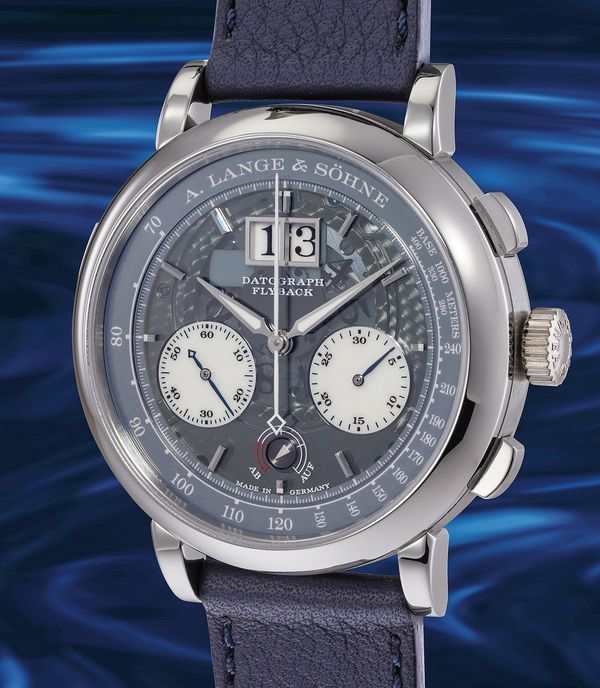
Lot 208: A 2019 A. Lange & Söhne Datograph Up/Down "Lumen" Ref. 405.034 in Platinum that's included in the Phillips Decade One (2015-2025) catalogue. Estimate: CHF 100,000 - 200,000
The magic lies in the dial’s construction. Crafted from tinted sapphire crystal, it reveals the perlage-finished main plate beneath while serving a vital technical purpose: allowing luminous components to absorb ultraviolet light during the day and emit a bright glow after dark. The effect extends across the tachymeter scale, subsidiary dials, date display, and power reserve indicator, creating a dynamic interplay of visibility and design.
The present example, number 66 in the series, is offered in excellent condition and complete with its A. Lange & Söhne Guarantee, product literature, wallet, presentation box, and outer packaging. A milestone in contemporary chronograph design, the Datograph “Lumen” captures the spirit of Saxon watchmaking while pushing one of A. Lange & Söhne’s most celebrated models into bold new territory.
You can view the complete Phillips Decade One (2015-2025) auction catalogue here.