Article | Patek Philippe Steel 1518 Phillips 2025 Price Record 2016
In-Depth: The Stainless-Steel Patek Philippe Perpetual Calendar Chronograph Ref. 1518
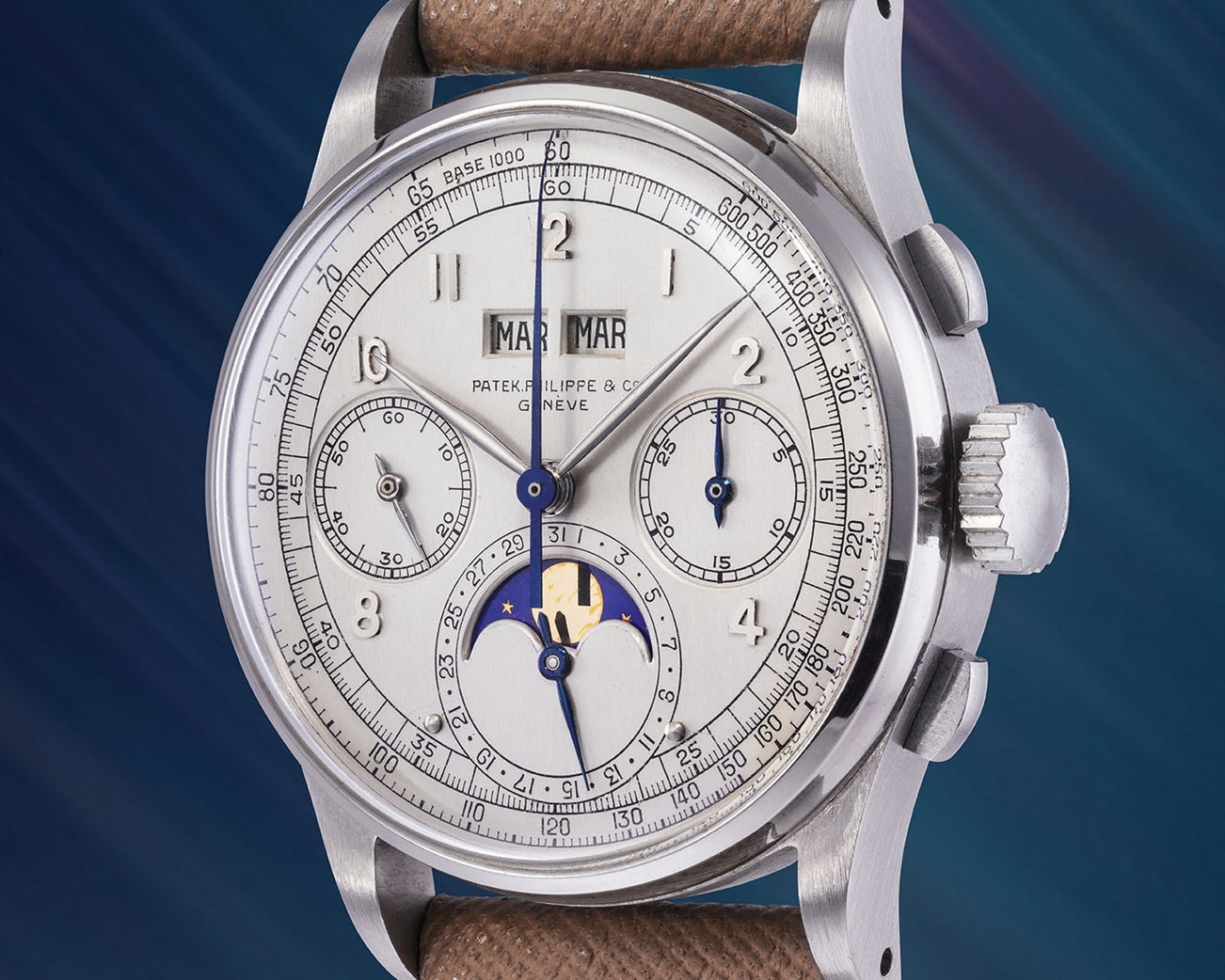
Only four examples of the stainless-steel Patek Philippe Ref. 1518 are known. This November, the very first returns to Phillips – part of a once-in-a-generation offering of all three case metals of the world’s first serially produced perpetual calendar chronograph wristwatch.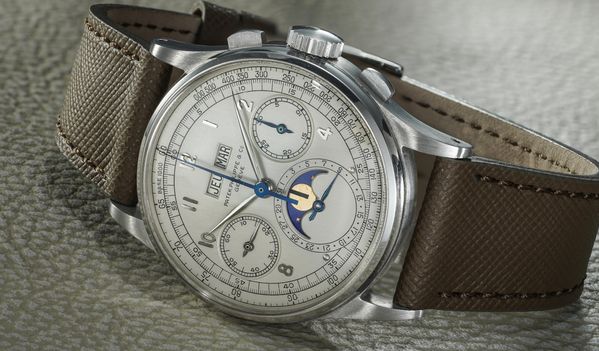
This November, Phillips in Association with Bacs & Russo will celebrate a decade of watch auctions with the Decade One (2015-2025) thematic sale at the Hôtel Président in Geneva. This landmark sale marks the successful first 10 years of the Phillips Watches department, reflecting on the remarkable watches, record-breaking results, and new scholarship that have shaped Phillips Watches since its inaugural auction in 2015.
– By Logan Baker
In the hierarchy of vintage wristwatches, few names command the reverence reserved for the Patek Philippe Ref. 1518.
Introduced in 1941, it was the world’s first serially produced perpetual calendar chronograph wristwatch – a technical milestone that became the foundation of one of the most important families of watches ever made. Across a production run of just 281 examples, most were cased in yellow gold, a smaller number in pink gold, and only four are known in stainless steel.
Lot 23: A 1943 Patek Philippe Perpetual Calendar Chronograph Ref. 1518 in stainless steel, one of four known. Included in the Phillips Decade One (2015-2025) auction. Estimate: In excess of CHF 8,000,000
This November, one of those four returns to Phillips as part of Decade One (2015–2025), the landmark auction celebrating 10 years of Phillips in Association with Bacs & Russo. It is not just any steel 1518, but the very first one ever made, identified by the digit “1” engraved beneath the case number. This exact watch last appeared on the market in November 2016 at the Phillips Geneva Watch Auction: FOUR, where it achieved CHF 11,002,000 – a record-breaking sum that made it the most expensive wristwatch ever sold at auction at the time and the first to break the eight-figure barrier.
That moment not only confirmed the 1518’s legendary status but also helped spark a new era in watch collecting, paving the way for subsequent milestones, such as the USD $17.8 million paid for Paul Newman’s personal Rolex Daytona Ref. 6239 the following year at Phillips. Nearly a decade later, the first steel 1518 returns to the auction block with an estimate in excess of CHF 8,000,000.
Manufactured in 1943, two years after the reference debuted, this steel 1518 was sold on 22 February 1944 by Joseph Lang, a retailer in Budapest, Hungary. The date is more than a historical footnote. Hungary had just declared war on Germany, severing its alliance with the Axis powers, and the future was deeply uncertain. That this watch – a mechanical expression of precision and permanence – was purchased in such a moment speaks to the enduring human desire to invest in beauty and craft even when tomorrow is in doubt. Remarkably, the second known steel 1518 was also delivered to Lang on the same day. The identity of the original buyers remains unknown, but both examples resurfaced in Hungary between the mid-1990s and early 2000s.
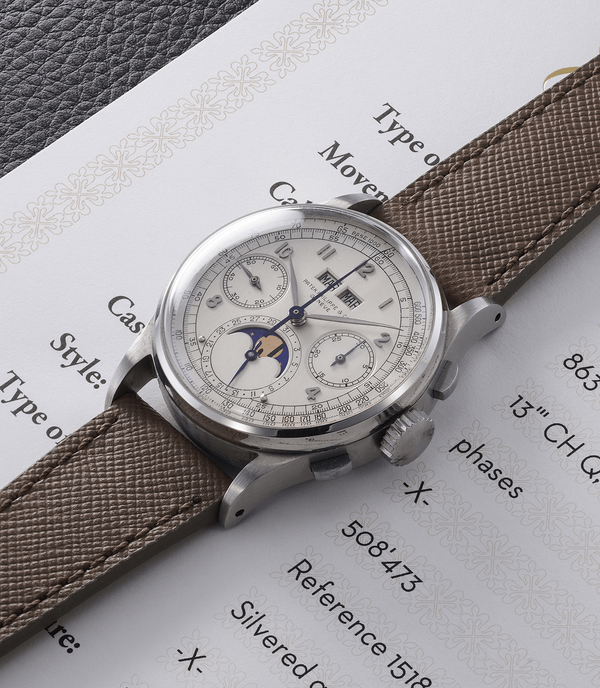
Lot 23: A 1943 Patek Philippe Perpetual Calendar Chronograph Ref. 1518 in stainless steel, one of four known. Included in the Phillips Decade One (2015-2025) auction. Estimate: In excess of CHF 8,000,000
The watch offered by Phillips in November is notable not only for its provenance and rarity but also for its condition, which aligns with the most exacting standards of connoisseurship. Housed in a 35mm case by Georges Croisier – later known as Genevor SA – it displays hardly any signs of wear or polishing. The sharp edges, crisp lugs, pristine brushed and polished surfaces, and original crown speak to careful preservation over eight decades. The two chronograph pushers remain in superb condition, and the case architecture retains the proportions it had when it left the Patek Philippe workshops in 1943.
The inner caseback bears the serial number 508’473, with the all-important “1” stamped below it. The last three digits of the case number, “473,” are also engraved on the inner side of the stainless-steel bezel. Inside, the movement number 863’193 is marked on multiple components, including the undersides of the weekday and month discs, engraved entirely by hand.
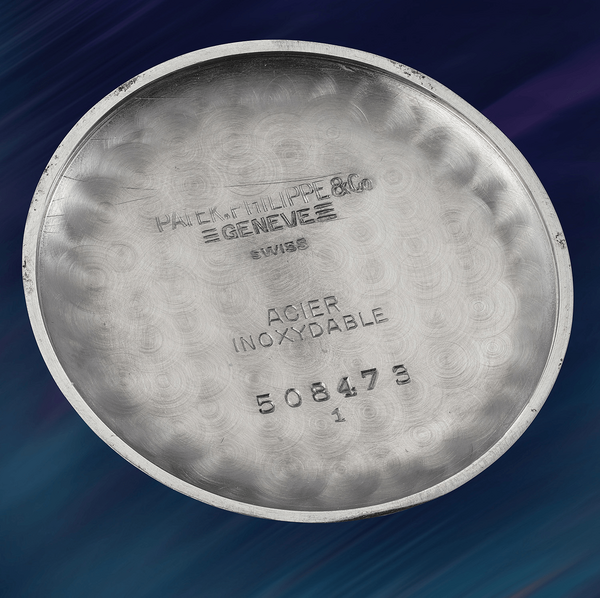
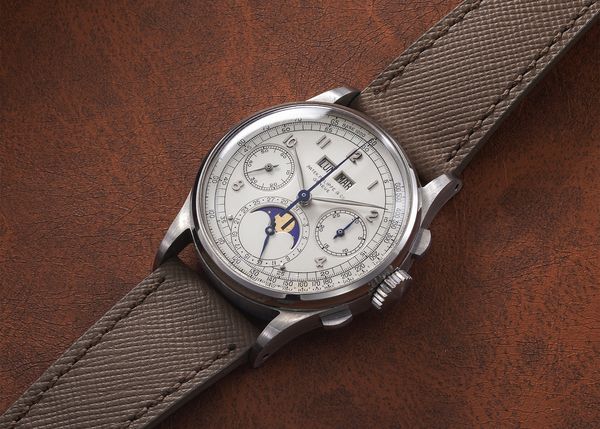
Lot 23: A 1943 Patek Philippe Perpetual Calendar Chronograph Ref. 1518 in stainless steel, one of four known. Included in the Phillips Decade One (2015-2025) auction. Estimate: In excess of CHF 8,000,000
The dial, made by Stern Frères, remains free of damage or harsh restoration. Its raised black hard enamel signature and scales are crisp and well defined, a testament to the quality of Patek Philippe’s mid-century dial production.
Every detail, from the enamel signature to the engraved discs, reflects the standards of craftsmanship and precision that define why the Ref. 1518 stands apart.
The Birth of a Legend
To understand why the 1518 matters so deeply – and why the steel examples sit at the summit of collecting – it’s worth returning to the circumstances of its creation. The watch was unveiled in 1941 at the Basel fair, during the height of World War II. Europe was engulfed in conflict, and the future was anything but certain. Against that backdrop, Patek Philippe introduced a wristwatch that embodied the opposite of chaos: a mechanical instrument capable of tracking the calendar and measuring elapsed time with precision.
The 1518 was the first perpetual calendar chronograph wristwatch ever produced in series by any brand. Before it, perpetual calendars and chronographs had been combined in pocket watches, and a few one-off wristwatch commissions existed, but none had been made as a regular production model. The 1518 set the template that every subsequent perpetual calendar chronograph would follow. Its design – day and month apertures in series at 12 o’clock, sub-dials for running seconds and 30-minute chronograph register at 9 and 3 o’clock, and a moon-phase with date at 6 o’clock – became the canonical layout for complicated Patek Philippe wristwatches. The raised hard enamel tachymeter scale at the periphery added a final note of functional elegance.
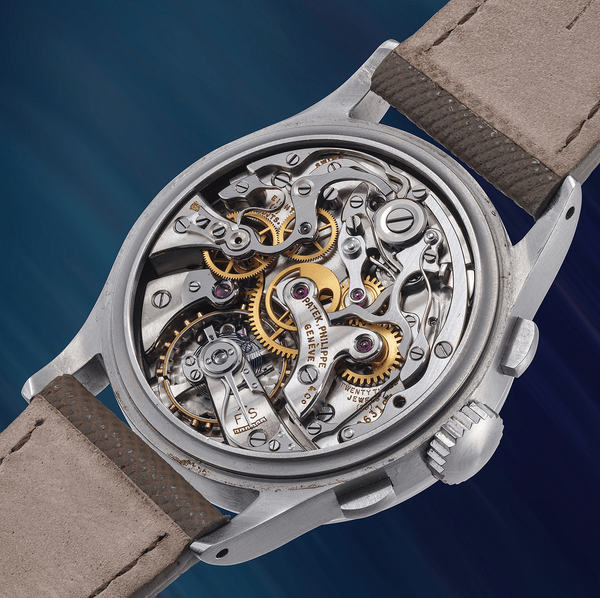
Lot 23: A 1943 Patek Philippe Perpetual Calendar Chronograph Ref. 1518 in stainless steel, one of four known. Included in the Phillips Decade One (2015-2025) auction. Estimate: In excess of CHF 8,000,000
The case, at 35mm, was the epitome of modernity in the 1940s, with its clean lines, downturned lugs, and balanced proportions. While the basic architecture remained consistent, subtle changes over the course of production reflected the evolving tastes and techniques of the time. Early cases were thicker with a narrow band, with chronograph pushers centered on the mid-case. Later cases became thinner, with a more prominent bezel, and the pushers and date correctors shifted slightly downward.
Dial details also evolved. Early examples featured the long-form “Patek Philippe & Co.” signature and larger calendar apertures with less angled facets. After the war, the brand shortened its signature and refined the typography and proportions. These variations, while subtle, are now critical markers for scholars and collectors studying the lineage of the reference.
Across its entire production, only 281 examples of the Ref. 1518 were made. The vast majority were cased in yellow gold, around 55 are believed to have been produced in pink gold, and just four in stainless steel. The decision to make any in steel at all was extraordinary.
At the time, stainless steel was typically reserved for tool watches and simple chronographs rather than complicated Patek Philippe timepieces. Whatever the reason, the outcome was one of the rarest and most significant wristwatches ever created.
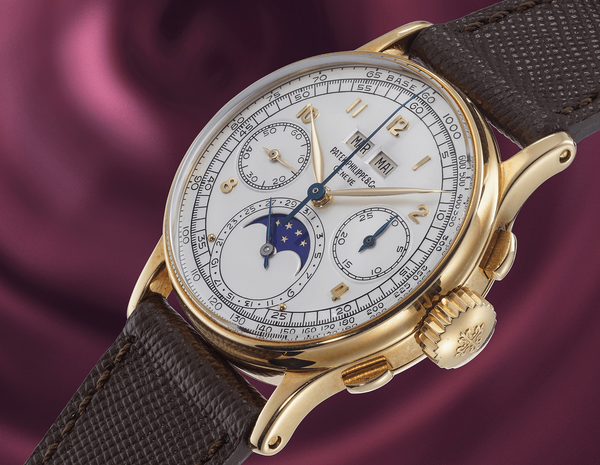
Lot 40: A circa 1945 Patek Philippe Perpetual Calendar Chronograph Ref. 1518 in 18k yellow gold. Included in the Phillips Decade One (2015-2025) auction. Estimate: CHF 200,000 - 400,000
The 1518 was the watch that set the course for Patek Philippe’s complicated wristwatches for the next eight decades. Its DNA runs through the references that followed: the 2499, 3970, 5970, and today’s 5270 all trace their lineage directly back to the 1518.
To this day, owning one is regarded as the summit of vintage Patek Philippe collecting.
The 1518 'Triptych'
The return of the first stainless-steel 1518 is reason enough to mark Decade One (2015-2025) on the calendar. But this watch is not alone. Phillips will present it as part of an extraordinary “1518 Triptych” – three variants of the reference appearing together in the same auction: stainless steel, pink-on-pink, and yellow gold.
It is the first time such a lineup has appeared at auction, and likely the last time for a generation.
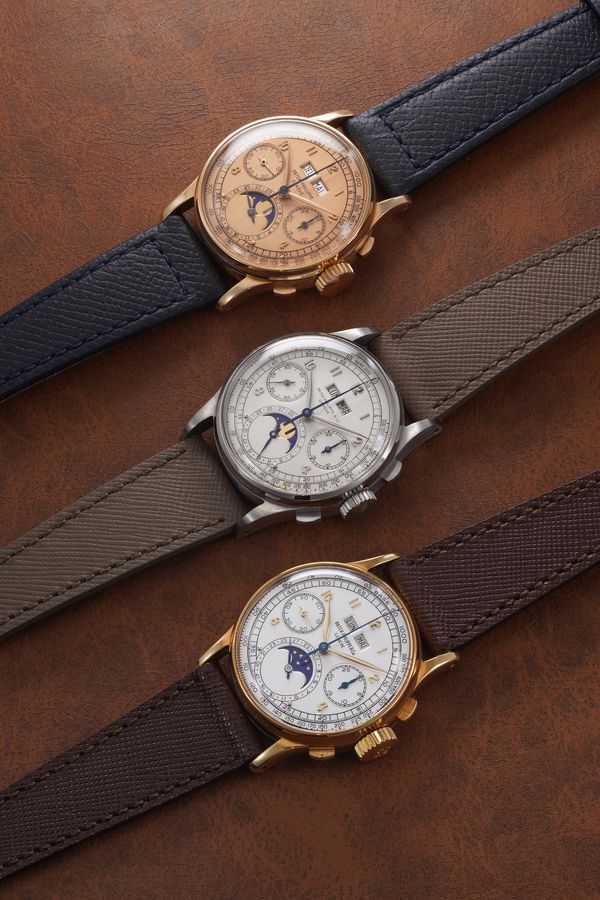
The Patek Philippe Ref. 1518 Triptych, included in the Phillips Decade One (2015-2025) auction.
The pink-on-pink example, made in 1947, pairs a pink gold case with a matching salmon-hued dial. Only around 15 examples of this configuration are known. Most pink gold 1518s were fitted with silvered dials, and the decision to match case and dial was reserved for a handful of special pieces.
The case on this watch retains its original architecture with no signs of lug tapering, and the hallmarks remain deep and crisp. The dial is unrestored, with flawless engraved and enameled graphics and a remarkably intense color. Analysis of surviving examples reveals that these salmon dials were produced in small batches, likely of around five or six watches each – further underscoring their rarity.
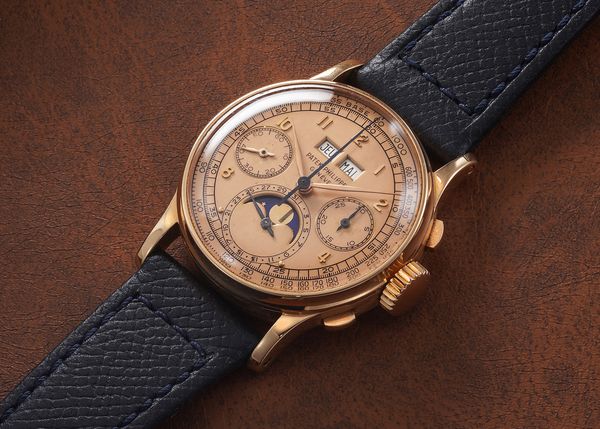
Lot 23: A 1947 Patek Philippe Perpetual Calendar Chronograph Ref. 1518 "Pink-on-Pink" in 18k pink gold, one of approximately 15 known examples. Included in the Phillips Decade One (2015-2025) auction. Estimate: In excess of CHF 1,200,000 - 2,400,000
Alongside it will be a classic 18k yellow gold example from circa 1945. Representing the reference in its most emblematic form, this watch was recently fully serviced by Patek Philippe. Its case is strong (untouched during the service), the hallmarks are well preserved, and the dial – restored by Patek Philippe at the owner’s request – appears as new.
Together, these three watches form an extraordinary offering. The presence of a steel 1518 alone would make this auction a landmark event. Adding a pink-on-pink and a yellow gold example further elevates it, presenting a complete view of the reference’s most significant variations. In 2016, Phillips achieved a similar feat by presenting examples in all three metals, but this is the first time a pink-on-pink 1518 will appear alongside them.
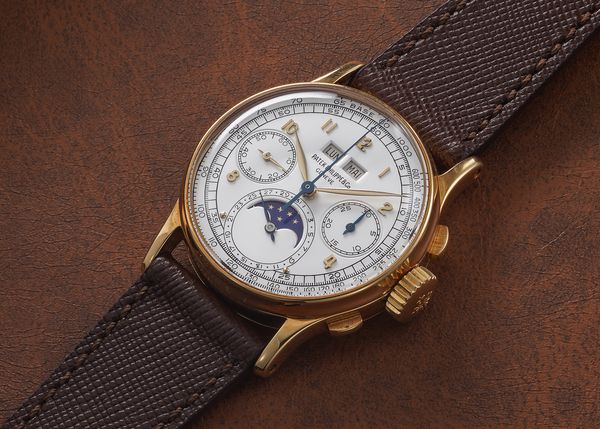
Lot 40: A circa 1945 Patek Philippe Perpetual Calendar Chronograph Ref. 1518 in 18k yellow gold. Included in the Phillips Decade One (2015-2025) auction. Estimate: CHF 200,000 - 400,000
More than 80 years after it first left the Patek Philippe workshops, the first stainless-steel Ref. 1518 will cross the auction block once again on 8–9 November 2025, at Decade One (2015–2025) in Geneva. With an estimate in excess of CHF 8,000,000, it remains the most important vintage Patek Philippe wristwatch ever sold at auction – and, to this day, the most expensive. Its 2016 result marked a turning point not only for the market but for the perception of wristwatches as cultural artifacts on par with fine art.
The Ref. 1518 is a cornerstone of horological history, a design that redefined what was possible on the wrist, and a symbol of enduring innovation in the face of uncertainty. Its influence is visible in every perpetual calendar chronograph that followed. And among all its iterations, the four steel examples – led by the first, offered here – stand apart as the ultimate expression of rarity and connoisseurship.
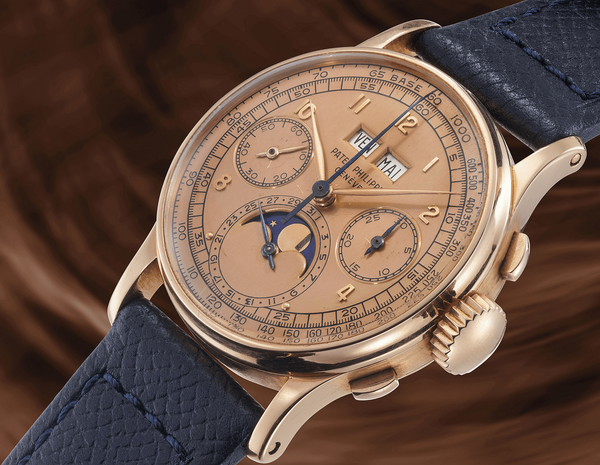
Lot 23: A 1947 Patek Philippe Perpetual Calendar Chronograph Ref. 1518 "Pink-on-Pink" in 18k pink gold, one of approximately 15 known examples. Included in the Phillips Decade One (2015-2025) auction. Estimate: In excess of CHF 1,200,000 - 2,400,000
Phillips’ presentation of this 1518 “Triptych” is a once-in-a-generation opportunity to see three of the most important wristwatches ever made side by side. It is a reminder that the Ref. 1518 is not just part of watchmaking history – it is one of the rare pieces that is watchmaking history.
You can view the complete Phillips Decade One (2015-2025) auction catalogue here.