Article | Ferdinand Berthoud Naissance D Une Montre 3 Unique Steel Phillips Auction 2025
In-Depth: The Brilliant, Handmade Ferdinand Berthoud Naissance d’Une Montre 3
Six years. More than 11,000 hours of work. That's what it takes to preserve traditional watchmaking.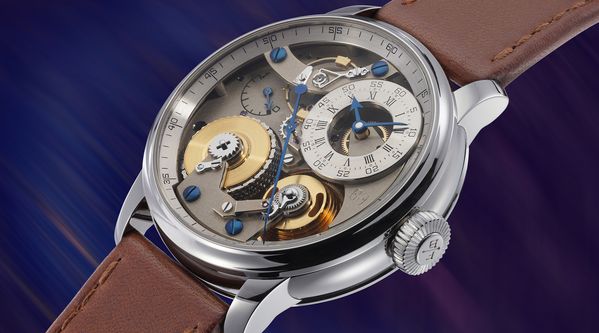
This November, Phillips in Association with Bacs & Russo will celebrate a decade of watch auctions with the Decade One (2015-2025) thematic sale at the Hôtel Président in Geneva. This landmark sale marks the successful first 10 years of the Phillips Watches department, reflecting on the remarkable watches, record-breaking results, and new scholarship that have shaped Phillips Watches since its inaugural auction in 2015.
– By Logan Baker
In 2007, several of the world’s most respected watchmakers issued a quiet warning. The industry, they said, was on the verge of losing its soul. As computer-aided design (CAD) and CNC machining gained ground, handcraft was fading into the background. Skills passed from master to apprentice for centuries were disappearing. So, they created a solution.
The Naissance d’Une Montre (or “Birth of a Watch”) initiative began as a long-term project by the Time Æon Foundation, founded by Robert Greubel, Stephen Forsey, and Philippe Dufour. The goal: prove that a watch could still be made entirely by hand, using traditional tools and techniques – and teach others how to do it.
The first project centered on a young watchmaking teacher named Michel Boulanger. Under the guidance of Dufour and the Greubel Forsey team, he spent several years creating a handmade tourbillon using only manual tools. Unveiled in 2012, the watch was later auctioned in 2016, raising over $1.4 million to support Time Æon’s mission. Eleven more examples followed and were sold directly to clients.
The second watch, Naissance d’Une Montre II, took a more experimental route. It brought together Urwerk, Oscillon, and Greubel Forsey in a striking blend of avant-garde aesthetics and traditional techniques. Completed in 2023 after multiple years of collaboration, only one watch was made. It was sold at the Phillips Geneva Watch Auction: XVII, in May 2023, for CHF 406,400.
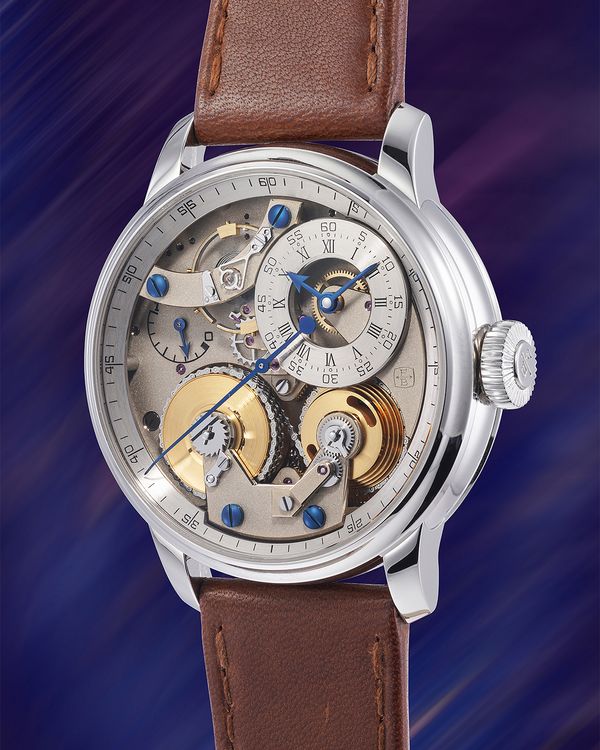
Lot 6: The 2025 unique Ferdinand Berthoud Naissance d'Une Montre 3, including in the Phillips Decade One (2015-2025) auction. Estimate: CHF 400,000 - 800,000
Phillips now has the honour of presenting a unique example of the new Naissance d'Une Montre 3 in stainless steel, made by Ferdinand Berthoud, at the Decade One (2015-2025) thematic auction in Geneva, on 8-9 November 2025.
Ferdinand Berthoud Joins the Conversation
First announced in 2019, the Naissance d’Une Montre 3 is the latest chapter in the initiative, led entirely by the teams at Ferdinand Berthoud and Chopard. It marks the first time the revived Berthoud has participated in a project of this kind – and it aligns perfectly with the company’s watchmaking values: precision, innovation, and respect for horological heritage.
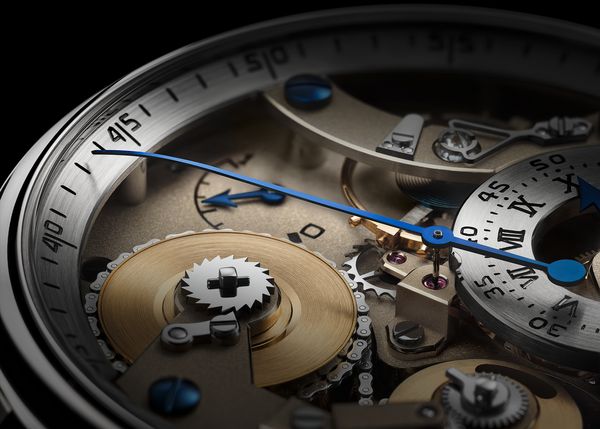
Lot 6: The 2025 unique Ferdinand Berthoud Naissance d'Une Montre 3, including in the Phillips Decade One (2015-2025) auction. Estimate: CHF 400,000 - 800,000
“The traditional craftsmanship of haute horlogerie is in danger because, unfortunately, the major brands don’t spend the time and don’t make the investments to develop such projects,” says Vincent Lapaire, General Manager of Ferdinand Berthoud. “And that’s why this project is fundamental to preserving the watch industry’s know-how for future generations.”
That said, the latest Naissance d’Une Montre project also represents a different approach from its two predecessors.
“It’s not a collaboration between master watchmakers like the previous editions,” says Lapaire. “Here, we’re talking about a Ferdinand Berthoud timekeeper that’s inspired by a historical pocket watch made by the master in 1775. It’s also a collaboration between Ferdinand Berthoud craftsmen, watchmakers, and decorators – but also the Chopard craftsmen that helped develop the project and produced the habillage and all the elements around the movement.”
Fittingly, the watch draws direct inspiration from an 18th-century marine chronometer: the Astronomical Pocket Watch No. 3, which Berthoud created alongside his apprentice, Jean Martin, in 1806. This piece, described at length by Berthoud in his Supplément au Traité des Montres à Longitudes (1807) text, combined a fusée-and-chain mechanism with a bimetallic balance – cutting-edge features for its time, and remarkably relevant to the present project.
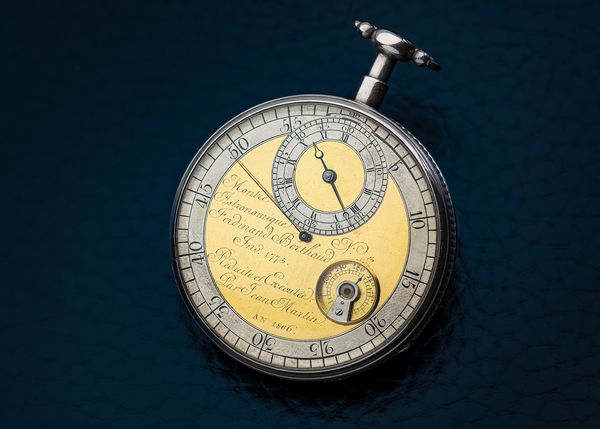
The Ferdinand Berthoud Astronomical Pocket Watch No. 3, made in 1806, that served as the inspiration for the Naissance d'Une Montre 3 project.
Like its historical predecessor, the movement inside Naissance d’Une Montre 3 features a fusée-and-chain transmission, a bimetallic balance, and a classic pillar-style architecture. It also includes a power reserve display, stopwork mechanism, and a unique diamond endstone shock absorber. The watch is powered by the FB-BTC.FC calibre, constructed entirely using traditional mechanical tools – without CNC or digital intervention.
Each component, from the wheels and pinions to the screws and balance, is made by hand. To enable this kind of work, Ferdinand Berthoud, under the leadership of President Karl-Friedrich Scheufele, created the “Atelier Tradition” in Fleurier.
Making a Watch the Hard Way, On Purpose
Between 2019 and 2025, over 11,000 hours of work were invested in producing the first prototype of Naissance d’Une Montre 3. More than 75 individuals contributed their hands, minds, and experience to the project. No CNC machines were used. Just tools, knowledge, and time.
Ferdinand Berthoud’s goal was clear: to make a watch using only mechanical tools and make it at the highest possible level of quality and precision. That meant acquiring rare machinery, learning bygone techniques, and teaching a new generation of specialists to use them.
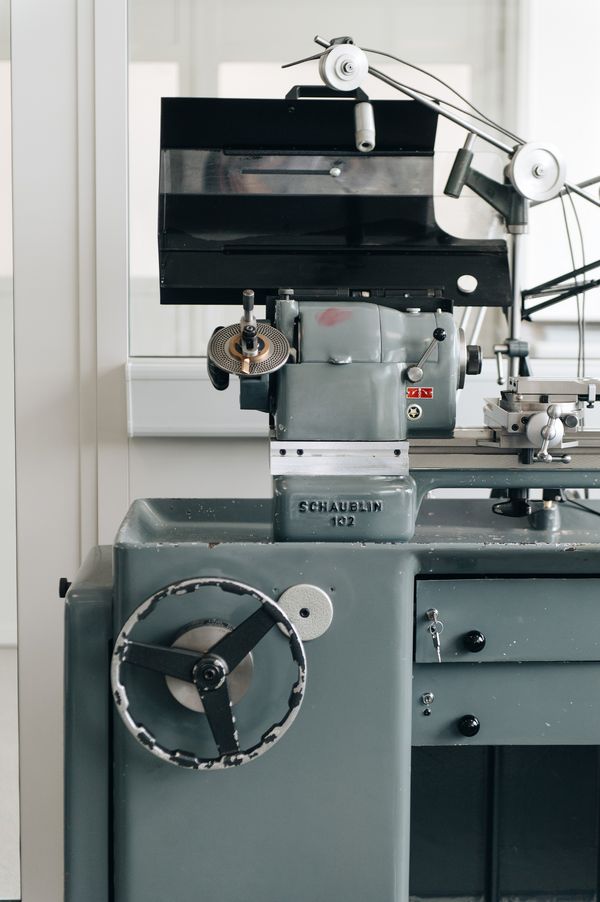
A mid-century Schaublin 102 lathe inside Atelier Tradition.
In 2021, Ferdinand Berthoud established a dedicated workshop in Fleurier to house its Naissance d’Une Montre initiative. Karl-Friedrich Scheufele, President of Chopard and Ferdinand Berthoud, appointed one of his most trusted watchmakers to lead the project: Daniel Bolognesi.
Bolognesi has worked at Chopard for three decades. He played a key role in developing the company’s in-house L.U.C. movement manufacture in the 1990s, and the Naissance d’Une Montre 3 marks his final major undertaking before retirement. But there was one small issue: Chopard didn’t own many – if any – of the vintage tools or machines required to complete a project of this scope. Sourcing the equipment was only the first step. Most of the mid-century tools weren’t operational, so the specialists at Atelier Tradition had to study, repair, and recalibrate each machine before any watch components could be made. That process took more than two years.
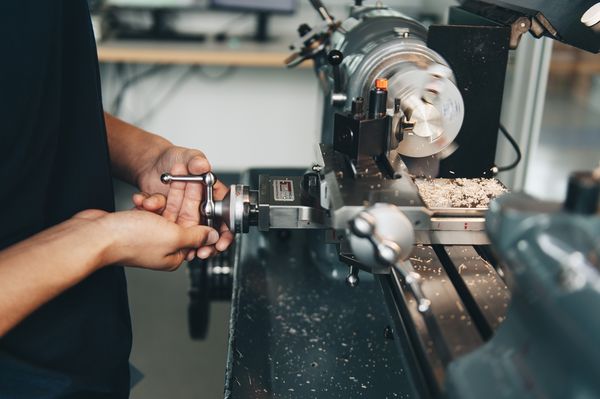
A Ferdinand Berthoud machinist turns a component on a manual precision lathe.
Eventually, the workshop was fully outfitted with vintage equipment from the 1950s and ’60s. Key machines include a Schaublin 102 lathe for shaping circular components, such as shafts, fusées, pillars, and pinions; a SIP jig borer for drilling, milling, and grinding precision movement parts; and an Aciera F3 milling machine for fabricating custom tooling.
Even the cutting tools had to be created by hand. Using an Ewag machine fitted with a diamond grinding wheel, the team was able to manually shape hardened steel. Everything was designed, machined, and crafted with no digital input – exactly as it would have been generations ago.
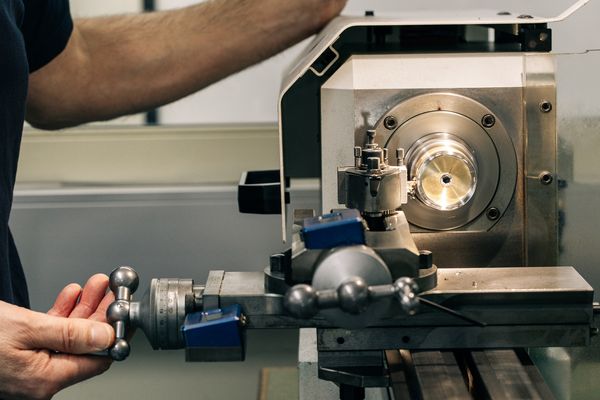
A case component is machined on a manual lathe.
At the center of Naissance d’Une Montre 3 is the hand-wound calibre FB-BTC.FC. It’s a technical and philosophical statement that combines historical solutions with modern execution. The movement employs a pillar-style construction and incorporates a fusée-and-chain transmission for maintaining constant force.
The calibre FB-BTC.FC features 747 components, all of which were created individually. Cutting and polishing the pinions alone required a day’s work, and finishing a wheel could take up to three days. And despite its relatively simple geometry, the mainplate features 126 sinks of eight different diameters.
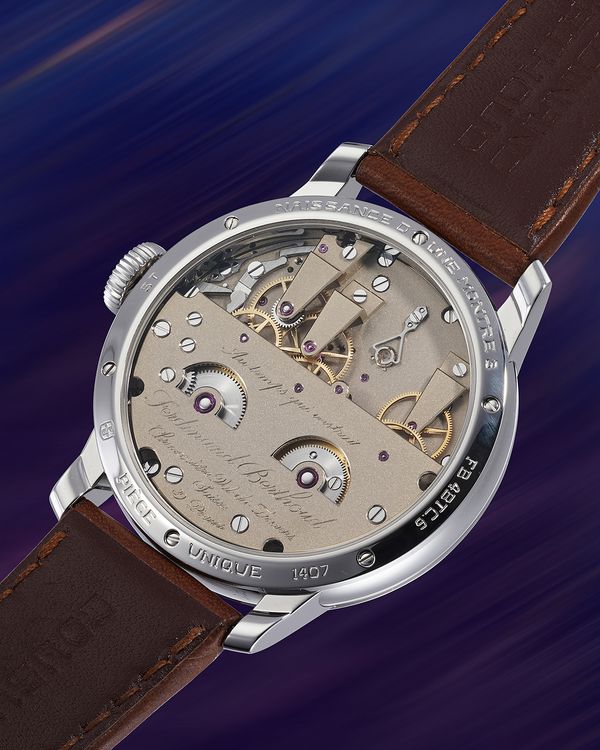
Lot 6: The 2025 unique Ferdinand Berthoud Naissance d'Une Montre 3, including in the Phillips Decade One (2015-2025) auction. Estimate: CHF 400,000 - 800,000
Unlike other contemporary Berthoud movements, the FB-BTC.FC calibre doesn’t rely on differential gearing for winding. Instead, it utilizes a ratchet wheel and auxiliary spring hidden inside the fusée, which provides the watch with sufficient torque to keep running for approximately 30 minutes, even as it’s being wound. This avoids any interruption to the watch’s timekeeping – something marine chronometers once demanded.
The fusée and barrel are connected by a chain composed of 477 individually polished steel elements. It includes 285 links and 191 pins, none thicker than 0.30mm. Every link was fitted by hand. Even the shock absorption system required reinvention. Berthoud created a bespoke diamond setting that combines high hardness with the elasticity needed to protect the balance wheel from damage. You’ll find the same category of stone performing the same function on the original Astronomical Pocket Watch No. 3.
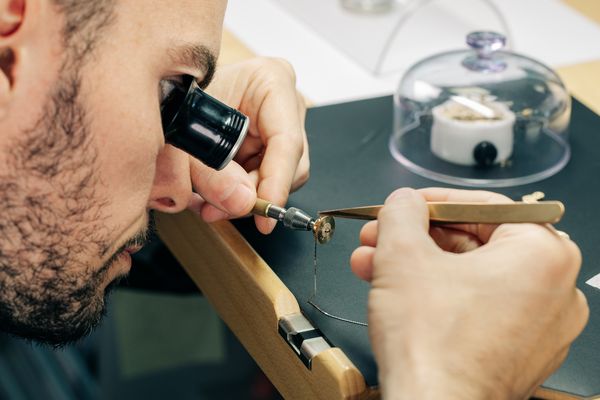
A Ferdinand Berthoud watchmaker attaches the chain to the fusée.
The most exciting aspect is that all these attributes appear to make a real difference in precision timekeeping. The calibre FB-BTC.FC has been officially certified as a chronometer by COSC, making it the first watch in the 18-year history of the Naissance d’Une Montre initiative to receive a chronometer certification. Oh, and for the movement decoration? Well, let’s just say absolutely no corners were cut.
Of course, only manual tools are used – no automation. The Ferdinand Berthoud finisseurs developed their own special polishing paste. The tools themselves are primarily handmade by each individual craftsperson. They even use natural sand for any sandblasting decoration, compared to the common laser sandblasters found today. Anglage is handled with a knife rather than the more conventional wire, providing sharper, flatter angles that result in a more noticeable and reflective polish. The decoration of a single Naissance d’Une Montre 3 movement requires more than 600 hours of work.
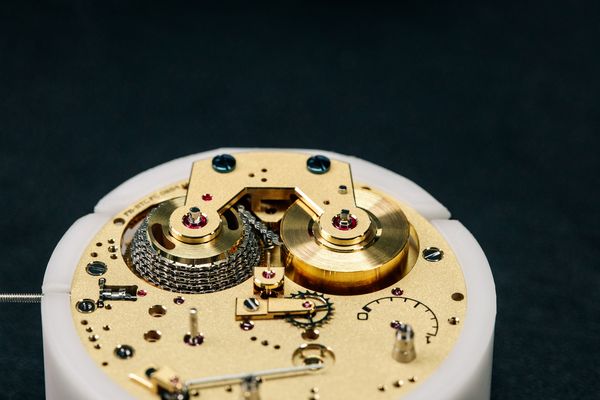
The calibre FB-BTC.FC with visible fusée-and-chain mechanism.
The same manual intensity is also evident in the watch’s exterior components. The case, dial, hands, crown, and buckle were all designed, shaped, and finished without the aid of CNC technology. Their geometry may appear simple, but each element was shaped with precision tools and a steady hand. The 44mm stainless steel case is inspired by the Astronomical Pocket Watch No. 3. It features four welded lugs and a curved mid-case – shapes that are notoriously difficult to execute using manual tools.
The winding crown adheres to the same design language, characterized by finely milled fluting and a hand-engraved medallion featuring the Ferdinand Berthoud logo. The buckle is cut, filed, and polished by hand from a solid plate. Each one is then stamped with the required Swiss hallmark by the Precious Metals Control office before the “FB” logo is engraved.
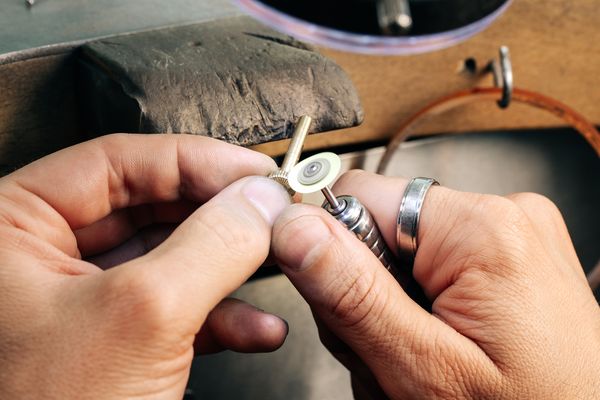
A rotary hand-tool refines the watch’s crown.
The dial is made from 18k gold and displays Roman hours and Arabic minutes on an off-centered sub-dial. The markings are hand-engraved and blackened with a chemical nickel treatment. The seconds are shown on a circular scale positioned around the movement itself, supported by steel pillars. Even the hands are extraordinary. The production of the seconds hand – over 25mm long and impossibly thin – demands intense focus and manual dexterity to avoid damage. The canons for both the running seconds and power reserve indicator are made from 18k gold.
From start to finish, Naissance d’Une Montre 3 is a project driven by human intention. There are easier ways to make watches. There are faster ways to reach the same result. But the point of the Naissance d’Une Montre series is that it’s the opposite of speed and scale; instead, it’s about preservation, transmission, and trust in human craft.
As for the future?
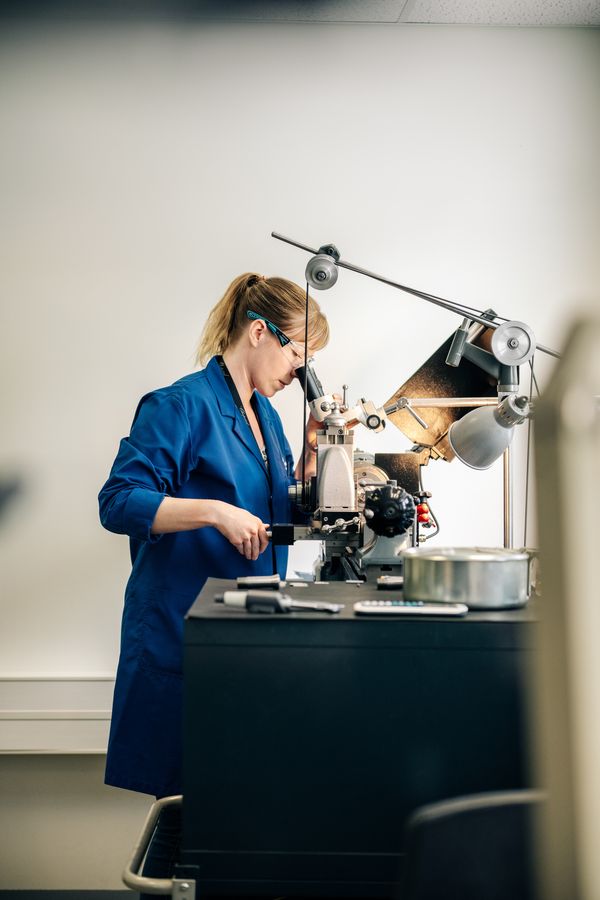
Operating a manual lathe.
“We have not created such an amazing workshop to only make one Naissance d’Une Montre,” says Lapaire. “We will certainly develop something else handmade like this in five, six, or seven years. What is very important is to maintain the know-how, to invite new watchmakers to join the team, and to train them. The main purpose of this project is not just to produce and sell the watches but to maintain the know-how and then transmit it to the next generation.”
The First New Bimetallic Balance Wheel in Decades
Only once has the Nobel Prize in Physics been awarded to a figure directly connected to watchmaking.
That distinction belongs to Charles-Édouard Guillaume, who won in 1920 for his discovery of nickel-iron alloys with highly unusual thermal properties. These alloys – Invar and Elinvar, in particular – offered dramatic improvements in dimensional and elastic stability under fluctuating temperatures. Guillaume’s work revolutionized precision measurement, ushering in a new era of temperature-compensated timekeeping. His invention, the Guillaume balance, became one of the most significant horological developments of the early 20th century.
Now, in the 21st century, a new watch once again carries a bimetallic balance at its heart – the first of its kind to be produced in decades. The Naissance d’Une Montre 3 project revives this long-dormant approach to recover and preserve the mechanical knowledge and techniques that once defined a pinnacle of chronometry.
Temperature has always been the enemy of precision. As temperatures rise or fall, metals expand or contract in response. In a mechanical watch, even small changes can affect the torque of the hairspring and the inertia of the balance, which together regulate timekeeping. Most modern watches rely on alloys that self-compensate for temperature fluctuations, simplifying both construction and regulation. But before these alloys were invented, watchmakers tackled the problem by combining two metals with different rates of expansion into a split balance wheel. This bimetallic construction would bend subtly with temperature, adjusting its inertia to maintain a consistent rate.
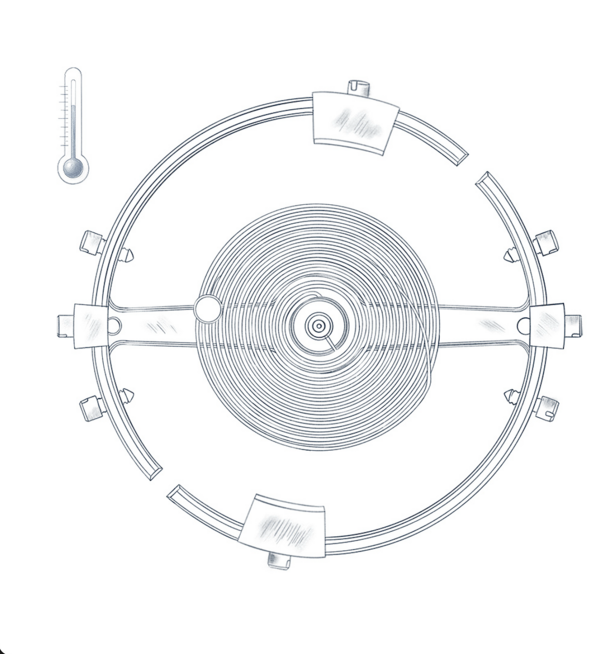
Neutral Temperature: At its reference temperature, the bimetallic balance maintains its neutral shape, keeping the hairspring at its intended length and tension. The balance wheel’s rim remains straight, and the hairspring’s elasticity is in perfect balance.
Charles-Édouard Guillaume’s Invar, with its near-zero coefficient of thermal expansion, was a perfect inner material for such a wheel. Combined with brass, which expands more readily, the resulting balance could offset the softening or stiffening of the hairspring caused by temperature shifts. This invention helped eliminate the so-called “secondary error” in chronometry – the subtle rate changes observed when a watch is tested at high, low, and mid-range temperatures.
Guillaume’s balance wheels were adopted by some of the most prestigious watchmakers of the era, including Patek Philippe, Ulysse Nardin, and Zenith, particularly for Observatory competition-grade watches. But with the advent of new materials in the mid-20th century, the bimetallic balance slowly fell out of use – its production techniques and theory consigned to archives and history books.
The Naissance d’Une Montre 3's movement, calibre FB-BTC.FC, revives the bimetallic balance with technical and historical rigor. Its construction takes direct inspiration from a timepiece completed in 1793: the decimal pocket watch N°26, created by Pierre-Louis Berthoud, nephew of Ferdinand Berthoud. Commissioned by the mathematician and navigator Jean-Charles de Borda, N°26 used a split bimetallic balance designed to maintain precision in changing environmental conditions. Louis Berthoud would later describe it as his most important chronometer.
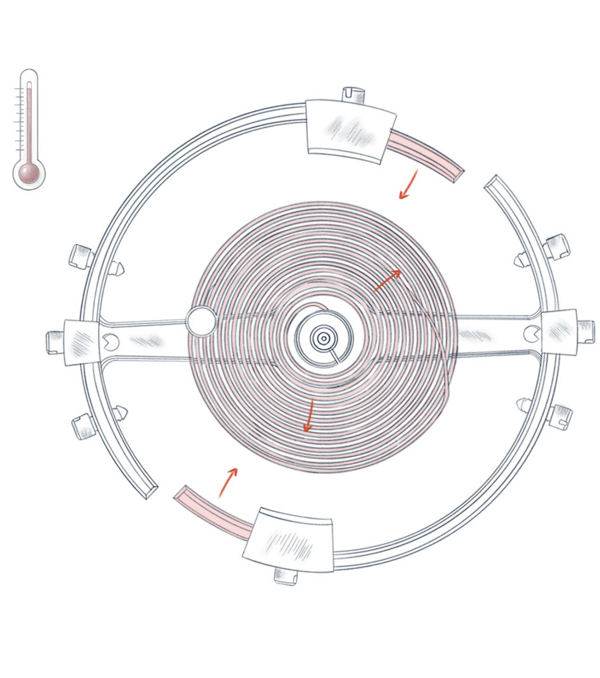
Heat Expansion: In warm conditions, the bimetallic rim expands and bends inward, slightly shortening the hairspring’s effective length to counteract the loss of elasticity.
“When we initiated the project, I asked if it would be possible to transcribe directly the work made by Pierre-Louis Berthoud and to produce a similar bimetallic balance,” says Lapaire. “But his bimetallic balance was created very early, in 1793. It was built to be used in longitude pocket watches, but it wouldn’t have worked as well in a contemporary wristwatch. That’s why we decided to go for the more ‘modern’ technique and commit to the Guillaume split bimetallic balance wheel.”
In the FB-BTC.FC calibre, the bimetallic balance consists of a fused inner ring of Invar and an outer ring of brass, following Guillaume’s principle of thermal compensation. The balance includes four 18k gold adjustment screws, two gilded nickel-silver weights on the split rim for thermal regulation, and two fixed masses to ensure optimal inertia. It’s paired with a traditional hairspring made from flame-blued 0.06mm carbon steel, drawn and shaped entirely by hand, and featuring a Phillips terminal curve.
“The most difficult part of this entire project was definitely figuring out how to produce a bimetallic balance wheel for a wristwatch,” says Lapaire. “It took three years of research and development, without the help of any technical literature, because it hasn’t been achieved in decades. This is not something that is taught in watchmaking school.”
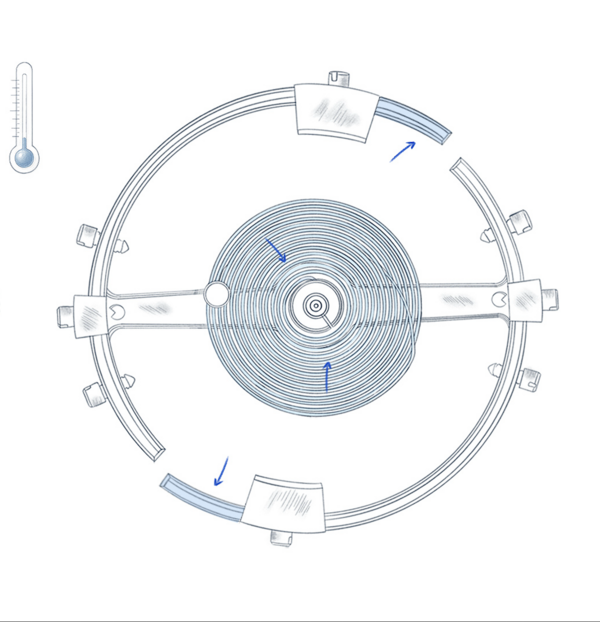
Cold Contraction: In cooler temperatures, the rim contracts and bends outward, effectively lengthening the hairspring to offset the increased stiffness caused by the cold.
This balance assembly, composed of 18 parts, beats at 3Hz (21,600 vph) and functions as the core of the movement. But it’s also an artifact of horological resurrection. Producing the fused Invar-brass balance required an entirely new experimental process.
“During the first two years, we thought it was impossible because we kept failing, over and over and over again – we constantly tried new techniques,” says Lapaire. “We ended up working closely with Chopard’s in-house gold foundry in Geneva on this project. They have a lot of expertise and were able to help us produce a simple disc with these two metals (invar and brass) welded together. The foundry was able to provide it to our craftsmen, who were then able to tool the balance.”
“We first tried to create the balance by fusing the metals together – it was a disaster,” he continues. “We eventually found success by welding the two metals together in a very homogeneous way, in an oven with a controlled temperature and a vacuum. It was a very complex technique to ensure the result was a harmonious element that was absolutely stable and could be drilled, tooled, and cut in the shape of the balance."
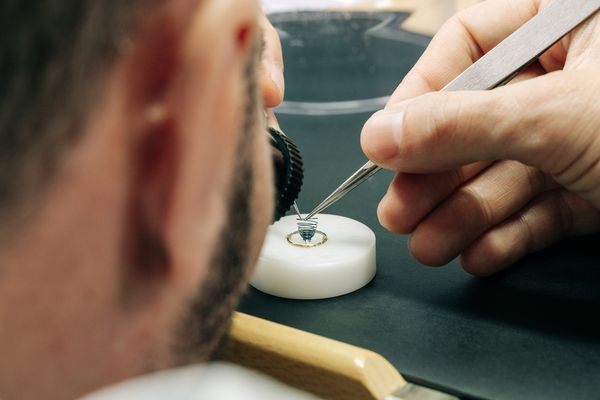
A Ferdinand Berthoud watchmaker fits the hairspring to the bimetallic balance wheel of the Naissance d’Une Montre 3. This step regulates the watch’s precision, and in the case of NDM III, it’s done entirely by hand.
“Producing the Guillaume bimetallic balance was a key element for the project. There was no technical literature. We contacted all the members of the Time Æon Foundation for help. We reached out to watchmaking schools everywhere. Nobody knew how to achieve it. The challenge was to rediscover the technique.”
The bimetallic balance physically bends with the temperature, either increasing or decreasing its effective moment of inertia to offset changes in the hairspring’s torque. As heat rises and the hairspring softens, the balance arms move inward, reducing inertia. As temperatures fall, they expand outward, increasing inertia. The system preserves equilibrium – and precision.
The movement also includes a diamond shock absorber, directly inspired by the Astronomical Pocket Watch No. 3. Its function is deceptively complex: to protect the balance staff while preserving its endshake and tension across temperature swings. As with many other components in the Naissance d’Une Montre 3 project, its implementation required not only engineering but also historical research and the recovery of long-lost techniques.
An Education in Time
Every detail of the Naissance d’Une Montre 3 is a point of emphasis.
Visually, the design reflects Berthoud’s marine chronometers. The 44mm stainless steel case is inspired by the Astronomical Pocket Watch No. 3, down to its curved profile and distinct welded lugs. The dial, off-centered and hand-engraved in 18k gold, shows Roman hours and Arabic minutes at 2 o’clock. The seconds track encircles the movement, while the hands – flame-blued steel with fine tips – take nearly two complete days to produce using over 50 steps and more than a dozen finishing operations.
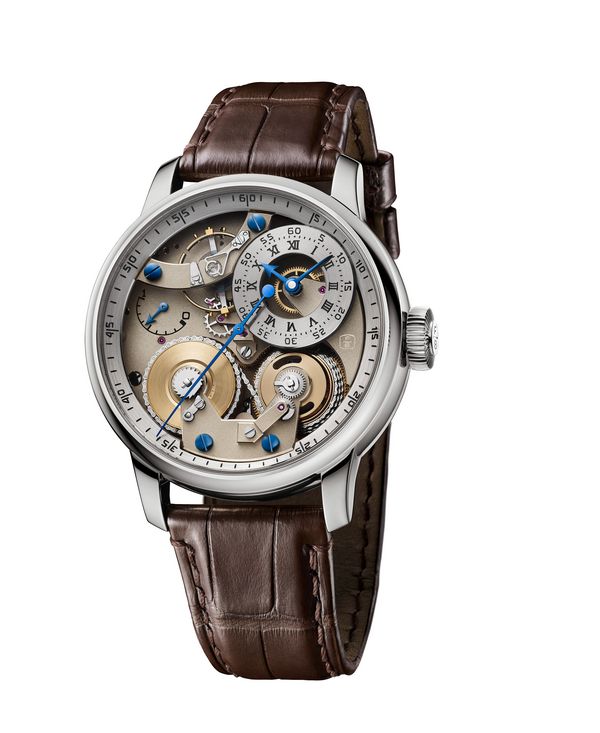
Lot 6: The 2025 unique Ferdinand Berthoud Naissance d'Une Montre 3, including in the Phillips Decade One (2015-2025) auction. Estimate: CHF 400,000 - 800,000
All this comes together in a timepiece that exists as both a watch and a proof of concept. The Naissance d’Une Montre 3 explores how mechanical knowledge can be passed down, not just through books or diagrams, but through the physical act of making.
In the case of Ferdinand Berthoud, that includes a philosophical nod as well: engraved on the barrel bridge is the 18th-century motto of Louis Berthoud, Ferdinand's nephew and a horological master in his own right: “Au Temps qui Instruit.” Time teaches.
“For the future owner of this watch, it’s extremely important that they understand that the Naissance du Montre 3 project is not only about crafting an exceptional timekeeper by hand with traditional tools,” says Lapaire. “It’s also a very important achievement in terms of preservation and consolidation of traditional haute horlogerie know-how. It’s not only about the watch but all the techniques that we have learned and that we will teach to the next generation of watchmakers.”
The Unique, Stainless-Steel Naissance d'Une Montre 3
Only 11 examples of Naissance d’Une Montre 3 will be produced – each by hand, each with slight variations. Ten are reserved for collectors. The eleventh is unique: a stainless-steel example that will be sold at Phillips during the Decade One (2015-2025) thematic auction in Geneva this November.
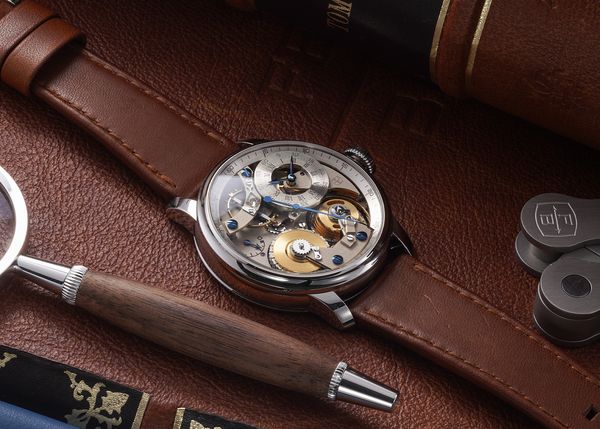
Lot 6: The 2025 unique Ferdinand Berthoud Naissance d'Une Montre 3, including in the Phillips Decade One (2015-2025) auction. Estimate: CHF 400,000 - 800,000
In fact, the primary run of 10 pieces cased in gold are all already spoken for and will be delivered over the next few years, making the present example the first one officially delivered, but the last one available. A portion of the sale proceeds, including Phillips' buyer's premium, will be donated to charities and organizations dedicated to preserving watchmaking expertise for future generations.
This is an opportunity to own a watch that embodies a decade of revival, experimentation, and profound respect for the traditional craft of watchmaking. And that’s what Naissance d’Une Montre is ultimately about.
It’s a living commitment to the idea that craftsmanship still matters. And that teaching it matters even more.
You can view the complete Phillips Decade One (2015-2025) auction catalogue here.