Article | Guillaume Balance Wheel What Is Bimetallic Pocket Watch Patek Philippe Kari Voutilainen
The Remarkable History of the Guillaume Balance
Awarded the Nobel Prize in 1920, Charles-Édouard Guillaume’s nickel-iron alloys revolutionized precision timekeeping.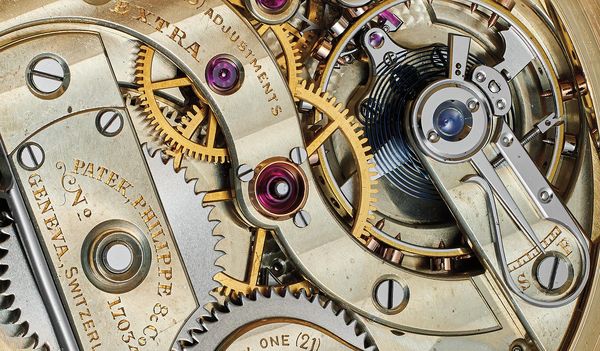
– By Logan Baker
Only once in history has the Nobel Prize in Physics been awarded to someone for work directly tied to watchmaking. That distinction belongs to Charles-Édouard Guillaume, who received the 1920 prize for his discovery of nickel-iron alloys with unusual and highly useful thermal properties.
Guillaume’s research laid the foundation for more accurate timekeeping devices – particularly the development of the “Guillaume balance,” one of the most important horological innovations of the early 20th century.
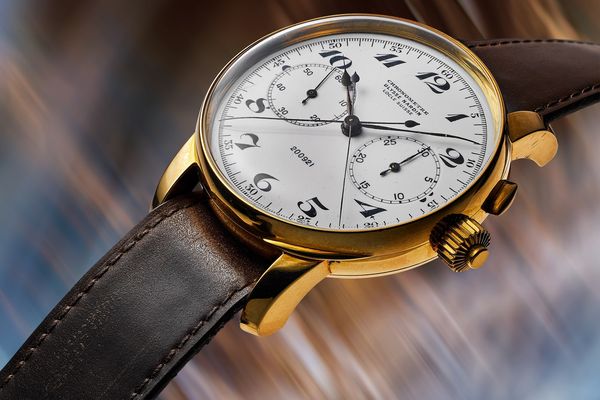
An oversized 1915 Ulysse Nardin split-seconds chronograph wristwatch with Guillaume balance that sold for USD $114,300 at the Phillips New York Watch Auction: X, in June 2024.
Born in the Val-de-Travers region of Switzerland on February 15, 1861, Guillaume's father was a watchmaker, and while Guillaume pursued a career in physics, he remained deeply connected to the world of Swiss watchmaking throughout his life. He would spend over 50 years working at the International Bureau of Weights and Measures, where his most important discoveries emerged in the late 1890s.
At the heart of his work was a fundamental challenge: how to control for the effects of temperature on precision measurement. Most materials expand or contract when exposed to heat or cold. This natural phenomenon creates serious problems for scientific instruments – and especially for timekeepers, which rely on highly stable oscillating components.
Guillaume’s breakthrough came in the form of three nickel-iron alloys: invar, elinvar, and platinite. Invar, in particular, had an exceptionally low coefficient of thermal expansion – meaning its dimensions barely changed with temperature. Elinvar, meanwhile, maintained nearly constant elasticity across temperature variations. These qualities made the materials ideal for components like balance wheels and hairsprings, which require both physical stability and elastic consistency.
Remembering his father's work as a watchmaker, Guillaume began experimenting with invar pendulums. His work soon caught the attention of Paul Perret, a Swiss watchmaker, who requested a sample of invar and collaborated with Guillaume to test its properties. With help from physicist Marc Thury (who is credited with coining the name “invar”), the two quickly confirmed the alloy’s thermal stability.
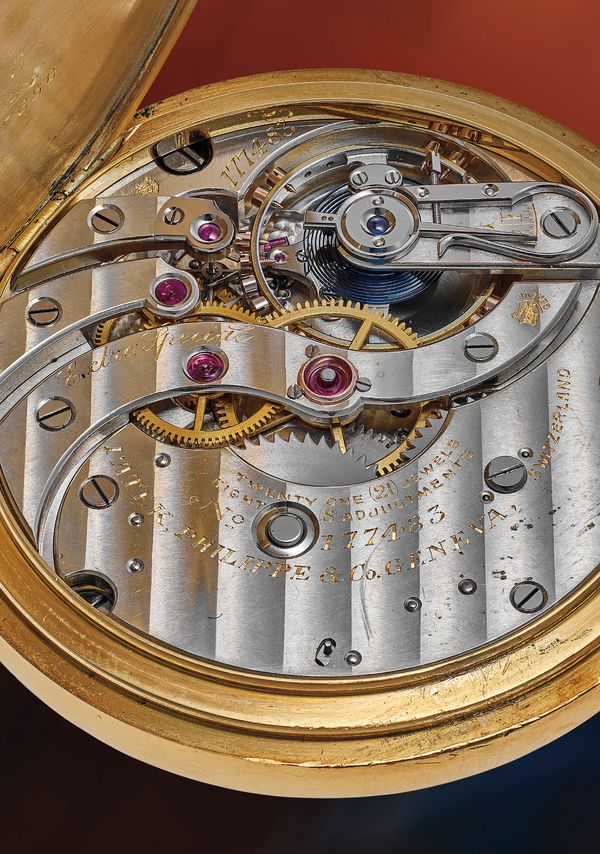
A 1913 Patek Philippe pocket watch with an "Extra Special"-grade movement featuring a Guillaume balance, originally made for Henry Graves Jr. Sold for USD $279,400 during the Phillips New York Watch Auction: X, in June 2024.
At the time, a key challenge in precision watchmaking was the so-called secondary error: a subtle, non-linear variation in a watch’s rate due to temperature changes. To test for secondary error, observatories measured a watch's rate at both high and low temperatures, and then again at the average of the two. Any discrepancy between the expected and observed rates at the midpoint revealed the presence of secondary error, typically caused by the interaction of various temperature-sensitive components.
Guillaume realized that his nickel-iron alloys could address this issue. By slightly adjusting the composition of invar to create a negative quadratic temperature coefficient, he hypothesized that the material could cancel out the secondary error altogether. To test this theory, he turned to two respected Swiss watchmakers: Paul D. Nardin in Le Locle and Paul Ditisheim in La Chaux-de-Fonds. Their experiments confirmed Guillaume’s prediction. Timepieces equipped with nickel-iron balances showed no measurable secondary error. The results were presented at the Neuchâtel Observatory before none other than Adolphe Hirsch, one of the most respected astronomers and horological authorities of the time.
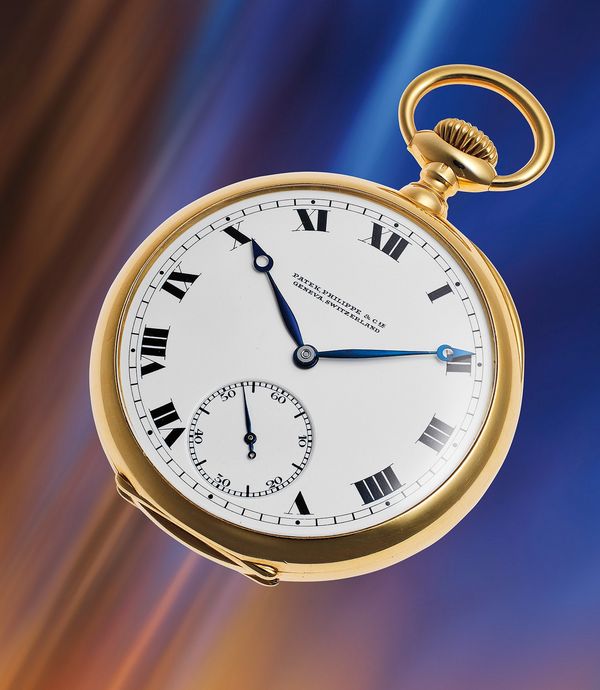
A 1912 Patek Philippe pocket watch with an "Extra"-grade movement featuring a Guillaume balance, and which was awarded "Honourable Mention" at the 1915-1916 edition of the Geneva Astronomical Observatory Timing Contest. Sold for USD $19,050 during the Phillips New York Watch Auction: X, in June 2024.
Encouraged by this success, Guillaume refined his approach. In 1912, he theorized that combining his nickel-iron alloy with elements like manganese or chromium could yield a material with invariable elasticity – ideal for hairsprings. This led to the creation of elinvar, and ultimately to the construction of a monometallic balance spring that was nearly immune to temperature effects. Zenith was the first brand to adopt the elinvar hairspring, debuting it in a chronograph in 1916.
By the time Guillaume received the Nobel Prize in 1920, the impact of his discoveries on watchmaking was already clear. Thanks to the Guillaume balance, rate discrepancies in marine and deck chronometers were reduced to mere tenths of a second per day. In astronomical regulators, invar pendulums allowed for precision within hundredths of a second. A typical temperature coefficient in horology might show a rate change of 0.1 seconds per degree Celsius per day – Guillaume’s alloys slashed that figure to nearly zero.
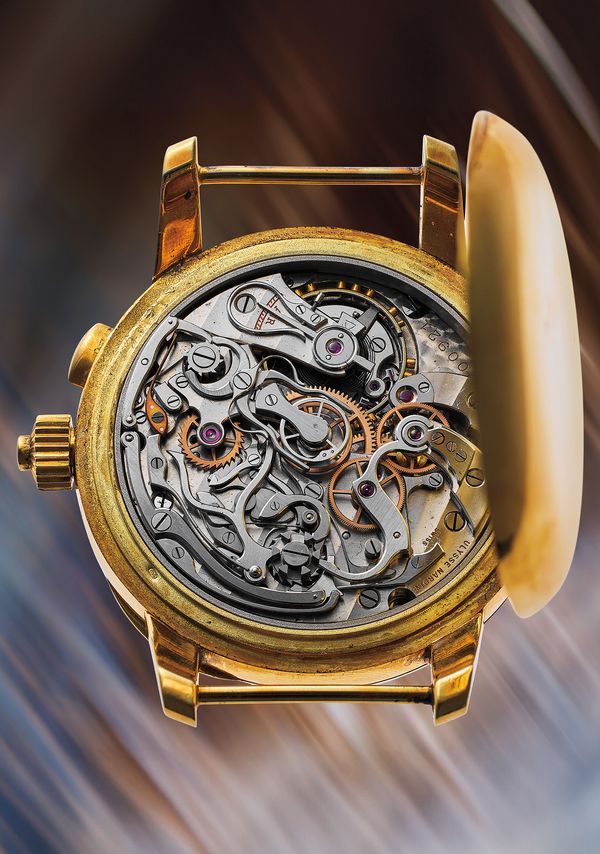
An oversized 1915 Ulysse Nardin split-seconds chronograph wristwatch with Guillaume balance that sold for USD $114,300 at the Phillips New York Watch Auction: X, in June 2024.
Guillaume balances became a hallmark of early 20th-century observatory-grade chronometry. Makers such as Patek Philippe, Zenith, Ulysse Nardin, and others used them in their most precise pocket watches, especially those entered into Observatory contests. While these balances haven't been produced in decades, their influence can still be seen in the thermal compensation strategies used in modern high-precision timekeeping.
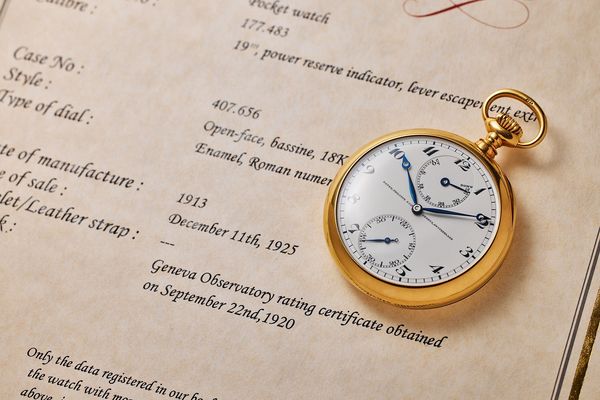
A 1913 Patek Philippe pocket watch with an "Extra Special"-grade movement featuring a Guillaume balance, originally made for Henry Graves Jr. Sold for USD $279,400 during the Phillips New York Watch Auction: X, in June 2024.
Three remarkable timepieces that sold during the June 2024 Phillips New York Watch Auction: X contained a Guillaume balance: lot 26, a 1912 Patek Philippe pocket watch with an "Extra"-grade movement that was awarded "Honourable Mention" at the 1915-1916 edition of the Geneva Astronomical Observatory Timing Contest; lot 28, a 1913 Patek Philippe pocket watch with an "Extra Special"-grade movement, originally made for Henry Graves Jr.; and lot 29, a truly incredible, oversized 1915 Ulysse Nardin split-seconds chronograph wristwatch.
You might also recall that the 2022 Zenith × Kari Voutilainen × Phillips in Association with Bacs & Russo Calibre 135 Observatoire Limited Edition wristwatch featured a vintage Zenith Observatory-grade movement fitted with a Guillaume balance, as well.