Article | Kenny Schachter Emerges From The Hoard
Kenny Schachter Emerges from the Hoard
An easy way to avoid storage fees? Live with your art. The man behind the collection speaks with Phillips as he makes way for whatever comes next.
Phillips is proud to present the sixth edition of Hoarder, an online sale of contemporary art and design from the personal collection of artist, writer, and lecturer Kenny Schachter. Featuring works by emerging and established artists, as well as a hell of a deal on some track pants, most of the lots are offered with no reserve. The sale is open for bidding through 17 July, alongside a gallery viewing through 16 July, where guests might even spot Schachter "dutifully invigilating" the show from time to time.
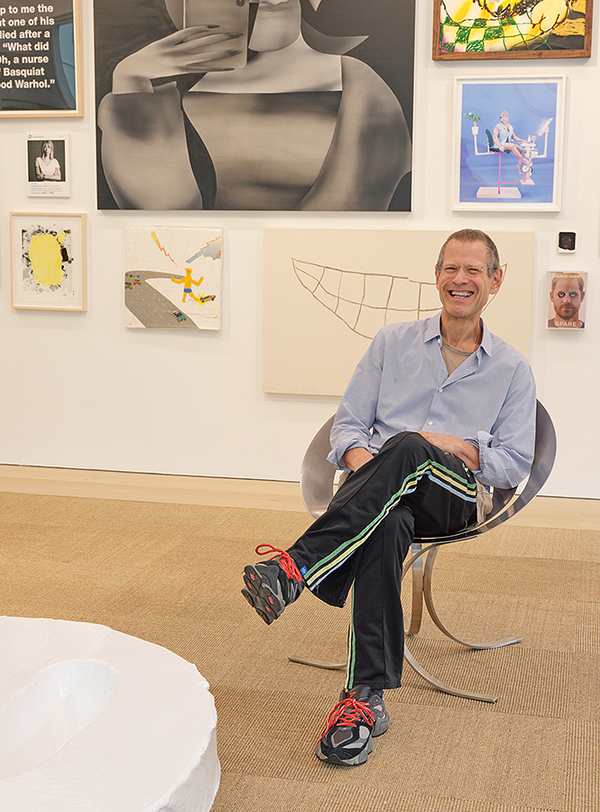
Kenny Schachter at Phillips' 432 Park Avenue gallery. The present Adidas track pants are not part of the sale.
PHILLIPS: Let's set the tone: “My loss is your gain.” Quite a pitch.
KENNY SCHACHTER: My loss is your gain meaning that I have decided to let this group of works go to the next art lover, and above all, this is not about my profit or loss; but, rather to initiate a funding event to enable my sustenance and maintain a life engrained in teaching, writing and being able to continue making things.
P: The hoard has been sheared and grown six times now. What was your selection process like this go-around?
KS: You can never own art, you are but a mere custodian, ensuring the wellbeing of the objects in your lifetime until the next caretaker. I have enjoyed many of the things in this sale for literally decades and now it's time (for me) and them to move on. I assure you there's plenty more to fill the gaps, which didn't remain fallow for long. I don't differentiate between making art, teaching, writing, curating and the Hoarder series — as far as I am concerned they are all a continuous thread of my art practice.
P: What are some of the stories behind these works?
KS: I bought the Chris Ofili 29 years ago from an exhibit that Jake Chapman curated entitled Some of My Best Friends are Geniuses in a gallery called Independent Art Space off Kings Road in London in 1996. I was there to curate an exhibition of my own at the time of New York-based artists. I can relate to his sentiment in organizing the exhibit: art is not merely an academic exercise but part and parcel of life itself. Jake was even gallery sitting at the time and I had to run out to the cash machine to wrench the piece off the wall. And I am sitting the Phillips Cube gallery space as I write this!
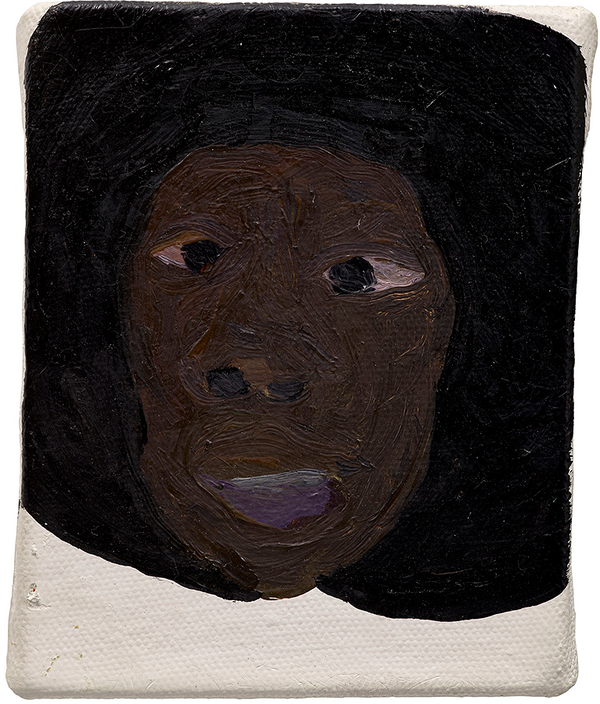
Chris Ofili, The Chosen One, circa 1996. Hoarder VI: The Migration.
P: No reserve widens the fold a bit. Where does a new collector start when approaching the sheer variety of options — yours or otherwise?
KS: Art from the heart. Nothing more to say. Look, read, then look and read some more. As Christopher Wool painted in a giant stenciled text painting years ago that stuck in my head: THE HARDER YOU LOOK THE HARDER YOU LOOK. Art is about expanding your capacity to think and see.
P: Does being an artist yourself impact the way you collect and sell?
KS: I can't sell drugs to an addict and loathe the process, hence the Hoarders! Again, I collect as I make, write and teach — with consideration and forethought. I deem the works I live with, and I am up to my eyeballs in the stuff, as research materials that I physically interact with each (and every) day! I treat the works in my collection as chess pieces — though I hate games and can't play sports — I engage with them, touch them, move them, smell them all the time. Maybe we should strike that last sentence, ha ha. (Editor's Note: Overruled.)
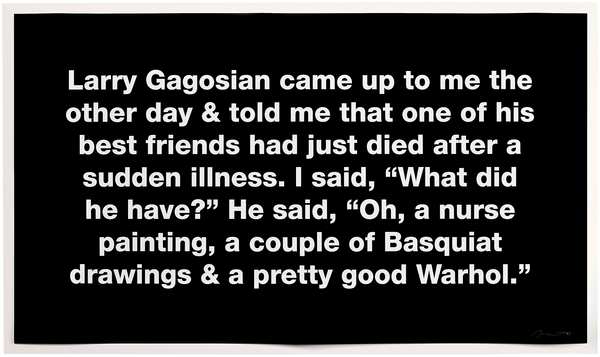
Kenny Schachter, The Larry Joke, 2018. Hoarder VI: The Migration.
P: How have online sales shifted the art landscape in recent years? In simpler terms: how infinite is your scroll?
KS: Before Covid, in the entrenched, stale hierarchy of the art market, online sales were akin to selling the contents of your bedside drawers and closest on a blanket in a city street. When online became the lifeline to buy and sell art, the breadth of the market catapulted into the bigtime billions of dollars. Watching those sales during the pandemic became an international pastime. Observing the conspicuous display of consumption on computers was an odd form of entertainment when you can't even see the buyers wave paddles, only specialists, socially distanced in a studio, wielding telephones. Strange days indeed. In any event, the habit of buying and selling online stuck and the category has steadily grown ever since.
P: You're often asked for insight on specific artists within the market, but speaking broadly, an album is more than its singles — when does a collection become less about its individual works and more about its, well, collectiveness?
KS: Every collection is stained with the DNA of the buyer and should stand-up individually and as a cohesive group. I feel the Hoarder VI installation at Phillips is among the best group shows I have seen in years — if I don't say so myself.
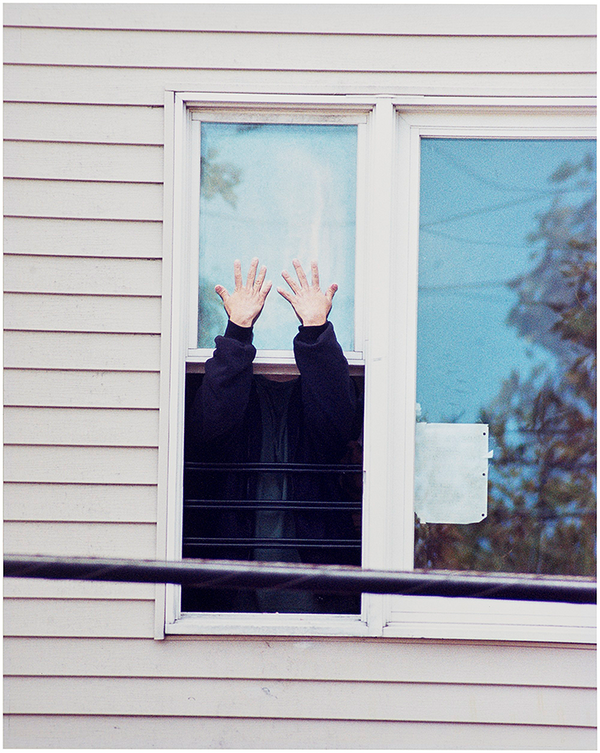
Rachel Harrison, Untitled (Perth Amboy series), 2001. Hoarder VI: The Migration.
P: Where to next? What's got your attention at the moment?
KS: I have a solo show in Chicago at Old Friends Gallery from August 14th through the middle of September entitled Chicken Stingel: The Sequel — don't ask — but please, please take a look! They are a great young gallery that also operate a massive ceramic studio offering up solutions to a shifting market that all to many (mostly in the press) are moaning about. They are creating proactive alternatives to make, see and live from art production, helping large swathes of the creative community in the process.
In October, I have an exbibit/performance of art, furniture and a real-time writing adventure in Marfa, Texas, at the fantastic Sentinel newspaper building in Judd-ville, entitled After Judd where I will live and work in a mini-residency.
In conclusion, things never change, we not only want art, we need it and have done so since time immemorial. Relax everyone, art will be fine.