140
Andy Warhol
Open This End
Full-Cataloguing
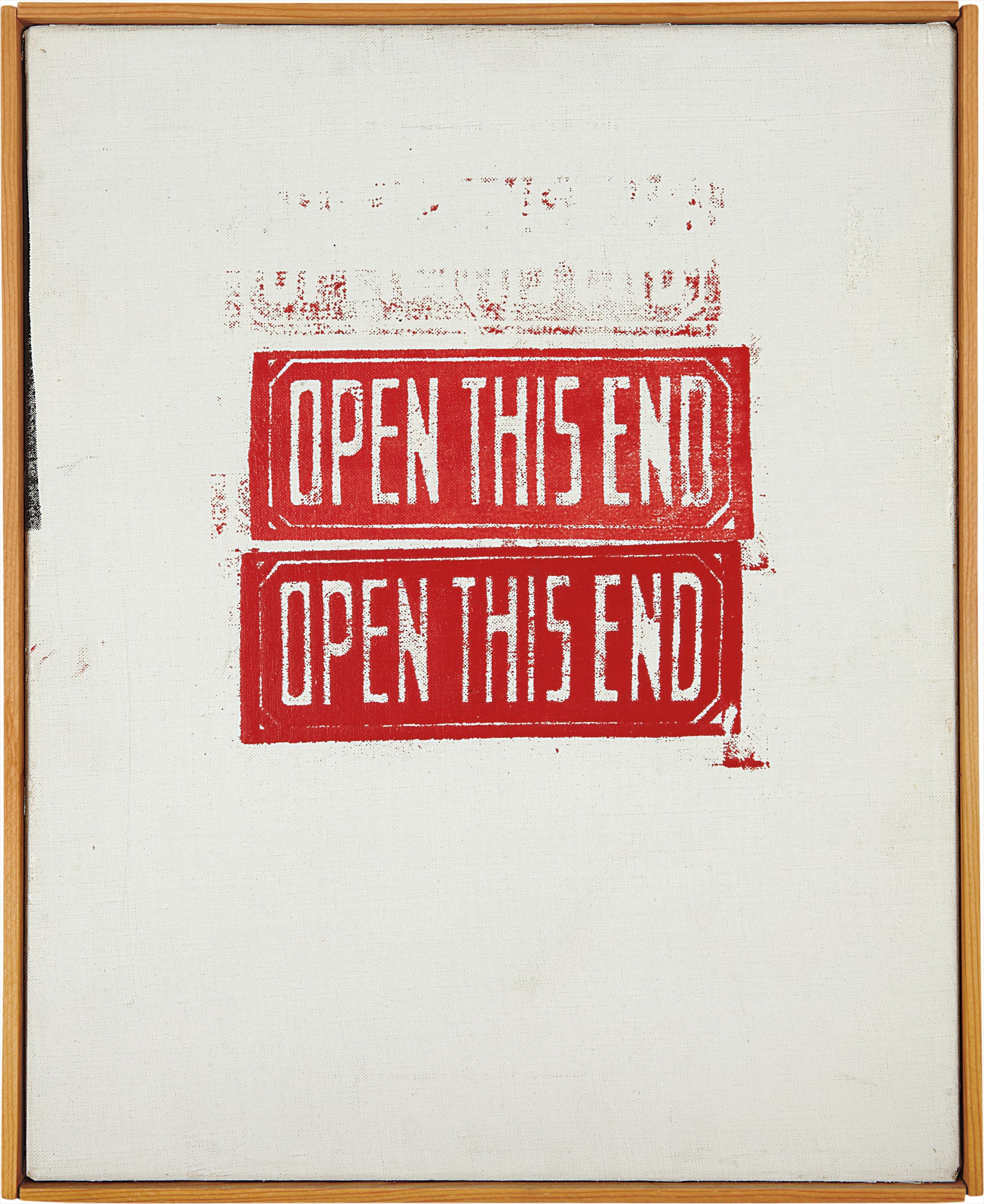
As an embodiment of Warhol's commentary on consumer culture, Open This End, 1962 is ripe for discussion not only for its Duchampian origins, but also for its fabulous sexual suggestiveness, which Warhol would explore further later in his career. Recalling the iconicity of his Campbell's Soup Cans, the severe medium of the present lot stands starkly in the center of the canvas, as though radiating a heat--perhaps hot to the touch. Fate played an important role in Warhol’s artistic process, as we observe the smudges, smears, and unintentional marks that came to be the ubiquitous signs of an authentic Warhol silkscreen. Warhol takes a common phrase, found on canned goods and other marvelously mundane groceries, and elevates it, ultimately granting the brief instruction a life of its own. But we can also see Warhol's wry sense of humor working its mischievous magic, inviting us to question his good intentions. Warhol never provides us with any answers--only paintings.
Andy Warhol
American | B. 1928 D. 1987Andy Warhol was the leading exponent of the Pop Art movement in the U.S. in the 1960s. Following an early career as a commercial illustrator, Warhol achieved fame with his revolutionary series of silkscreened prints and paintings of familiar objects, such as Campbell's soup tins, and celebrities, such as Marilyn Monroe. Obsessed with popular culture, celebrity and advertising, Warhol created his slick, seemingly mass-produced images of everyday subject matter from his famed Factory studio in New York City. His use of mechanical methods of reproduction, notably the commercial technique of silk screening, wholly revolutionized art-making.
Working as an artist, but also director and producer, Warhol produced a number of avant-garde films in addition to managing the experimental rock band The Velvet Underground and founding Interview magazine. A central figure in the New York art scene until his untimely death in 1987, Warhol was notably also a mentor to such artists as Keith Haring and Jean-Michel Basquiat.