|
A Selling Exhibition Dedicated to Pablo Picasso’s Deep and Lifelong Engagement with the Animal World
On View at Phillips’ Asia Headquarters in Hong Kong’s West Kowloon Cultural District from 13 March – 15 April
Hong Kong – 17 February 2025 – PhillipsX, a selling exhibition platform operated by the global Private Sales team at Phillips, is pleased to announce Picasso & The Animal Kingdom, a selling exhibition dedicated to Pablo Picasso’s deep and lifelong engagement with the animal world. Across paintings, works on paper, sculpture, ceramics, and editions, this exhibition highlights the artist’s masterful ability to capture the essence of animals —not just as subjects, but as symbols, muses, and metaphors that reveal an artistic vision and personal mythology. Taking place from 13 March to 15 April at Phillips’ galleries in Hong Kong’s West Kowloon Cultural District flanking M+, this show coincides with the museum’s special exhibition The Hong Kong Jockey Club Series: Picasso for Asia—A Conversation.
Jeremiah Evarts, Deputy Chairman, Senior International Specialist Modern & Contemporary Art, said: “Picasso’s output is famously diverse – one can find extreme variations between the profound melancholy of the Blue Period and the fractals of Cubism, the lyricism of his Neo-Classical phase and the distortions of his wartime portraiture, among many other worlds he created in his seven decades as an artist. It is one of the great joys of Picasso scholarship to find threads that remain consistent through all of these stylistic shifts, and his attention on the animal kingdom is certainly one of these. In this exhibition, we are pleased to present examples across those seven decades that show an artist in thrall with the mystical power of animals. His evocation of animal personalities ranges from whimsical and humorous depictions to more profound meditations on the relationships we form with these creatures. From owls, ducks and pigeons to monkeys, dogs, and goats, our presentation at Phillips Hong Kong will present a wild menagerie emanating from the most influential artistic mind of the 20th century.”
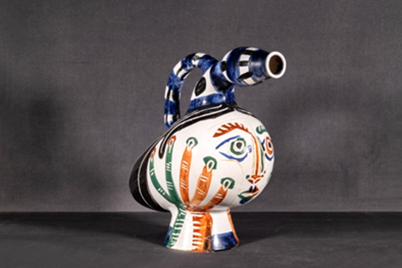
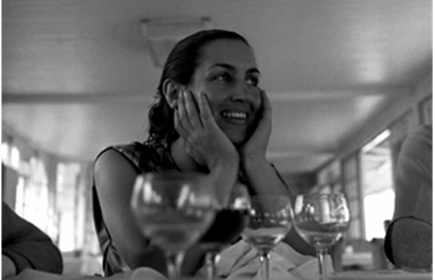
Whether rendered in a single, spontaneous line or sculpted into bold, dynamic forms, his depictions demonstrate both a sensitivity to nature and an instinct for reinvention. The exhibition features a number of unique and editioned pieces that showcase Picasso’s dynamic approach to clay. His ceramic practice flourished in the late 1940s and 1950s at the Madoura pottery studio in Vallauris, France, and was particularly rich with animal motifs. Among the highlights of the exhibition is Canard pique-fleurs (1951), a striking fusion of animal and human imagery. Shaped to suggest the silhouette of a duck, this vessel is brought to life with an unexpected human element—the face and hands of a woman, inspired by his partner at the time, Françoise Gilot. Employing a combination of black slip and sgraffito, Picasso animated the form with flowing lines that depict the waves of her hair and the delicate features of her resting face. The vessel also incorporates six pierced holes toward its back, hinting at its intended function as a flower vase. This work exemplifies Picasso’s ability to animate his ceramic surfaces with the same dynamism found in his use of pencil and oil; the vase captures the soulful duck through expressive yet minimal lines.
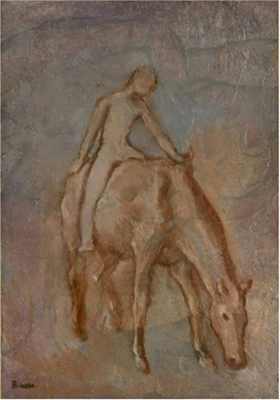
This same sensitivity extends in his oil, in which Picasso’s exploration of animals becomes even more layered and complex. Jeune Garçon nu à cheval (1906), is a rare and extraordinary example from his Rose Period, a phase marked by warmth, tenderness, and a certain optimism in distinction to the preceding Blue Period. The painting’s significance is further underscored by its connection to L’Abreuvoir (The Watering Place) (1906), an ambitious, unrealized composition that Picasso explored through multiple studies (the most complete of which is now housed at The Metropolitan Museum of Art, New York). Jeune Garçon nu à cheval is one of only two known oil paintings associated with this theme—and the only one still in private hands. Recent research has revealed an earlier Blue Period composition beneath the surface, underscoring Picasso’s earliest practice of reworking canvases and offering new insight into his evolving creative process.
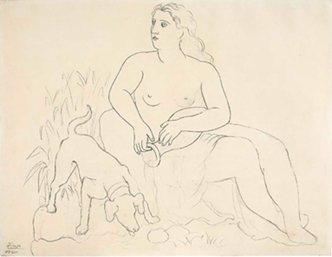
La Source / Femme au chien, a pencil drawing from 1921, reflects Picasso’s return to classical ideologies following the atrocities of World War I. A seated female figure pours water for her canine companion while providing
sustenance for the river. The delicate yet confident and steady linework lends a sculptural presence to the composition, emphasizing the quiet yet profound connection between the figures. Dogs in Picasso’s work embody companionship, loyalty, and instinct, often depicted with playfulness. Among the work’s important provenance includes The Museum of Modern Art, New York (MoMA).
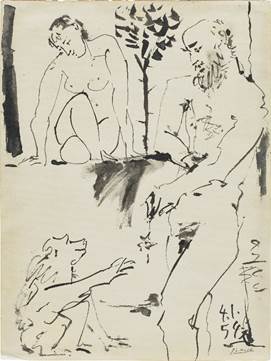
Femme et singe, done nearly 30 years later in 1954, illustrates Picasso’s progression into a more spontaneous handling of pen and brush with ink on paper. The work is a strong example of his ability to play with tension and harmony while maintaining the interplay between human and animal – in this case, a monkey- reflecting playfulness, intellect, and sensuality.
Through this highly curated selection of paintings, drawings, sculpture, and ceramics, Picasso & The Animal Kingdom celebrates the enduring presence of animals in the artist’s oeuvre and reaffirms their significance within his artistic legacy. From the fluid elegance of his drawings to the dynamic physicality of his ceramics and the layered complexity of his paintings, this exhibition showcases Picasso’s lifelong fascination with the animal kingdom throughout his career and across varied media.
Date & Time: 13-30 March, 11am to 7pm; 1-15 April, 10am to 6pm (Closed on 31 March and 4 April)
|
|||||||