
Brittney Leeanne Williams, A Window, Doorway and Arch, 2021. Gallery One for Foster Pride.
PHILLIPS: To start, tell us about the driving force behind Foster Pride. What are the goals of the programs?
LYNN SCHNURNBERGER: Foster Pride empowers children and teens in foster care to develop their talents, build self-esteem and reach their potential through mentoring relationships and the arts. Since 1993 over 15,000 youth have participated in visual literacy art classes, job-preparedness activities, internship programs, and more that spark creativity, academic learning, and pride. Our goal is to provide the resources to help these vulnerable young people become successful, independent adults.
P: Why did you want to start the organization? And how has that vision evolved over time?
LS: I started the program for very personal reasons. I can't have children and at the time, I was looking into single parent adoption and I read about the plight of children in foster care — back then, as a single woman, I wouldn't have been allowed to to be a foster parent, but I decided I could start an art program for them. I wanted to do something which involved having children in my life. And then, because I do believe that everything happens when it's supposed to, I met my wonderful now-husband who was a widower with a then 3 1/2-year-old daughter. So i got to start Foster Pride AND become a mother. Foster Pride started as one weekly art class for 30 children — and today we work with over 400 children annually in the Bronx, Brooklyn, Queens and Manhattan. And we've grown from giving after school art classes to helping students prepare their portfolios for special high schools and college; providing financial literacy classes; offering HandMade, which teaches young women in foster care how to crochet and sell their beautiful creations at American Eagle and Nordstrom; and providing internships and job opportunities. So our scope has really expanded!

Annie Hémond Hotte, Mother, 2019. Gallery One for Foster Pride.
P: What is your process for selecting participants into Foster Pride programs?
LS: Foster Pride works with some of the best foster care and youth agencies in the city — Good Shepherd Services, Graham-Wyndham, The Door, the JCCA, among others. Teachers go on site to these different agencies around the city so that we can capture our biggest audiences — children may be at the agency for parental or social worker visits, but now they're coming for art class too. Many of our teens live in group homes where we arrange weekly classes and internships are open to anyone over 16 in foster care.
P: What impact have you seen from the organization? What has been the most surprising success story?
LS: One of the unique things about Foster Pride is that we stick with our kids and we're lucky to share in their lives and successes.Sammy tagged along with his older foster brother to a Foster Pride computer class for teens when he was just nine-years-old. He was so enthusiastic that despite his young age, the teacher, Rosanne, let him stay. But the once-a-week class wasn’t enough for Sammy — he started showing up at Rosanne’s office everyday. Soon afterwards, he was doing his homework with Rosanne and staying for dinner — and by the end of the year not only had his grades improved, he’d won his school’s science fair. Rosanne has remained Sammy’s trusted mentor throughout the years — cheering his college graduation, dancing at his wedding and becoming an adopted grandmom to Sammy and his wife Kristen’s two beautiful children.
Massama, now 22, is a refuge from Mali who arrived in the United States alone when he was 15, speaking no English. Massama participated in Foster Pride’s “Career Week,” an event which exposes youth to what it’s like to work in different industries and he attended every single session — visiting a fashion company, a construction site, a restaurant, and a bicycle repair shop. When we asked him what kind of job he would like, Massama’s answer was simple, “One that leads to a good future.”
Foster Pride was able to secure an internship for Massama at the NYC Department of Law where he honed his language and administrative skills. These days, Massama is the first set of eyes to review internship applications for law students who want to work for the department. His bosses admire Massama’s drive, ability and enthusiasm and Massama loves learning and working there. He is currently a junior at John Jay College, where he is studying criminal justice. And whether he ends up with a career as an admin, a paralegal, a lawyer, or in some other entirely different profession, we feel confident, as does Massama, that he is on his way to becoming a proud, confident, tax-paying member of his community, one who has a job “That leads to a good future.”
P: Why is art important for kids? How does art help them to develop a sense of who they are?
LS: There are tons of studies that tell us that art encourages fine motor skills, neural development and problem solving abilities that help students understand other subjects like reading, math and science. Children in foster care have experienced trauma, and art is a valuable tool to process their emotions in a safe way. Making art can instill a sense of mastery and pride that these youth don't experience in other parts of their lives. And making art is fun!
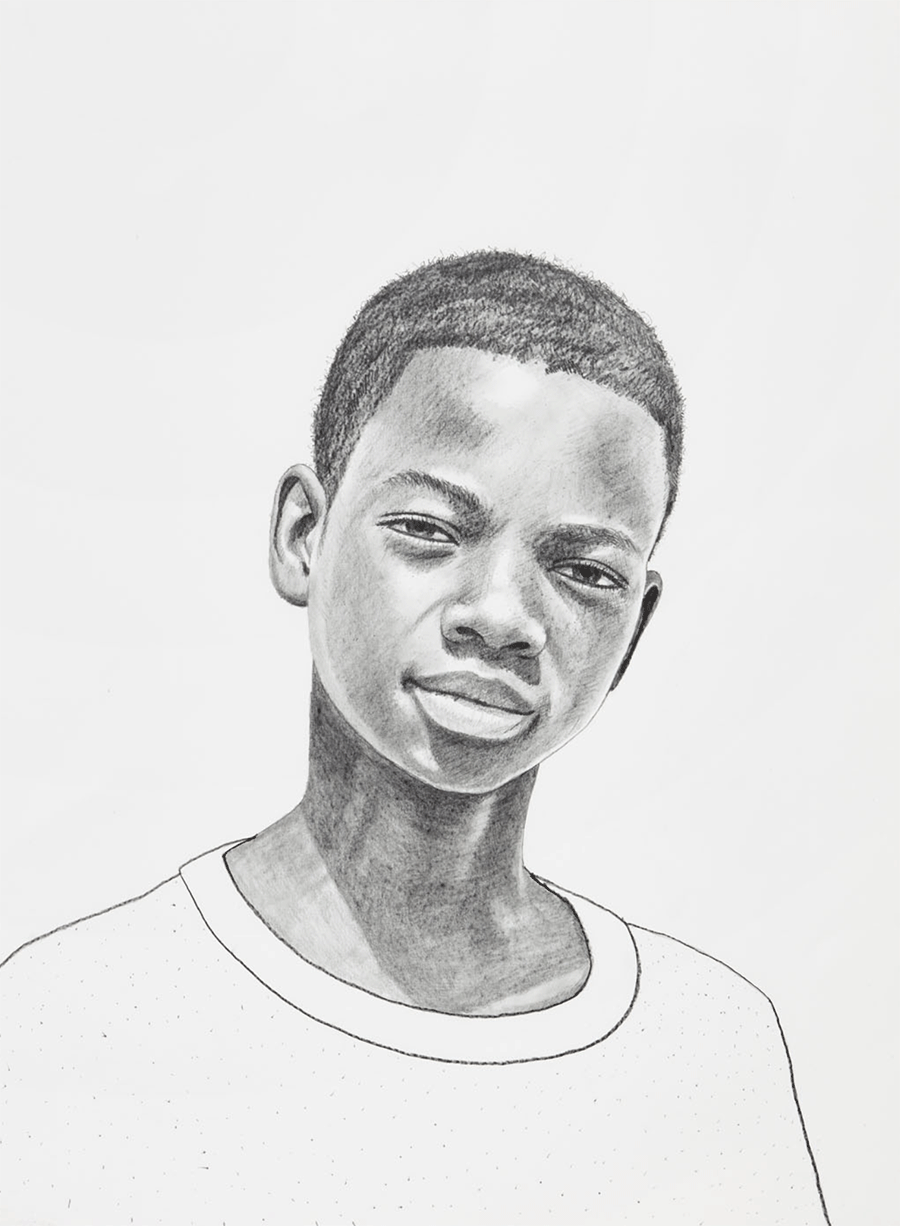
Raelis Vasquez, Hermanito, 2021. Gallery One for Foster Pride.
P: What has your own relationship with art been?
LS: Ever since I was a child art has been a way to express myself. There's a joy in creating, especially when you're in "the zone," or simply making art for the sake of making art. Art is something everyone can do — there are no "mistakes" in art —only happy accidents. And throughout the years, it's been a real pleasure to be able to offer this same opportunity to thousands of children, children who may not have had the chance to hold a paint brush or a scissor before coming to a Foster Pride class, and to watch them blossom.
Discover More from Gallery One >
Recommended Reading
Art is a Prayer: In Conversation with Brian Clarke on Flowers, Friendship, and Fragility >