Article | Downtown Artists Contemporary Art Auction New York May 2026
A Two-Way Mirror on a One-Way Street
An iconic work by KAWS shows us more than one way to see New York and the downtown scene.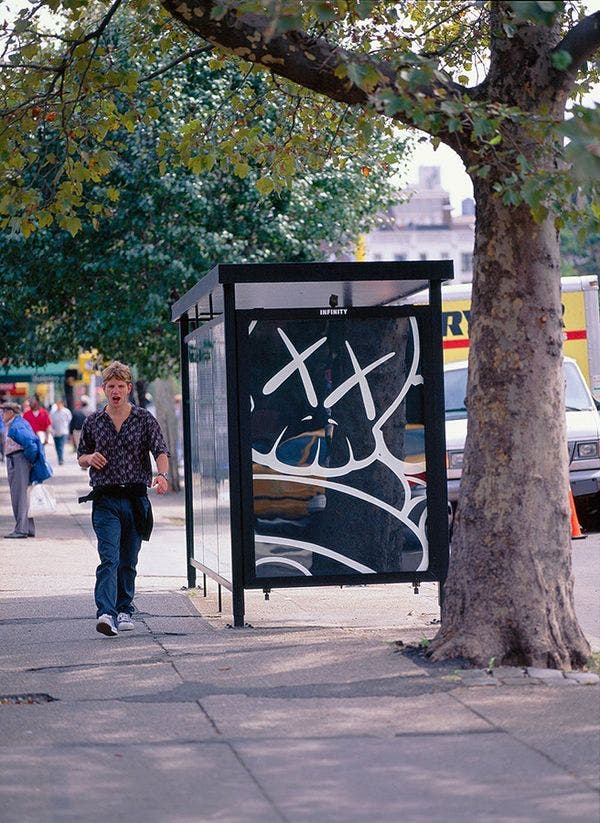
KAWS, UNTITLED (CHUM, HOUSTON STREET), 2000 in situ. Image/Artwork: © KAWS
To set the stage, it’s the year 2000 in New York City. The city is abuzz with post-Y2K relief, a brief reprieve following the realization that the architects of computer language had failed to conceive of the 21st century. For all the anxiety that gripped the era, looking back, it feels quaint, almost simple. It was a world before social media hyper culture, before the iPhone, before the dot com or mortage bubbles burst, and just before the seismic shift of September 11th.
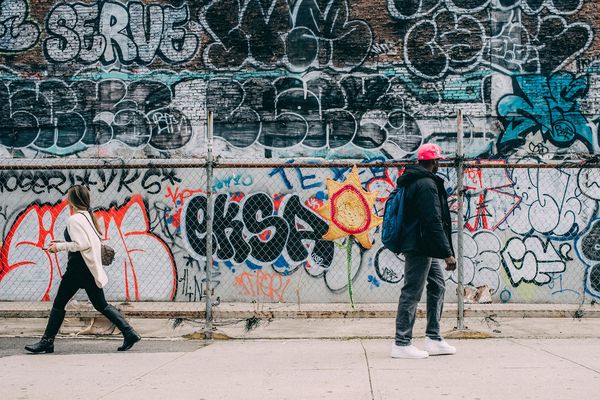
Graffiti in New York’s SoHo neighborhood, January 2000. Image: Mika Volkmann / Alamy Stock Photo
It was against this backdrop that KAWS took his now-pervasive iconography to the streets downtown. In works like UNTITLED (CHUM, HOUSTON STREET), we see a commentary on how mass consumerism, luxury advertising, and the visual myths born of mass media shape how a new generation sees. The presence of commercial imagery in the public sphere once owned by the street artists of the 1980s was felt by many as a kind of coup against the gritty, dilapidated neighborhoods that birthed the 1980s downtown scene — an era defined by in equal measure by the contrasting forces of friction and pulse, squalor and freedom, collective creativity and social crisis.
In a real sense, KAWS was navigating the progression of New York with the same historical distance we now use to look back at this work.
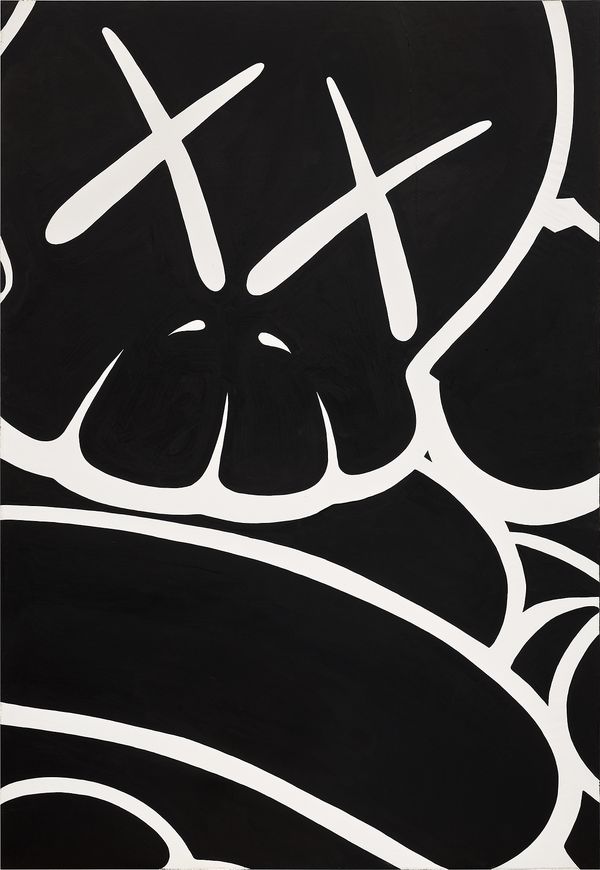
KAWS, UNTITLED (CHUM, HOUSTON STREET), 2000. Modern & Contemporary Art Afternoon Session, New York.
From our vantage point, the year 2000 was about a quarter-century ago. For KAWS in the year 2000, the economic turmoil in the city in 1975 — when New York City nearly slid into bankruptcy, and around the time the artist was born — was also a quarter-century prior. That earlier crisis had created the conditions for the downtown scene, cheap rents that allowed artists’ studios and their gallerists to flourish in the wreckage.
In a real sense, KAWS was navigating the progression of New York with the same historical distance we now use to look back at this work. He was witnessing commercialization co-opt the visual space of the street, leveraging the cultural prestige of a location that had been the stage for an anti-establishment movement. But the joke’s on us for taking this as a conflict at face value. For KAWS, who has never shied away from commercial collaborations, these conflicts are a site of negotiation rather than contention.
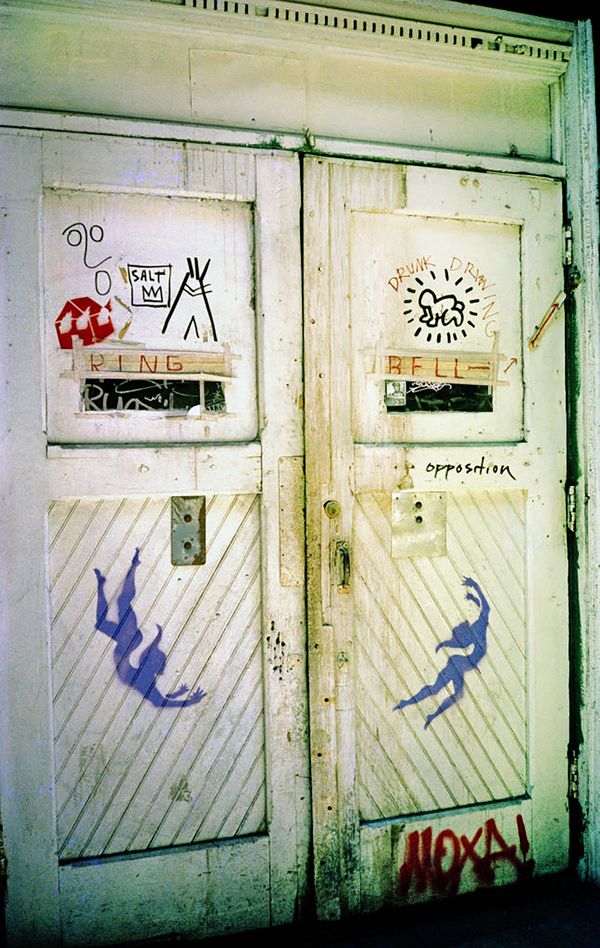
View of a doorway, with graffiti tags by various artists (including a burning house by David Wojnarowicz, Jean-Michel Basquiat, and Keith Haring), in Soho, New York, New York, 1984. Photo by Rita Barros/Getty Images
UNTITLED (CHUM, HOUSTON STREET) — a rare surviving example of his bus shelter interventions and the most iconic example from the series — takes a less confrontational approach than earlier street art by earlier artists like Keith Haring, David Wojnarowicz, or Jean-Michel Basquiat. Rather than attacking the medium of advertising, KAWS inhabits it. He plays within its physical space, employing the visual codes that commercial imagery has already embedded in our brains.
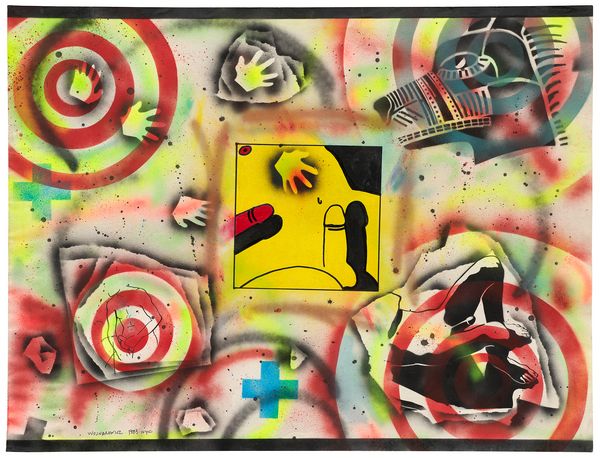
David Wojnarowicz, Untitled, 1983. Modern & Contemporary Art Day Sale Afternoon Session, New York.
In contrast, for an artist like David Wojnarowicz, art was a means to directly confront corporate greed and political corruption, particularly in how these forces contributed to the AIDS crisis, a disease that would ultimately take the artist’s life in 1992. In this 1983 work — created the same year as his first exhibition at the gallery Civilian Warfare — Wojnarowicz deploys many of his most characteristic motifs, drawn from his early graffiti stencils. By layering his characteristic imagery of the target, wolf head, cross, phallus, and hand, Wojnarowicz creates a symbolic investigation into how cultural power is structured and enforced.
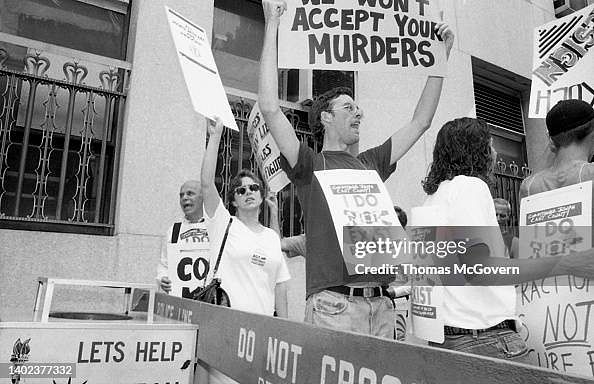
Artist and activist David Wojnarowicz at an AIDS demonstration at the New York City Department of Health on July 28, 1988 in New York City, New York. Photo by Thomas McGovern/Getty Images
Looking at these works by KAWS and David Wojnarowicz together, we begin to feel the inherent tension of the downtown scene, a tension that, in many ways, would propel the neighborhood to its current state.
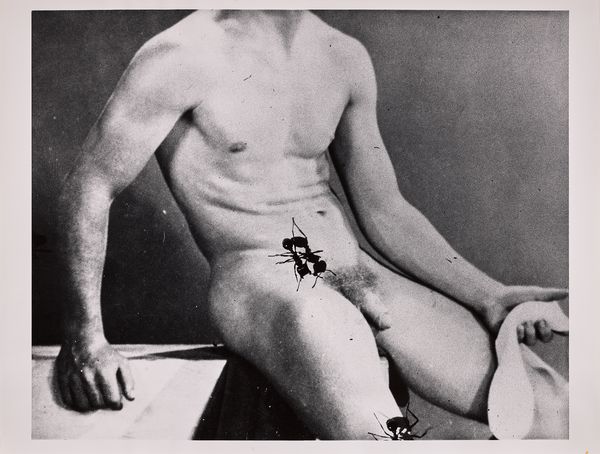
David Wojnarowicz, Untitled (Desire) from Ant Series, 1988. Modern & Contemporary Art Afternoon Session, New York.
Looking at these works by KAWS and David Wojnarowicz together, we begin to feel the inherent tension of the downtown scene, a tension that, in many ways, would propel the neighborhood to its current state. After all, while the 1980s and ’90s scenes were a place of grassroots social rebellion, igniting social justice movements we still feel today, this was also the moment the downtown artist moved from character to archetype in the new global art market.
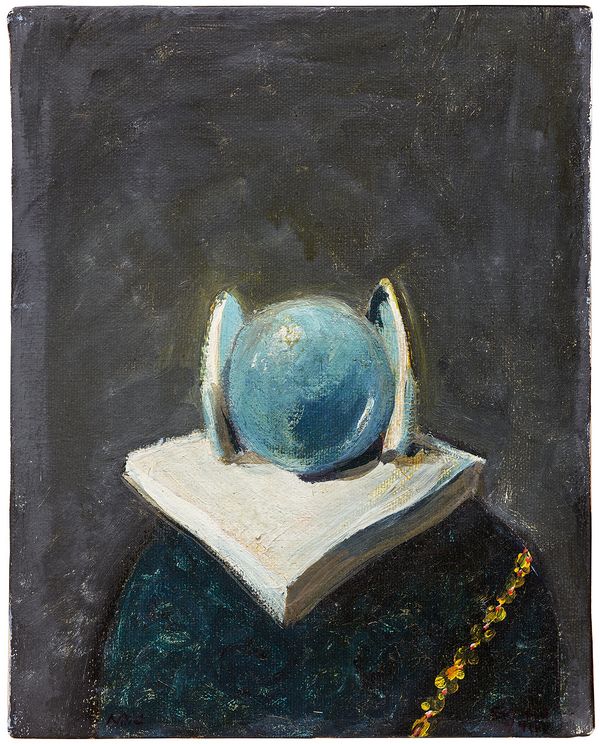
George Condo, Circular Head Composition, 1993–1994. Modern & Contemporary Art Afternoon Session, New York.
The tension between the radical and the marketable defined the ‘90s downtown scene, creating a space where George Condo could blend grotesque, street-level energy with the polish of art historical traditions, where Francesco Clemente could translate nomadic, spiritual symbolism into sophisticated imagery, and where Julian Schnabel could reignite the heroic status of the painter.
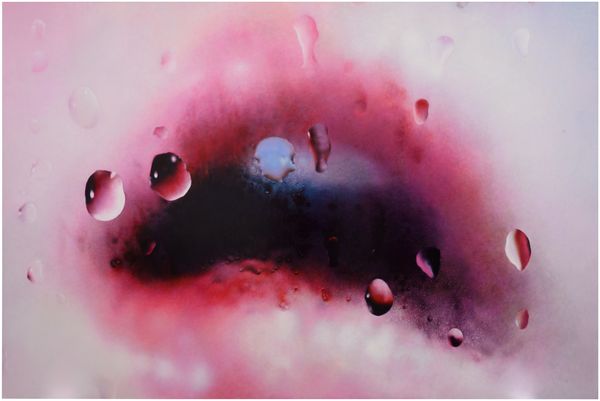
Marilyn Minter, Nebulous, 2018. Modern & Contemporary Art Afternoon Session, New York.
As the community continues to grow, the ongoing dialogue between art and commercialism only highlights art’s resilience. While there is often bemoaning over these shifts, the reality is far more nuanced — and ultimately, much more hopeful. For example, many of the artists who first settled downtown in the 1980s still reside there today. And on any gallery opening night, the streets are flooded with people seeking out art for its transformative power rather than presumed value. We still see this vitality downtown from the many galleries and studios to the recent re-opening of the New Museum. So, it is fitting that these works and others by iconic New York artists — including Kenny Scharf, Wade Guyton, Jenny Holzer, Marilyn Minter, and more — are being celebrated and offered in our New York auction, the very city whose identity these artists help forge and whose cultural landscape they continue to define.
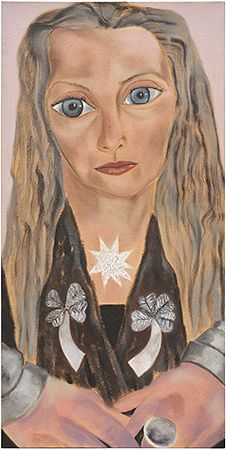
Francesco Clemente, Kiki Smith, 2006. Modern & Contemporary Art Afternoon Session, New York.
Phillips’ spring auctions of Modern & Contemporary Art will be on view from 9 May 2026 at 432 Park Avenue.