Article | In A Gesture A 2026 Collectors Guide To Post War American Art Auction New York
In a Gesture: A 2026 Collector’s Guide to Post-War American Art
In conversation with Phillips, Dakota Sica shares why Second Generation Abstraction is a market on the rise.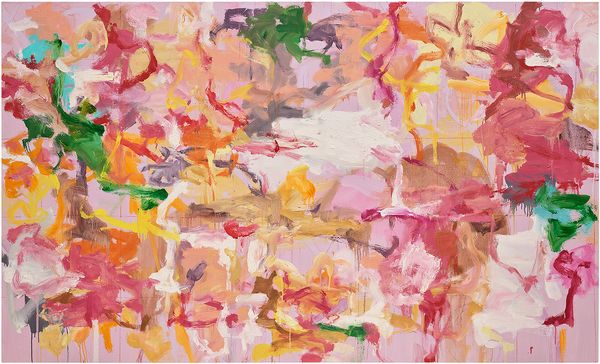
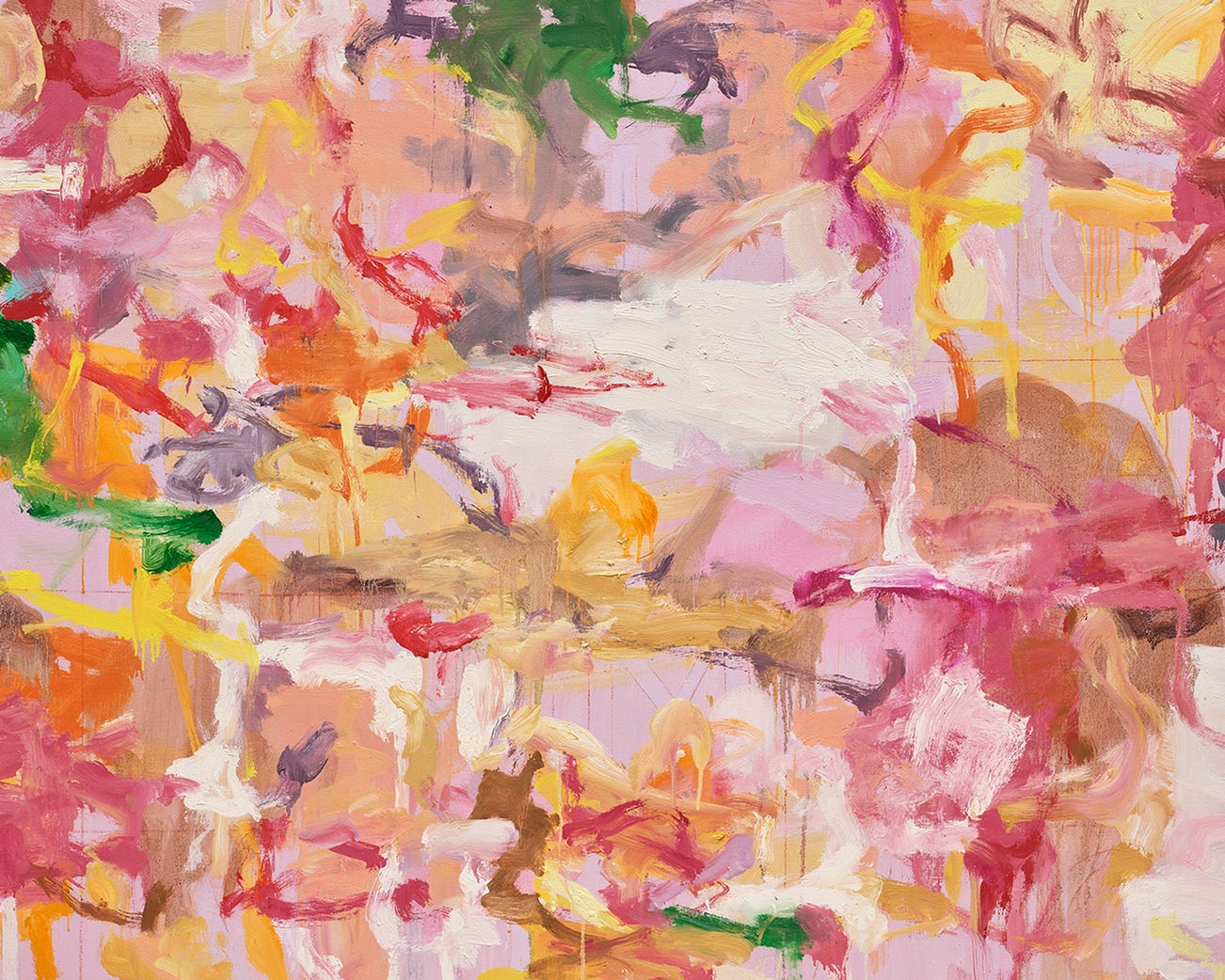
Kikuo Saito, Cerise, 2009. Modern & Contemporary Art New York: Morning Session.
As an art advisor, owner of New York’s Leslie Feely Gallery, and an expert on Abstract Expressionism and Color Field painting, Dakota Sica holds a unique vantage point in the art world. He is also the vision behind the offering, Gesture - Second Generation Abstraction, in our upcoming Modern & Contemporary Art: Morning Session in New York.
Indeed, given the impact of post-war American abstraction and its influence on generations of artists, it is easy to feel that no collection is complete without it, though eye-watering auction results can feel like a barrier to entry. But here, Sica pulls back the curtain on this market, showing us how exceptional works might be more within reach than most emerging collectors would dare to dream.
Guidance and strategies for collectors
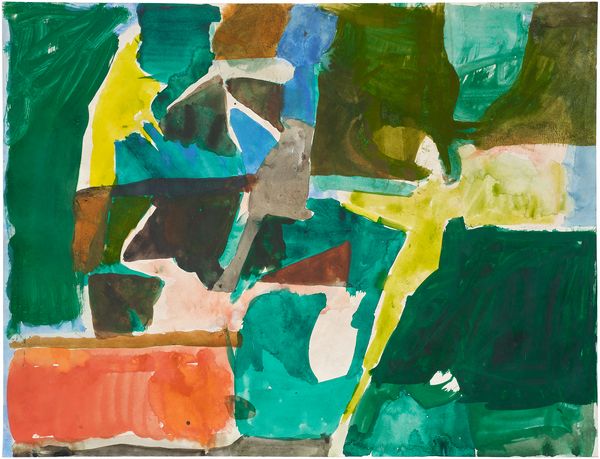
Richard Diebenkorn, Untitled (Albuquerque), 1952. Modern & Contemporary Art New York: Morning Session.
Phillips: Why should the new generation of collectors consider American post-war abstraction?
Dakota Sica: Post-war — referring to the period after the Second World War — was a renaissance of artistic production, specifically the work being made in New York. This fertile period gave birth to many important movements and artists that we revere today. Whether it is about beauty, the sublime, or the human experience, this period of art transcends cultural and generational boundaries, making it timeless, in perpetual vogue.
P: What is Second Generation Abstraction? And why do you think this category is gaining momentum right now?
DS: The first generation of AbEx (Abstract Expressionist) painters are tightly held in museum collections and multigenerational family collections. When important paintings do come to market, they often command eight to nine-figure sums — this is rarified air, and not many can participate at these levels. However, abstract painting did not end with the first generation — it was reinvented and built upon by the second generation of abstract painters. This group of artists is one of the last frontiers for excavating value at a relatively accessible price point.
P: What do you consider the most essential piece of advice for those just beginning to collect?
DS: Look before you buy — the more you see, the better informed you will be, and ultimately you will build a better collection because of it. When you do buy, do so with your eyes, not your ears. Collections are a personal pursuit, so you want to make sure it speaks to your own sensibilities. Knowing the histories helps — but it is more rewarding when you draw your own conclusions from them.
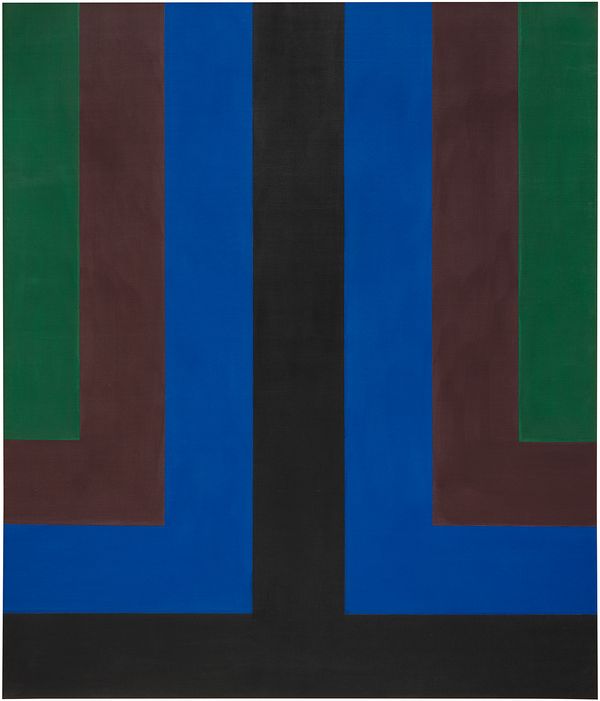
Howard Mehring, Blue Note, 1964. Modern & Contemporary Art New York: Morning Session.
P: Does investment value factor into how you collect or advise clients? How does one toe the line between acquiring something because you love it, versus ensuring your assets are allocated responsibly?
DS: Investment value should always be a consideration when buying art at higher price points (i.e., over $20,000). This may be a controversial take, but I have seen firsthand that collectors tend to enjoy good works that they also bought well. On the other hand, there is also value in paying tomorrow’s price for something that is truly exceptional. Therefore, value is a moving target, but one that should always be accounted for.
P: What are your thoughts on the benefits of buying at auction?
DS: Auction has become the most democratic way of buying art. There are no waiting lists, no prioritized relationships, no protracted negotiating periods — the individual who is willing to place the winning bid will take the work home. There is something great about that! And if you’re lucky and someone misses the call on the sale day, you might even get something for a steal.
P: Recently, we’ve noticed many collectors seeking out artists who may have been overlooked by previous generations. Do you have any advice on how to exercise discernment when seeking the next rediscovery?
DS: Not all overlooked artists are great — some were overlooked for good reason. Just like how gold doesn’t have the same value as silver, but both are precious metals found in the earth. Ushering in these historical names takes conviction on the collector’s part — but there are historical inequities stemming from gender, race, socioeconomic status, etc., where great artists went unnoticed. Those collectors with vision and foresight and the willingness to do the work will be rewarded.
P: In terms of provenance, authentication, and expertise, what should collectors be keeping in mind when navigating post-war American art? Does it differ depending on how well-established the artist’s market is?
DS: Buying at auction from a major house like Phillips already gives a collector a lot of peace of mind. These works are vetted and thoroughly researched. The same level of due diligence done by an auction house should be conducted when acquiring works privately. With the rising prices, there are also opportunistic bad actors, so always check provenance, exhibition history, publications, and estate records where possible.
On Gesture - Second Generation Abstraction
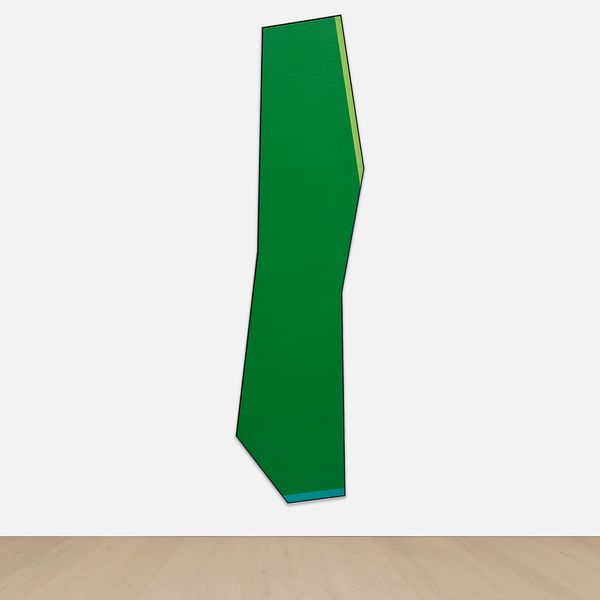
Kenneth Noland, Everglade, 1981. Modern & Contemporary Art New York: Morning Session.
P: Tell us a bit more about the Washington Color School. Do you consider these artists to be undervalued?
DS: The Washington Color School is a subset of second-generation abstract painters. Although these artists were from Washington, D.C., their works were widely exhibited in New York and many kept studios in the city. The movement is characterized by paintings made directly on the surfaces of unprimed canvas — sometimes gestural, like in the work of Morris Louis, and at other times hard-edge, like in works by Kenneth Noland and Howard Mehring, who are both featured in this sale. These artists are all wildly undervalued compared both to their artist peers and their contributions to the history of painting.
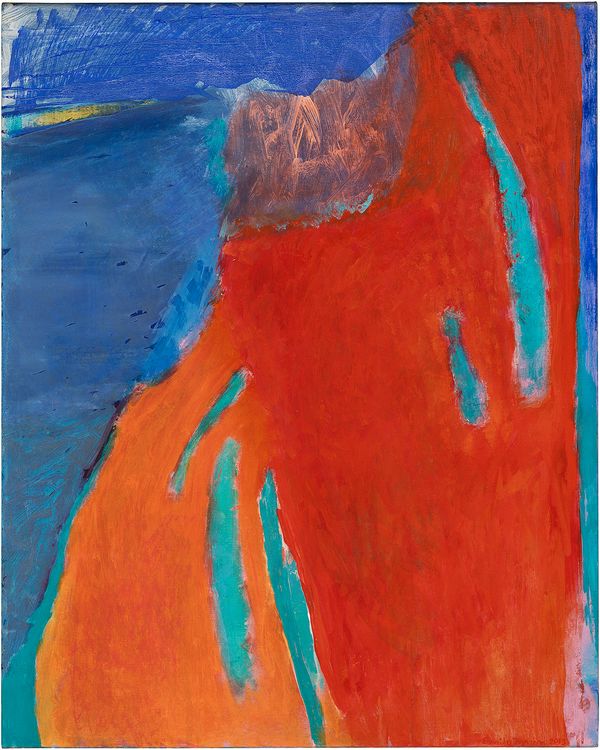
Emily Mason, Reactivated, 2013. Modern & Contemporary Art New York: Morning Session.
P: What are some of the aspects of Emily Mason’s practice that differentiated her from her contemporaries?
DS: Mason has a distinct and singular vocabulary — once you are familiar with her practice, her paintings become instantly recognizable. Admittedly, she was a late discovery even for me. I initially knew the work of her husband, painter Wolf Kahn, but after finding out about Emily’s work, I feel there is no comparison. Kindly note, Wolf Kahn’s prices are still far above Mason's — I think that is likely to change soon.
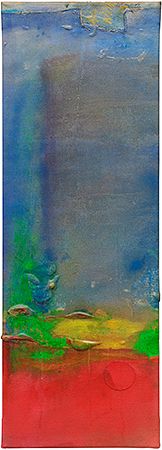
Frank Bowling, Shoreidol, 1999. Modern & Contemporary Art New York: Morning Session.
P: Frank Bowling is a bit of an outlier in the collection, as he is associated with London as much as New York. What was the thought process in adding his work to the collection, and how does he relate to these artists who are more distinctly American?
DS: Bowling is a British-Guyanese painter, but he lived and worked in New York from ’66 to ’75 — arguably the peak of artistic activity in the city — and later returned in the ’90s. Bowling may have been at times a pond away, but he was very much intertwined with the artistic milieu of the second generation of abstract painters. Therefore, it made perfect sense to draw parallels with his work and this collection.
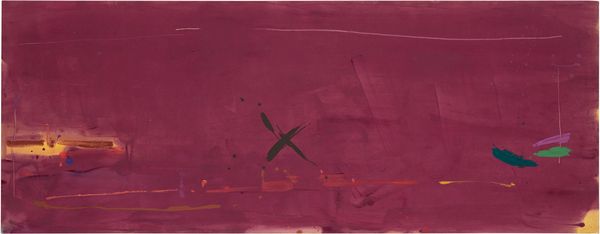
Kikuo Saito, Thorn Apple, 1984. Modern & Contemporary Art New York: Morning Session.
P: There are two works by Kikuo Saito in the collection, one from 2009 and one from 1984. What do they say about the progression of the artist’s practice? And how do you help collectors decide if they will collect a single artist’s work in-depth?
DS: I am very happy to showcase the range in Saito’s career. In the earlier painting, Thorn Apple, you feel the influences of Frankenthaler, for whom Saito was a studio assistant for many years. In the later work, Cerise, you feel Saito reach the height of his artistic powers, also marked by the end of his life. I am not sure if he instinctually knew that his time was short, but these late paintings radiate vitality — both fearless and urgent, as if everything was left on the canvas, Saito leaving his lasting mark.
If an artist inspires you, it is natural to collect the whole career. Often with great artists there are distinct periods in their career. It is rewarding to find and secure key examples from each period to tell the whole story.
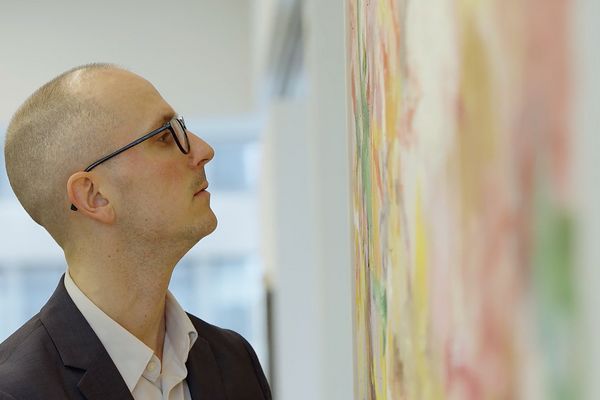
Dakota Sica in Phillips’ New York gallery.
P: This selection features a mix of hard-edge abstraction and lyrical abstraction. If you could only choose one personally, which would it be?
DS: I am quite partial to lyrical abstraction; however, I find that one ripens the other. There is a harmony created when you juxtapose a lyrical work against a minimal abstraction. In a way, they are opposites but make each other sweeter when they coalesce.
Sica’s own journey to collecting
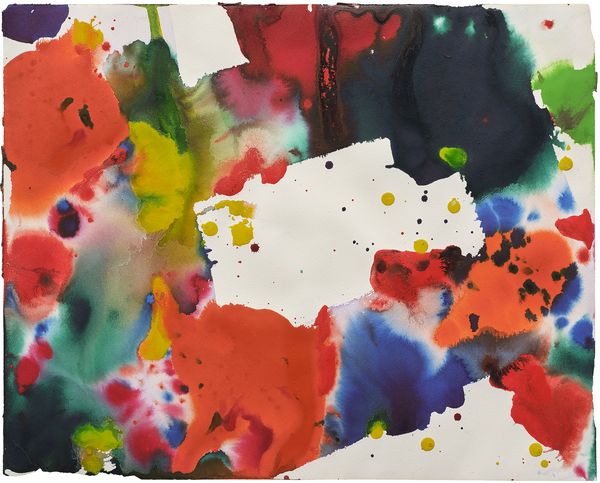
Sam Francis, Untitled, 1972. Modern & Contemporary Art New York: Morning Session.
Phillips: In addition to the many hats you wear in the art world, you have built an impressive art collection yourself. How did it all start for you?
DS: First off, thank you — it has been a labor of love. I first started by collecting editions, then works on paper, followed by small paintings, and eventually large paintings. I sold when I was able to acquire a better example by the same artist. In the cases where I was priced out of the large canvas, I bought the best small painting or work on paper I could find and afford. I am always slightly wary of dealers who don’t collect. For me, I love the art, and I want to live with it. I just don’t invite clients over anymore, or else they want to buy everything off my walls!
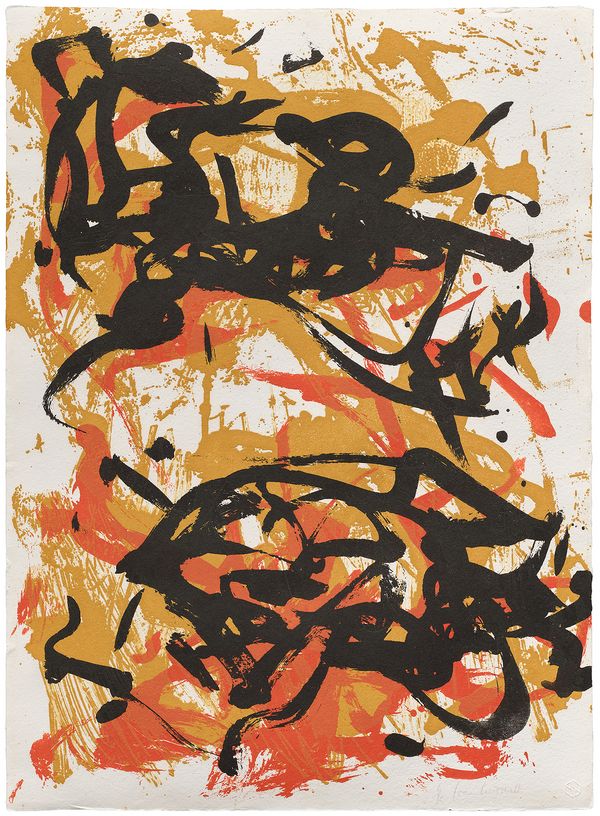
Joan Mitchell, Weeds III, 1992. Modern & Contemporary Art New York: Morning Session.
P: It is interesting that you collect both post-war and contemporary art. Is there an overarching principle that has guided your collecting?
DS: There is a through line that traces all the way from the cave paintings to an emerging artist toiling away in their Brooklyn studio. It is a joy and a challenge to follow that lineage — collecting the past, present, and future in art. It is good to remember that all great artists were once emerging.
P: How has your approach changed as you’ve gained experience as a collector?
DS: Over the years, I have learned that patience is rewarded in collecting art. This applies to both buying and selling — a skill I think is only gained by being in the market long enough. Those who are patient and measured in their collecting journey often end up with the best works. Collecting art is more akin to a way of living, so patience, like in life, is an invaluable trait.