Article | How A Chair Can Be Conceptual Design Auction London April 2026
How a Chair Can Be Conceptual
Sitting with some contemporary works in our upcoming London Design auction.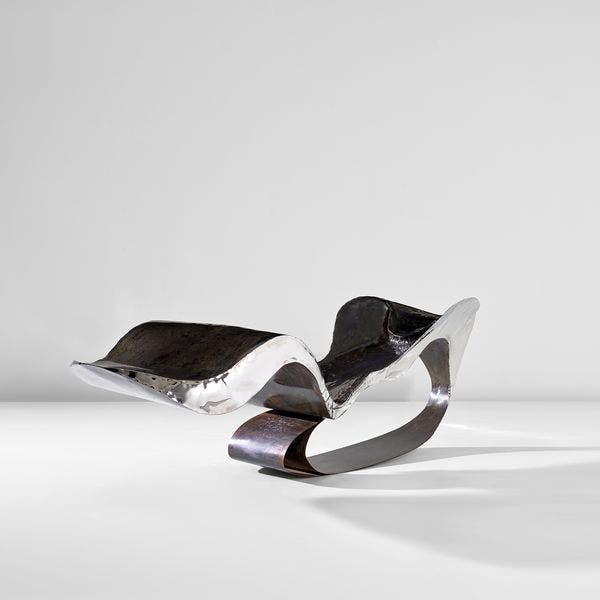
Ron Arad, Unique 'Sapporo Spring', 1990. Design London.
“I’m not very interested in policing the border between art and design,” says Ron Arad. “I prefer to distinguish between what is boring and what is exciting.”
Considering a few contemporary works by Arad and others in our upcoming London Design auction, we see his point. Across these works, boundaries between art and function collapse. But what’s more, comparing them invites broad conversations, both when they’re considered within a collection or within the scope of broader art and design currents.
It is with a sense of open curiosity that these works truly sing, posing as many questions as answers. And these are age-old, Duchampian questions, like: At what point does an object’s function augment its status as art? How much does the space these works are placed in, and the other works that surround them, impact our understanding or experience of them? How much of the artist or maker’s hand must be present for the work to be considered art? And importantly for us, when the idea is as important as the object’s function or appearance, can we say that a chair, a table, or a mirror is conceptual?
Erasing borders with Ron Arad

Portrait of Ron Arad, 1993. Image/Artwork: Ron Arad and Associates Limited.
On offer in the sale are four Arad works that provide a window into the fascinating maker’s practice. Two unique steel chairs are among the rarest of his works on offer, and each shows how well they can be viewed alongside contemporary art. For example, it is easy to imagine these chairs reflecting colorful contemporary paintings, or standing alongside other mirror-like works by artists such as Jeff Koons or Anish Kapoor in a gallery or home. Their very nature further defies categorization, as they can easily be seen as sculptures, even though they remain functional.
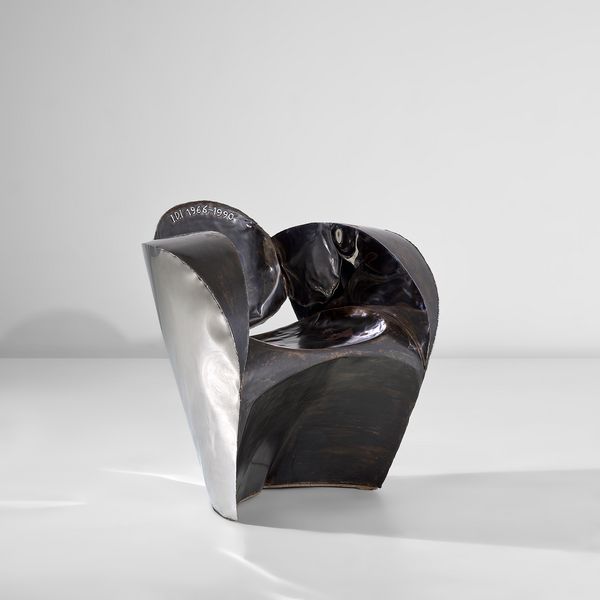
Ron Arad, Unique armchair, circa 1990. Design London.
Early Arad works like these were often fabricated in small numbers or unique examples and are the result of hands-on experimentation with industrial materials rather than industrial production, pushing furniture towards sculpture. The rarity of these works, dating from before Arad achieved wider recognition, makes them particularly desirable to collectors.
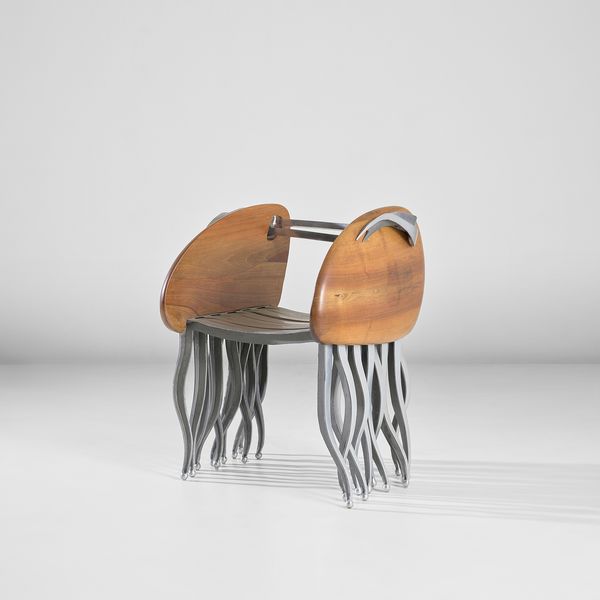
Ron Arad, Rare 'Split Chair', circa 1990. Design London.
Arad’s Rare ‘Split Chair’ and ‘Table no. 2’, from the ‘38 Tables’ series, are equally as sculptural and equally as rare. Considering all these works closely, we see much of what draws Arad lovers in — a relentless sense of experimentalism in a quest to discover the new, and the presence of the artist’s hand.
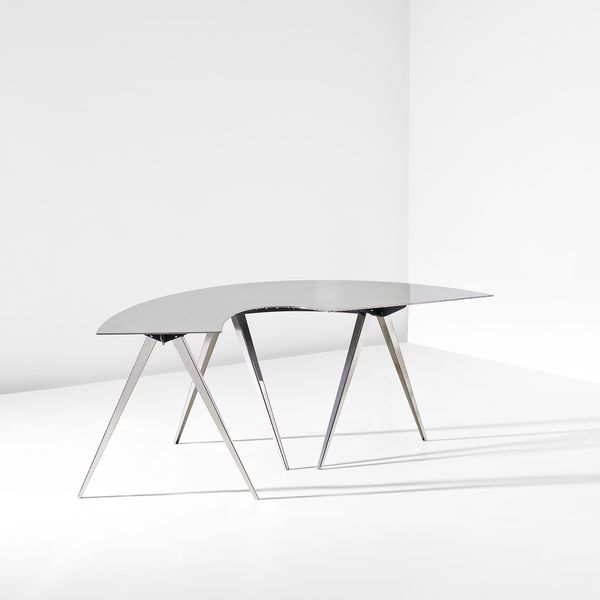
Ron Arad, 'Table no. 2', from the '38 Tables' series, 1995. Design London.
Embracing discomfort with Rick Owens
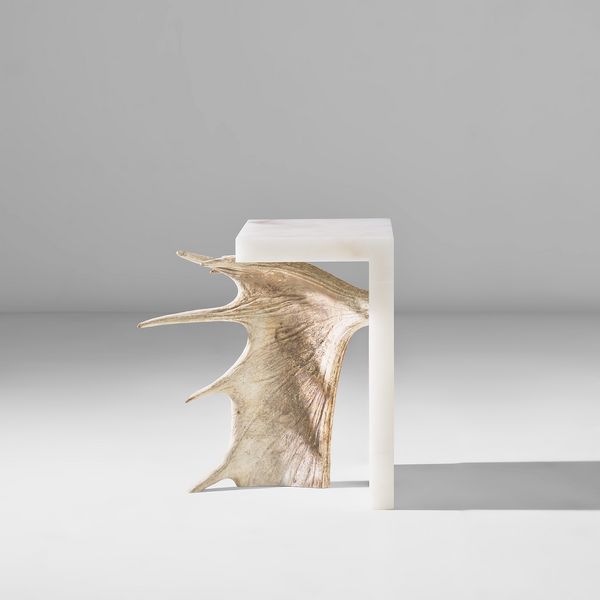
Rick Owens, 'Stag T' side table, 2018. Design London.
For Rick Owens, the level of comfort available in today’s world offers him something to counter, and his approach often questions the roles furniture and design can play in our lives. As he’s explained, “My furniture is almost anti-cozy — it’s solid, heavy, and hard to move. If you like it, you have to like it forever. But people who buy my furniture don’t live in concrete warehouses; they have a normal house and maybe have just one piece because they think it’s attractive.” He has described his furniture design as ceremonial, borrowing from brutalist design and possesing a spirtual aura reminicent of ancient sculpture, remarking that “there’s a lot of casualness out there, but every once in a while, don’t you want life to be a little more formal?”
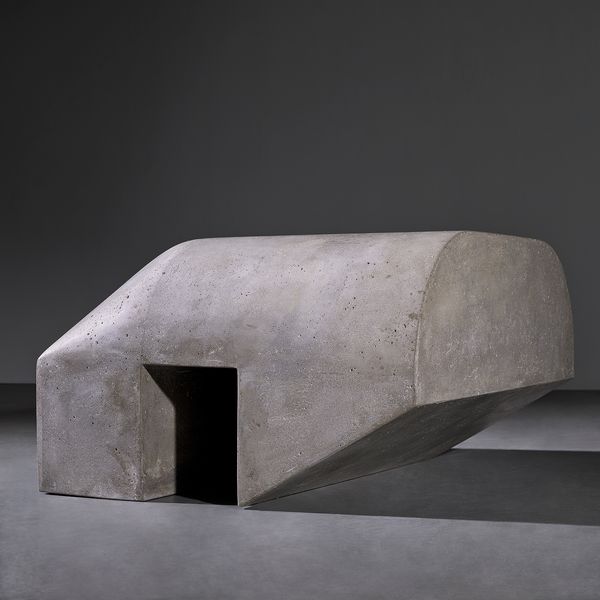
Rick Owens, 'Single Prong', 2016. Design London.
Like Arad, Rick Owens’ furniture production is often controlled and limited, maintaining a sense of exclusivity despite his global profile as a fashion designer. Owens, who originally trained in pattern-cutting before becoming a fashion designer, brings a couturier’s understanding of structure to furniture design: forms are reduced to prongs, antlers, and primitive supports, as seen in Rare 'Stag T' and 'Single Prong'. Materially, Owens favors solid wood, bronze, and marble, often pairing them with brutal, linear supports that give the works a monolithic presence. But it’s perhaps the intriguing blend of the industrial with the organic, either in material or in form, that is the most captivating and thought-provoking aspect of his works.
The Campana brothers’ poetry of ideas
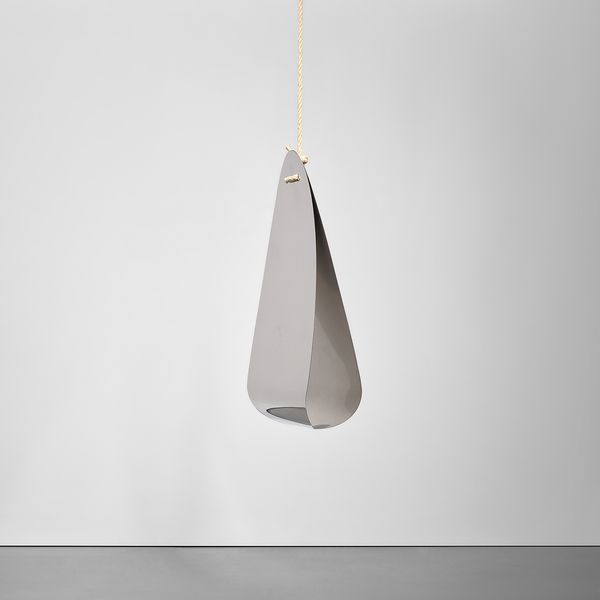
Fernando Campana and Humberto Campana, 'Fata Morgana' mirror, 2010. Design London.
Encountering the incredible 'Fata Morgana' mirror by Fernando and Humberto Campana invites striking comparisons within this selection. Like Rick Owens’ side table, this work marries the organic and the industrial; like many of Ron Arad’s designs, it masters mirror-polished stainless steel. But here, the conceptual angle is clearer than ever — the mirage-like reflections overtly shift our focus from the object’s utility to its idea.
This work perhaps serves as a commentary on clashes within contemporary Brazilian life that long fascinated the artists — clashes between industrial production and traditional craft, between urban and rural classes, and between identity and perception. The “mirage” is perhaps the illusion that all these dichotomies are separate and opposing or that our own vision of the world is ever truly fixed.
We are storytellers at heart, only we use materials instead of words. Our pieces are like actors looking for an author, like Luigi Pirandello's drama. Our perception of everyday life and the creative gaze infuse each object with poetry, soul and character. —Fernando and Humberto Campana
There’s always more to discover
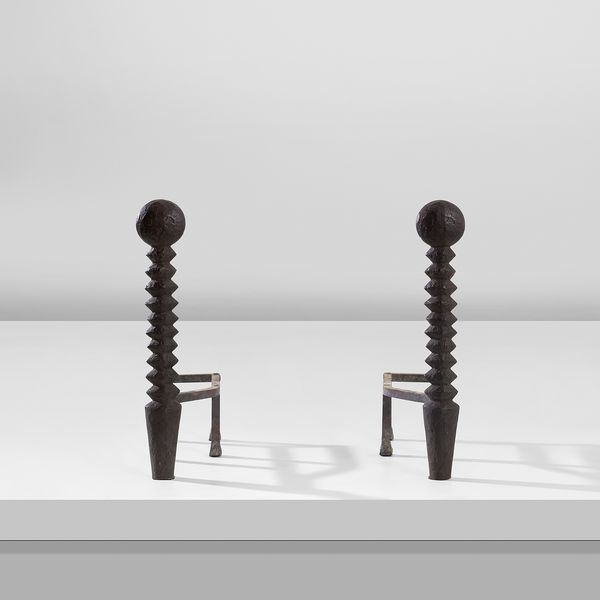
Philippe Anthonioz, Pair of andirons, 2010. Design London.
There’s so much more to explore in our upcoming auction — take Philippe Anthonioz’s Pair of andirons or Eric Schmitt’s Pair of 'Fingi' ceiling lights, for example. We can see these works as asserting the underlying idea is as vital to the object’s identity as its ability to illuminate a room or support burning logs — be it in how Schmitt’s work diffuses light like a kind of organic, botanical canopy, or how the unrealized state of Anthonioz’s complete edition, like much conceptual art, can be seen to privilege the conception of a work as much as the execution.
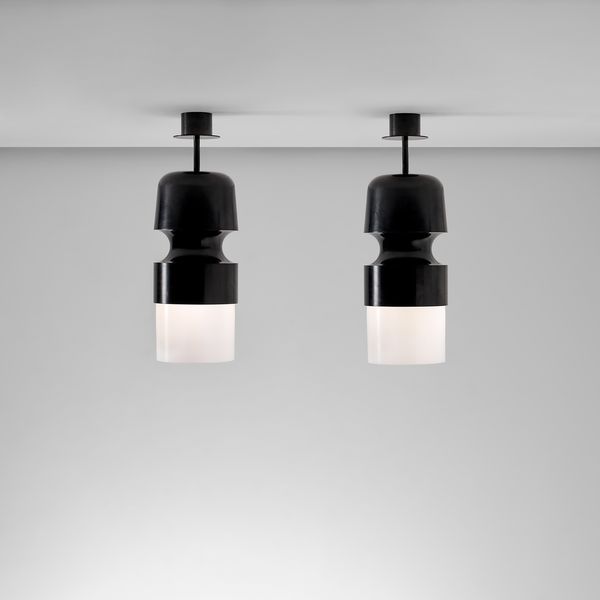
Eric Schmitt, Pair of 'Fingi' ceiling lights, designed 2000, produced circa 2022. Design London.
It is difficult to categorize these artists and makers as their work defies easy classification. Such codification into neat buckets of art or design — though helpful in a market sense — is of no particular interest to these artists, as they each erase strict lines as quickly as they draw new ones. For Ron Arad, his work has been shown in contemporary art spaces as much as in design spaces, and it lives in design-focused collections as often as in visual art collections. The same is true for an artist like Rick Owens, whose body of work moves fluidly through art, design, and fashion. And for the Campana brothers, the conceptual nature of their work not only defies categorization but also challenges our perceptions of waste, luxury, and identity with as much of a jolt as many of the most confrontational contemporary artists.
A wide array of further concepts can be unpacked in the contemporary works in the auction, but there’s only one way to know for sure.
Phillips’ spring Design sale will be on view from 24–30 April at 30 Berkeley Square, ahead of the auction on 30 April.