Article | Specialist Picks In Motion Photographs Auction New York April 2026
Specialist Picks: In Motion
From literal to implied movement, swim in a sea of motion with our specialists.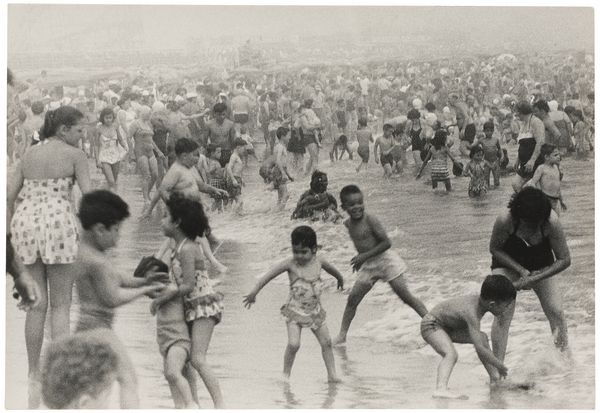
Diane Arbus, Kids in the surf, Coney Island, N.Y., 1958. Photographs New York.
For as much as photography is about a moment frozen in time, we’re struck by just how often photographs create motion through stillness. And with the onset of spring comes a newfound sense of urgency to move, so naturally, these motion-rich photographs particularly caught our team’s eyes.
So, if you’re also feeling that impulse, it’s time to get out and meet us at 432 Park Avenue for the preview of the upcoming auction.
Sebastião Salgado
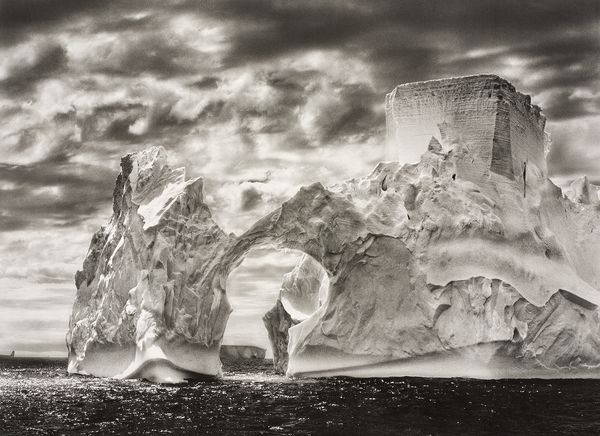
Sebastião Salgado, Iceberg Between Paulet Island and the South Shetland Islands, Antarctica, 2005. Photographs New York.
Vanessa Hallett, Worldwide Head of Photographs, Deputy Chairman, Americas
Sebastiao Salgado's iconic Iceberg between Paulet Island and the South Shetland Islands, Antarctica, is part of his Genesis series — a multi-year project in which he documented some of the most pristine and untouched landscapes in the world.
This image captures a natural ice formation that resembles a magical castle you would expect to see in a movie. It is magnificent and beautiful and embodies a majestic stillness — until you look closer and see all the activity and motion within the frame.
You see the dense and active cloud activity in the sky, the iceberg formation that we know shifts and morphs as part of its ephemeral existence, and lastly, the waves of the ocean evident through the scattered light on its surface. Along the bottom of the iceberg, there are visible textures where constant ocean movement has polished the ice and created distinct levels of watermarks.
In addition to the dramatic subject, the grandeur of scale rendered in Salgado’s signature high-contrast tonality creates a sense of reverence around this natural wonder. This image solidifies Salgado’s brilliance for me and presents nature at its primeval best, reminding us why we need to preserve our world and all its natural beauty.
Yves Klein, Harry Shunk and János Kender
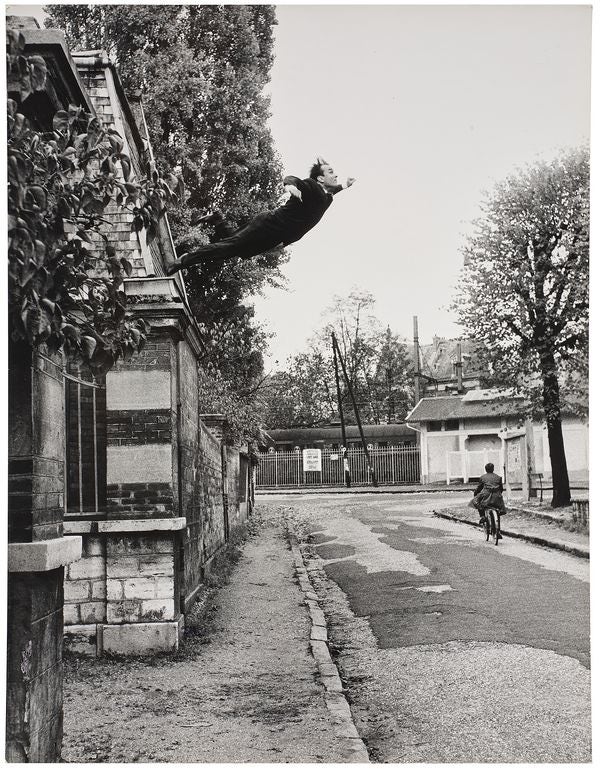
Yves Klein, Harry Shunk and János Kender, Saut dans le Vide (leap into the void), Paris, 1960. Photographs New York.
Christopher Mahoney, Senior International Specialist, Photographs
Let’s set aside, for the moment, that Yves Klein’s Saut dans le Vide (Leap into the Void) documents a high-concept piece of performance art. Let’s forget that the image represents a triumph of pre-digital manipulation by photographers Harry Shunk and Janos Kender. And let’s disregard that Klein executed many, many jumps in order to capture the perfect image, and that he landed safely each time in a blanket suspended by a group of friends, later removed from the composition through Shunk’s and Kender’s darkroom magic. And I guess we don’t really need to get into the fact the Klein was a wildly creative genius with a mystical streak and a 4th-degree black belt in judo. For me, this photograph catches that fleeting moment of inspiration that strikes an artist, that moment when the artist must throw themselves into the void and trust their own creative powers. True creation is filled with risk, is performed without a net, and relies upon the redemptive power of art. Klein’s leap into the void is an exuberant leap of faith — one that continues to inspire.
William Eggleston
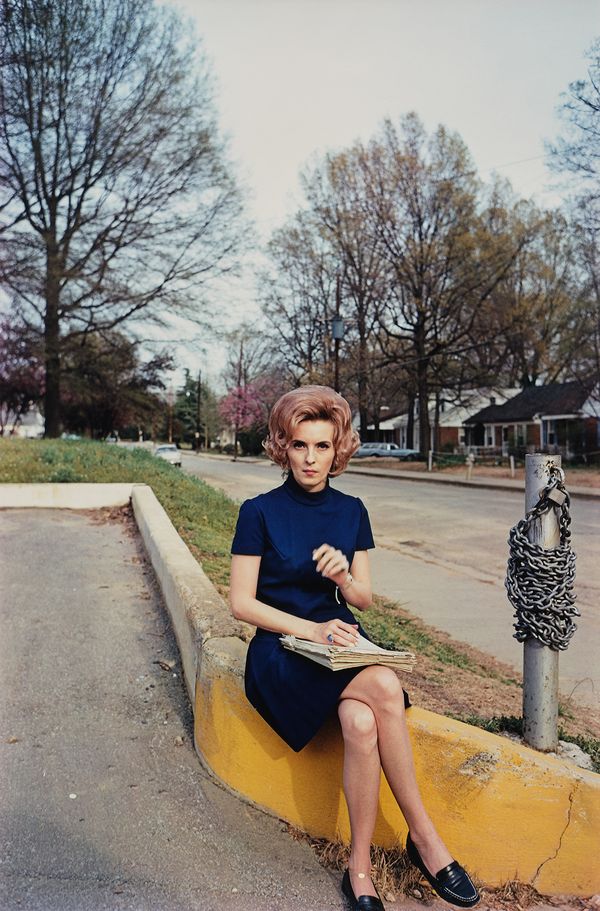
William Eggleston, Untitled (Memphis), 1971. Photographs New York.
Sarah Krueger, International Specialist, Head of Department, New York, Photographs
While William Eggleston’s muse seated on the weather-worn curb is still, my eyes are continually in motion when looking at this photograph. Eggleston’s compositions are deceptively smart and densely full, making my attention here move restlessly: from the woman’s direct gaze, up along the sharp diagonal of the curb, out into the quiet sprawl of suburban Memphis, and back again to the subtle flick of her wrist. The angle of her crossed legs runs effortlessly parallel to the curb. The narrative, though, remains out of reach. Is she gathering her papers, reacting to something Eggleston is saying, or simply caught mid-gesture?
Rendered in the densely saturated colors of the dye transfer process, this photograph rewards sustained looking, down to the smallest details — the glint of light on her anklet acting as a final punctuation to a composition from which I simply cannot look away.
Diane Arbus
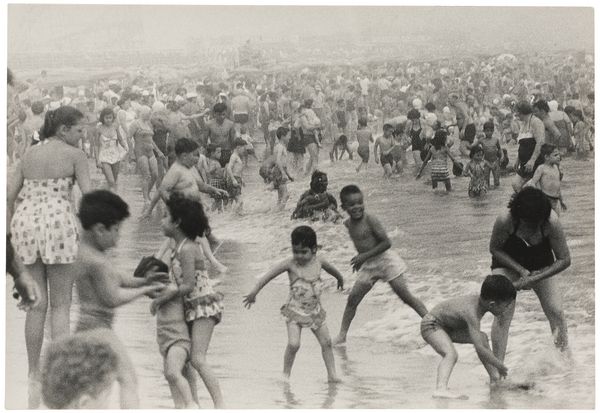
Diane Arbus, Kids in the surf, Coney Island, N.Y., 1958. Photographs New York.
Ellie McIntosh, Executive Assistant & Department Coordinator, Photographs
As New York slowly continues to warm up, I am inspired by the deep summer scene in Kids in the surf, Coney Island, N.Y. Diane Arbus photographed a variety of communities that populated mid-century America and, in this image, has captured the sense of play and joy that embodies New Yorkers at the beach. Boisterous kids giggle in the foreground, a woman sits almost fully submerged in the surf, and waves upon waves, not of seawater, but swimmers, fade into the background. It is a communal experience as everyone, desperate to get out of the heat, crowds into the salty water. This fraternity is where I aspire to be. Come the summer months, I will join the hundreds of New Yorkers who convene every year to bring our bustle of the city to the shores of Coney Island!
Idris Khan

Idris Khan, The Rite of Spring, 2013. Photographs New York.
Leah Hicks, Cataloguer, Photographs
I find Idris Khan’s The Rite of Spring visually and conceptually fascinating. By layering and superimposing pages of the sheet music of Igor Stravinsky’s iconic score into one image, Khan renders the full composition visible at once. The result is an arresting image, an onslaught of visual input, that we as the viewer are left to decipher. The stacking and blurring of the musical notation have a frenzied, vibrational quality, as if the reverberation of the music can be seen and felt.
With my background in dance, seeing Pina Bausch’s ballet The Rite of Spring for the first time was a formative experience. Reinterpreting the original 1913 Ballet Russes production, Bausch tells the story of a ritual sacrifice, set on a dirt-covered stage. Throughout the ballet, the dancers’ movement becomes increasingly erratic and wild until the climax, when a female dancer, the “chosen one,” dances herself to death. When looking at Idris Khan’s photograph, I’m reminded of the visceral and frenetic nature of the choreography. Here, Khan shows how a two-dimensional work can generate a powerful sense of kinetic energy, which speaks to the resonance of Stravinsky’s masterful score as well as the dynamism of the photographic medium.
Edward Burtynsky
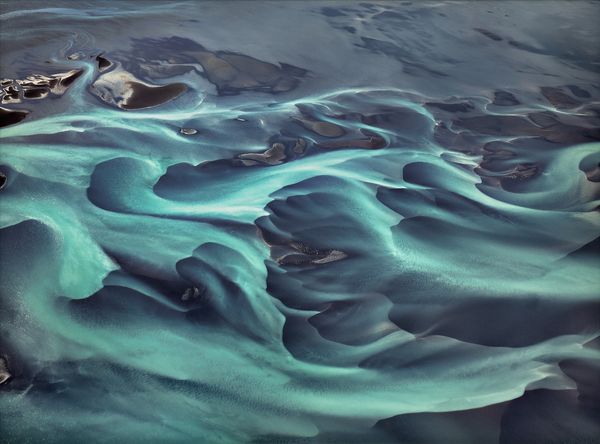
Edward Burtynsky, Ölfusá River #1, Iceland, 2013. Photographs New York.
Elizabeth De Palma, Sale Manager, Photographs
In this photograph, Edward Burtynsky captures the dynamic movement of the Ölfusá River in Iceland. This work is from the artist’s Water series, in which he explores human impact on the waterways around us. The image’s qualities are painterly, and while it exemplifies our “in motion” theme quite literally, I also find it both visually and conceptually compelling. My eyes get lost wandering through the movement of the river as its tides and currents push and pull the sediment into a myriad of swirling blue hues. Whether it is due to the grand scale of his photographs or the environmental activism he highlights across all his work, I am nearly always drawn to Burtynsky. If you have a chance to stand in front of this work, you may feel you are swimming in our galleries!