Article | Yoga How Japanese Artists Made The Traditional Modern Hong Kong Auction March 2026
Yōga: How Japanese Artists Made the Traditional Modern
For the first time, a curated collection of Japanese Yōga comes to our Modern & Contemporary Art auction in Hong Kong.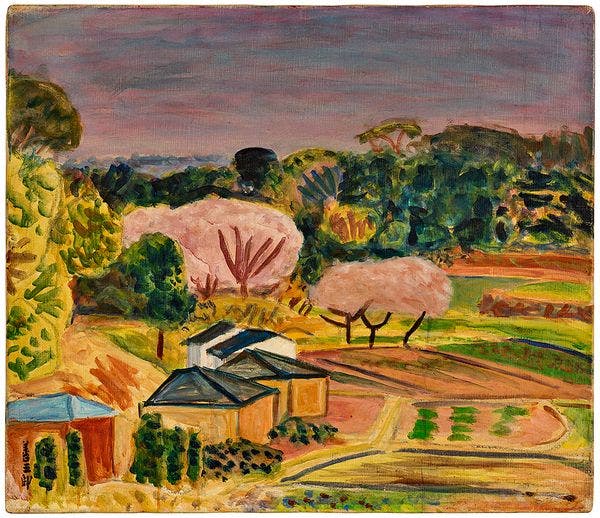
Zenzaburo Kojima, Fields in Spring, 1948. Modern & Contemporary Art Hong Kong.
The Yōga movement emerged in Japan during the Meiji Restoration, as Japanese Modern artist engaged with Western-style techniques and motifs. Far from rote imitation or veneration, these artists sought to engage in a sophisticated dialogue with their Western Modern masters, such as Renoir and Picasso, while firmly grounding their work in Japanese aesthetics, including Rinpa and Nanga.
By blending foreign methods with Japanese and Eastern aesthetics, these artists reinvented subjects like the nude, landscape, and still life. Ultimately, the movement expressed both the poetry of daily life and the complexities of individuality within a modernizing Japan. It is unquestionable that these artists have had a lasting impact on Japanese contemporary art, and Phillips is honored to explore their legacy in our upcoming Modern & Contemporary Art sale on 29 March.
Here, we unveil the works in the selection, delving deeper into what they say about a crucial historical turning point in Asia’s cultural history.
Zenzaburo Kojima
Zenzaburo Kojima’s unique ability to navigate Eastern and Western tensions and sensibilities was the result of the artist’s lifelong project to create a distinctly Japanese form of oil painting, a syncretism he called “Kojima style.” Having abandoned his medical studies to pursue painting and travel to France and Italy in the 1920s, Kojima immersed himself in European historical and modern art, and upon his return to Japan, he found a dynamic capacity to relate the Renaissance and Fauvist masters he studied abroad to traditional Japanese decorative forms.
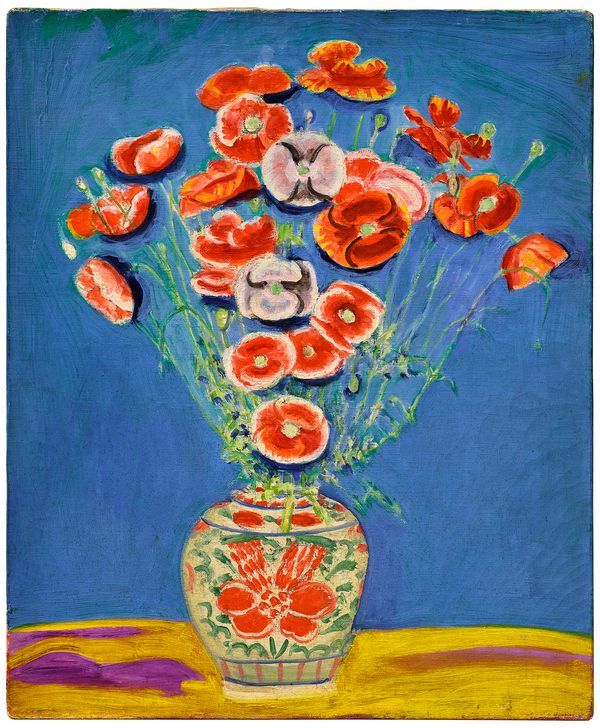
Zenzaburo Kojima, Field Poppies, 1950. Modern & Contemporary Art Hong Kong.
The two Kojima works in this sale — Field Poppies and Fields in Spring — both belong to the artist’s most well-regarded period. Painted near his studio in Kokubunji, Tokyo, where Kojima practiced sketching seasonal landscapes, the latter showcases his approach of using the natural world as a spontaneous yet contained space, in which the living surfaces of the trees and plots are made idyllic by a dusky sky and a hopeful palette. As if plucked from the same field, Field Poppies formalizes the harvest into a still life: the vivid red blooms are arranged in a highly decorative pattern, mirroring the ceramic vase below and establishing a rhythm between Kojima’s cross-cultural practice and a subject matter that connects them both.
Ryuzaburo Umehara
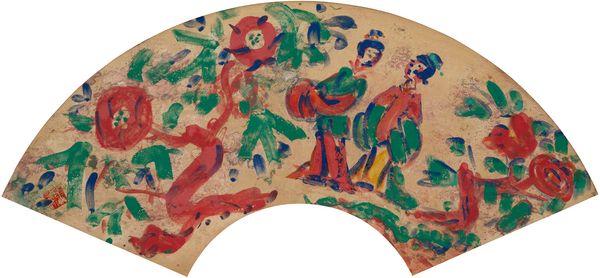
Ryuzaburo Umehara, Chinese Beauty. Modern & Contemporary Art Hong Kong.
Born in Kyoto, Ryuzaburo Umehara entered the studio of Chu Asai (1864–1907) at the age of fifteen, then traveled to France to study under Pierre-Auguste Renoir, returning to Japan in 1913. While deeply influenced by Renoir, Umehara sought to develop a distinctly Japanese approach to oil painting, emerging by the 1930s as a leading figure in Japan’s Yōga scene.
Umehara’s Chinese Beauty showcases his skillful synthesis of Eastern and Western sensibilities. Taking the form of a fan, the artist elevates a traditional status symbol into a work of high modernism, with traditional Chinese figures executed in a manner reminiscent of Matisse and the Fauvists. His technique and personality are on full display — the vibrant palette and gold-accented mineral pigments lend the work a radiant glow and reflect his passion for Chinese wucai porcelain, while the hand-rubbed surface evokes the weathered, spiritual texture of ancient Buddhist murals.
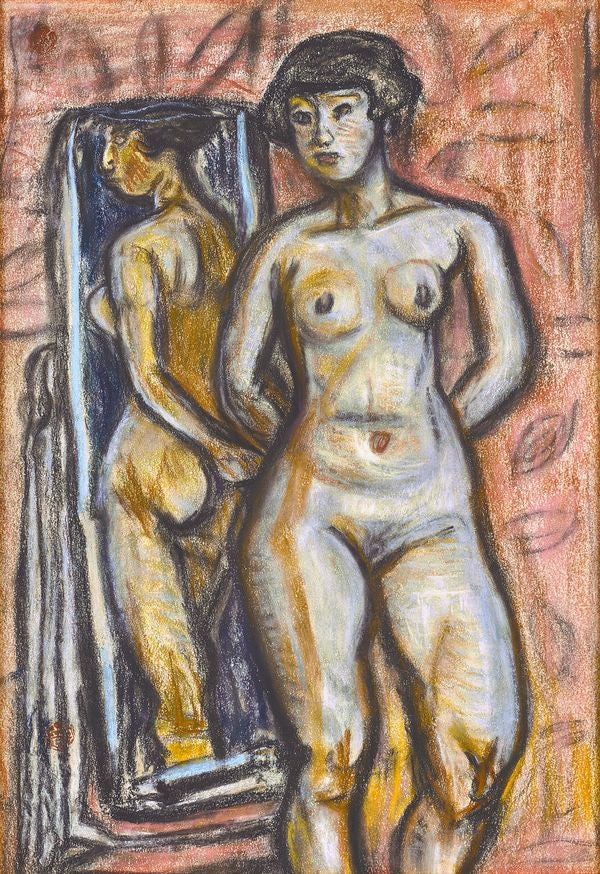
Ryuzaburo Umehara, Nude. Modern & Contemporary Art Hong Kong.
Umehara’s pastel work, Nude, showcases his most iconic style, a vision he explored consistently from the early 1920s onward. In this work, the artist presents a distinctly Asian ideal of beauty, intentionally departing from the constraints of the classical Greek model. The inclusion of a mirror is at once a nod to Asian tradition, where mirrors were revered as portals to the divine, and an embrace of European Modernist leanings, recalling Picasso and the Cubists’ desire to perceive a subject from multiple perspectives at once.
Seiji Chokai
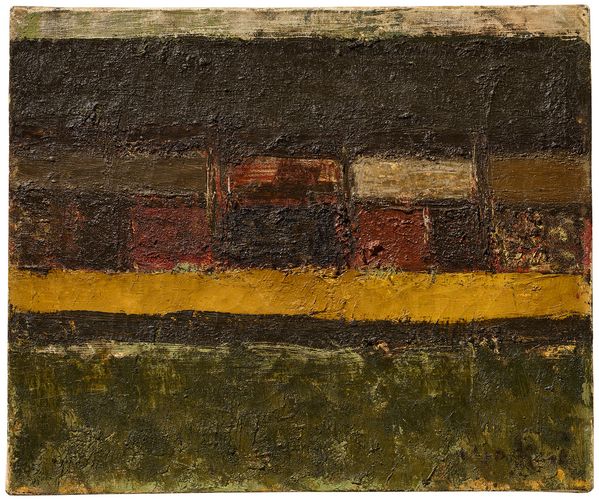
Seiji Chokai, House in the Northern Lands. Modern & Contemporary Art Hong Kong.
House in the Northern Lands exemplifies an important dimension of Seiji Chokai’s significance to modern Japanese art: like many Yōga artists, Chokai studied in Europe and engaged heavily with French painting, however, his return to Japan was not as a convert to its modes. Instead, Chokai committed himself to interrogating oil painting in its entirety; its materiality, intellectual possibilities, and how its applications could find new expressions in a Japanese context. The home along the river — a recurring motif in the artist’s practice from the 1950s onward — emerges through layers of paint in a horizontal weave. By incorporating sand and stone into his paint, Chokai creates a textured surface that carries a sensory weight, and rather than feeling like a simple depiction, even abstracted, the otherwise quiet composition suddenly bears the physicality of its environment.
Saburo Aso
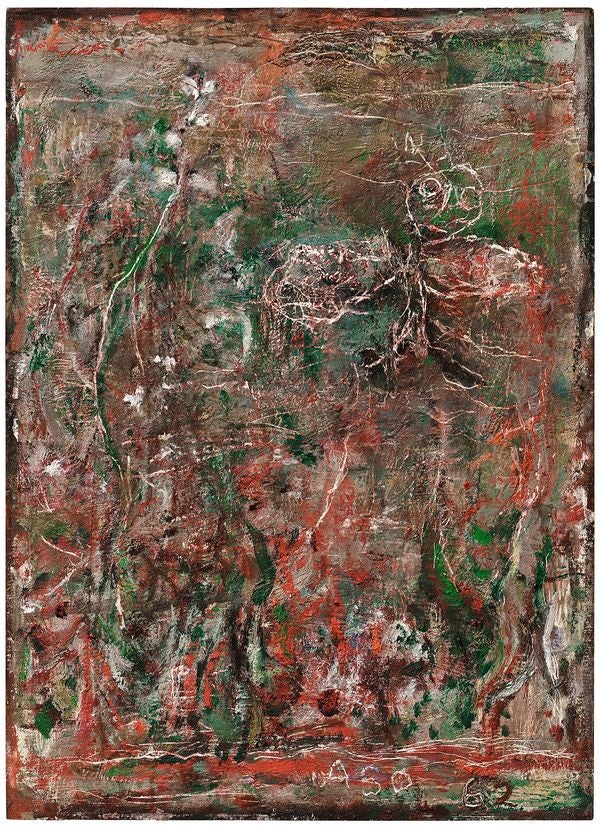
Saburo Aso, Grass, 1962. Modern & Contemporary Art Hong Kong.
Alongside Shunsuke Matsumoto and Ai-Mitsu, Saburo Aso co-founded the collective Shinjin Gakai in 1943, a time when individual expression carried serious risks for artists who didn’t devote themselves to the war effort. In the following years, Aso continued to paint figurative works, mostly of his family, documenting their survival experiences and reflecting his European studies in the 1930s. His gaze continued inward after the war, and from the 1950s onward, Aso shifted from intimate scenes of domestic endurance to confrontational, densely layered works in which atmospheric pressure bears down upon abstracted subjects. Grass, painted in 1962, depicts dense vegetation with intense texture and topographical markings that together generate an inner light that strikes an almost hopeful tone, one earned through defiance and Aso’s expressive power.
Kazu Wakita
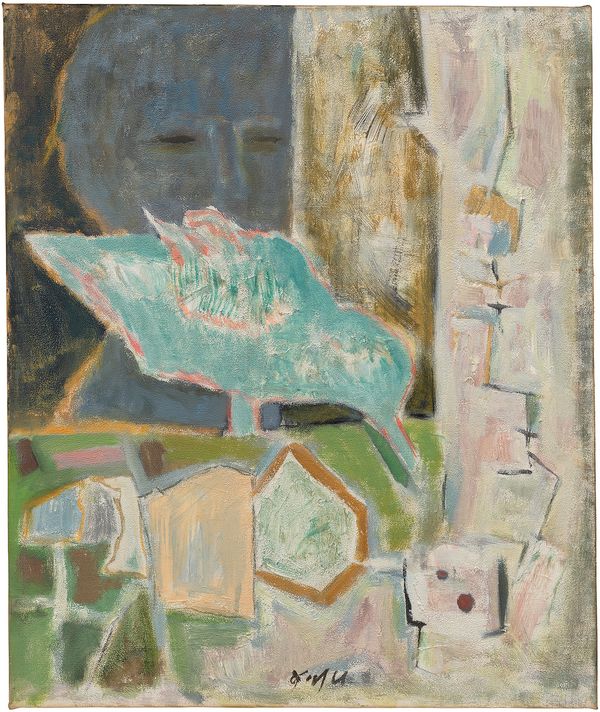
Kazu Wakita, The Bird at the Window. Modern & Contemporary Art Hong Kong.
Tender and lyrical, Kazu Wakita’s The Bird at the Window envelops the viewer within its contemplative atmosphere. Layers of muted colour and geometric, semi-organic forms reveal a shadowed protagonist patiently observing a bird — a motif of deep personal symbolism for the artist. Born in Tokyo, Wakita studied at the Berlin State School of Fine Arts before returning to Japan in 1932, later enduring the trauma of war and chronic illness. During a period of convalescence, a friend gifted him a bird, and he quickly came to see this companion as a personal symbol of freedom and hope. Subsequently, images of birds appeared in his works as an extension of himself. While Wakita avoided direct political commentary, his sense of composition, colour, and symbolism carries forward the complexity of his thought and his longing for peace.