Article | The World In Whitechapel 125 Years At The Vanguard
The World in Whitechapel: 125 Years at the Vanguard
One of London’s most enduring institutions celebrates a landmark anniversary and the artists whose careers it helped shape.
Founded in 1901 to bring “the finest art of the world to the people of East London,” Whitechapel Gallery has spent 125 years emphatically championing its mission in the heart of one of the city’s most important cultural crossroads. To mark this milestone, Phillips is proud to partner with Whitechapel for an online auction surveying the gallery’s history and present, with proceeds to benefit its future exhibitions, commissions, and public programmes. “In the face of such widespread division and uncertainty,” notes Director Gilane Tawadros, “it seems more important than ever to continue our legacy as a place of connection and principle, reaffirming our founding commitment to our local community while ensuring our ongoing relevance and influence around the world.”
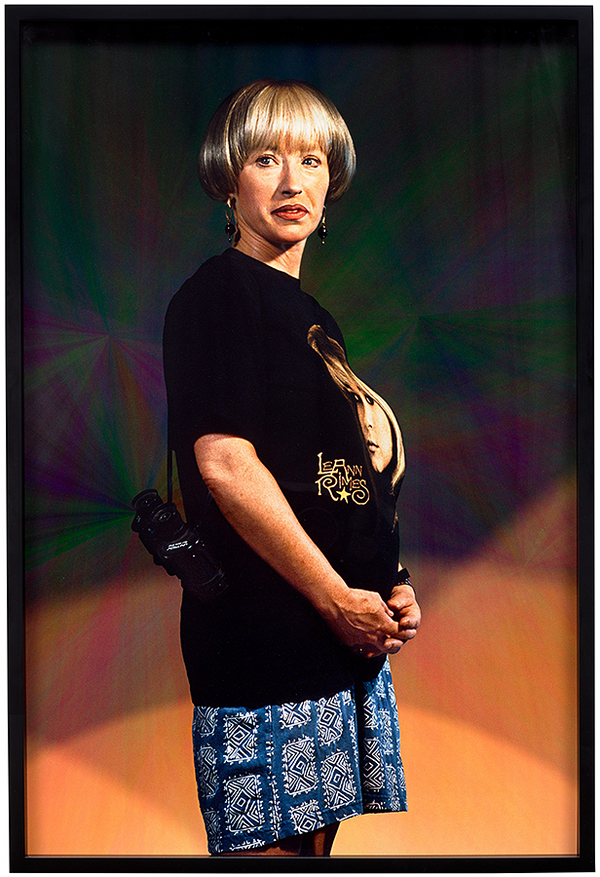
Cindy Sherman, Untitled #601, 2019. Modern & Contemporary Art: Online Auction, London.
A Living Archive
Each artist in the auction has had a significant and often pivotal exhibition at the gallery, with several experiencing career-defining moments through Whitechapel. Antony Gormley mounted his first solo exhibition there in 1981; an emerging Bridget Riley was shown alongside David Hockney and Patrick Caulfield in the 1964 The New Generation exhibition, which would go on to define the visual culture of the decade. More recently, Zineb Sedira’s Fanon and Latin America made its UK debut, and the gallery presented Nicole Eisenman’s first major UK retrospective in 2023. These confluences and launching points have defined Whitechapel from the very beginning: from Pablo Picasso’s showing of Guernica in 1939 to Barbara Hepworth in 1954 and 1962, Mark Rothko in 1961, Frida Kahlo in 1982, William Kentridge in 2016, and so many more, Whitechapel Gallery’s commitment to showcasing impactful art goes beyond institutional longevity.
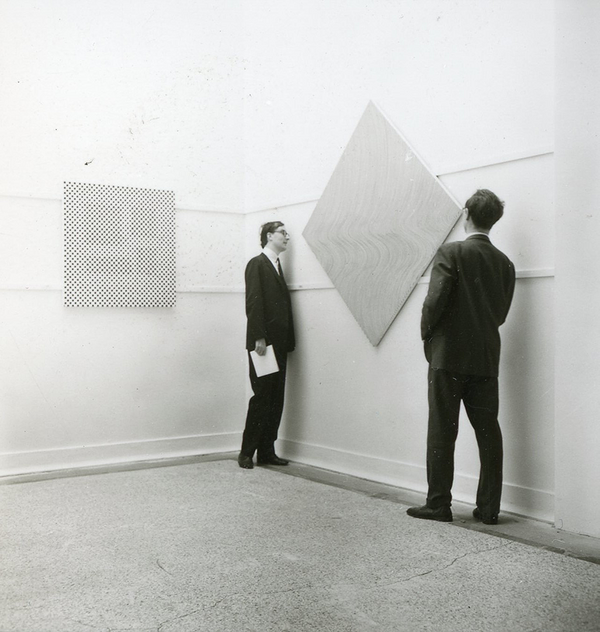
Installation view, The New Generation, 1964. March–May 1964. Whitechapel Gallery Archive.
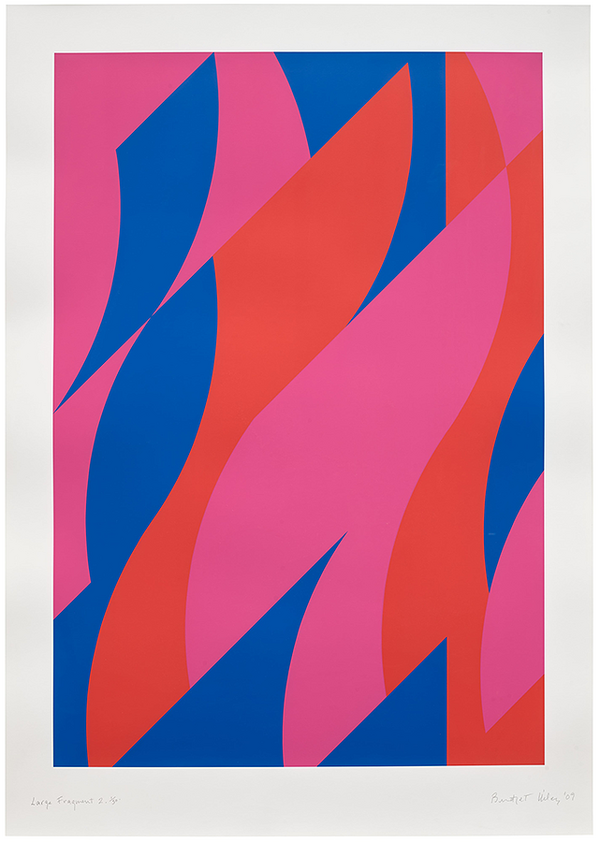
Bridget Riley, Large Fragment 2, 2009. Modern & Contemporary Art: Online Auction, London.
The 125th anniversary exhibition programme opens in April with Veronica Ryan: Multiple Conversations, the most comprehensive presentation yet of the artist’s work. The Turner Prize laureate’s four-decade practice is represented by over 100 sculptures, textiles, and works on paper, including works not seen since the 1980s. Ryan cites a 1979 Eva Hesse exhibition at Whitechapel as a formative influence; her work in the auction extends that relationship to today, bringing the artist back to the space where it all began. In addition, Senga Nengudi’s Performance Works 1972—1982 brings a pivotal decade for the American artist’s practice into a new context, along with Archaeology of Memory, a commissioned work by Argentinian Gabriel Chaile drawing on the cultural identity of the East End and exploring the ceremonial, communal language of food in an area where countless identities and nationalities converge around shared spaces.
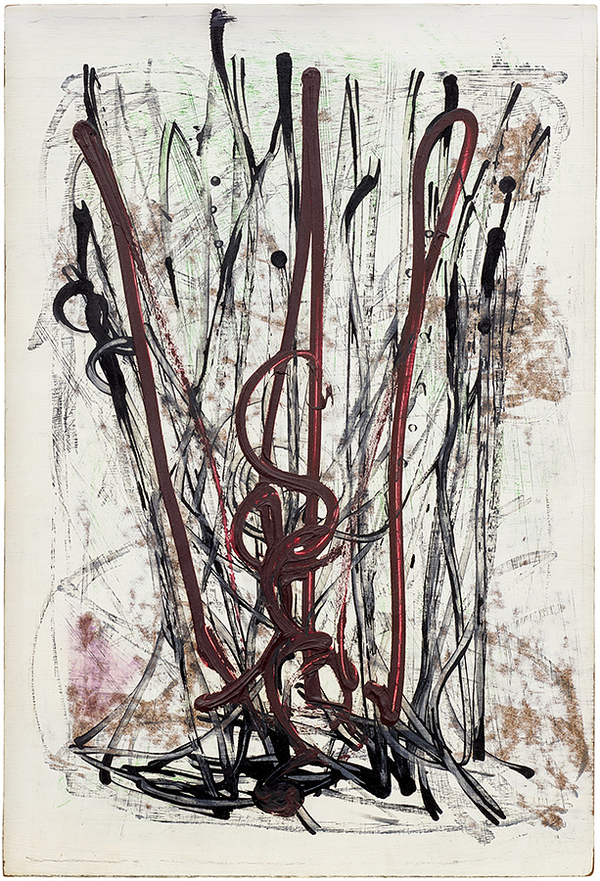
Barbara Hepworth, Interlocking Forms, 1957. Modern & Contemporary Art: Online Auction, London.
A Moveable Feast
The auction reflects the full range of Whitechapel’s scope. Works by Leon Kossoff, Cindy Sherman, and Alfredo Jaar feature alongside Lucien Freud, Ugo Rondinone, Joy Gregory, and Gavin Jantjes in an exceptional selection from across the gallery’s history. The auction features several unique experiential lots, which include studio visits (tea included!) with Tracey Emin in Margate, Ryan Gander OBE RA in Suffolk, and Jeremy Deller in North London, a watercolour commission by Francesco Clemente, or, for the bidders who want to roll up their sleeves, a bronze casting session with Kabir Hussain, a pottery workshop led by Lindsey Mendick, and a personal gallery tour with Veronica Ryan. If East London sunshine (not guaranteed with your bid) suits your disposition, take a scenic walk with Jane and Louise Wilson.
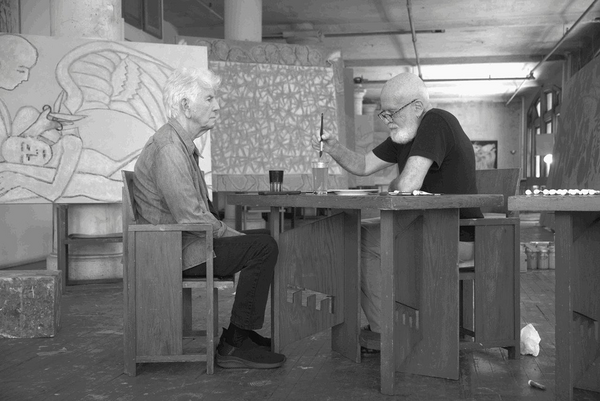
Bid to win a rare opportunity for Francesco Clemente to paint your portrait. Clemente will paint a portrait of you measuring approximately 12 x 9 inches in watercolour at his New York studio.
The anniversary also sees the launch of the Backyard Biennal — a cross-venue summer festival at East London’s cultural centres, places of worship, and public spaces in tandem with Art Futures, a talk series that invites artists, academics, policymakers, and community members to consider the role of institutions at a critical time for united perspectives. As Tawadros shares: “We have always been, and always will be, artist and ideas-led, ensuring that we represent urgent and diverse perspectives that offer audiences new ways ot thinking, feeling, and dreaming.”
In Their Own Words
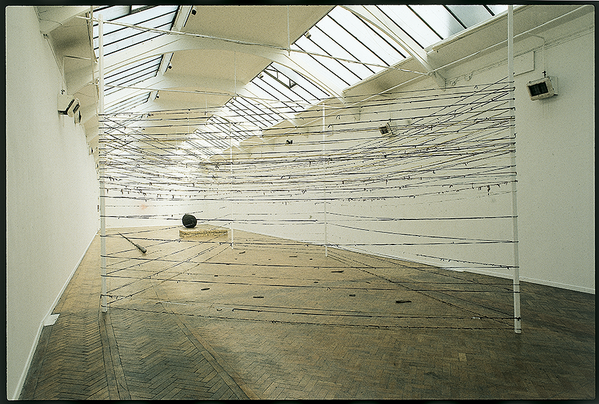
Installation view, Antony Gormley. 26 March–12 April 1981. Whitechapel Gallery Archive.
"The Whitechapel gave me my first solo exhibition in 1981. I have been lucky enough to have a few more since then, but it was the Whitechapel that offered me that first important opportunity to realise my ambitions as a young artist. It was a turning point in my life as an artist."—Antony Gormley
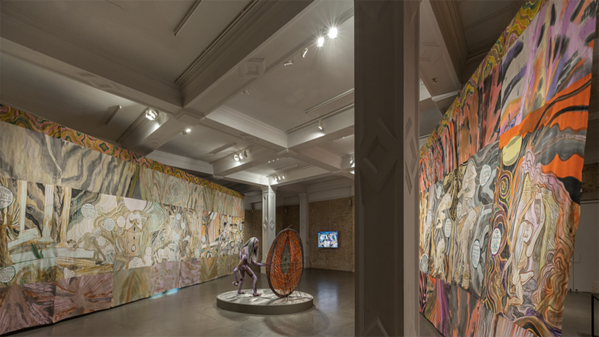
Installation view, Max Mara Art Prize for Women: Emma Talbot. 30 June–4 September 2022, Whitechapel Gallery. Photograph by Damian Griffiths.
"My exhibition at The Whitechapel Gallery was a significant step in my career, the outcome of the generous support I received for the Max Mara Prize. The exhibition was, in some ways, the grounding that helped me continue to develop my work for major institutions internationally. I was encouraged to realise an ambitious installation, using painting, animation, sound, and 3D work, building on a period of research and responding to the space. Whitechapel produced a beautiful catalogue to open out the work of the two-year project. It was such a valuable experience, and I couldn’t have felt more carefully and sensitively supported by the Whitechapel team, who were great." —Emma Talbot
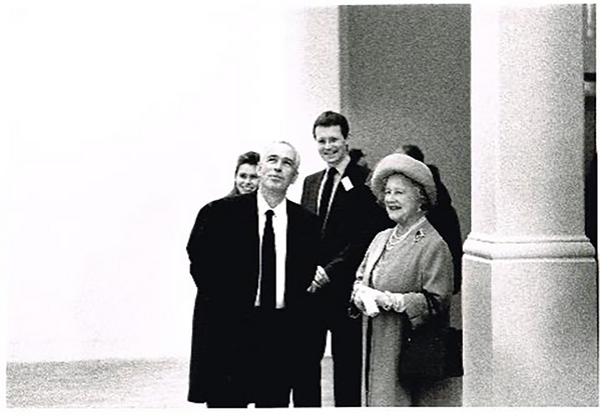
Sir Howard Hodgkin with the Queen Mother, Lady Sarah Chatto, and Sir Nicholas Serota. Howard Hodgkin: Fifty Paintings 1973-85. 20 September–3 November 1985. Whitechapel Gallery Archive.
"The [Whitechapel] Gallery was being reopened [in 1985] by HM the Queen Mother, who had been an iconic figure in the East End since World War II. I walked around the show behind her, and as she looked at my paintings, she remarked that if only she had known, she’d have worn different jewels." —Sir Howard Hodgkin
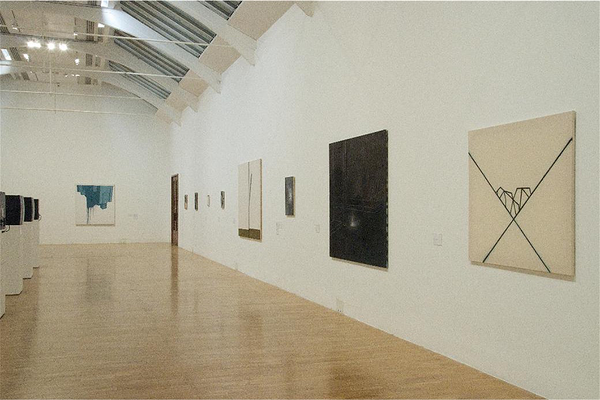
Installation view, Wilhelm Sasnal. 14 October 2011–1 January 2012. Whitechapel Gallery Archive.
"My experience of the Whitechapel Gallery exhibition was unique, unlike other events of that kind. Of course, the times were different. The optimism was still prevailing, at least from my point of view. Poland was a new member of the EU, and the UK was a pivotal country of the Union. Back then, for me, it was crucial how to convey the past (mostly Polish, still unpainted) in painting. Globalization was more interesting than destructive, from my perspective, even a sort of aesthetic issue. [...] Maybe there are no times, just time." —Wilhelm Sasnal
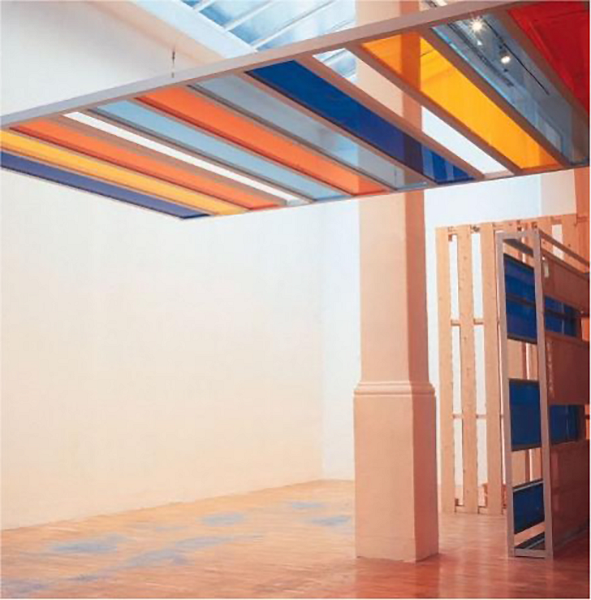
Installation view, Liam Gillick: The Wood Way. 3 May–23 June 2002. Whitechapel Gallery Archive.
"As a young artist, I visited to experience exhibitions that were unique in London at the time. Solo exhibitions that revealed artists in depth and without compromise, and judiciously planned group exhibitions that redefined histories, identities, and artistic communities. In 2002, alongside Hélio Oiticica, I had the opportunity to show how my own work had been influenced by the desire to create new structures and contexts. The Whitechapel transmits and receives. It projects ideas from the community of artists that surround it and receives uncompromised messages from across the globe." —Liam Gillick
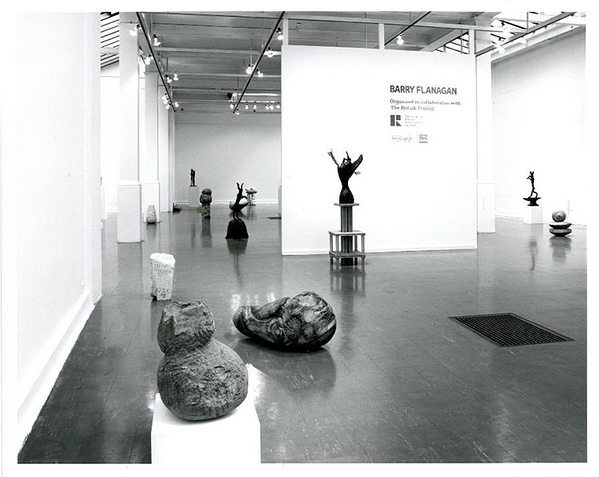
Installation view, Barry Flanagan. 7 January–20 February 1983. Whitechapel Gallery Archive.
"It was a 1963 visit to the Whitechapel Art Gallery to see Anthony Caro’s landmark exhibition that made [Barry] Flanagan, after a hiatus, intent on returning to his art studies and attend St Martin’s School of Art, to begin a two year Advanced Sculpture course in 1964 […] Almost twenty years later, Flanagan was to show his own work at the Whitechapel in British Sculpture in the Twentieth Century. Part 2: Symbol and Imagination 1951–1980, curated by Nicholas Serota." —The Barry Flanagan Estate
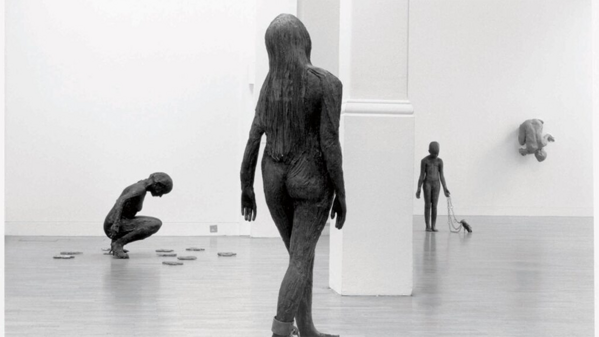
Installation view, Kiki Smith. 24 February 1995–23 April 1995. Whitechapel Gallery Archive.
"When I was asked to make an exhibition at Whitechapel, I knew little of its illustrious history. While I had been working as an artist since my twenties, it wasn't until my late thirties and early forties that I began to show and show internationally. It was such a wonderful space to show in, and I was slightly flabbergasted to have such an opportunity. It was a radical community space that didn't really exist very much in communities in the United States; that was something very inspiring to me." —Kiki Smith