Article | Innovation Everywhere You Look Editions Auction London January 2026
Innovation Everywhere You Look
Searching our upcoming London Editions auctions for the real meaning behind the buzzword.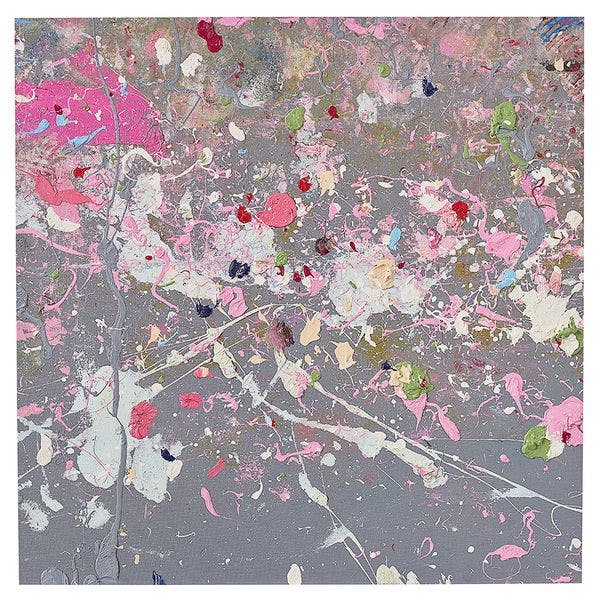
Damien Hirst, Where the Land Meets the Sea, 2023. Contemporary Editions: Online Auction.
Innovation. We’re hearing all about it these days. Slap the letters A and I on anything and boom — instant buzz, even if your self-cleaning, self-sabotaging robot breaks your window while watering that Monstera you let turn brown. But it so happens that innovation is at the core of our upcoming Editions sales in London, both in the art and on our platform.
Alongside our well-loved Evening & Day Editions Auction, this season, the London team launches their first-ever online auction, Contemporary Editions: Online Auction. So if you’re new to collecting or if you came in as an underbidder in the live sales and need a shot at redemption, now’s your chance — no regrets. But beyond our spiffy new platform, editions themselves have historically been a perfect medium for innovation, demonstrating how artists harness the latest tools of industrial innovation for their own creative ends. From the printing press to the first iPad and beyond, the creation of multiples has perhaps always been the first place where art meets the most emergent technologies. What’s more, editions are a breeding ground for innovative thought. It’s no surprise that many of the names linked with conceptual art — like Sol LeWitt and Bernar Venet here, for example — are so fundamentally associated with the category. But let’s start with the only thing David Hockney might love as much as his dogs.
David Hockney and the iPad
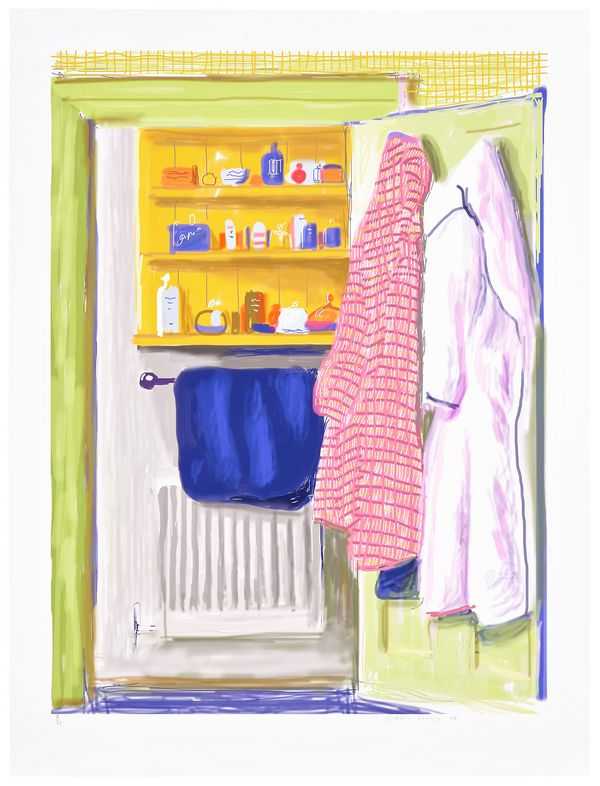
David Hockney, Two Robes, 2010. Evening & Day Editions, London.
What’s perhaps most surprising about Hockney’s iPad drawings is just how quickly he began to develop them after the launch of the product. Having been drawing on an iPhone since 2008, Hockney had honed his approach to digital mark-making, but by May 2010, just a month after the iPad’s release, he was already producing significant works with the device. Hockney’s use of the iPad goes far beyond the mere adoption of a new tool. Not only does the iPad allow the artist to experiment with his characteristically bold, colorful compositions at a moment’s notice, documenting the passage of time while traveling or day-to-day upon first waking up in the morning, but it also shifts the nature of the practice entirely. What had been a physical white ground that reflects light is now a surface comprised of light itself. Think different, indeed. And one more thing: This tactile closeness to the light surface offers the artist an immediate sense of feedback, but his hand remains as clearly visible in each stroke as it does in his paintings.
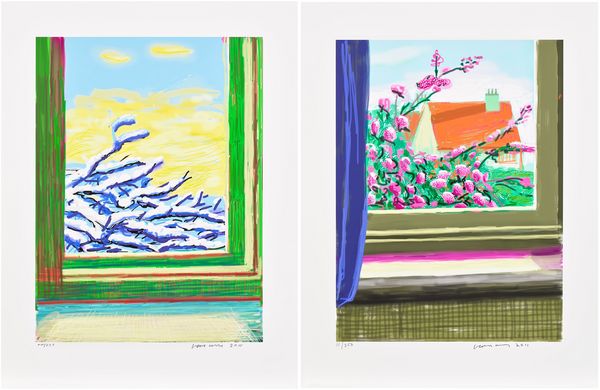
Left: David Hockney, No. 610, 23rd December 2010, from My Window: Art Edition C, 2010/2019. Right: David Hockney, No. 778, 17th April 2011, from My Window: Art Edition D, 2011/2019. Evening & Day Editions, London.
From paint to pixel
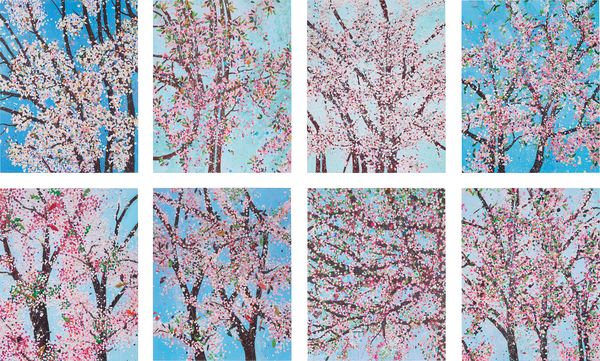
Damien Hirst, The Virtues, 2021. Evening & Day Editions, London.
Throughout his career, Damien Hirst has explored the notion of the artist’s hand versus the machine. Whereas each of the aforementioned artists plays with the relationship between the two, Hirst’s works typically consider the concept to be the work. The above giclée prints from his Virtues series, like much of his output, explore how an image can retain its power and its value when the artist’s hand is not immediately visible, either because it has been removed through mechanical or digital reproduction, or because of the perfection or anonymity in the execution. Ever the innovator, he recently announced plans for new works to be produced for 200 years after his passing via instructions and protocols he will leave behind. Although somewhat controversial, it represents a culmination of Hirst’s approach to innovation in image and value creation, and at least it’s more natural than what they’re currently doing to the composer Alvin Lucier’s brain, but don’t get us started there.
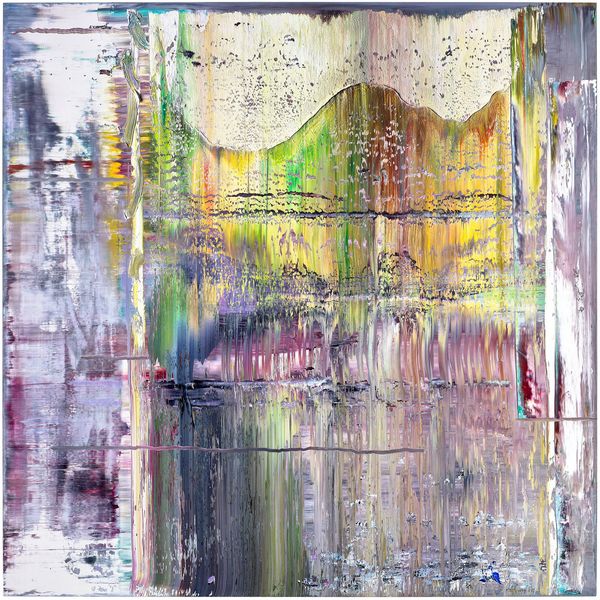
Gerhard Richter, Haggadah, 2006/2014. Evening & Day Editions, London.
Like Hockney and Hirst, Gerhard Richter often explores his subjects across media, but for him, the emphasis is on what can change in meaning and perception when an image is translated from one medium to another. In Orichidee II, Richter conceals a multi-step, multi-medium process within a single print. A print from a photograph of a painting based off a photograph, the artist interrogates the idea of representational originality through the blurring both of the image, but also the boundaries of media, intensified conceptually with each additional reproduction.
In Haggadah, Richter’s converging of material comes to fruition in this print of a colorful squeegee-d surface. Leaning into spontaneity and chance through the serendipitous collision of pigments, Richter’s mechanical reproduction of the painted picture deconstructs the binaries of machine predictability and individual agency.
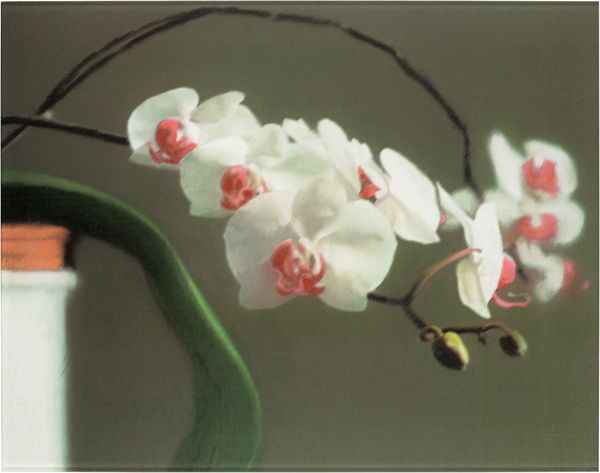
Gerhard Richter, Orchidee II (Orchid II), 1998. Evening & Day Editions, London.
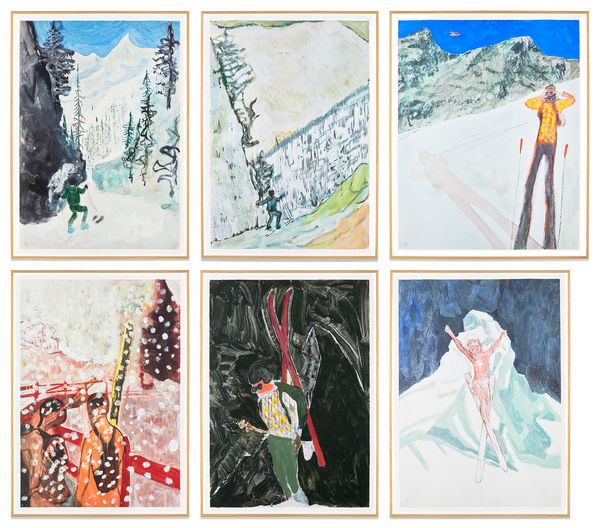
Peter Doig, Zermatt, 2022. Evening & Day Editions, London.
Peter Doig also employs innovative processes of reproduction in his print works, but where Richter explores shifting meanings across each iteration, Doig’s above images of Zermatt began as an exploration of the slippage of memory. Following a trip to the Swiss town, Doig executed these works based solely on his recollections and was inspired by vintage ski posters he encountered there. Employing thick textures and misty atmospheres, he replicates not only the sights but the sensations of snow, foliage, and alpine air. These aspects of the original painting are captured with precision in the giclée process, a relatively recent innovation in printmaking. This also brings the idea full circle, as the final prints mimic the objecthood of the ski posters.
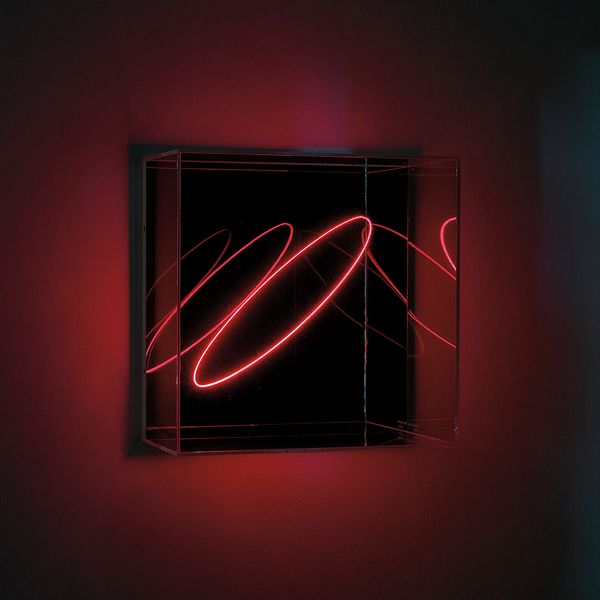
Ai Weiwei, Thinline, 2017. Contemporary Editions: Online Auction.
Numerous artists in our upcoming Evening & Day Editions Auction and Contemporary Editions: Online Auction showcase innovative ideas and approaches, as do the sales themselves.
Evening & Day Editions takes place 22–24 January in London, with viewing through 24 January at 30 Berkeley Square.
Contemporary Editions: Online Auction is open for bidding from 20–29 January.