Article | One Century Of Art Deco 1925 2025
A Century of Art Deco
Looking back on a movement that changed the world, with highlights from Phillips Design.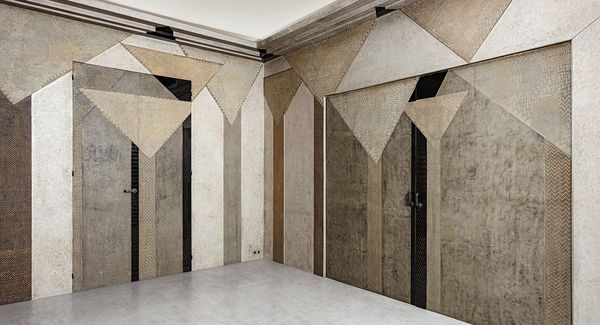
Jean Dunand, ‘Les Palmiers’ smoking room, from the residence of Mademoiselle Colette Aboucaya, Paris, 1930–1936. Sold for £3,289,500, Phillips London, 2021.
2025 was perhaps the most significant historical milestone we’ve yet seen for the Art Deco design movement, marking 100 years since the Exposition Internationale des Arts Décoratifs et Industriels Modernes in Paris — the exhibition that gave Art Deco its name.
Beyond the timeline, it’s easy to see why the themes of Art Deco speak to us so strongly today. Emerging in the 1910s before reaching its zenith in the 1920s and early 1930s, Art Deco offered a modern vision of elegance in an era of rapid modernization — an era much like our own. Combining geometric patterns, exotic materials, and refined craftsmanship, the style celebrated both industrial progress and artisanal luxury in response to earlier decorative movements; less organic than Art Nouveau, but more ornate than the spartan functionalism that followed.
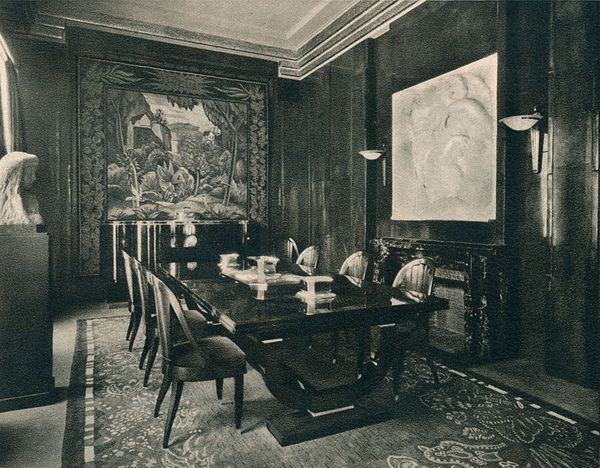
A Dining room at the International Exhibition of Modern Decorative and Industrial Arts, Paris, 1925. Furniture design by Émile-Jacques Ruhlmann. Credit: Print Collector / Getty Images
In furniture, lighting, and interiors, Art Deco introduced streamlined silhouettes executed in rare woods, lacquer, shagreen, and polished metals. Designers celebrated speed, travel, and cosmopolitan modernity, manifested in rectilinear motifs, zigzag inlays, and striking textures. At its heart, the Art Deco philosophy was about optimism for a future shaped by technology, while retaining the beauty of handcraft.
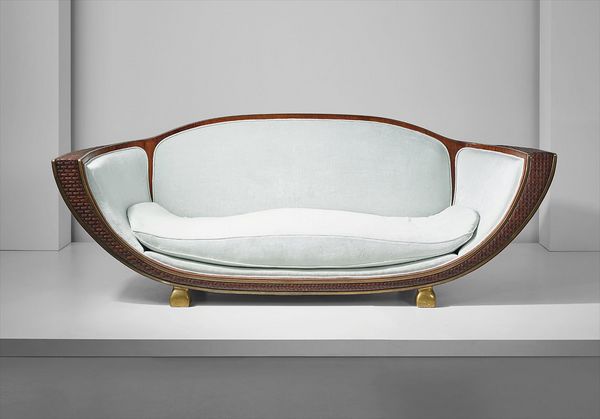
Marcel Coard, Important Canapé Gondole, circa 1925. Sold for £974,500, Phillips London, 2016.
As the year draws to a close, we explore Art Deco’s legacy through key moments in some of Phillips’ past Design sales, highlighting several works from the movement's dawn. As we celebrate these elegant and bold works that achieved strong results, we welcome consignments for this material ahead of our auctions in London and New York in 2026.
Jean Dunand’s sense of pattern and geometry
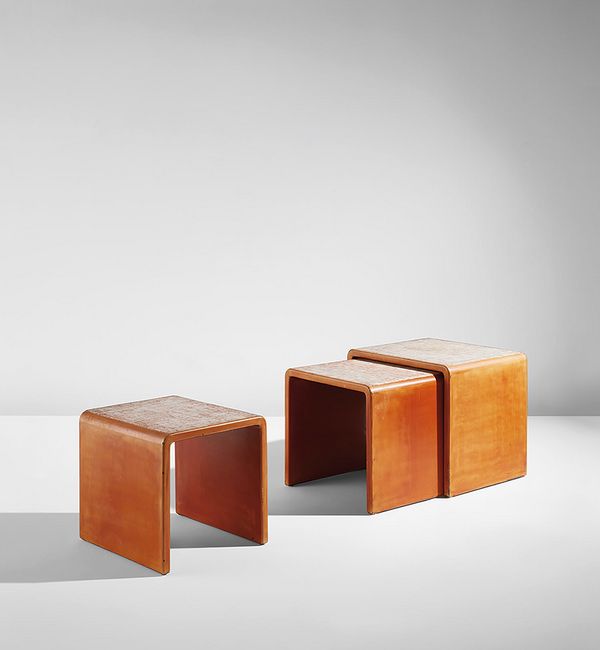
Jean Dunand, Set of three nesting tables, circa 1925. Sold for £200,000, Phillips London, 2020.
Art Deco’s sharp geometry and visual repetition come alive in the work of Jean Dunand. Just look to his Les Palmiers smoking room (above), where lacquered stylized palm motifs and repeating decorative panels create a rhythmic, almost architectural tapestry, revealing a masterclass in pattern and composition. In addition, Dunand’s set of three nesting tables uses coquille d’oeuf inlays to create a descending geometric rhythm across the tabletops, further demonstrating the era’s detailed treatment of pattern.
Émile-Jacques Ruhlmann’s exceptional materials and craftsmanship
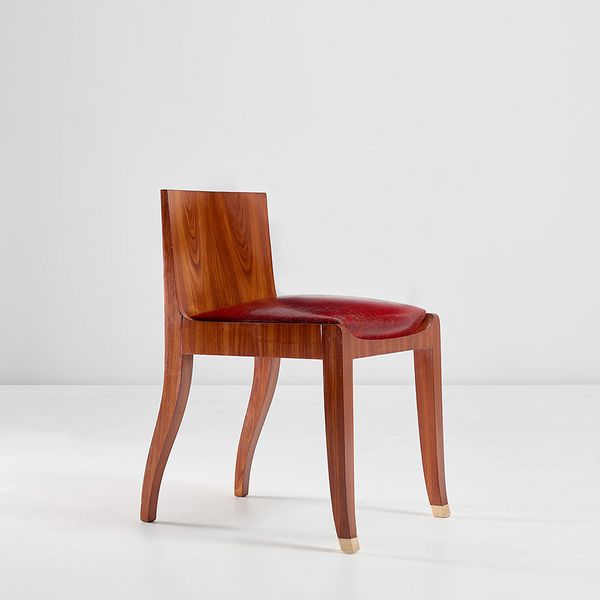
Émile-Jacques Ruhlmann, 'Tivo' side chair, circa 1918. Sold for £10,080, Phillips London, 2022.
Material richness is central to Art Deco’s allure, so it is no surprise that Phillips has showcased works that highlight the era’s luxurious finishes. Émile-Jacques Ruhlmann’s ‘Tivo’ side chair combines amaranth-veneered wood and leather, demonstrating how high-quality materials and refined construction can elevate furniture into art. Another shining example is Ruhlmann’s ‘Bouillotte’ table lamp (model 3048/3342), where gilt bronze, painted brass, and elegant proportions showcase the marriage of functional design and artisanal craftsmanship.
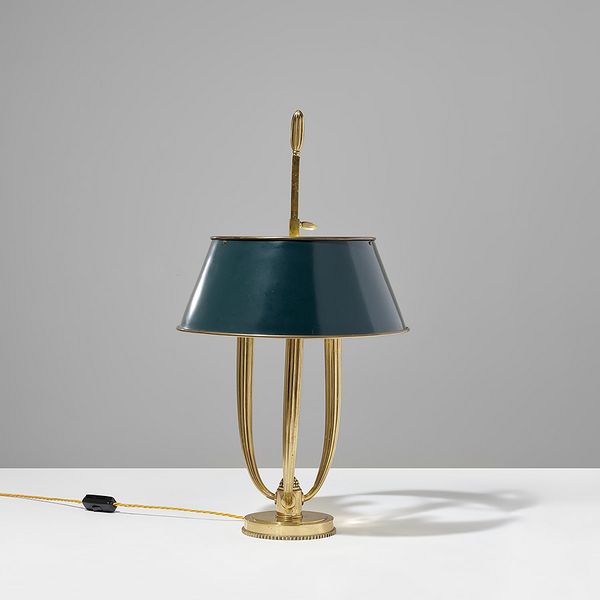
Émile-Jacques Ruhlmann, 'Bouillotte' table lamp, model no. 3048 AR/3342 NR, circa 1925. Sold for £69,850, Phillips London, 2024.
Pierre Legrain’s celebration of modern life
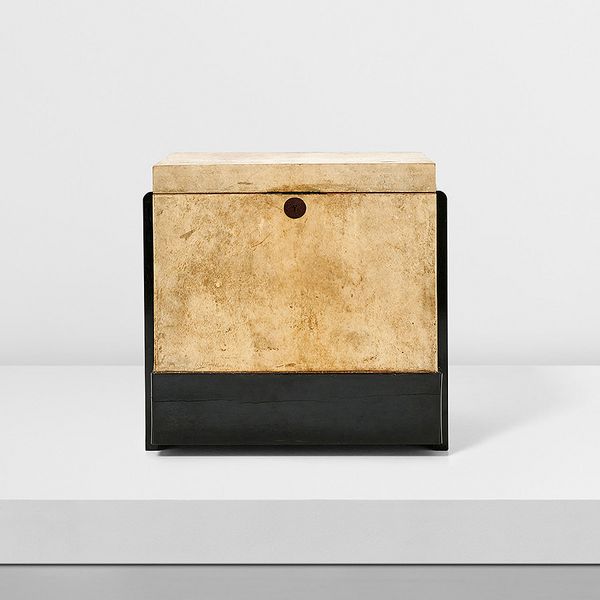
Pierre Legrain, Rare lidded tabouret, circa 1920. Sold for £151,200, Phillips London, 2022.
Art Deco expressed a belief in a glamorous, forward-looking world that valued craft and refined materials. This philosophy is vividly illustrated in the work of Pierre Legrain, whose bold integration of geometric form and luxurious finishes redefined modern living in the 1920s. Legrain’s designs balance a sleek, architectonic sensibility with artisanal touches, a synthesis that continues to resonate with collectors and institutions.
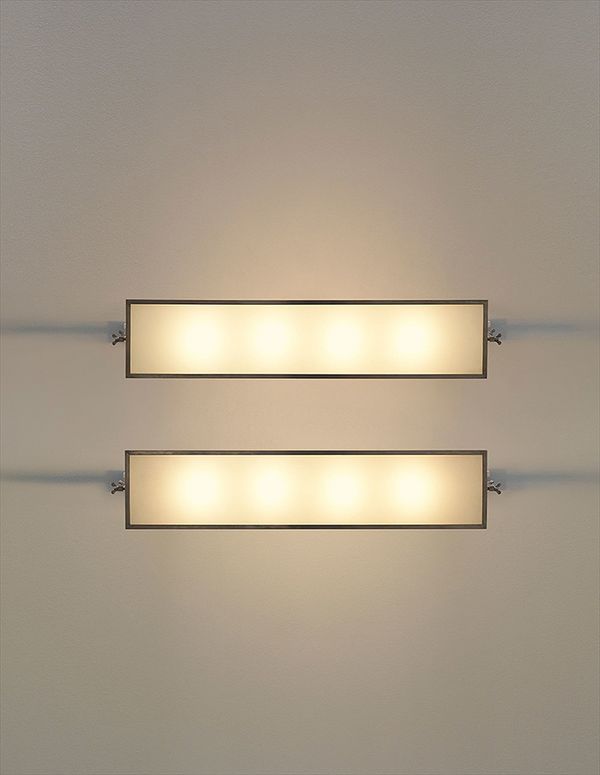
Pierre Legrain, Pair of wall lights, from the study of Roger Martin du Gard, Paris, circa 1926. Sold for $74,500, Phillips New York, 2014.
A standout example offered at Phillips is Legrain’s rare lidded tabouret, a compact stool combining ebony, ebonized pear wood, sycamore, parchment, and leather. Another testament to his impact is Legrain’s pair of wall lights, from the study of Roger Martin du Gard, Paris. These functional yet highly distinctive fixtures, with nickel-plated metal and frosted glass, reflect how even utilitarian lighting could embody Art Deco’s modern aesthetics without sacrificing craftsmanship.
Sell with Phillips
As the centenary year draws to a close, works from this era are at the forefront of collectors’ minds. Consign with Phillips for an unparalleled, modernized selling experience, backed by the expertise of our global Design team.