Article | Staff Picks Design Gift Guide Auction New York December 2025
Staff Picks: A Design Holiday Gift Guide
Sleighbells ring, are you bidding?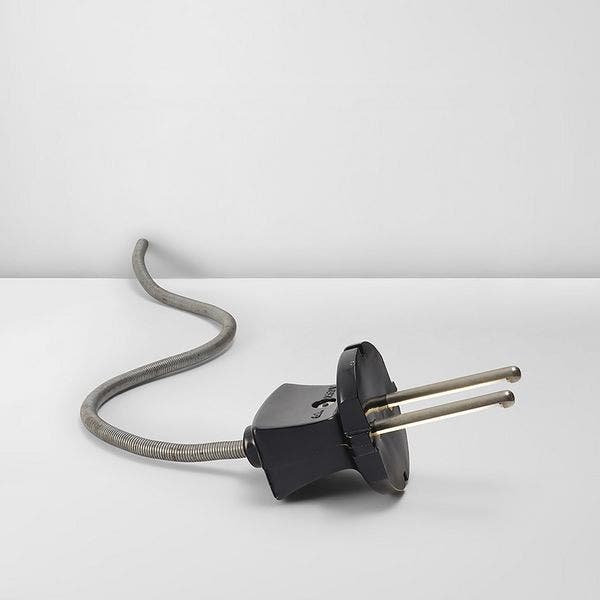
Yonel Lebovici, Prototype "Fiche Mâle" lamp, 1977. Design New York.
Yonel Lebovici
Cecilia Moure, Associate Specialist, Head of Sale, Design
Ceci n'est pas une fiche mâle! I can’t think of a better gift for your favorite eccentric than a lamp that celebrates the most overlooked aspect of any lighting feature: the plug. Exemplifying the dry wit of postmodernity, Yonel Lebovici questioned conventionality. By using the hyper-literal title (Fiche Mâle or male plug), he draws attention to the gendered linguistic binaries embedded within industrial systems. The Fiche Mâle lamp certainly transcends utility. Instead, Lebovici explores sculptural surrealism and linguistic play in order to reframe the technological and symbolic systems that structure daily life. This trompe l'oeil light would bring warmth and humor to any room, making it the perfect present.
George Nakashima
Demi Zhao, Cataloguer, Design New York
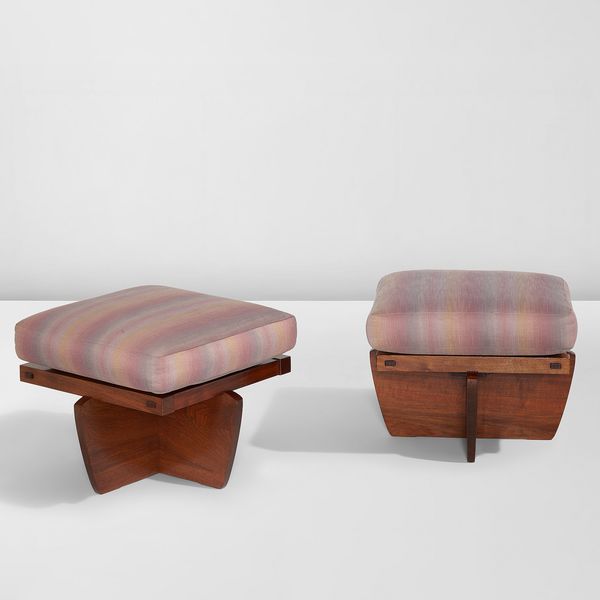
I chose George Nakashima’s “Greenrock” ottomans because they have the kind of quiet, inherent warmth that makes a home feel grounded. Designed in the early 1970s for the Rockefellers’ Pocantico Hills residence, this model was the last seating form Nakashima introduced, created as he shifted toward a deeper respect for the character of the wood itself. I’ve always been fond of Nakashima’s design philosophy — a spontaneous yet meticulous process that evokes the pristine charm of materials and translates them into an introspective spatial mood for contemplation, allowing nature to smile through its beauty. What I love most is how easily those ottomans slip into everyday life — pulled up beside a reading chair, holding a book or a tray, or offered as a welcoming seat — making them a lovely gift for friends, family, or to add a touch of coziness to your own home.
Konstantin Grcic
Kim Sorensen, Specialist, Design New York
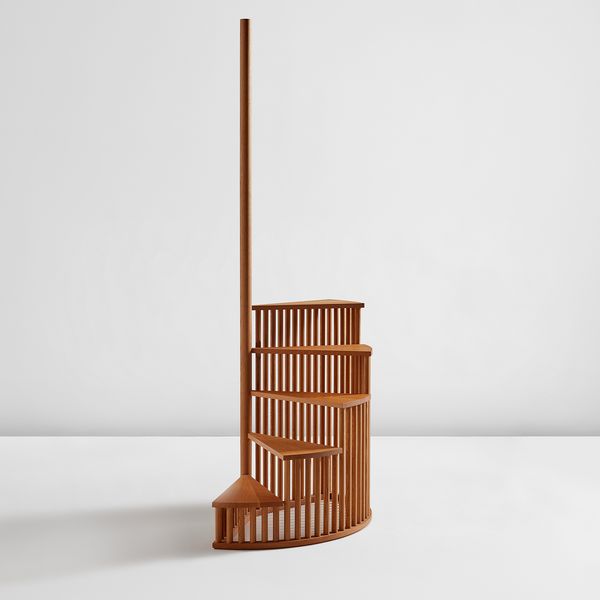
For the bibliophile in your life, may I suggest this set of library steps? I’ve always loved library steps as an aspirational furniture form, with the implication being that you have enough books to necessitate special steps to reach all of them (and enough rooms in your house to dedicate one to books). The form seems to have originated in European manor houses of the seventeenth century, and from there on out, bookworms across history and artistic movements have benefited from a diversity of beautifully crafted steps to access out-of-reach tomes. For Konstantin Grcic’s “London Calling” library steps, the German designer took inspiration from the narrow spiral staircases at the back of London’s original red double-decker buses, evoking fond memories of his time spent in London in the early ’90s.
John Lautner
Beth Vilinsky, Senior International Specialist, Design New York
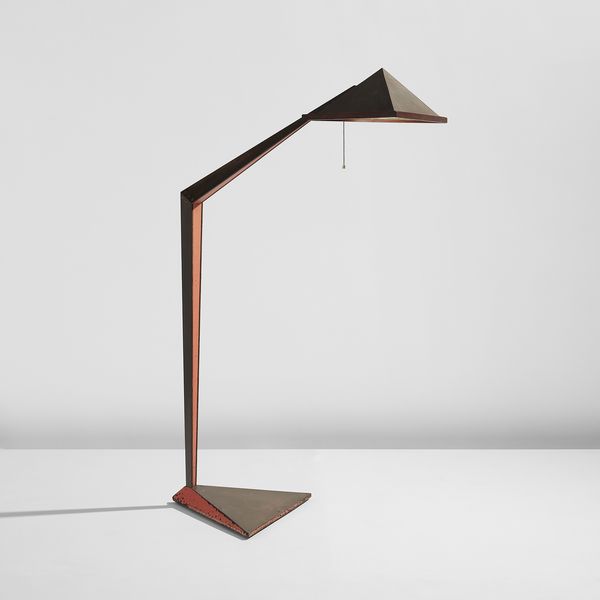
If you’re looking for a truly special gift for the architect or architecture enthusiast in your life, look no further than lot 9, John Lautner’s striking floor lamp, which he designed for Frank Lloyd Wright’s George Sturges house, circa 1939. Widely considered one of Wright’s most talented protégés and referred to by the master himself as “the second greatest architect on earth” (presumably Wright being the first), Lautner was selected to oversee the construction of the Sturges residence — the only Usonian home Wright ever built in Los Angeles. Just as Wright sought to integrate the house gently into its natural environment, so too was his intent to outfit its interior with furnishings that suited the building’s design. The present floor lamp has a strong and remarkably modern presence. Similar to the façade of the house, it is of rectilinear form and spare of fussy details. Inspired by the dramatic cantilevered terraces of the house that extend over the hillside, Lautner very effectively infused the lamp with a bold, angular base and shaft that terminate in a cantilevered, broad, geometric shade. The recipient of this gift will recognize and appreciate not only the historical importance of this lamp but the genius of its architectonic design as well. It may be a splurge and difficult to wrap, but your loved one is worth it!
Albert Cheuret
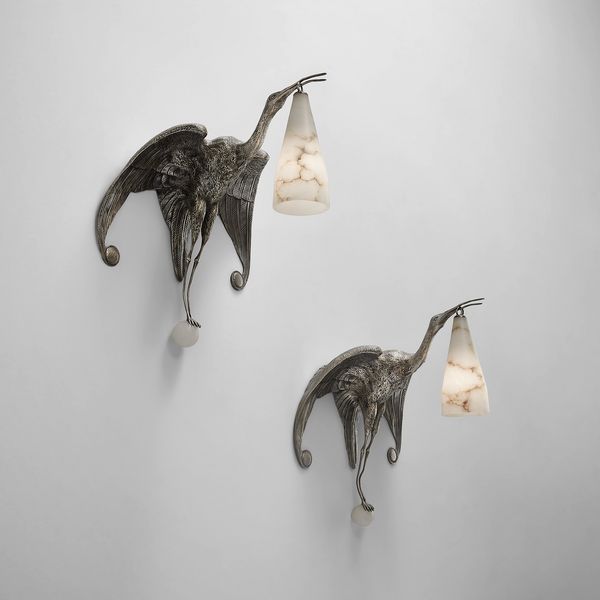
Elizabeth De Palma, Sale Manager, Design
I would propose you gift Albert Cheuret’s pair of "Cigognes" wall lights to someone in your life this holiday season. Cheuret is known for his Art Deco craftsmanship and affinity for the natural world, and these lights are sure to bring a whimsical feel to any space. The artist studied sculpture at the turn of the 20th century with the likes of Jacques Perrin and Georges Lemaire and went on to develop his notable style and brilliant artistry that set him apart from his peers. With their distinct geometric styling, signature use of bronze and alabaster, and homage to one of his beloved animal muses, these lights are quintessentially Cheuret. The stork-shaped lights could be a lovely addition to a nursery for those in your life who are expecting and attuned to the popular myth, or perhaps they could nestle in a cozy living room to bring some fantasy into an everyday space. I am certain this would be a wonderful gift to anyone with a love for Art Deco design and anything fanciful.