Article | Philippe Dufour Duality No1 Simplicity 37mm No1 Phillips New York Auction Dec 2025
What the Duality and Simplicity Reveal About Philippe Dufour
A closer look at the Duality No. 1 and the first Simplicity 37mm, and how they capture the heart of Philippe Dufour’s philosophy.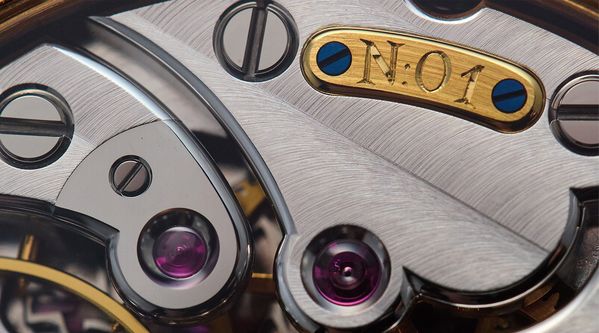
The PHILLIPS New York Watch Auction: XIII takes place on 6-7 December 2025, at our Park Avenue headquarters. The auction includes more than 140 of the world's finest watches – and though we are loath to boast, we truly think it's one of the best catalogues we've ever put together. We'll be highlighting several of the most interesting lots and stories featured in the sale right here, including the two very special Philippe Dufour wristwatches seen below.
– By Logan Baker
Philippe Dufour’s name evokes a mix of awe and warmth.
Collectors and even other watchmakers speak about him with genuine respect, but there’s nothing remote about the man himself. He’s approachable, direct, and confident in the only thing that has ever mattered to him: the craft of watchmaking.
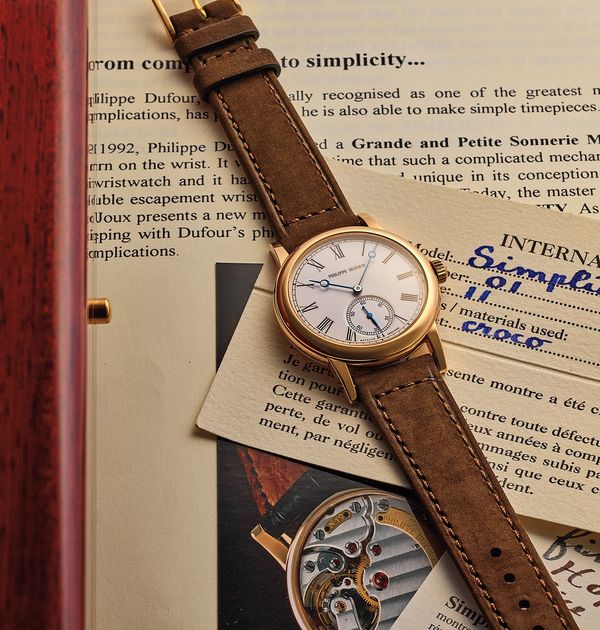
Lot 95: The circa 2002 Philippe Dufour Simplicity 37mm No. 01 in 18k pink gold that will be offered at the Phillips New York Watch Auction: XIII. Estimate: USD $350,000 - 700,000
His work has been at the center of the modern independent watchmaking movement since the 1990s. Why? It's really quite simple – Dufour has spent countless hours, spanning literal decades, mastering the language of traditional hand-finished Swiss watchmaking and transferring that language into the era of contemporary wristwatches with absolute conviction.
Two of his most significant creations are being offered at the upcoming Phillips New York Watch Auction: XIII. Both of these watches are fresh-to-market, and both carry the same extraordinary engraved distinction on their movements: No. 1.
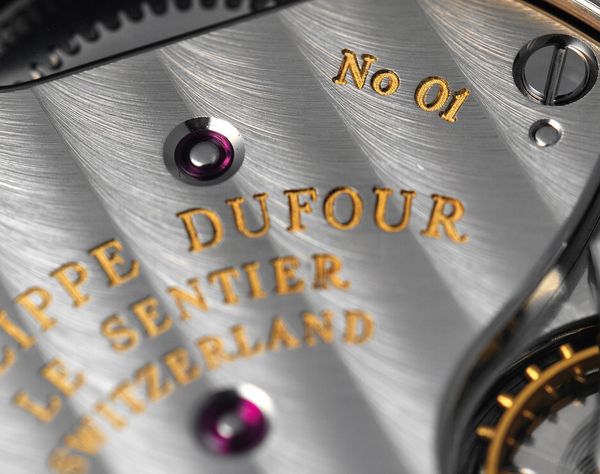
Lot 94: The circa 1999 Philippe Dufour Duality No. 1 in 18k white gold that will be offered at the Phillips New York Watch Auction: XIII. Estimate: USD $1,000,000 - 2,000,000
The Duality No. 1 in 18k white gold (lot 94), completed around 1999, and the Simplicity 37mm No. 1 in 18k pink gold (lot 95), completed around 2002, each tell part of the story of how Dufour built his legacy.
The Duality came first. When Dufour introduced it in 1996, he had already stunned the watch world by miniaturizing a grande et petite sonnerie into wristwatch form. That accomplishment alone would have secured his place in the history of watchmaking. But the Duality was something entirely different.
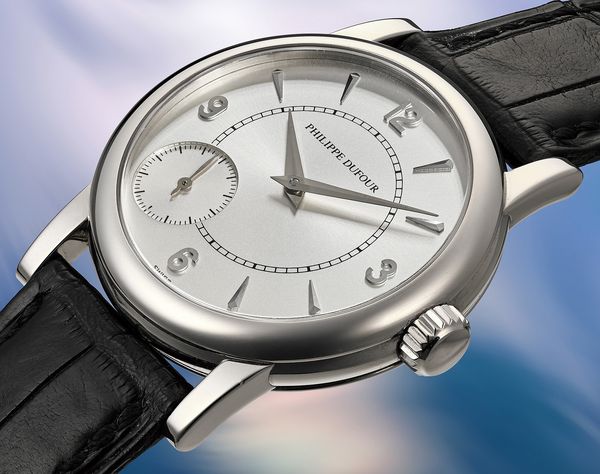
Lot 94: The circa 1999 Philippe Dufour Duality No. 1 in 18k white gold that will be offered at the Phillips New York Watch Auction: XIII. Estimate: USD $1,000,000 - 2,000,000
The idea came from a school watch he had handled decades earlier: a pocket watch with twin balances linked by a differential. He revived the concept, shrunk it to fit a wristwatch, and made it reliable.
The finished movement housed two independent balance wheels, both free-sprung with Breguet overcoils, tied together by a tiny differential no larger than a match head. If one balance ran fast and the other ran slow, the differential averaged the difference. The result was stability in any position.
Only 10 Dualities are believed to have been completed. Dufour had planned to make 25, but the work demanded so much attention that he moved on rather than compromise the high standard he set for himself. At the time, the market didn’t fully understand what he had accomplished, although collectors definitely do now.
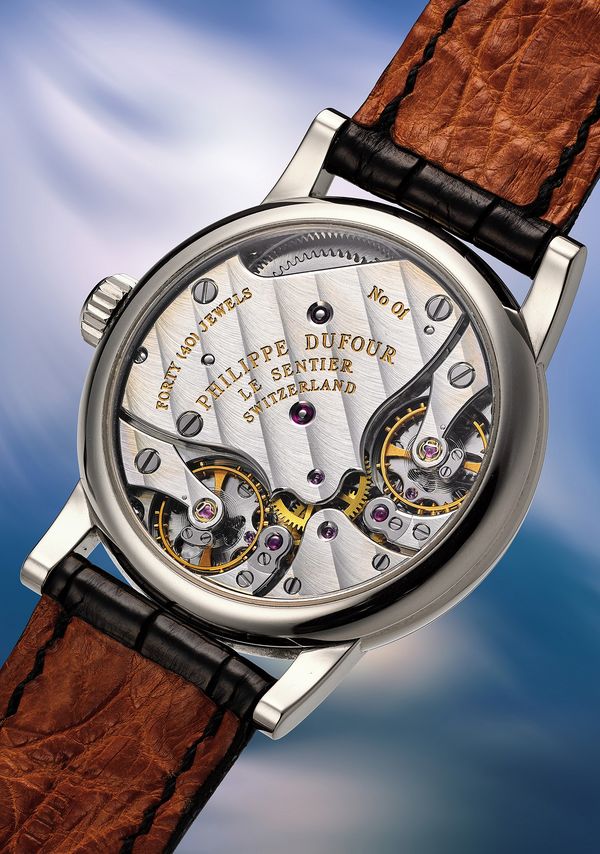
Lot 94: The circa 1999 Philippe Dufour Duality No. 1 in 18k white gold that will be offered at the Phillips New York Watch Auction: XIII. Estimate: USD $1,000,000 - 2,000,000
The Duality laid the groundwork for a wave of independent experimentation in precision watchmaking. F.P. Journe was directly inspired by the Duality's release to revisit his own experiments in resonating escapements, resulting in the Chronomètre à Résonance four short years later.
The 34mm example offered at the Phillips New York Watch Auction: XIII is No. 1 in the series, and it’s one of only two known Dualities cased in 18k white gold. It comes with its original certificate, box, and a set of rarely seen early materials, including movement renderings and a press kit.
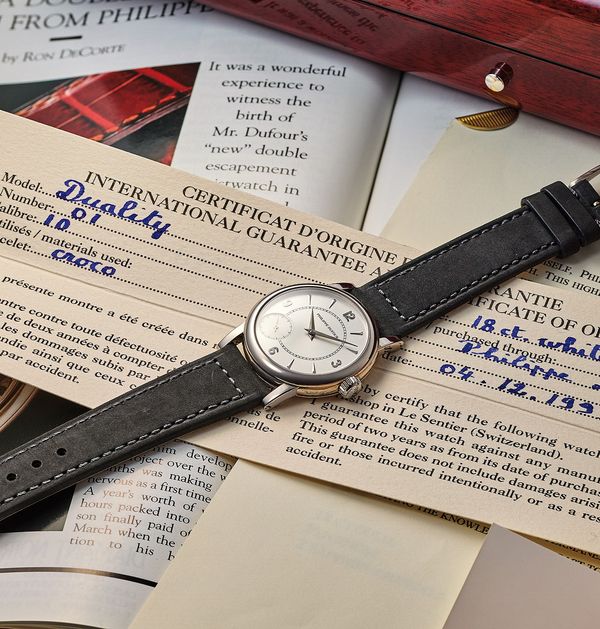
Lot 94: The circa 1999 Philippe Dufour Duality No. 1 in 18k white gold that will be offered at the Phillips New York Watch Auction: XIII. Estimate: USD $1,000,000 - 2,000,000
It’s easy to discuss the influence and historical importance of the Duality, but experiencing it in person truly drives the point home. The movement doesn’t feel overly experimental or needlessly theoretical – it feels complete, like every hand-finished component is exactly where it should be.
If the Duality represents Dufour at his most technical, the Simplicity shows him at his most philosophical.
He introduced the time-only wristwatch in 2000 with a simple idea: make a watch that demonstrated, without shortcuts, what perfect hand-finishing looks like. No complications or gimmicks. Just pure craftsmanship.
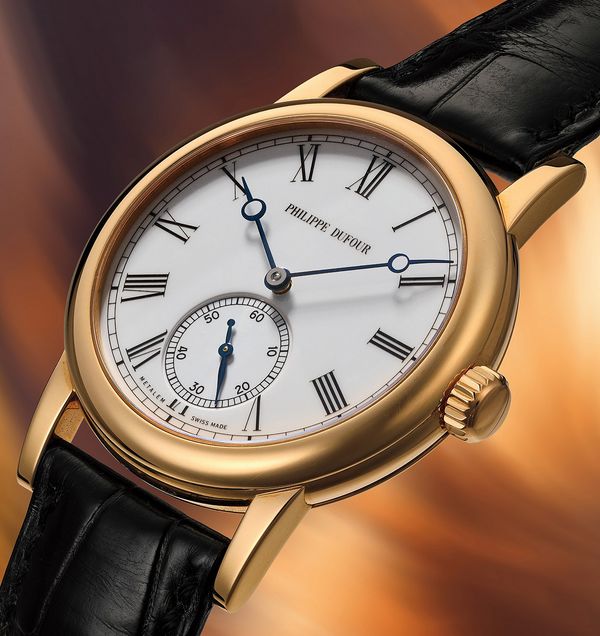
Lot 95: The circa 2002 Philippe Dufour Simplicity 37mm No. 01 in 18k pink gold that will be offered at the Phillips New York Watch Auction: XIII. Estimate: USD $350,000 - 700,000
The Simplicity ultimately became one of the defining watches of today's independent watchmaking scene. Dufour initially offered it only in a 34mm diameter, but collectors requested something larger. Instead of taking the easy route of adding a spacer ring around the movement inside a bigger case, he completely reworked and redesigned the movement for a 37mm case.
That decision says everything about Dufour. He cares deeply about proportion, harmony, and the internal logic of his creations. If a calibre needed a new layout to look and feel right, then he made a new layout.
He built a little more than 200 Simplicities across both sizes, with most of them going directly to clients he knew personally or who arrived at his bench through recommendations.
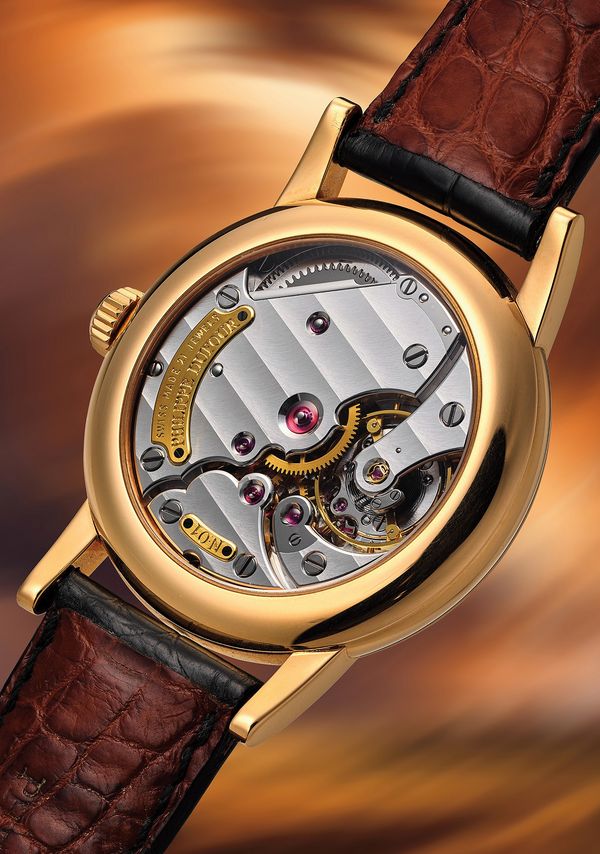
Lot 95: The circa 2002 Philippe Dufour Simplicity 37mm No. 01 in 18k pink gold that will be offered at the Phillips New York Watch Auction: XIII. Estimate: USD $350,000 - 700,000
The finishing remains the benchmark by which many collectors judge all other watches. Thick, gleaming anglage with sharp interior angles. Clean côtes de Genève that reveal the depth of each bridge. Black-polished steel components that catch the light like liquid metal. A click spring that became legendary on its own.
The Simplicity 37mm offered at the New York Watch Auction: XIII is No. 1 in the series: the very first of the redesigned larger-diameter examples. It’s housed in an 18k pink gold case with a white lacquer dial.
Like the Duality No. 1, it comes with all its original accessories, a complete set that reinforces how much care the consignor placed into preserving both watches. While plenty of Simplicities have passed through the hands of collectors, very few early serial numbers have ever surfaced, and there are no 37mm examples earlier than this one.
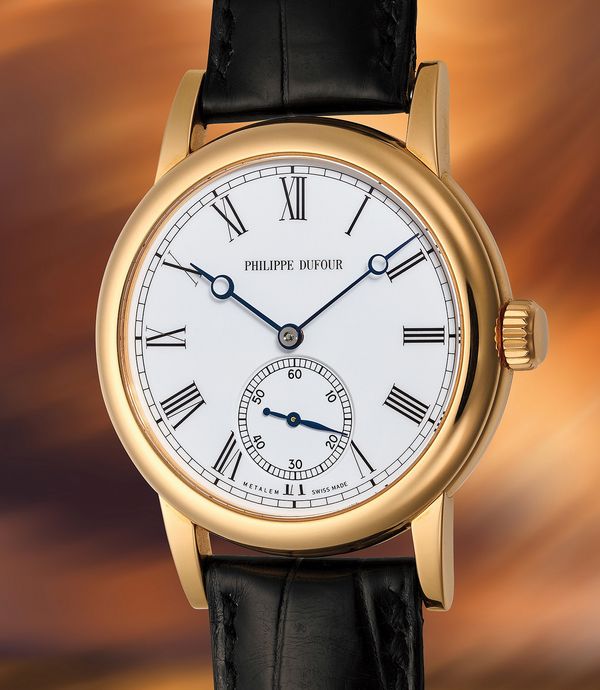
Lot 95: The circa 2002 Philippe Dufour Simplicity 37mm No. 01 in 18k pink gold that will be offered at the Phillips New York Watch Auction: XIII. Estimate: USD $350,000 - 700,000
Viewing these two watches together offers a clear sense of Dufour’s trajectory. The Duality shows a watchmaker pushing forward with fearless development that bordered on stubbornness. The Simplicity shows a watchmaker looking inward, stripping away everything except the essential qualities of proportion and Swiss craft. Together, they show where his ideas began, how they evolved, and why his name remains a cornerstone of the field.
Dufour has never chased scale or trends. These watches make that obvious. He built only what he believed in, one piece at a time, with both hands. It's an approach that has shaped a generation of watchmakers who saw possibility in his work, not nostalgia.
Today, independent watchmaking is a permanent part of the collecting landscape. In the mid-1990s, it wasn’t. Dufour helped make it so.
You can view the complete Phillips New York Watch Auction: XIII auction catalogue here.
