Article | Breguet 731 Pocket Watch 1801 1056 Worldtime 1995 Phillips Auction December 2025
Breguet Across Centuries: Two Pocket Watches, One Story
Two pocket watches, nearly two hundred years apart, demonstrate how Breguet has shaped watchmaking and continues to push it forward.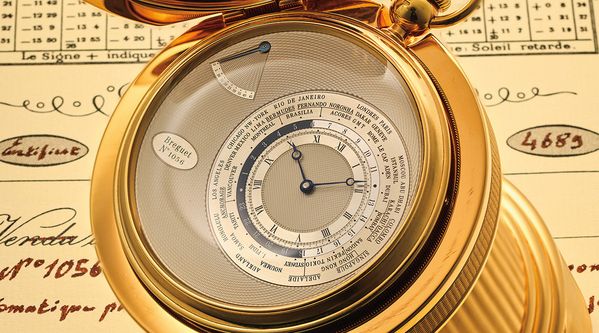
The PHILLIPS New York Watch Auction: XIII takes place on 6-7 December 2025, at our Park Avenue headquarters. The auction includes more than 140 of the world's finest watches – and though we are loath to boast, we truly think it's one of the best catalogues we've ever put together. We'll be highlighting a number of the most interesting lots and stories featured in the sale right here, including the two Breguet pocket watches seen below.
– By Logan Baker
This year, in 2025, Breguet celebrates its 250th anniversary — a milestone that underscores its enduring influence in the world of horology.
You can look back across that span and see the outline of modern watchmaking take shape. The company’s founder, Abraham-Louis Breguet, opened his workshop on the Quai de l'Horloge in Paris in 1775, and the ideas he introduced there continue to guide the industry. Just think – the perpétuelle self-winding mechanism in 1780; the "pare-chute" shock protection system in 1790; the overcoil balance spring in 1795; and, of course, the tourbillon patent on 26 June 1801.
These inventions became the shared language of precision timekeeping. They also defined the style we still associate with Breguet today: guilloché dials, pomme hands, slanted Arabic numerals, and coin-edge casebands.
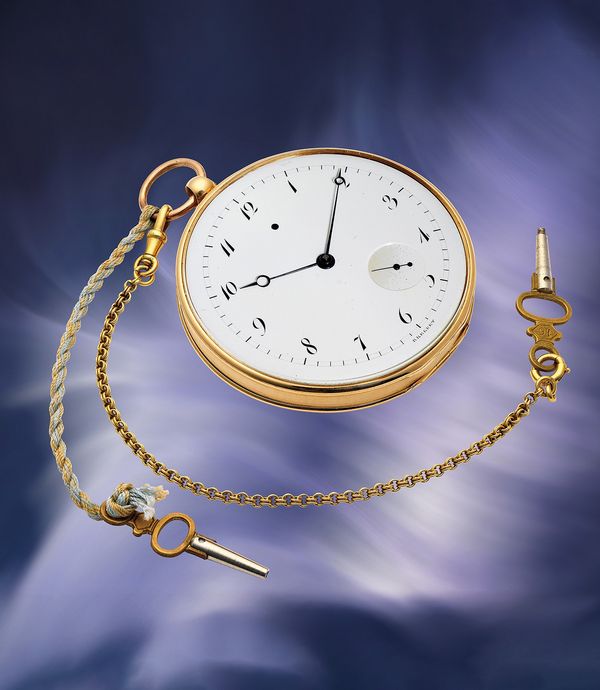
Lot 87: A circa 1801 Breguet No. 731 Pocket Watch in 18k yellow gold with subsidiary seconds and ruby cylinder escapement that's included in the Phillips New York Watch Auction: XIII. Estimate: USD $30,000 - 60,000
The ongoing anniversary year presents a great opportunity to take a closer look at how the brand has evolved from its first Paris workshop to the present day.
One way to do this is to place two pocket watches side by side – and, luckily, we can do just that during the upcoming Phillips New York Watch Auction: XIII. One dates to around 1801, created during the very years when Breguet was shaping the tools of modern watchmaking. The other comes from 1995, made during an era when Breguet refreshed its identity through in-depth research and rigorous technical work. Two watches that speak to different eras, yet a clear connection between them is evident.
The older piece, Breguet No. 731, sits at the intersection of history and craftsmanship. It is a large gold pocket watch with a ruby cylinder escapement and subsidiary seconds. The cylinder escapement had existed before Breguet, but he refined it to a level of reliability that earlier versions never achieved. The movement inside No. 731 incorporates that improved geometry. George Daniels once wrote that Breguet’s version of the ruby cylinder could not be improved in any sensible way. When you handle a watch like this, you feel the mindset that drove Breguet to seek better solutions, even when he had no direct rival forcing his hand.
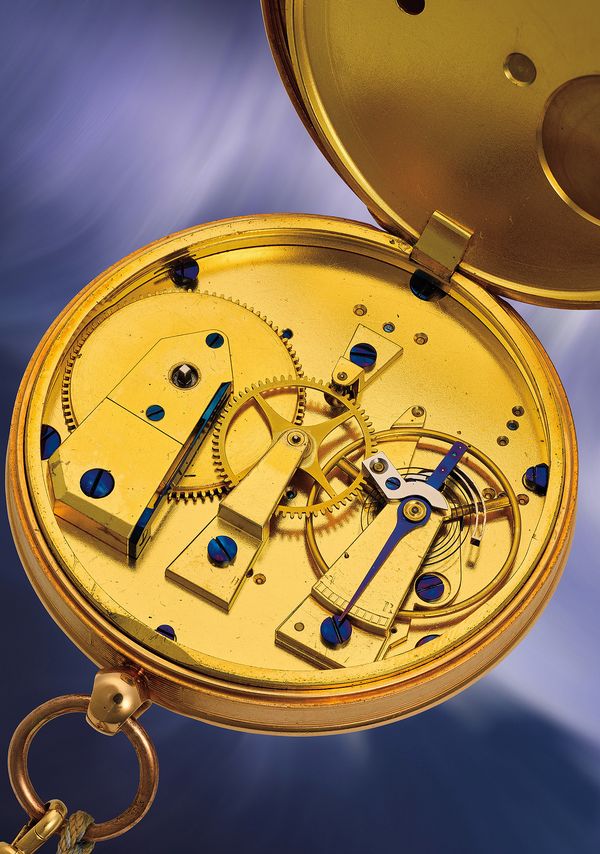
Lot 87: A circa 1801 Breguet No. 731 Pocket Watch in 18k yellow gold with subsidiary seconds and ruby cylinder escapement that's included in the Phillips New York Watch Auction: XIII. Estimate: USD $30,000 - 60,000
The watch also provides a traceable story. Breguet sold it to a Monsieur Sara on 9 May 1801, who returned it to Breguet's workshop four months later, where it was sold once more to a Monsieur Slade, who then delivered it to a Monsieur Botton. The 18k yellow gold case, numbered 4404, comes from Amy Gros, one of the period’s known casemakers.
More than 200 years later, the watch remains well preserved. The 59.5mm diameter, clean dial layout, and symmetrical movement architecture point directly to the early 19th century, but the design's overall clarity still feels resolutely modern. It's easy to understand why Breguet’s work appealed to figures like Marie Antoinette, Napoleon Bonaparte, and Queen Victoria.
Now jump ahead almost two centuries. The second pocket watch, Breguet No. 1056 from 1995, comes from a very different moment in the brand’s timeline. Mechanical watchmaking had survived the previous decades with difficulty. Breguet, under Investcorp’s ownership, was rebuilding itself. The company had acquired Nouvelle Lemania and was working with watchmaker Michel Parmigiani (who would later found his own company, Parmigiani Fleurier) to develop new movements. Parmigiani helped create an automatic pocket watch calibre with a hammer-style rotor in platinum. The present Ref. 1637 BA11 Worldtime pocket watch houses that movement, known as calibre 570.
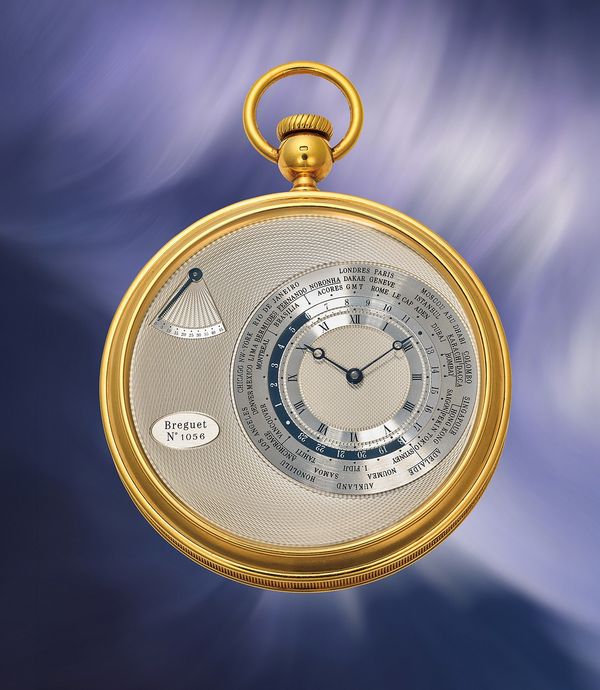
Lot 88: A 1995 Breguet No. 1056 Worldtime Pocket Watch Ref. 1637 BA11 in 18k yellow gold with automatic hammer winding mechanism; one of six examples made. Included in the Phillips New York Watch Auction: XIII. Estimate: USD $30,000 - 60,000.
This modern pocket watch sits in a larger case than its 1801 counterpart, wearing its complexity proudly. The guilloché dial showcases the classical design language that Breguet pioneered during his lifetime and that Daniel Roth and François Bodet revived at the brand in the 1970s and '80s. The sapphire crystal exhibition caseback puts the movement on full display. The platinum rotor arcs across the plates with a shape that nods to older pendulum systems, yet the finish and construction land firmly in the last decade of the twentieth century.
It is number five out of a set of six such watches, and it comes with a heavy brass stand that allows you to display it upright on a desk or mantle. The stand, the exhibition caseback, the world-time mechanism, and the platinum hammer rotor all demonstrate how Breguet blended heritage and invention during this period.
When you place the two watches together, the long thread that connects them becomes clear.
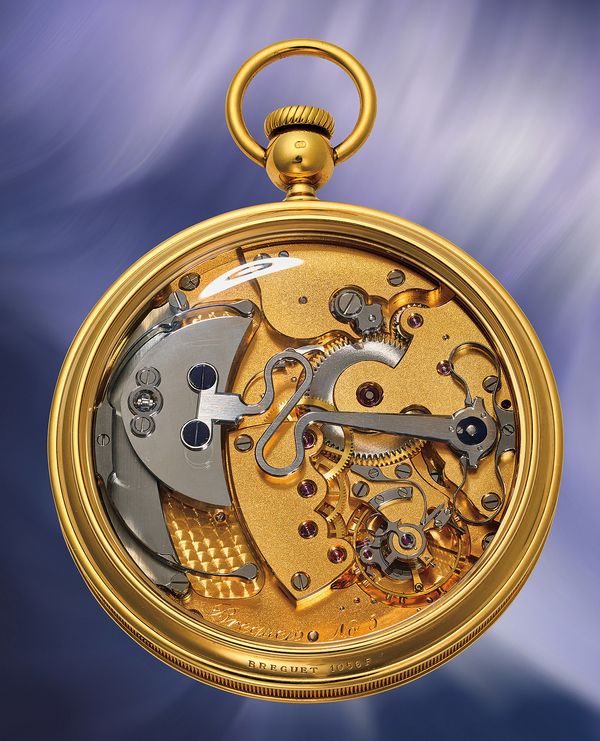
Lot 88: A 1995 Breguet No. 1056 Worldtime Pocket Watch Ref. 1637 BA11 in 18k yellow gold with automatic hammer winding mechanism; one of six examples made. Included in the Phillips New York Watch Auction: XIII. Estimate: USD $30,000 - 60,000.
The early watch focuses on mechanical clarity and functional improvement at a time when pocket watches were essential tools. The modern watch shifts the emphasis toward interpretation and expression. The brand in the 1990s sought to honor Breguet’s vocabulary with guilloché, blued hands, and precise finishing, while also crafting a technically ambitious object that catered to the tastes of the modern collector.
The comparison also highlights the breadth of Breguet’s story. The early pocket watch reminds you that Breguet’s inventions changed the course of watchmaking forever. The later one shows how the brand rediscovered and reinforced those roots after one of the most turbulent periods in horological history.
Two hundred and fifty years of watchmaking do not form a straight line, but these two watches come close to capturing that line’s beginning and its renewal. You see the original pursuit of accuracy and reliability. You see the rediscovery of style and technique. You see a history that remains alive.
You can view the complete Phillips New York Watch Auction: XIII auction catalogue here.