Article | The Vanderbilt Family Jewels Geneva Auction November 2025
THE VANDERBILT FAMILY JEWELS: Icons of American Aristocracy
Unpacking the artistic and social aspirations of the Gilded Age.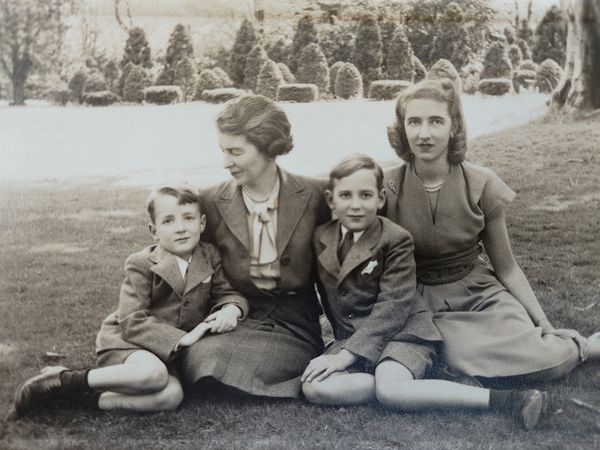
Gladys Moore Vanderbilt, Countess Széchényi, with her grandsons, The Honourable Robin Finch Hatton and Viscount Maidstone; together with Gladys' youngest daughter, Countess Ferdinandine Széchényi, later Countess Alexander E. Eltz. The picture is taken in The Breakers garden.
La Belle Époque (c.1895-1914) was an era of glittering optimism and grand prosperity in Europe, with Paris at its heart. A period defined by peace, cultural blossoming and technological progress, it is seen today as a ‘beautiful age’, a luminous time of beauty and luxury before the upheaval brought about by World War I.
The jewellery of the first decade of the 20th century embraced a certain lightness and delicacy, drawing inspiration not only from 18th century design but also the joyful and vibrant atmosphere of the era. Motifs like garlands of flowers, flowing ribbons, bows, tassels and laurel wreaths defined what became known as the Garland style, perfectly suited to a period of newfound wealth and beauty.
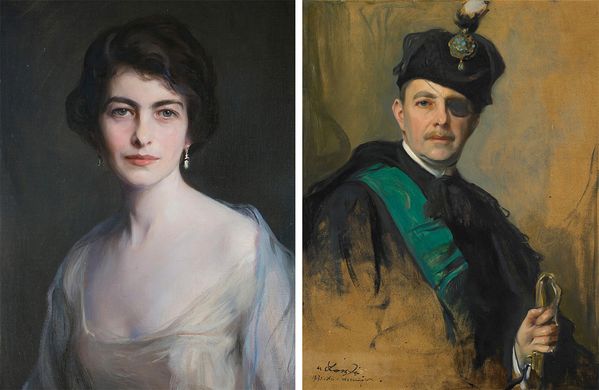
Left: Portrait of Gladys Moore Vanderbilt, Countess Széchényi (1886-1965). Painted by Philip de László © de László Foundation /Estate of Count Nicholas Eltz Private Collection. Right: Count László Széchényi. Painted by Philip de László, 1931. © de László Foundation/Estate of The Countess Anthony Szapáry Private, Collection, on loan to The Preservation Society of Newport County.
It was mirrored in the United States by what was called the ‘Gilded Age’. The industrialist elite of the time wore jewels in great abundance, lavishly displaying their extravagant lifestyle on every occasion — whether at the theatre or in their opulent ‘summer cottages’ in Newport, Rhode Island, such as the Vanderbilt mansion The Breakers, a 70-room residence built between 1893 and 1895 for Cornelius Vanderbilt II. Few names evoke the grandeur and opulence of America’s Gilded Age as powerfully as Vanderbilt. With a fortune built on railroads and shipping, the Vanderbilt dynasty came to symbolize the pinnacle of wealth, taste, and influence in the late 19th and early 20th centuries.
Central to this legacy is the Vanderbilt family’s extraordinary collection of jewels — pieces that stand as enduring emblems of elegance and sophistication. Curated with a discerning eye and an appetite for the finest craftsmanship, the Vanderbilt jewels were commissioned from the world’s most prestigious maisons, including Cartier, Tiffany & Co., Chaumet and Van Cleef & Arpels. Carefully selected to convey status, heritage and power, the jewels became cherished heirlooms passed down through generations of American aristocracy.
Today, pieces from the Vanderbilt collection are exceedingly rare and highly coveted by collectors, not only for their intrinsic beauty but for their unparalleled provenance. Each jewel is an icon of visionary patronage, epitomising timeless taste and an illustrious legacy.
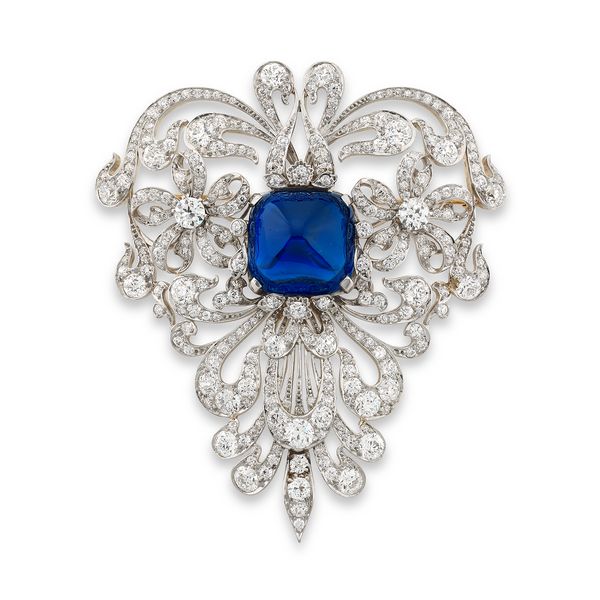
Lot 401: Tiffany & Co., 'The Vanderbilt Sapphire.' Magnificent and highly important sapphire and diamond brooch, early 20th century. The Geneva Jewels Auction: V.
The star of the collection is “The Vanderbilt Sapphire”, an exceptional sugarloaf Kashmir sapphire and diamond brooch weighing 42.68 carats, in illustrious ‘Royal Blue’ colour. Created by Tiffany & Co., this extraordinary gem is accompanied by certificates from AGL, SSEF, and Gübelin. It was originally gifted by Alice Gwynne Vanderbilt to her daughter Gladys Vanderbilt, Countess Széchényi. The brooch’s intricate openwork design embellished with old-cut diamonds typifies quintessential Belle Epoque refinement. More than a family heirloom, this jewel embodied the era’s artistic and social ambitions, pioneered by one of the greatest American dynasties.
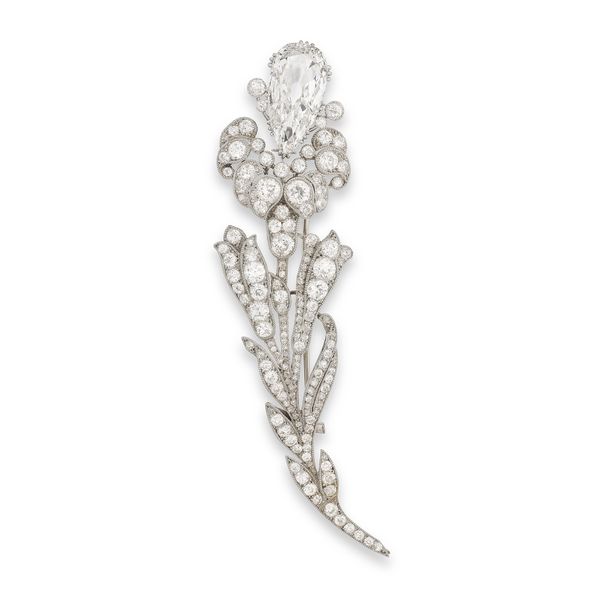
Lot 400: Cartier, Magnificent diamond brooch, circa 1908. The Geneva Jewels Auction: V.
Among the most outstanding examples is the Cartier Diamond Brooch Lot 400, originally part of a diamond tiara from the Belle Epoque, designed as eight lily sprays and adorned with interchangeable pear-shaped amethysts and similarly shaped diamonds. It was gifted to Gladys Vanderbilt by her mother, Alice Claypoole Vanderbilt (née Gwynne), upon her marriage to Hungarian Count László Széchényi, in 1908. The couple were married at the Vanderbilt residence in New York. The New York Times reported that ‘the ceremony was of the simplest character’ and that ‘her jewels were a single large diamond pendant and a string of pearls'. It was regarded as one of the most high-profile society marriages since that of her cousin Consuelo to the 9th Duke of Marlborough thirteen years earlier.
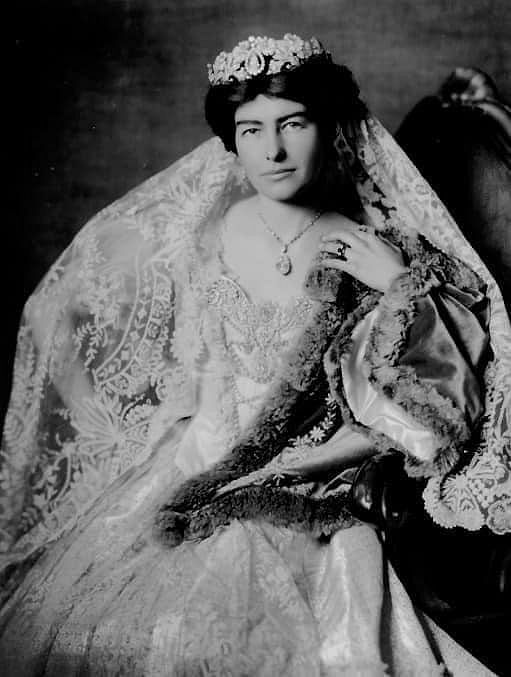
Gladys Moore Vanderbilt, Countess Széchényi, wearing the Cartier Tiara.
Gladys, the youngest daughter of Cornelius Vanderbilt II, represented the last generation of Gilded Age heiresses whose marriages bridged American wealth and European nobility. Conceived in the Belle Époque style, the tiara was worn on numerous important occasions, most notably at the coronation of Emperor Charles and Empress Zita of Austria as King and Queen of Hungary on 30 December 1916. It was eventually dismantled, and the remaining brooch presented in our auction stands as a surviving symbol of social power, familial ambition, and transatlantic prestige.
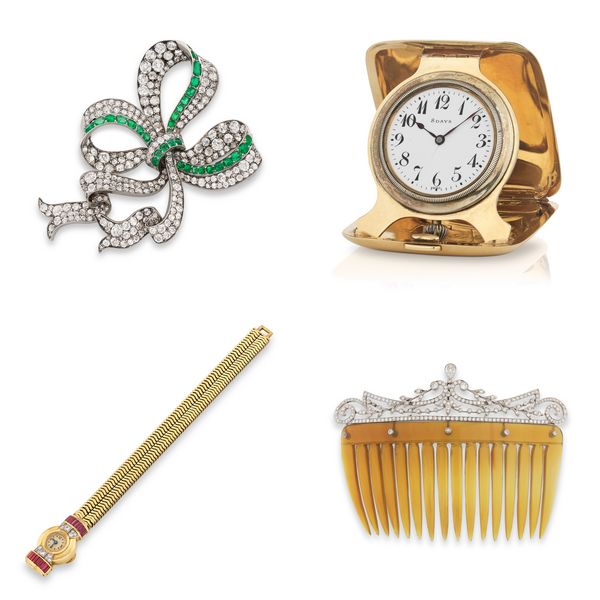
Clockwise from top left: Lot 399: Diamond and emerald brooch, late 19th century; Lot 392: Cartier, Gold 8-Day traveling timepiece; Lot 391: Cartier, Gold, ruby and diamond wristwatch, circa 1937; Lot 394: Diamond hair ornament, early 20th century. The Geneva Jewels Auction: V.
The family collection also includes delicate objects and fine jewels from the late 19th century to the first third of the 20th century, including an emerald and diamond brooch of bow design, a diamond comb, a Cartier vanity case bearing the monogram of Gladys Vanderbilt, an '8-Days' traveling clock given to Gladys, Countess Széchényi , on Christmas 1913, and a gold, ruby and diamond wristwatch.