Article | Fp Journe Francis Ford Coppola Ffc Prototype Auction 2025 Phillips New York
Francis Ford Coppola’s F.P.Journe FFC Prototype Heads to the Phillips New York Watch Auction: XIII
The director of “The Godfather” asked if a hand could tell time. François-Paul Journe made it happen. Now, Coppola’s personal prototype heads to Phillips New York this December.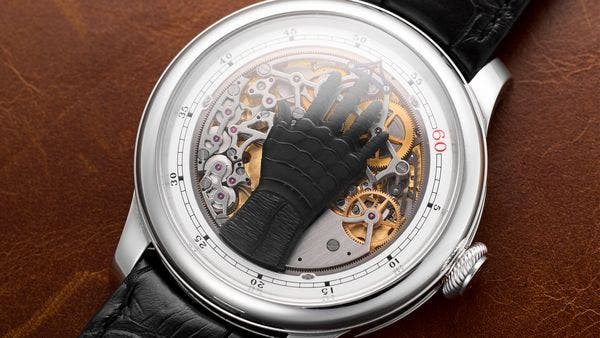
The PHILLIPS New York Watch Auction: XIII takes place on 6-7 December 2025, at our Park Avenue headquarters. The auction includes more than 140 of the world's finest watches – and though we are loath to boast, we truly think it's one of the best catalogues we've ever put together. We'll be highlighting several of the most interesting lots and stories featured in the sale right here, including Francis Ford Coppola's personal F.P.Journe FFC prototype, seen below.
– By Logan Baker
Every great idea starts with a question. For the legendary film director Francis Ford Coppola, it came in 2012, over wine at his Inglenook estate in Napa Valley: “Has anyone ever used a human hand to tell the time?”
Sitting across from him was François-Paul Journe, one of modern watchmaking’s true masters. The filmmaker’s question stumped him at the time. Journe had developed new types of tourbillons, pioneered resonance in wristwatches, and tackled countless horological hurdles – but never anything quite like that. And so began one of the most unlikely collaborations in contemporary watchmaking.
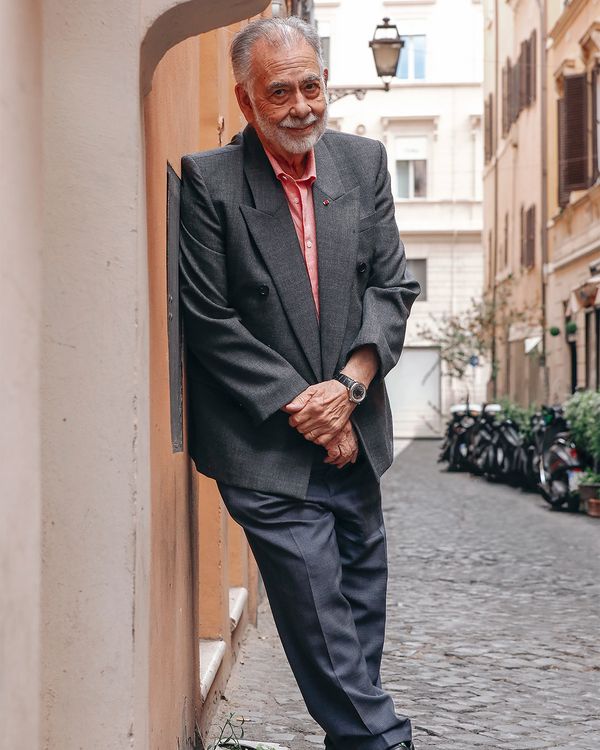
Francis Ford Coppola, pictured in Rome, September 2025.
That conversation eventually gave rise to the F.P.Journe FFC Prototype, an extraordinary platinum wristwatch that uses a sculpted, articulated hand to indicate the hours. It’s the only Journe wristwatch whose concept came from someone other than the master watchmaker himself, and it’s the very example Journe built and gifted to Coppola in 2021. This December, it leads the Phillips New York Watch Auction: XIII, with an estimate in excess of one million USD.
The story traces back even earlier – to Christmas 2009, when Coppola’s late wife, Eleanor, gave him an F.P.Journe Chronomètre à Résonance RN in platinum. The filmmaker was captivated. Three years later, he invited Journe to Napa, where their shared fascination with time, craft, and human expression found common ground.
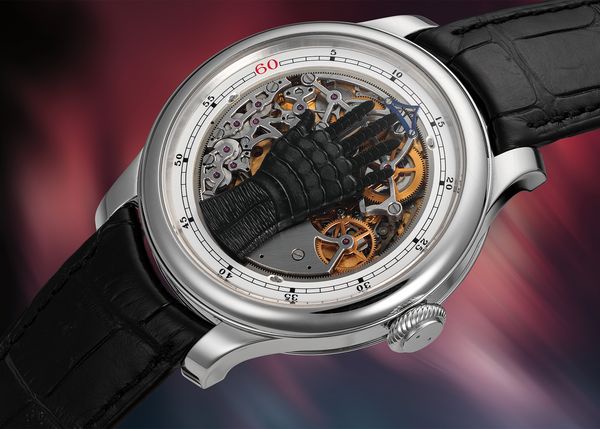
Lot 17: The circa 2021 prototype F.P.Journe FFC, gifted to Francis Ford Coppola in 2021. The watch is included in the upcoming Phillips New York Watch Auction: XIII. Estimate: In excess of USD $1 million
The challenge seemed unworkable: how to represent twelve hours with five fingers. Journe and Coppola worked together to find a solution. One through five came easily; six through twelve required ingenuity. By the end, they’d mapped a full twelve-hour cycle using only five moving digits – part automaton, part sculpture.
For the hand itself, Journe turned to history. He drew inspiration from Ambroise Paré, the 16th-century French barber-surgeon often referred to as the father of modern surgery. Paré’s prosthetic “Le Petit Lorrain” featured articulated fingers powered by hidden gears and springs. Journe adopted its design as the aesthetic foundation for the FFC, giving the watch an almost medieval character, with overlapping metal plates reminiscent of a knight’s gauntlet.

A guide to the hours display on the F.P.Journe FFC.
Mechanically, the FFC is pure Journe. He adapted his trusted Octa calibre 1300.3, known for its five-day power reserve, and added a remontoir d’égalité to deliver a constant flow of energy to the hand mechanism. Every hour, ten cams visible through the dial spring to life, shifting the fingers to their next position. Despite the complexity, the movement remains only 8.1mm thick – an engineering feat even by Journe's standards.
Only two prototypes exist: one for Journe, which remains in his possession, and the present watch, made for Coppola and engraved with his name on the caseback. The bridges are steel, the titanium hand is finished in black, and the minute ring is white rather than grey. Subtle differences, but enough to mark it unmistakably as a prototype.
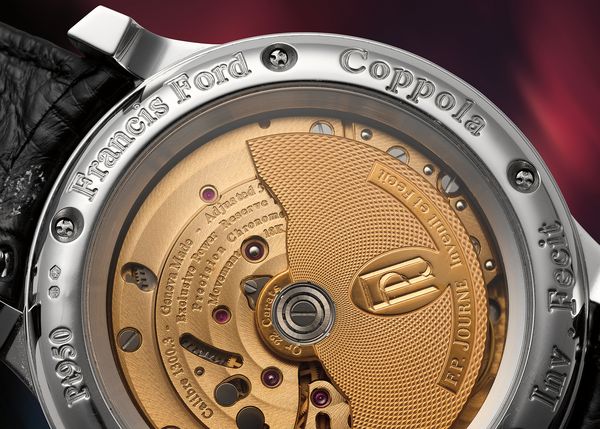
Coppola's name is engraved on the watch's caseback.
Together with the unique FFC Blue from Only Watch 2021, these prototypes are the only FFCs – and among the very few watches – assembled by François-Paul Journe himself. The model’s production is tightly controlled, reserved for only his most established clients, and apart from the FFC Blue, none have ever appeared at public auction.
When the FFC Prototype crosses the block at Phillips in New York on 6–7 December, it will appear alongside six other watches from Coppola’s collection, including the original F.P.Journe Résonance gifted by Eleanor.
You can view the complete Phillips New York Watch Auction: XIII auction catalogue here.