Article | Napoleon Louis Berthoud Marine Chronometer 52 Decres Guillaume Tell Ship Ponee Nereide Decade One
Napoleon’s Gift: The Story of the Louis Berthoud Marine Chronometer No. 52
Ordered by Napoleon Bonaparte and presented for acts of valor at sea, Louis Berthoud’s Marine Chronometer No. 52 tells a story of bravery, empire, and the birth of modern precision timekeeping.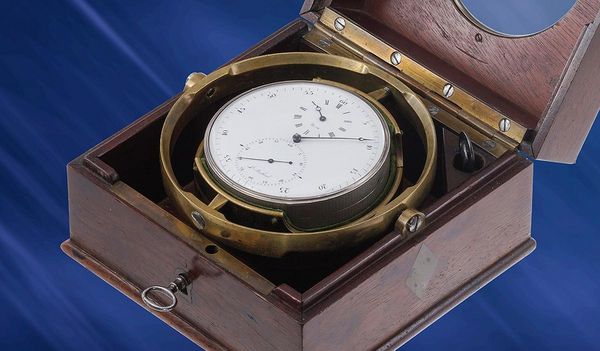
This November, Phillips in Association with Bacs & Russo will celebrate a decade of watch auctions with the Decade One (2015-2025) thematic sale at the Hôtel Président in Geneva. This landmark sale marks the successful first 10 years of the Phillips Watches department, reflecting on the remarkable watches, record-breaking results, and new scholarship that have shaped Phillips Watches since its inaugural auction in 2015.
– By Logan Baker
It began as a commission from Napoleon Bonaparte, then Premier Consul of France, and became a witness to the making of an empire.
Louis Berthoud’s Marine Chronometer No. 52 kept time aboard ships that fought the British Navy, changed hands among both members of the Bonaparte family and admirals, and marked moments of courage in battle that helped shape the Napoleonic age.
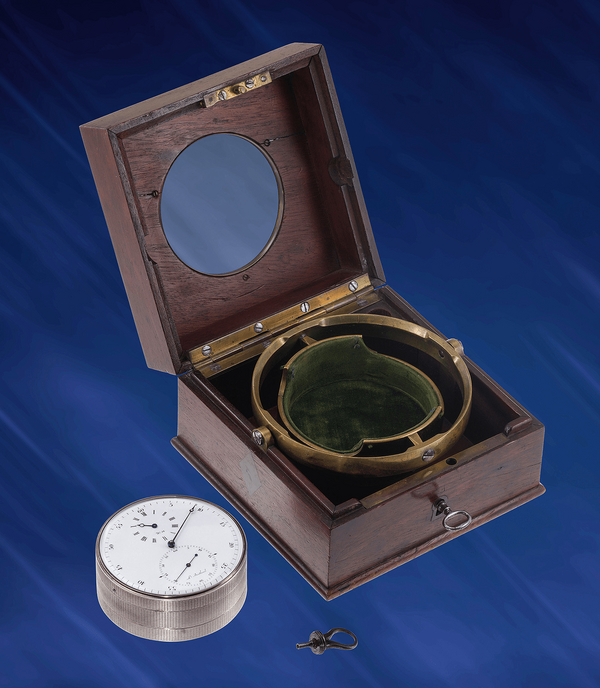
Lot 7: The circa 1801 Louis Berthoud Marine Chronometer No. 52. Included in the Phillips Decade One (2015-2025) auction. Estimate: CHF 60,000 - 120,000
More than two centuries later, it survives as a witness to both the evolution of precision timekeeping and the turbulent world of Napoleonic France – and it's included in the upcoming Phillips Decade One (2015-2025) thematic auction in Geneva, on 8-9 November 2025.
A Gift from the Premier Consul – And Beyond
Louis Berthoud's Marine Chronometer No. 52 was completed around 1801, a pivotal time in French history.
Napoleon Bonaparte had not yet crowned himself emperor but was already reshaping Europe as France's Premier Consul. Among his many efforts to rebuild France’s power was the strengthening of its navy – and few men symbolized that struggle better than Vice Admiral Denis Decrès.
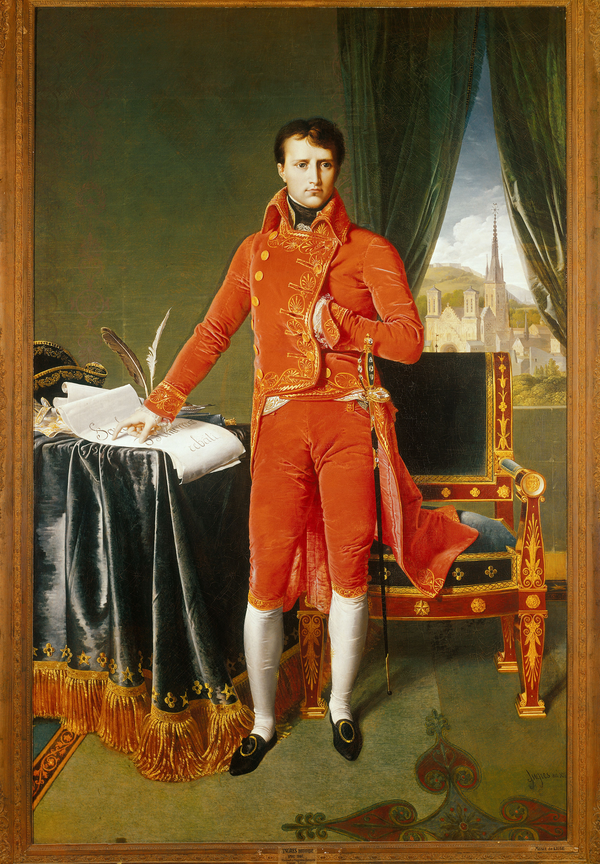
"Bonaparte, First Consul." An 1804 painting of Napoleon Bonaparte as Premier Consul of France, by Jean-Auguste-Dominique Ingres.
Decrès had commanded the 80-gun Guillaume Tell, one of only two ships-of-the-line to survive the devastating French defeat at the Battle of the Nile in August 1798.
Blockaded in Valletta, Malta, Decrès made a desperate breakout attempt on 30 March 1800. His ship was intercepted almost immediately by a vastly superior British force – including the HMS Penelope, HMS Lion, and HMS Foudroyant – and a brutal eight-hour engagement followed.
Dismasted and crippled by the following morning, the Guillaume Tell struck her colours. But Decrès’s courage had not gone unnoticed. Released and hailed as a hero, he returned to France, where Napoleon promoted him to admiral and, in October 1801, appointed him Minister of the Navy – a post he would hold until his death in 1820.
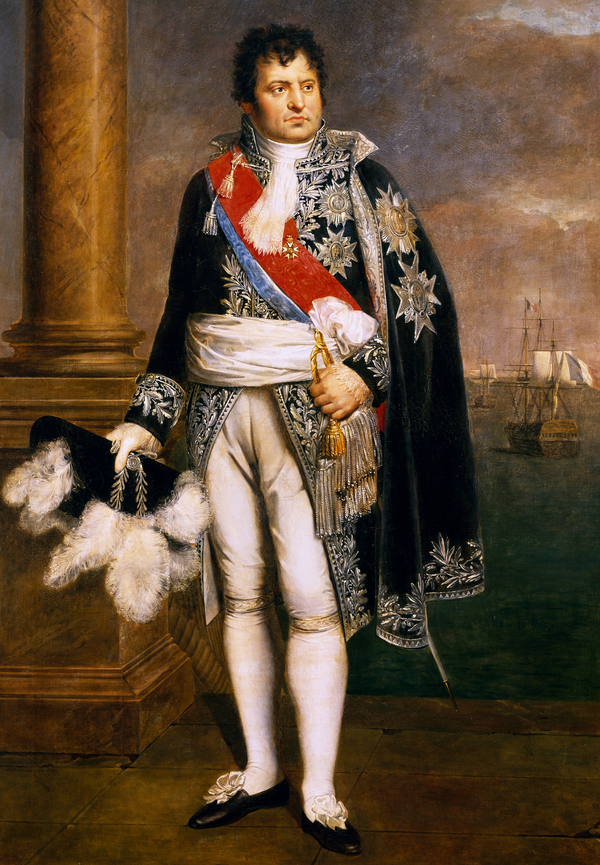
An 1806 portrait of Vice Admiral Denis Decrès, by René-Théodore Berthon
To honor Decrès’s bravery, Napoleon ordered the Marine Chronometer No. 52 from Louis Berthoud and presented it to him personally. The inscription on its case captures this moment: “Given by the First Consul to Vice Admiral Decrès to mark the glorious combat he undertook with the Guillaume Tell against superior English forces – Decree 11 Ventôse IX : 2 March 1801.”
It was a gift that carried deep symbolic weight, representing resilience and ambition at a time when France was rebuilding its naval capabilities.
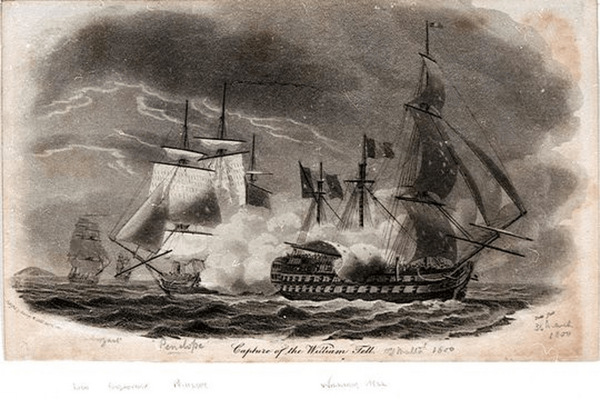
An 1801 line engraving depicting the “Capture of the Guillaume Tell,” to commemorate the ship’s final action during the Napoleonic Wars.
However, the life of the Marine Chronometer No. 52 didn’t end with Decrès.
In 1804, he sent the chronometer back to Berthoud for cleaning and regulation. Soon after, he ordered the watch to be delivered to Prince Jérôme Bonaparte, Napoleon’s younger brother and the newly crowned King of Westphalia. Why this exactly happened remains a mystery, but the chronometer was eventually returned to Decrès in 1807 through Berthoud’s workshop.
Its story gained another chapter in 1812, when Decrès presented it to Captain François Ponée to commemorate his bravery aboard the frigate Néréide during the campaign of 1811.
The new inscription engraved inside the dust cap reads: “Given by the Duc Decrès, Minister of the Marine, to the Frigate Captain Ponée to commemorate his gallantry onboard the Frigate Néréide during the campaign of 1811: March 1812.”
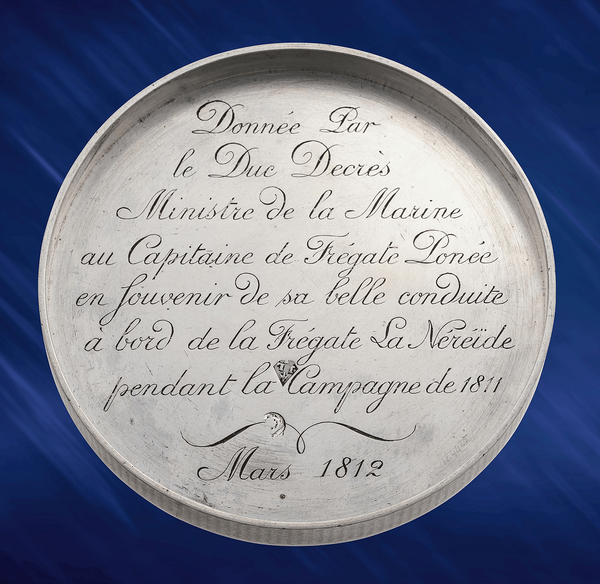
Lot 7: The circa 1801 Louis Berthoud Marine Chronometer No. 52. Included in the Phillips Decade One (2015-2025) auction. Estimate: CHF 60,000 - 120,000
The Néréide’s story echoed that of the Guillaume Tell.
During a fierce engagement off Mauritius in May 1811, the ship was heavily battered by the HMS Phoebe. With its captain killed and casualties mounting, Lieutenant Ponée – now in command – refused to surrender until he could secure honorable terms at Tamatave, Madagascar. The Néréide was subsequently recommissioned into the British Fleet and renamed HMS Madagascar.
Berthoud's Lever Escapement
Louis Berthoud (1754–1813) was born in Switzerland but moved to Paris at the age of 15 to apprentice under his uncle, Ferdinand Berthoud, one of the greatest chronometer makers of the 18th century. He took over the family workshop in 1784 and quickly built a reputation of his own.
By 1802, he was designated Horologist to the Navy, and by 1805, as Horologist to the Paris Observatory and the Bureau des Longitudes. A member of the Académie des Sciences and a gold medalist at the 1801 Paris Exposition, Berthoud was at the center of France’s pursuit of marine chronometry – a field crucial for navigation at sea, empire building, and scientific progress.
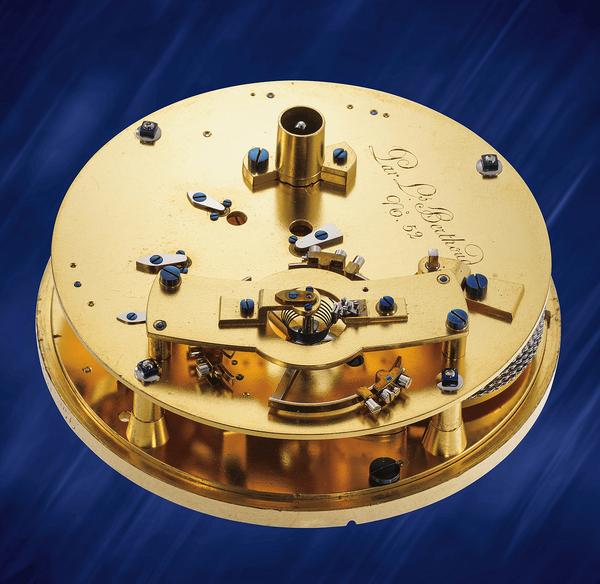
Lot 7: The circa 1801 Louis Berthoud Marine Chronometer No. 52. Included in the Phillips Decade One (2015-2025) auction. Estimate: CHF 60,000 - 120,000
The mechanism inside the Marine Chronometer No. 52 reflects that pursuit. It is fitted with a lever escapement and a conical balance spring – an experimental configuration Berthoud explored but rarely used. Like many of his contemporaries, he often replaced the lever escapement with the more predictable pivoted detent – but the No. 52 proved exceptional.
In his own workshop notes, Berthoud wrote: “This watch with a lever escapement was sold in Floréal of the year IX to be given by the First Consul to Vice-Admiral Decrès. I considered it as one of my best watches, and since the month of Brumaire year X (November 1804), when it was returned to me for examination, I have often been astonished by its regularity.”
Today, it is the only known surviving Louis Berthoud timepiece that retains its original lever escapement.
History & Horology
Marine Chronometer No. 52 embodies the intertwined history of technology, politics, and human courage.
Ordered by Napoleon, awarded for heroism at sea, entrusted to a Bonaparte prince, and passed on again to honour another act of bravery, it sailed through some of the defining naval campaigns of the Napoleonic era. Remarkable enough for Berthoud himself to single it out in his notebooks, it remains a landmark in the evolution of precision timekeeping.
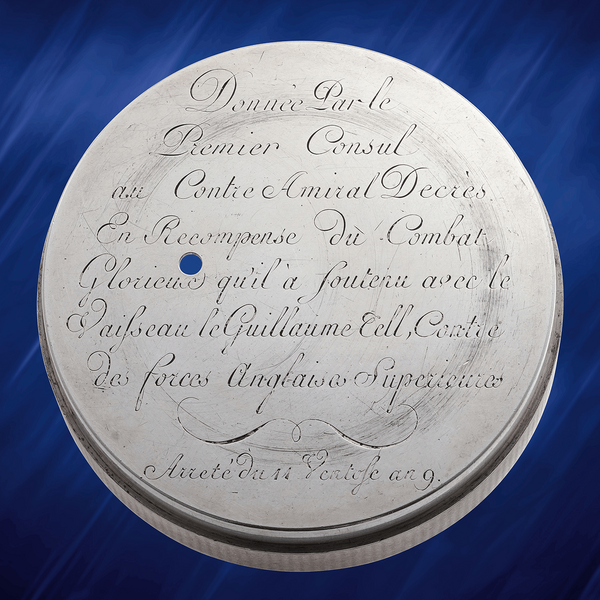
Lot 7: The circa 1801 Louis Berthoud Marine Chronometer No. 52. Included in the Phillips Decade One (2015-2025) auction. Estimate: CHF 60,000 - 120,000
Offered at the Phillips Decade One (2015-2025) auction in Geneva this November, with an estimate of CHF 60,000 – 120,000, the Louis Berthoud Marine Chronometer No. 52 stands as a tangible link to a transformative period in European history – and a piece of horological innovation that once passed through the hands of an emperor.
You can view the complete Phillips Decade One (2015-2025) auction catalogue here.