Article | Icons Only Warhol And Banksy Meet High Fashion
Icons Only: Warhol and Banksy Meet High Fashion
A rare confluence of art and fashion in London brings together the glamourous legacies of Giorgio Armani, Kate Moss, and the legendary artists who depicted them.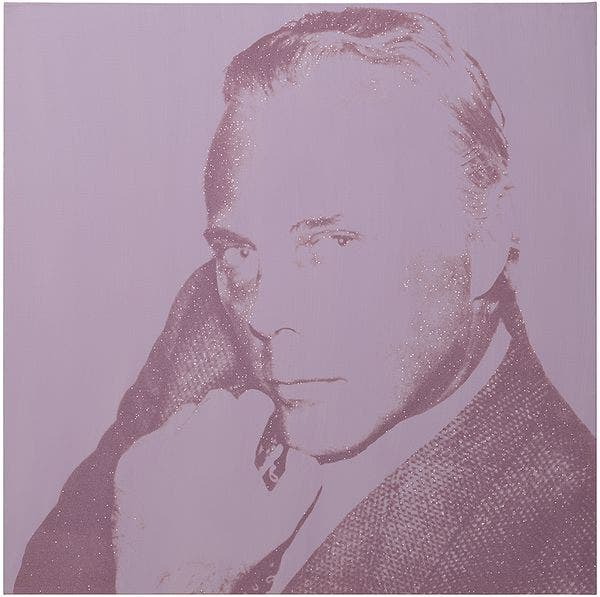
Andy Warhol, Giorgio Armani, 1981. Modern & Contemporary Art Evening Sale London.
Standing in Phillips’ London gallery for the preview exhibition of the upcoming Modern & Contemporary Art auction, we’re transported back to the 1980s. We can almost hear the thump of a bassline in some Italian disco track, and we see Giorgio Armani strike a pose, the diamond dust catching the light off of this portrait like a deluge of camera flashes seen from the red carpet. Our vantage point is Andy Warhol’s, and we’re witnessing the coming together of two defining icons of 1980s fashion, art, culture, and glamour.
But with just a spin of our heels, we catch sight of Banksy’s irreverent appropriation of Warhol’s Marilyn, only now starring Kate Moss. That Italian disco bass line we’re hearing shifts underneath the gritty guitar of ‘90s Britpop. We’re suddenly living in two eras at once, and it’s only now that we’re struck by how similar they are.
In the early ‘80s, Warhol would have been keenly aware of the shifting tides of fashion as a wave of ‘60s icons gave way to a faster-paced culture of materialistic consumerism. It was during this period that Warhol became more entangled with the world of high fashion, meeting and photographing figures now so iconic — and, indeed, consumable — that they can easily be mentioned by last name only: Versace, Saint Laurent, and Armani. In fact, there’s perhaps no one who epitomizes ‘80s glamour and luxury better than Giorgio Armani, who passed away just last month at the age of 91.
By the time Warhol created this work, Armani had already rejuvenated the visual language of men’s suiting much in the same way Warhol had reinvented portraiture two decades earlier. Warhol recognized that new figures like Armani would play a crucial role in his ongoing artistic project of documenting icons of popular culture. This was something Armani understood before agreeing to sit for Warhol, as the fashion designer later remarked, “I think he wanted to portray me as an icon. That is what Warhol portraits do: they elevate the subject into an icon of the of culture he was documenting.”
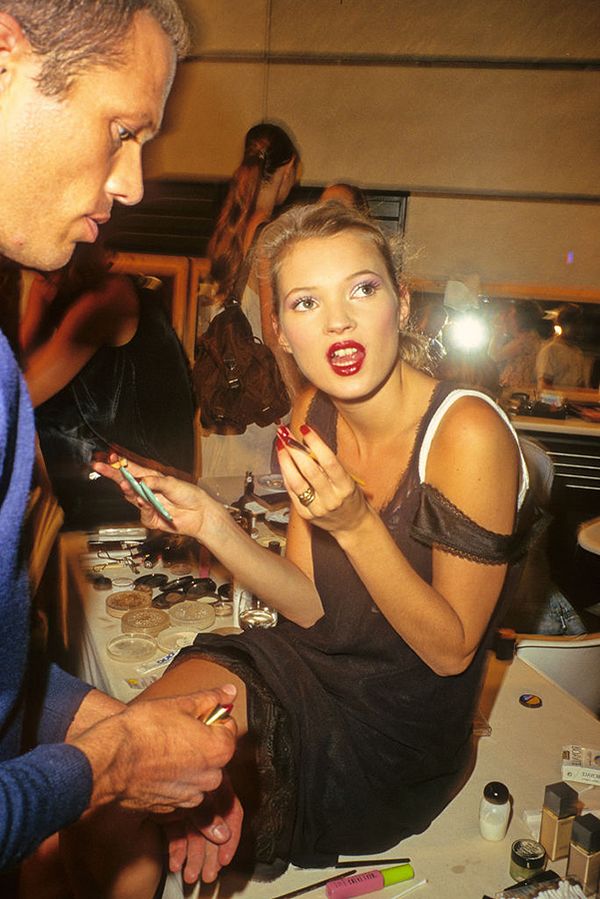
Kate Moss attends a Chanel Show during Paris Fashion Week in the 1990s in Paris, France. Image: Foc Kan/WireImage/Getty Images
Working two decades later, Banksy also understood this transformative power of a Warholian image, turning his eye instead to Kate Moss and drawing parallels with Marilyn Monroe. In many ways, the diffusion of the ‘90s sense of “Cool Britannia” — of devil-may-care supermodels smoking cigarettes in ripped jeans, of the Young British Artists’ renegotiations of power, and of UK street art’s subversive creativity — can be summed up with the image of Kate Moss as the reigning queen of “Indie Sleaze” and the hedonistic allure of the era. This era can be easily compared not only to the glamour of the ‘80s, but also to the earlier wave of media frenzy that launched Marilyn Monroe and first showed the world how we would consume a celebrity’s image in modern life.
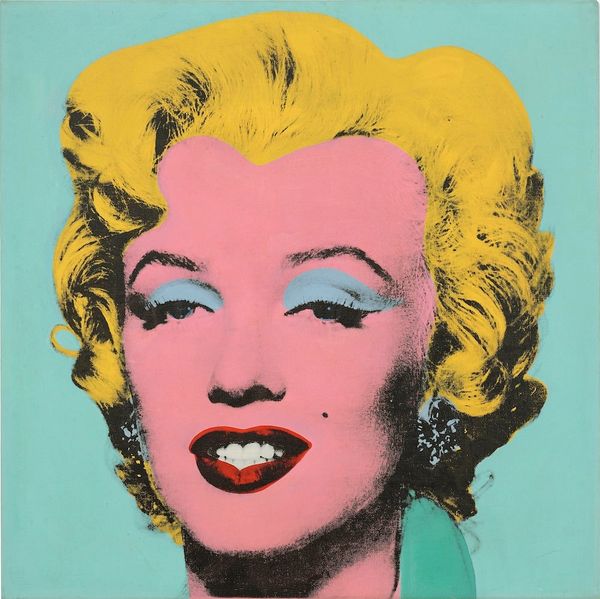
Andy Warhol, Shot Sage Blue Marilyn, 1964, sold for $195 million in 2022. Image: © Christie's Images / Bridgeman Images, Artwork: © 2025 The Andy Warhol Foundation for the Visual Arts, Inc. / Licensed by DACS, London.
It was Warhol’s understanding of these earlier trends that catapulted his explosion onto the art scene, and his portrait of Marilyn, on which Banksy based his 2005 portrait of Kate Moss, is undoubtedly the defining image of 20th century art — the Mona Lisa of modernity. Banksy brings all of these references together in the key year of 2005, which showcases not just the moment Banksy first put down his graffiti stencils and stepped into a major gallery for a proper exhibition, it’s also the same year that Apple launched the Photobooth app and a profusion of iMacs and Macbooks brought much of Warhol’s iconic imagery into our homes.
For Warhol, depictions of celebrities and icons encompass tragedy as much as glamour, drawing attention to the darker realities of the commodification of imagery. Such dichotomies clearly fascinate Banksy too, for as much as he was willing to enter mainstream art spaces with this portrait in the exhibition Crude Oils: A Gallery of Re-Mixed Masterpieces: Vandalism and Vermin exactly twenty years ago, his irreverence is inflammatory — evidenced by the artist’s release of 150 live rats into the gallery space for the duration of the exhibition.
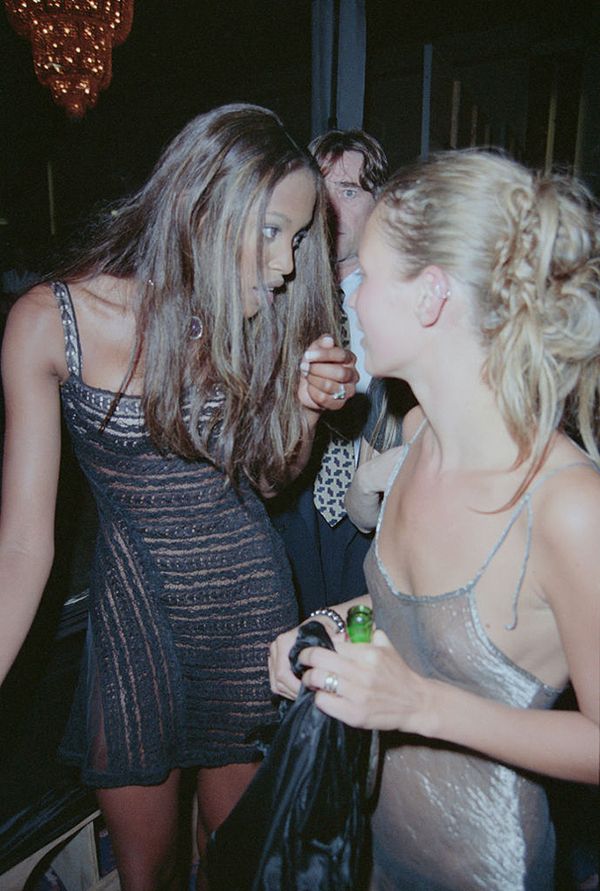
British supermodels Naomi Campbell, wearing a short semi-transparent black dress, and Kate Moss, wearing a transparent sheer slip dress, at the Elite Model Agency party for the Look of the Year Contest at the Hilton Hotel, London, September 1993. Image: Dave Benett/Getty Images
So just what are Banksy and Warhol telling us here about how our culture consumes, exploits, and disposes of images in the modern era? Banksy not only acknowledges Kate Moss as the defining face of our times, but he’s also reminding us that Marilyn’s tragedy is one we all share and help to perpetuate. With this in mind, returning to Giorgio Armani’s piercing blue eyes, we can see how prescient Warhol was, and how deeply he understood the language of the modern icon. After all, just like the 1980s and the early 2000s, it feels as though Armani’s passing has come in a transitional moment for the worlds of art and fashion. Let’s just hope that the glamour is still allowed to dance.