Article | Seiko Skx Series Skx007 Price 2025 Auction History
The Seiko SKX007, One of the Most Beloved Watches in the World Heads to Auction
How a humble, affordable dive watch became one of the most important entry points into mechanical watch collecting.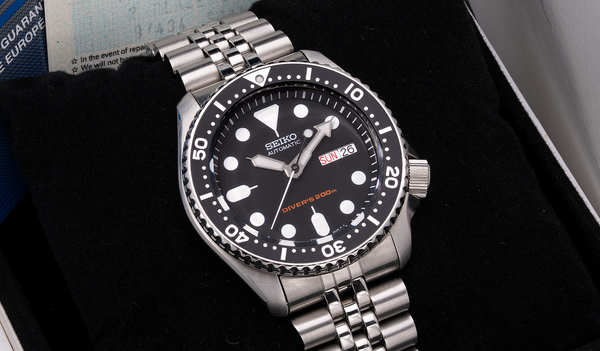
Phillips in Association with Bacs & Russo is thrilled to welcome you to The Hong Kong Sessions, Fall 2025, and IWC: Back to the 80s online auctions, running from 12:00 PM HKT, Wednesday, 17 September, to 2:00 PM HKT, Wednesday, 24 September. The sales feature nearly 150 different high-end luxury wristwatches, covering everything from A. Lange & Söhne and F.P. Journe to Audemars Piguet and Patek Philippe, including the Seiko SKX007 highlighted below.
– By Logan Baker
Every watch collector, no matter how advanced, seems to have a Seiko SKX story. For some, it was their first mechanical watch. For others, it was a faithful companion on dives, hikes, or nights out, taking knocks and scratches without complaint. And for many, it was simply the best value proposition in all of watchmaking – a true, ISO-certified dive watch that cost less than a dinner for two in Geneva or New York.
The SKX007, launched in 1996 alongside its Pepsi-bezeled sibling the SKX009, didn’t arrive with fanfare. It wasn’t meant to. This was Seiko at its most utilitarian, taking everything it had learned from decades of building tool watches and distilling it into a no-nonsense diver. The SKX carried forward the DNA of classics like the 6105 “Captain Willard” and the 7002, but it also marked the beginning of a modern legend.
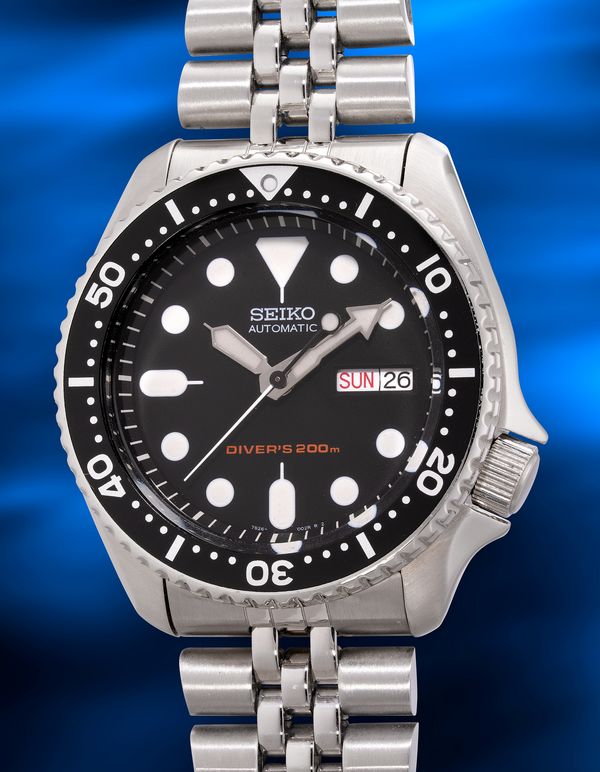
Lot 8105: A circa 2017 Seiko SKX007 that's included in the Phillips Hong Kong Sessions, Fall 2025, Online Auction. Estimate: HKD $2,000 - 4,000
Look at the watch head-on, and the appeal is obvious. The matte black dial is punctuated by large, luminous indices that glow with Seiko’s signature LumiBrite, the kind of lume that still embarrasses watches ten times the price. A day-date window sits at 3 o’clock, with weekdays printed in black, Saturday in blue, and Sunday in red, a small but human touch that Seiko fans have come to love. The crown, tucked at 4 o’clock and guarded by rounded shoulders, is screwed down tight for 200 meters of water resistance. The bezel – 120 clicks, unidirectional – has just enough resistance and minimal back play. Every detail is about function first, but the sum adds up to something much more charismatic than its spec sheet suggests.
Inside beats the caliber 7S26, a workhorse movement if ever there was one. It doesn’t hack, it doesn’t hand-wind, and it won’t impress on paper. But it’s robust, reliable, and ready to run for decades with little more than an occasional service. Seiko’s Magic Lever winding system ensures it comes to life with the slightest shake of the wrist. Collectors who grew up with the SKX often compare it to a Toyota Camry or a Swiss Army knife: not glamorous, but built to survive anything.
And that’s the point. The SKX was never meant to sit in a safe or on a winder. It was a true “beater,” the kind of watch you could wear to the beach, to a barbecue, or to the office without thinking twice. Drop it, scratch it, or lose it – you’d shrug, maybe even smile, because for the first time in modern watchmaking, a genuinely capable mechanical dive watch was accessible to just about everyone.
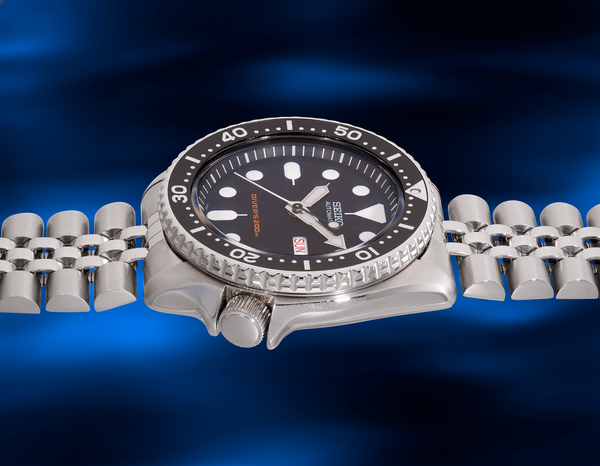
Lot 8105: A circa 2017 Seiko SKX007 that's included in the Phillips Hong Kong Sessions, Fall 2025, Online Auction. Estimate: HKD $2,000 - 4,000
Of course, the SKX wasn’t designed in a vacuum. Its lineage stretches back to 1965, when Seiko introduced its first diver, the ref. 6217-8000/1, better known as the 62MAS. From there came icons: the 6105, immortalized on Martin Sheen’s wrist in Apocalypse Now; the cushion-cased 6309 of the late 1970s; and the transitional 7002, which passed the baton directly to the SKX. Each of these watches built on the last, refining the formula for reliability, readability, and ruggedness. The SKX007, in many ways, represents the culmination of that line – streamlined, affordable, and uncompromising in the things that mattered most.
When Seiko quietly discontinued the SKX in the late 2010s, collectors immediately took notice. What had once been a ubiquitous, almost disposable diver was suddenly finite. Prices crept up, then surged. The watch that once defined entry-level collecting had become collectible itself. Today, SKX models in good condition – especially untouched examples on their original Jubilee bracelets – command far more than they did when new. The irony is delicious: a watch designed to be the ultimate everyman’s diver has become a darling of the secondary market.
What explains this enduring affection? Part of it is honesty. The SKX never pretended to be more than it was. No faux-vintage touches, no marketing fluff, no inflated luxury aspirations. Just a solid steel case, a dependable movement, and lume bright enough to light up a room.
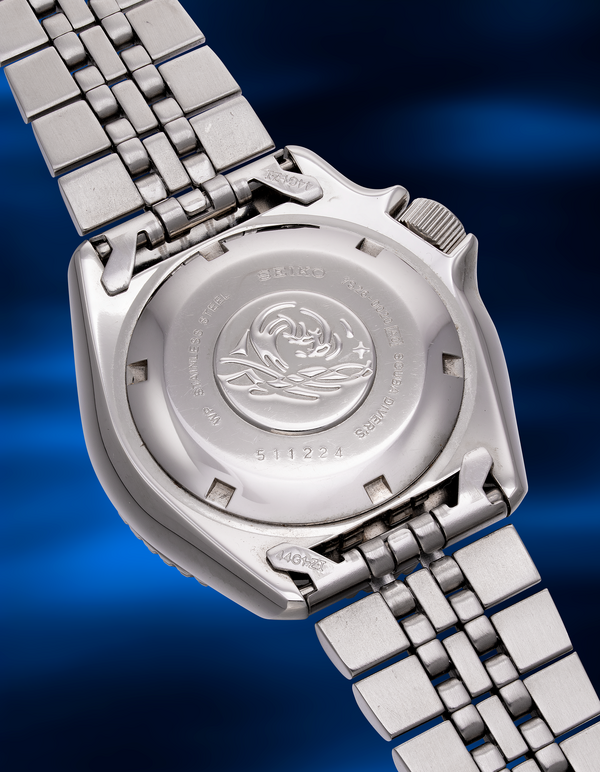
Lot 8105: A circa 2017 Seiko SKX007 that's included in the Phillips Hong Kong Sessions, Fall 2025, Online Auction. Estimate: HKD $2,000 - 4,000
But there’s also nostalgia. For many collectors, the SKX was the gateway drug, the watch that opened the door to a lifelong fascination with mechanical timekeeping. You don’t forget your first dive into this world. And unlike many entry-level watches, the SKX held its ground even as collections grew. It wasn’t replaced by a Submariner or a Fifty Fathoms; it sat alongside them, ready to take abuse when the others stayed safe at home.
Which brings us to today. To see an SKX007 appear at auction is to be reminded that this humble diver has crossed a threshold. It’s no longer just a watch you buy on Amazon or pick up secondhand at the local shop. It’s a piece of watchmaking history, part of a lineage that stretches from the 62MAS to Seiko’s modern Prospex line.
No, the SKX will never set a world record at auction. It won’t rival a Patek 1518 or a Rolex Daytona “Paul Newman.” But it doesn’t need to. Its importance lies elsewhere: in its ability to democratize dive watch ownership, to prove that great design and engineering don’t have to cost a fortune.
That’s why the SKX007 isn’t just beloved, it’s essential.
You can view the complete Phillips Hong Kong Sessions, Fall 2025, Online Auction catalogue here.