Article | Behind The Drop Raul De Nieves
Behind the Drop: Raúl de Nieves
The multidisciplinary artist on forging a sense of self, community consciousness, and moving between the church pew and the dance floor.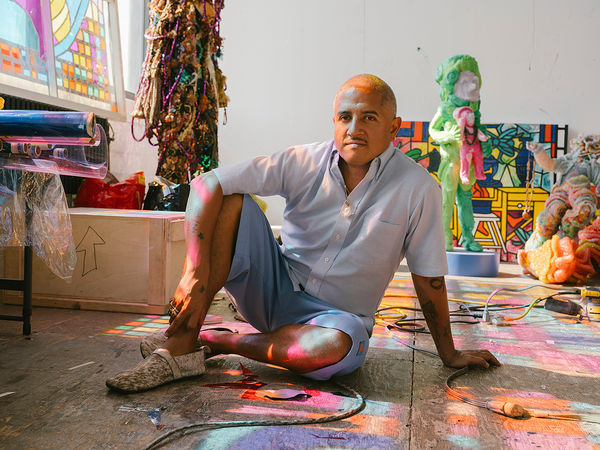
Raúl de Nieves. Photo: Katharina Poblotzki.
Multimedia artist and performer Raúl de Nieves' artistic practice investigates transformation, beauty, collective experience, and tradition through a unique visual syncretism. Drawing on the motifs of Catholic and Mexican symbols and interpreting everyday materials into spectacular objects, de Nieves creates immersive spaces wherein art and spectator share narratives and gain new perspectives. Ahead of his Drop with Phillips and upcoming show at Pioneer Works in Brooklyn, New York, we caught up with the artist to discuss his influences, upbringing between cultures, and finding symbols of beauty in unexpected places.
PHILLIPS: At this point in your practice, what sorts of themes or questions are you exploring?
RAÚL DE NIEVES: The work for Pioneer Works has been such a kind of growth; understanding that I continue to make these site-specific installations that require a lot, not just for myself, but my collaborators, the institution. This form of making this kind of faux stained glass has been such an experiment, but I think now it really has become a realized idea. This will be one of the biggest takeaways for me when I’m doing this exhibition In Light of Innocence. The show is mainly around the idea of visual language of symbolism. Stained glass has always referred to me as a form of storytelling. When you’re surrounded by it, you get to experience a form of time passing because you’re experiencing it through different times of daylight, and you get to see it interact with the sun. It shows you this whole potential of maybe magic.
The symbolism of time is important, and how we think about ourselves in this time, but also asking ourselves: what was it like in the past, and what will it be like in the future? There are a lot of references that go back to the Tarot. I don’t necessarily read or practice it, but I have gotten readings, and most of the time, you’re allowing an act of chance to tell you some sort of message. Sometimes the message comes from somebody else’s interpretation of the cards, and you have to be open to believe, even if you hear things you don’t want to hear. It’s the perfect time for me to go into this perspective of time and think about how we’ve related to symbolism and the active words themselves.
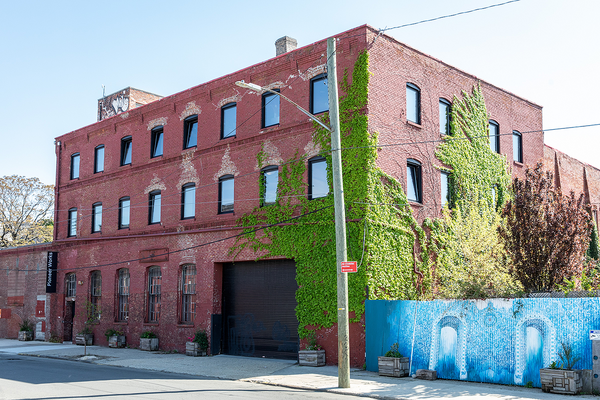
Pioneer Works in Brooklyn, New York.
P: Magical Realism, or Carpentier’s “marvelous real,” is often tied to Latin America. What do you think makes the region so suited to blending myth, spirit, and magic with everyday life?
RdN: It’s a widely celebrated but often misunderstood, or even misinterpreted, concept. I grew up in Mexico, and we moved to America when I was nine years old, so as a child, I got to see these forms of ritual. Latin Americans — or just foreigners — live such a normal life because you grow up and you’re taught a specific way, these forms of ritual, and then it’s all about becoming an adult. Especially in Mexico, it’s almost like the inner child becomes so important. Watching communities have a specific dress code and a dance becomes so important to the group. That’s where magic really shows itself; people still believing in these traditional ways of thinking that are passed down. When we were little, we would watch a generation of people dressed as old men and dance with masks, and there was always a little kid still dressed as an old man. It’s a passage of time.
That’s the real aspect of magic: humans being playful and having these special things that create their individuality and practicing it together. Growing up in Mexico, watching craftsmen take straw and turn it into magical objects; that’s something I’ve always remembered. At the same time, I can’t believe I can turn things like paper and tape into their final objects. These materials have a shifting point, and it’s just so beautiful. People practice this form of ritual in everyday life, and it’s magic even if it’s common.
P: Are there Latin American rituals or celebrations that have directly influenced your work?
RdN: I witnessed death as a child, so I got to live through this idea of understanding. When I was little, I experienced a lot of death — my mom, my dad, my mom’s father and mother, cousins … How do you deal with this? How do you tell a child what that means and how they should feel? Growing up in Mexico, we reacted to it, and then we celebrated it. The celebration was always joyful and cathartic in a sense, watching people react to memory and loss, and how you gain something from that because it connects you to the spiritual aspect of life. That’s how religion touched me. As a queer person, religion could make me afraid, because supposedly there are passages that say I’m not involved in this world. But confronting that non-invitational aspect gives me more power. It’s like making friends with fear; keeping your enemies close to the point that it no longer feels like an enemy. Growing up and seeing this community go into churches and graveyards and share this aspect of life inspired me to try to create church-like spaces that are open for everybody. We belong in spaces that may not feel inviting, and the more we make room for ourselves, the more we allow others to believe they belong to.
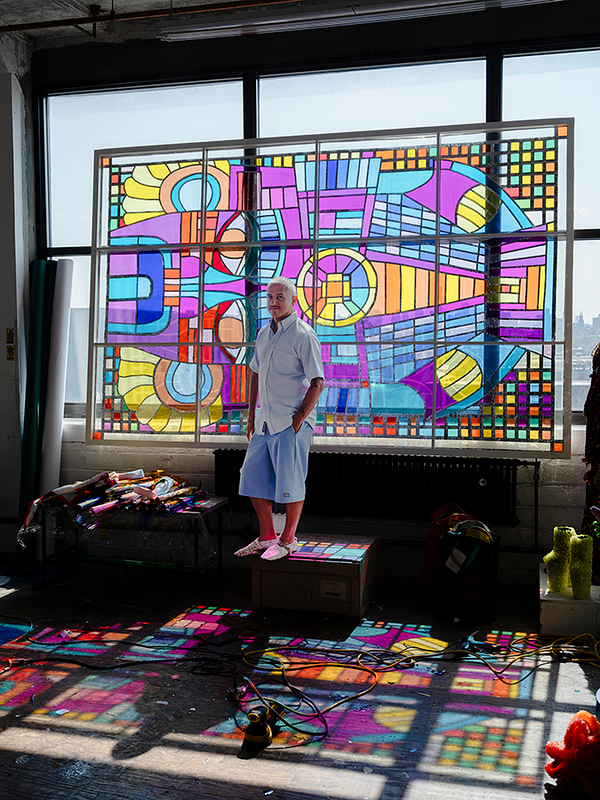
Raúl de Nieves. Photo: Katharina Poblotzki.
P: And in embracing that you create both a literal and artistic space.
RdN: Yeah, parallel spaces. I still go to church, and even if I don’t sit through the mass, it’s a collective consciousness in a space, almost a meditation. You aren’t speaking, but everyone is asking for something. What you need, what you desire; it’s really beautiful to explore your feelings in silence.
P: How does your cross-border identity show up in your aesthetic, especially blending folk art and queer nightlife?
RdN: Growing up in Mexico gave me ritual and tradition; living in New York for 19 years gave me queer nightlife. Most of my studios were in artist-run spaces that opened their doors for people to come in and be part of the practice. At The Spectrum, for example, gage [of the boone] created such a legacy for New York. Watching people react to joy is powerful. Church and the club are so different, but both have elements of collective consciousness. In the club, you’re letting yourself be part of an infectious relationship to the moment. Silence and chaos are both forms of meditation.
P: Your work often incorporates beads. Where did that begin?
RdN: The bead is a single dot, but when you have 500 of them, it creates space and mass. You can’t use just one; you have to have an abundance. Thinking about abundance is something I try to use as a mantra: abundance in relationships, memories, physical objects, wealth, and all categories of life.
P: Your show In Light of Innocence opens at Pioneer Works in September, alongside your Phillips Drop. What does that title mean to you?
RdN: It’s the innocence of seeking, of finding truth through time. Growth patterns become an aspect of the self. It touches on clairvoyance, searching for answers, and waiting for the unexpected. It’s an entrance to the future, or to someone, based on the symbols embedded within.
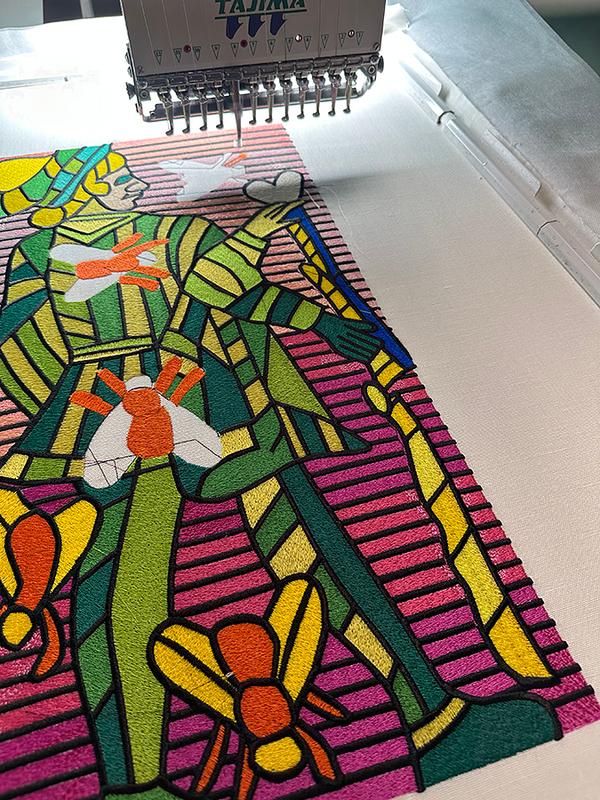
Raúl de Nieves, Page of Wands, 2025. Dropshop. Image: Courtesy of Studio Göta.
P: For your Drop with Phillips, you’re designing a gold ring with gemstones that spell out “A DOOR.” What’s the symbolism?
RdN: The ring is a focal point to the exhibition, pretty much the only object besides the windows. It’s like a key, a rite of passage. Rings come with symbolism of their own: they create relationships, mark life’s epochs, get passed down and become part of a new life in turn. This one spells out “A DOOR” — not as in “I adore you,” but a door. It asks for the unlocking of new perspectives, adventures, journeys. We’re always thinking about what new doors we’re going to open. It’s about opportunity and how our lives evolve. I like the idea of creating space by allowing for the work to take on a new role when it leaves my studio.
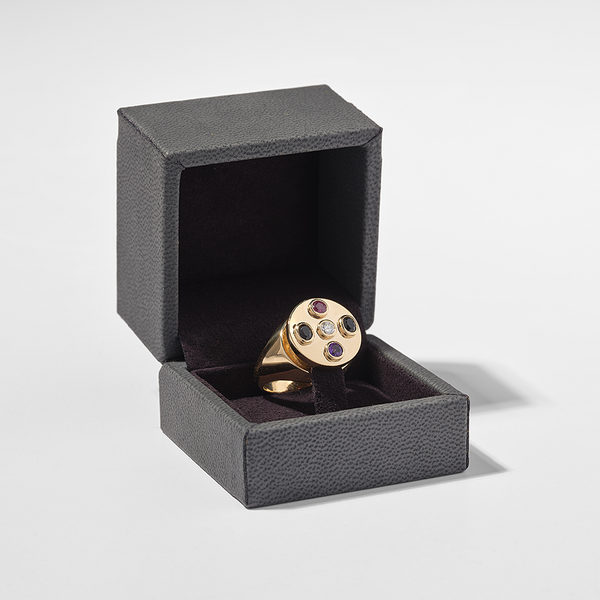
Raúl de Nieves, A Right of Passage, 2025. Dropshop.
P: What inspired you to create jewelry now?
RdN: Jewelry has significance and power. The ring comes from an idea and is executed through many people — it’s collaborative. The hope is that someone can use it as a form of conversation or as a key to opening up a door. When you put meaning into jewelry, it helps you manifest. A ring can be a form of manifestation and growth.
It’s a collaborative way of thinking, too. Jewelers have all these different tasks that they have to do in order to create a piece, but it all stems from the idea and the practice of unlocking a moment with the end result. I wanted to make something tangible, something anyone can access.
P: In honor of Latin American Heritage Month, which Latin American artists have most inspired you?
RdN: Frida Kahlo is such a role model for me. Growing up, seeing her image, and as I got older, I understood her work was about emotions — tapping into the sorrow of life and portraying it in the form of a picture. Her legacy is bigger than life. When you think of Frida Kahlo, you have to think about Mexico. As a female, she had such struggles with life, but now she’s more popular than Jesus.
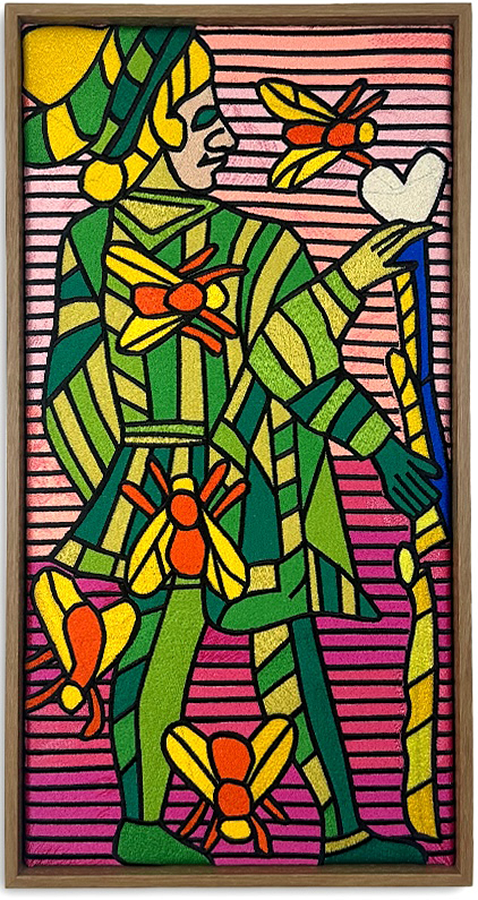
Raúl de Nieves, Page of Wands, 2025. Dropshop.