Article | Arts Ever Evolving Forms Hong Kong Auction
Art's Ever-Evolving Forms
On the rapid transformation in art from the 1990s to now.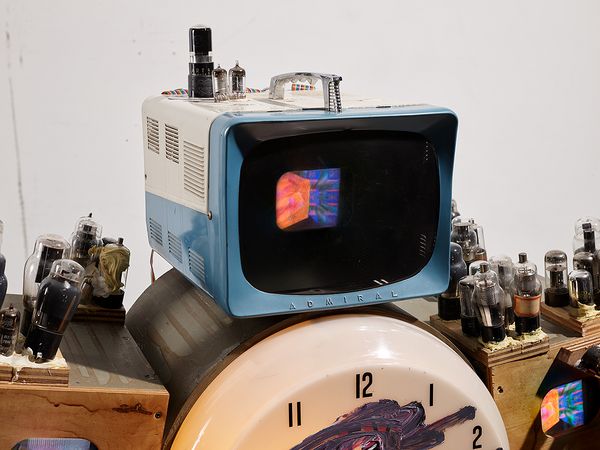
Nam June Paik, TV SERVICE ROBOT, 1997. Modern & Contemporary Art: Evening & Day Sale Hong Kong.
It’s hard to find a buzzier word these days than “innovation.” Often used to describe the warp-speed advancement of recent technologies and the fortunes that came with it, there’s another angle worth considering. Namely, what does innovation mean in art?
Artists have long taken advantage of technological innovations in their practices, incorporating new materials and mediums, or utilizing forgotten technologies in creative ways that question our assumptions about these tools and ourselves. They’ve also innovated in a deeper way, pushing the field of visual art forward conceptually and aesthetically. In the differences and subtleties between these approaches, we find a wellspring of creativity, expression, and invention — often within a single work.
Here, glimpse the confluence of creativity and innovation within works in our upcoming Modern & Contemporary Art: Evening & Day Sale in Hong Kong.
Nam June Paik
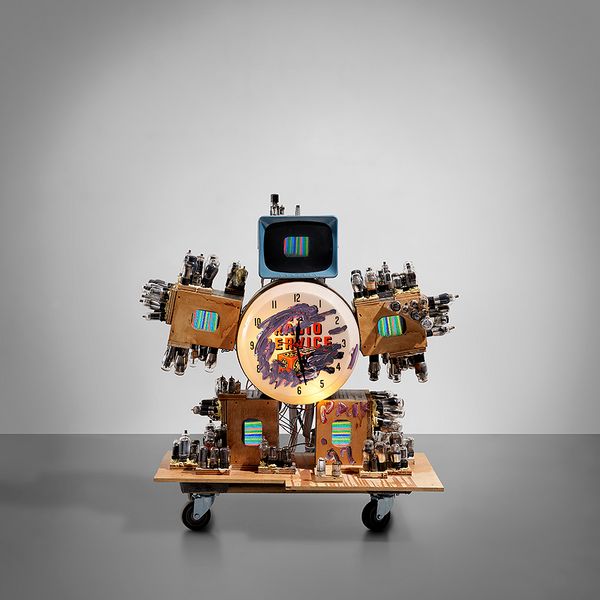
Nam June Paik, TV SERVICE ROBOT, 1997. Modern & Contemporary Art: Evening & Day Sale Hong Kong.
In this 1997 work, Korean artist Nam June Paik — the father of video art — looks back at earlier innovations to investigate the pace with which technology renders itself obsolete. Cast as a humanoid-robotic form, the work forges a connection with viewers and their sense of their own bodies, but it also encourages us to consider our own role in the demise of the technologies we create and use.
The screens display passages from the film Merce by Merce by Paik — a tribute to choreographer Merce Cunningham and the avant-garde master Marcel Duchamp. Paik himself is seen in these videos alongside collaborators, including Cunningham, John Cage, Jasper Johns, and Shigeko Kubota, as they raise questions about art, life, and time. Tying it all together, Paik’s manipulations of this footage cause these ideas to be layered upon themselves and transformed.
From our vantage point today, Paik’s exploration of technology’s inevitable obsolescence rings with poignancy. For example, the glowing clock in this work was salvaged from the kind of New York City technology repair shop that no longer exists, and the old radio and television tubes that adorn the work are now difficult to find.
David Hockney
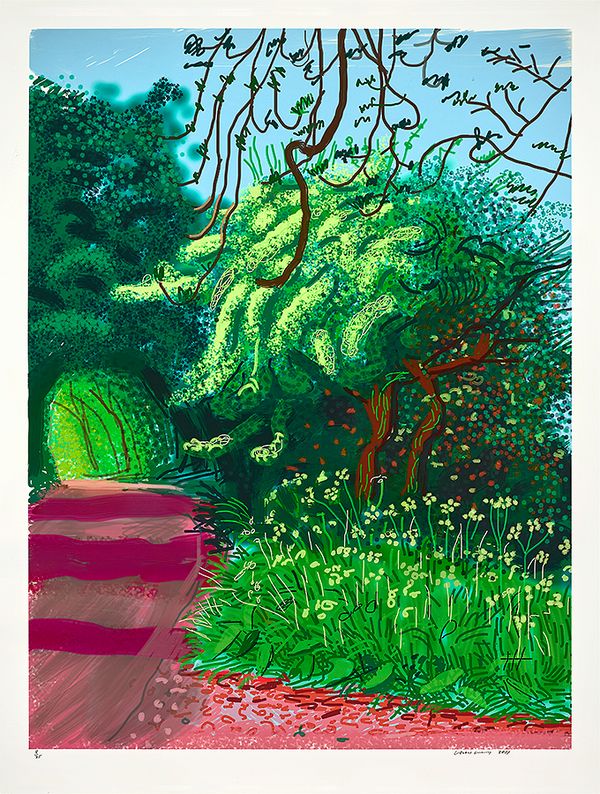
David Hockney, The Arrival of Spring in Woldgate, East Yorkshire in 2011 (twenty eleven) - 14 May, 2011. Modern & Contemporary Art: Evening & Day Sale Hong Kong.
David Hockney’s iPad drawings showcase the artist’s unique willingness to apply his traditional artistic techniques to new technologies, opening the opportunity for new discoveries. Hockney explains: “Until I saw my drawings replayed on the iPad, I’d never seen myself draw.” This work, dating from 2011, was on the cutting edge of the era, as the iPad had only been released the year prior.
Drawing on an iPhone or iPad is now part of Hockney’s daily practice — he often draws flowers each day and sends them to friends electronically. For Hockney, the innovation of the outside world brings a new capacity and dimension to the interiority of his personal Arrival of Spring series, but the artist is quick to point out that the technology itself is not the point for him. “I just happen to be an artist who uses the iPad, I’m not an iPad artist,” he explains. “It’s just a medium.”
Lee Jin Woo
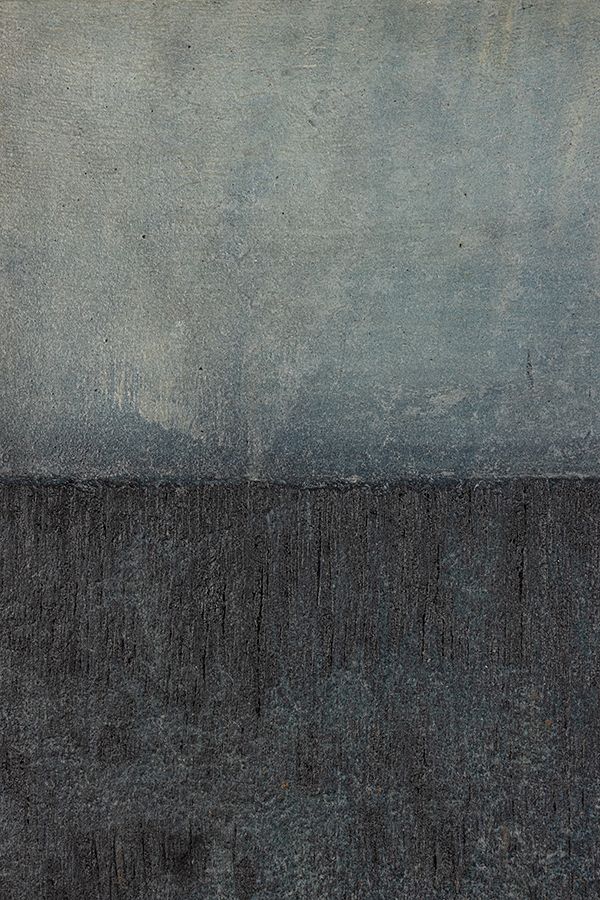
Lee Jin Woo, Untitled, 2013. Modern & Contemporary Art: Evening & Day Sale Hong Kong.
As one of the oldest technologies in the world, Korean Hanji paper dates to the 3rd or 6th century CE. Mineral pigments have been used since ancient times, and charcoal is as old as fire. Perhaps that’s why in Paris-based Korean artist Lee Jin Woo’s hands, these materials feel so timeless, even in such a strikingly contemporary work as 2013’s Untitled.
By reconsidering these older materials and casting them as part of his contemporary practice, Lee Jin Woo opens a portal to a metaphysical plane. This work feels like a guide map to both the artist’s identity and our own capacities for perception. It shows us how a fresh, contemporary approach to older materials can represent a kind of innovation itself — an urgent message that rings loudly today. And so it comes as no surprise that the artist’s latest solo exhibitions — Inflowing Ground (2025, HdM Gallery, Beijing) and Lee Jin Woo (2024, White Cube, Hong Kong) — have been so well received.
Anish Kapoor
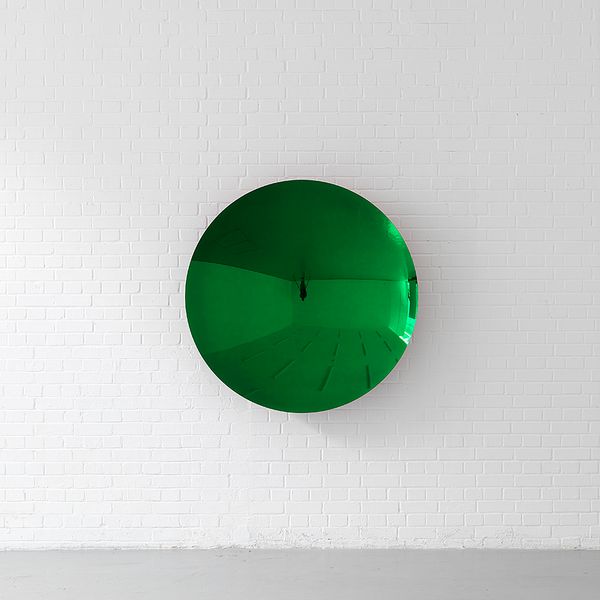
Anish Kapoor, Untitled (Organic Green / Apple Red), 2015. Modern & Contemporary Art: Evening & Day Sale Hong Kong.
Anish Kapoor treats our perception like an object itself, sculpting how we observe form, space, and materiality. Innovation is his starting point, both materially and conceptually, and his 2015 work Untitled (Organic Green / Apple Red) is a prime example. Its use of vibrant colour and mirror-lacquered stainless steel creates a disorienting, upside-down reflection that manipulates our sense of space. Conceptually, the work also explores the dynamic between presence and absence in a manner that innovates beyond traditional sculptural concerns.
Rashid Johnson
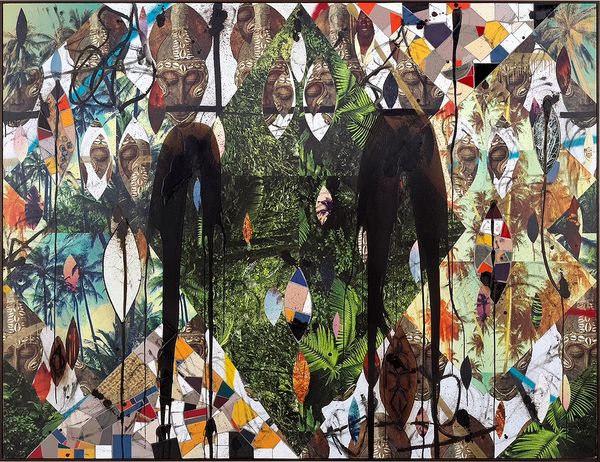
Rashid Johnson, Untitled Escape Collage, 2017. Modern & Contemporary Art: Evening & Day Sale Hong Kong.
Rashid Johnson’s innovation stems from his unconventional use of materials and his layered approach to exploring complex themes of identity, history, and cultural anxiety. He often combines a variety of everyday objects and materials that are charged with meaning. To see this, look no further than this 2017 work, Untitled Escape Collage. On a surface comprising ceramic tile, mirror tile, branded red oak flooring, vinyl, spray enamel, oil stick, black soap, and wax, Johnson embeds personal narratives within broader art historical and cultural contexts. This kind of web of associations lies at the heart of his practice, as he explained in a 2019 interview, his work is about “taking cultural materials and then allowing them to perform in very contemporary ways […] allowing them to become abstractions […] or tools […] while still having a really strong signifier relationship to its cultural underpinning and root.”
Izumi Kato
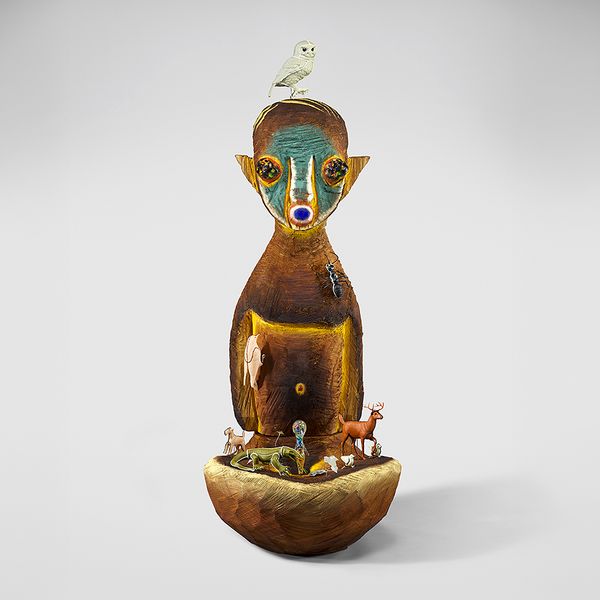
Izumi Kato, Untitled, 2022. Modern & Contemporary Art: Evening & Day Sale Hong Kong.
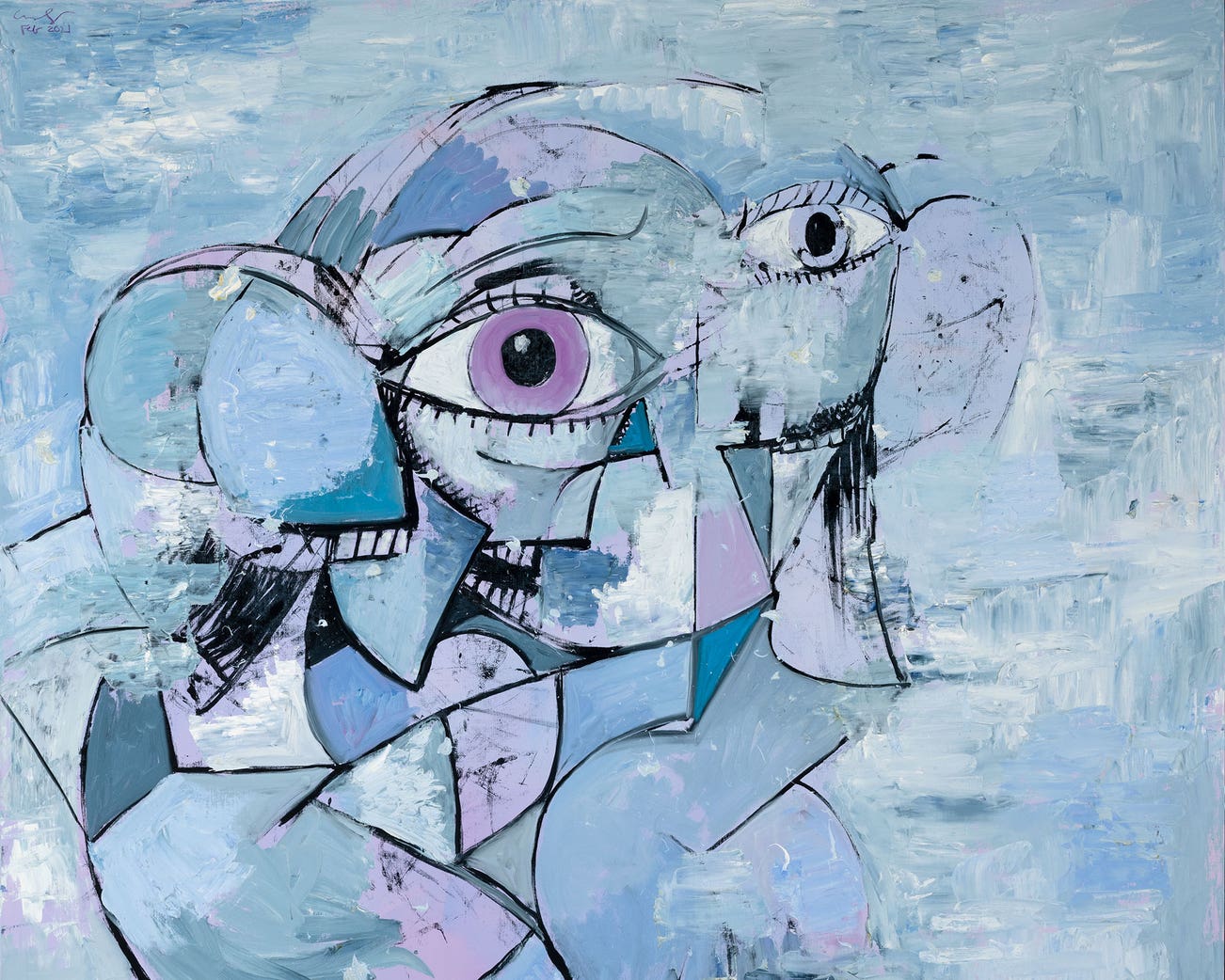
Izumi Kato’s practice turns everything we know about making art upside down. Famous for his painting approach that eschews brushes in favor of his bare hands, the artist’s hybrid painted sculptures are a defining aspect of his practice, noted for their animalic figures that feel as ancient as they do otherworldly. His material exploration and rejection of traditional tools echo aspects of the Mono-ha group’s focus on material presence, but his approach is unique for its singular and recognizable motif of recurring figures with large vacant eyes.
Yawanawa and Refik Anadol
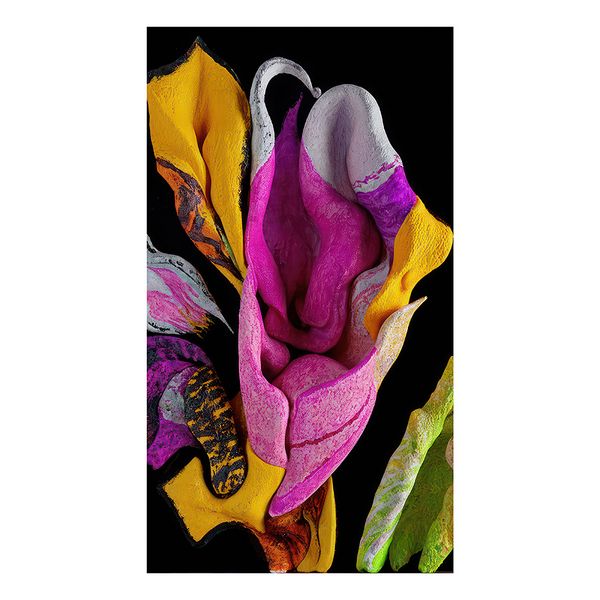
Yawanawa and Refik Anadol, Winds of Yawanawa #882, 2023. Modern & Contemporary Art: Evening & Day Sale Hong Kong.
Ask any chatbot worth its salt what it thinks of AI art, and it will likely give you a surprising explanation — AI is simply a tool, and like any tool, its impacts can vary widely depending on how it’s used. When the pioneering New Media artist Refik Anadol uses these tools, his works reflect our culture back at us in new ways. They’re less a replacement for human-made art than a tribute to it. The art world has taken notice of his unique approach, evidenced by New York’s Museum of Modern Art’s acquisition of his work Unsupervised — Machine Hallucinations — MoMA, which marked the prestigious institution’s first inclusion of a tokenized artwork in its permanent collection.
Like that work, which uses generative AI to interpret and transform the art in MoMA’s collection, Winds of Yawanawa merges weather patterns from the Yawanawa’s village in the Amazon rainforest with artworks by young Yawanawa artists. The result is a kind of collaboration between data and people that brings the nuances of Yawanawa culture to a broader audience, both human and otherwise.
Discover more from Modern & Contemporary Art: Evening & Day Sale Hong Kong >
Recommended Reading