Article | The Basics Of Perpetual Calendars
The Basics of Perpetual Calendar Wristwatches
The first perpetual calendar wristwatch, crafted by Patek Philippe, marks its 100th anniversary this year.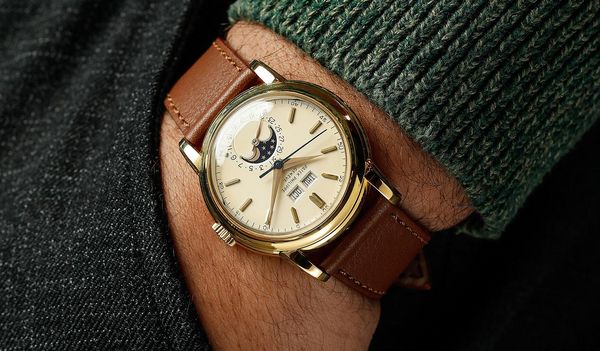
– By Logan Baker
Few complications captivate watch enthusiasts and collectors like the perpetual calendar.
It's arguably the pinnacle of craft in the watch world and a testament to human ingenuity in mastering timekeeping.
This year, the perpetual calendar wristwatch celebrates its centennial. While the concept of perpetual calendars originated in pocket watches, the transition to wristwatches marked a significant milestone in horological history.
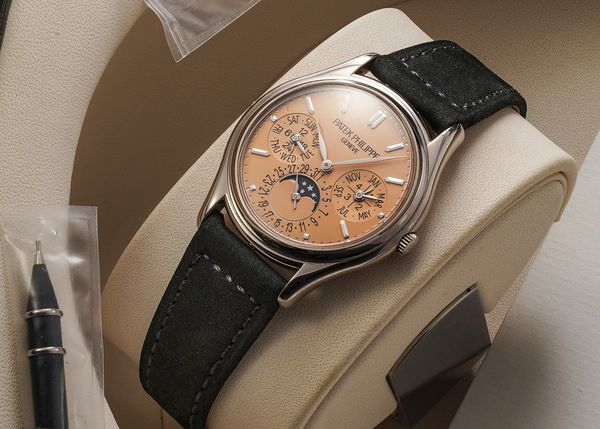
A 2016 Patek Philippe Perpetual Calendar ref. 3940G-029 "Saatchi Edition" that sold for CHF 190,500 at the Geneva Watch Auction: XIX, in May 2024.
In 1925, Patek Philippe introduced what is widely recognized as the first perpetual calendar wristwatch. This timepiece, bearing the movement number 97975, was originally crafted in 1898 as a women's pendant watch movement. Decades later, it was repurposed into a wristwatch, featuring a 34.4mm yellow-gold case with hand-engraved lugs. The dial displayed the date via a central hand, with day and month sub-dials, and a moon-phase indicator—a design that set the standard for future creations.
From its historical inception to modern-day marvels like last year’s record-setting Portugieser Eternal Calendar from IWC, the perpetual calendar remains a symbol of precision and elegance.
Understanding the Perpetual Calendar
At its core, a perpetual calendar is a complication that automatically accounts for the varying lengths of months and leap years, ensuring the correct display of date, day, month, and often moon-phases, without manual adjustment. This means that, unlike standard calendar watches which require regular monthly correction, a perpetual calendar will accurately display the date even as February shifts between 28 and 29 days every four years.
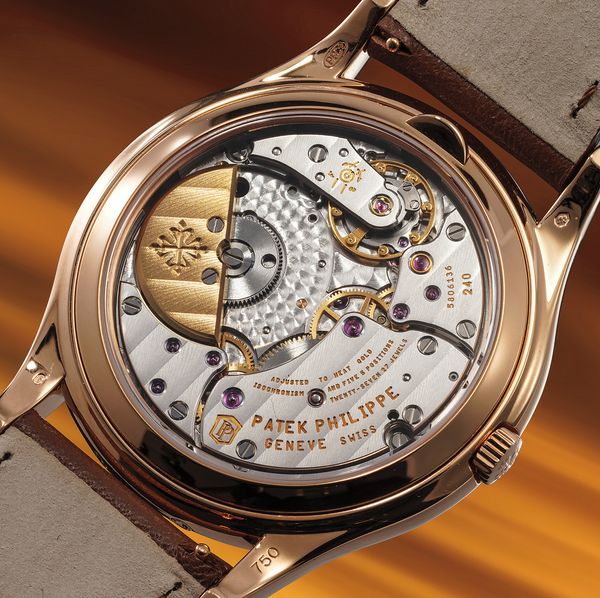
The caliber 240 Q inside the Patek Philippe Perpetual Calendar ref. 5140R-011.
At the heart of perpetual calendar is a complex system of gears and levers meticulously engineered to track the passage of time. A key component is the cam, often shaped to represent the four-year cycle, which dictates the varying lengths of months and the occurrence of leap years.
As the watch operates, the cam rotates, engaging with levers that adjust the date display accordingly. For instance, at the end of a 30-day month, the mechanism ensures that the date skips to the first of the next month, bypassing the 31st. Similarly, at the conclusion of February in a leap year, the date advances from the 29th to March 1st.
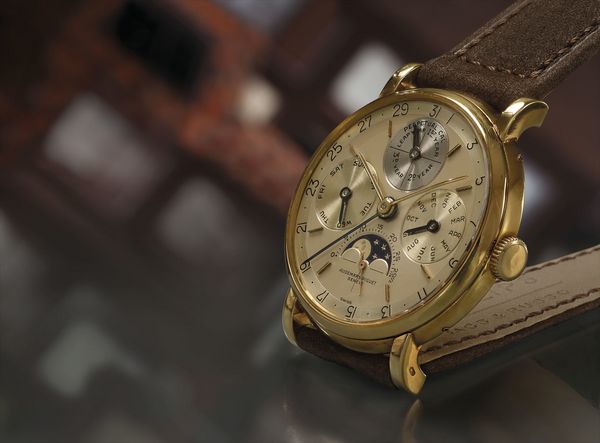
A 1957 Audemars Piguet Perpetual Calendar ref. 5516 in 18k yellow gold that sold for USD $675,000 at the Phillips Winning Icons auction, in October 2017.
The mid-20th century witnessed significant advancements in perpetual calendar wristwatches. In 1955, Audemars Piguet introduced the reference 5516, the first perpetual calendar wristwatch to feature a leap year indicator.
The 1980s marked another milestone with IWC's development of a synchronized perpetual calendar mechanism, which allowed all calendar displays to be adjusted simultaneously via the crown, simplifying the user interface and reducing the risk of damaging the mechanism through incorrect adjustments.
Cultural Significance
The perpetual calendar remains one of the most desirable complications in watchmaking, with brands continuously refining its design and functionality. Modern interpretations often feature additional complications such as chronographs, tourbillons, and minute repeaters.
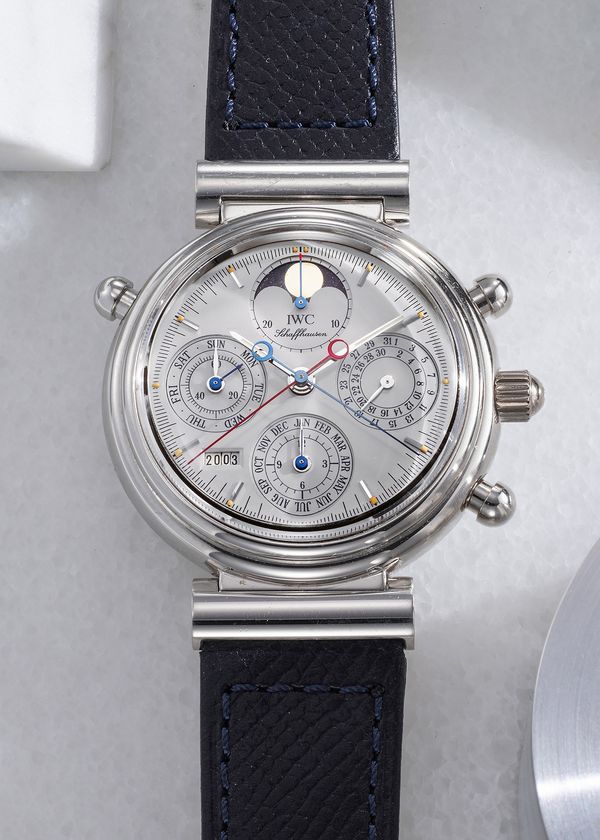
A circa 1995 IWC Schaffhausen Da Vinci Perpetual Calendar Split-Seconds Chronograph in platinum that sold for CHF 22,860 at Phillips Geneva, in March 2024.
From their inception in the early 20th century to today's groundbreaking designs, perpetual calendar watches remain timeless symbols of precision, innovation, and the unwavering pursuit of watchmaking excellence.