Article | Estate Of John Githens And Ingeborg Ten Haeff Auction New York
How to Build a World
Works from the Estate of John Githens and Ingeborg ten Haeff tell the story of their shared vision and love of New York.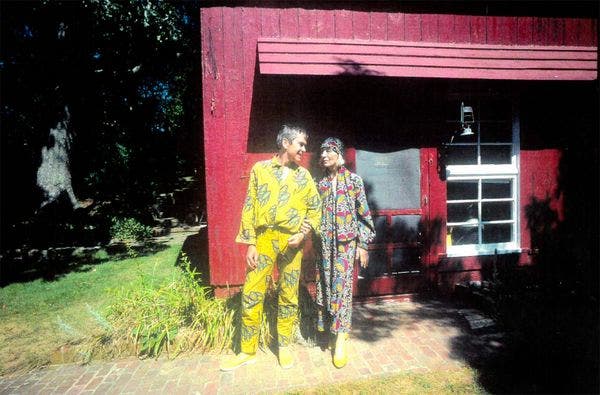
John Githens and Ingeborg ten Haeff.
The collection of John Githens and Ingeborg ten Haeff stands alone as one of the final vestiges of Golden Era Greenwich Village-bohemia. Assembled over a lifetime of remarkable social and cultural engagement, the works housed in the couple’s historic Washington Square Park residence attest to the power of taste and the possibilities generated by a personal aesthetic program. An idyll set in the heart of Manhattan, the apartment was home to ten Haeff and Githens for over half a century, playing host to their collecting fervor, artistic and scholarly curiosities, and a panoply of social events that situated the couple at the heart of New York’s artistic community.
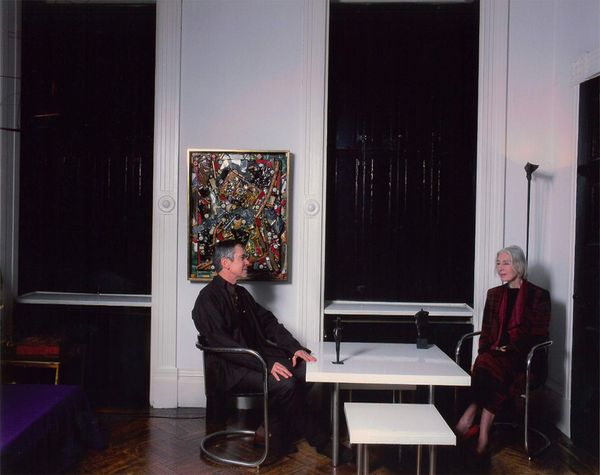
The couple in their Greenwich Village home, with Alfonso Ossorio’s Split, 1965. Modern & Contemporary Art New York Day Sale, Morning Session.
The German-born ten Haeff had previously fled to Brazil upon the outbreak of World War II where she married the eldest son of President Getulio Vargas. After the war, ten Haeff left Brazil and her marriage to move to New York, pursuing a degree in classical guitar at Juilliard and swiftly embracing the dynamic cultural scene in Gotham’s post-war milieu. Perhaps more profoundly, however, ten Haeff recalled the welcoming spirit of New York. Having experienced the rise of Fascism in Germany and a tumultuous end to her relationship with Vargas, she later reflected on being, “so astonished at the kindness, the openness of the people.”
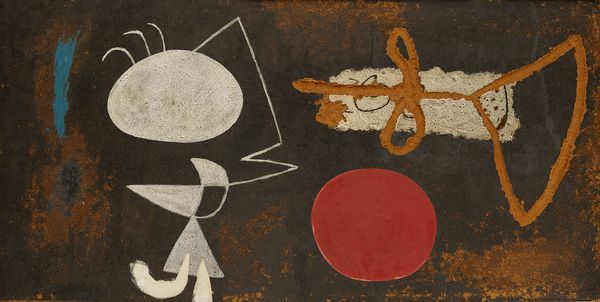
Joan Miró, Peinture, 1950. Estate of John Githens and Ingeborg ten Haeff. Modern & Contemporary Art New York Evening Sale.
In 1948, ten Haeff married the noted architect, city planner, and furniture designer Paul Lester Wiener. Wiener, a fellow German émigré, was most renowned for his central role in laying out modern Havana and Bogota as well as winning the commission to plan a neighborhood development in Washington Square Park. Their relationship propelled ten Haeff, by this stage a talented musician in her own right, further into the fabric of New York bohemia. The sculptor Alexander Calder crafted a treasured brooch and earrings as a wedding present to the couple, whilst at this time they also started to develop their art collection in earnest. In 1951, Wiener and ten Haeff purchased Joan Miró’s Peinture, 1950 from Pierre Matisse Gallery; since, the work has remained continuously in their collection and unseen in public. Moreover, the couple collected artworks that were tied to their social and professional background, including examples by contemporaries Herbert Bayer, Kurt Seligmann, Le Corbusier, and Calder. It was at this time that ten Haeff herself began to seriously pursue painting, prodigiously executing works in an Abstract Expressionist idiom.
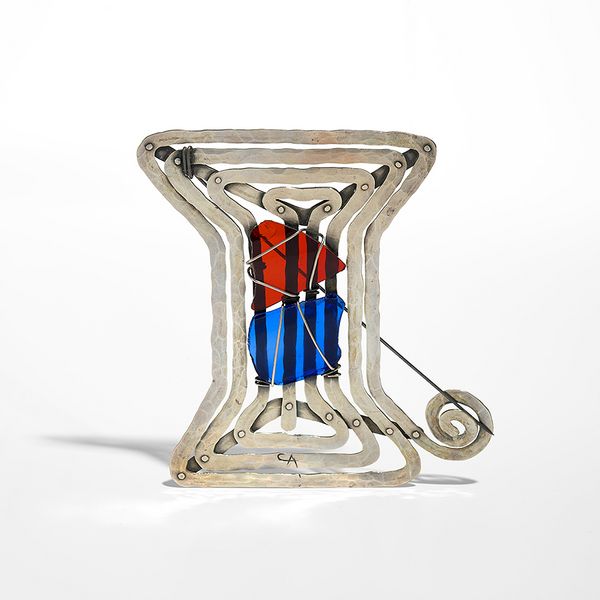
Alexander Calder, Reclining Bride, 1948. Estate of John Githens and Ingeborg ten Haeff. Modern & Contemporary Art New York Evening Sale.
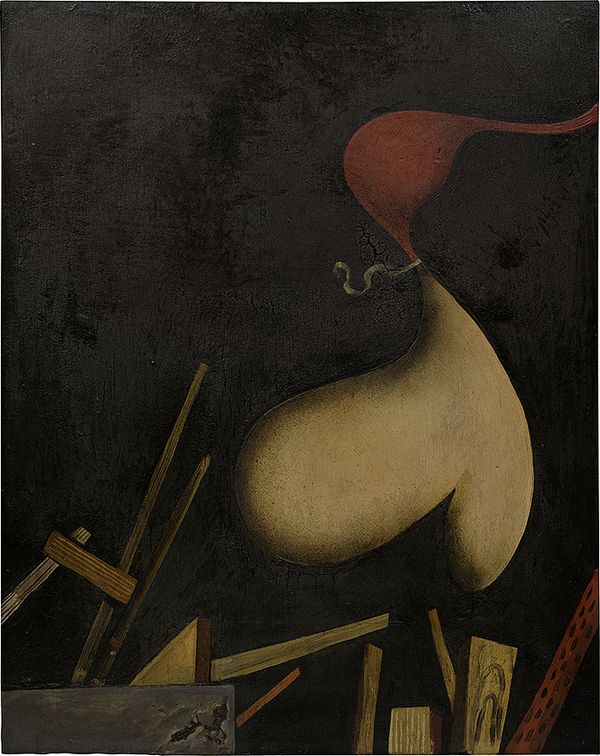
Kurt Seligmann, Sur les Barricades, 1929. Estate of John Githens and Ingeborg ten Haeff. Modern & Contemporary Art New York Day Sale, Morning Session.
Githens, a noted Russophile and gifted linguist who held professorial positions at Vassar College and St. John's University, was introduced to ten Haeff by a mutual acquaintance from Vassar after Wiener's passing in 1967. Despite being twenty-two years younger than his future wife, they soon married — with Willem de Koening and Alfonso Ossorio attending their wedding — and became a fixture within the New York and East Hampton artist communities. The new couple would regularly throw lavish dinners and attended the city’s most glamorous parties and venues. Through their friendship with artists, ten Haeff and Githens’ collection grew through both gifts and acquisitions. Alongside a veritable archive of correspondence — in German, French, and Russian — their homes in Amagansett and Greenwich Village were filled with personally dedicated drawings by de Kooning, assemblages by Alfonso Ossorio, and important works by Richard Lindner, Hedda Sterne ad Xanti Schawinsky, each hung alongside ten Haeff’s own paintings.
After ten Haeff’s passing in 2011, Githens returned full-time to the apartment in Greenwich Village and remained an engaged part of the city’s artistic scene. His devotion to his wife was unfailing — “there was nobody really like her” — and Githens continued to champion her painting until his death early this year aged eighty-seven. The pair nurtured a collection that reflected their inimitable worldly interests and experience, exemplifying a lifetime of engagement with the artist in the form of highly personal objects. Moreover, the collection is testament to ten Haeff and Githens’ mutual affection for New York. As Githens wrote days before his passing, “I love this constantly mutating place, and pray that heaven will be exactly like New York.”
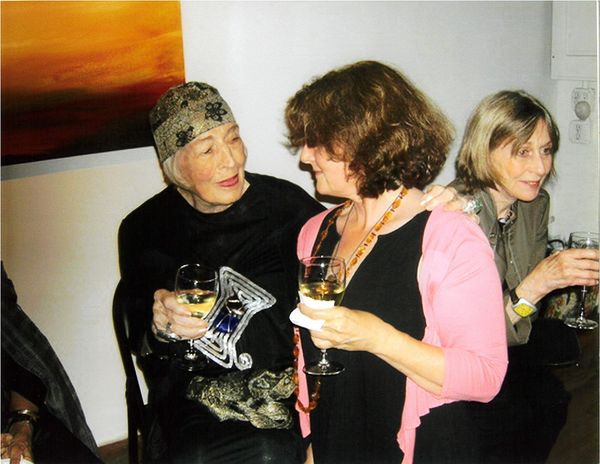
Ingeborg ten Haeff wearing Reclining Bride by Alexander Calder at a party in her Washington Square Park home.
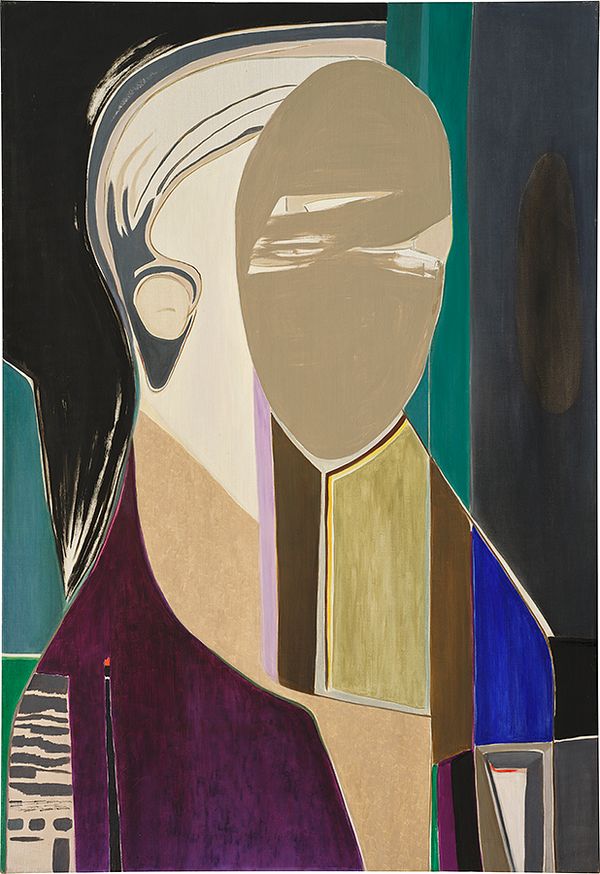
Ingeborg ten Haeff, Untitled, 1977. Estate of John Githens and Ingeborg ten Haeff. Modern & Contemporary Art New York Day Sale, Morning Session.
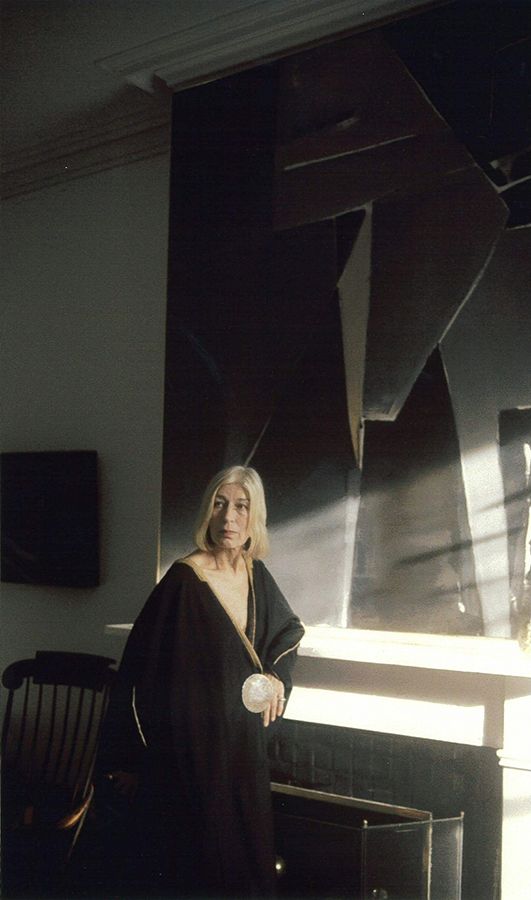
Ingeborg ten Haeff.